The Core Purpose: Torque Multiplication and Speed Matching
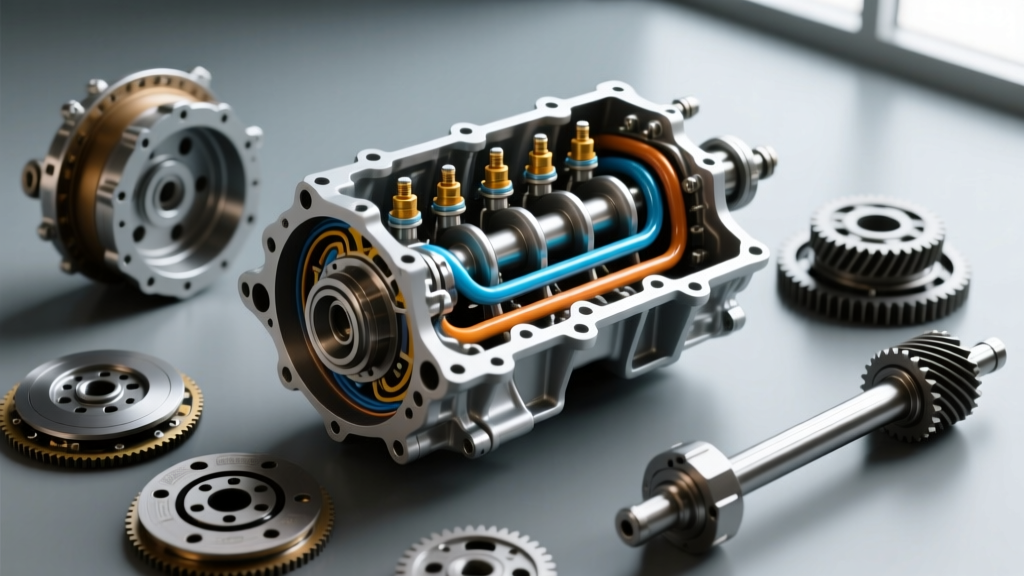
Before dissecting the exact mechanical components, it is vital to understand the fundamental function of an automotive transmission. Internal combustion engines operate within a narrow RPM band where they produce optimal torque and horsepower. The transmission's primary purpose is to multiply engine torque for initial acceleration, provide a reverse gear mechanism, and allow the engine to idle while the vehicle is stationary. As the vehicle accelerates, the transmission must seamlessly alter the gear ratio to keep the engine within its power band while matching road speed. But what does an automatic transmission use to change gears? The answer is not a single universal part, but rather a spectrum of engineering solutions that vary wildly depending on the transmission architecture.
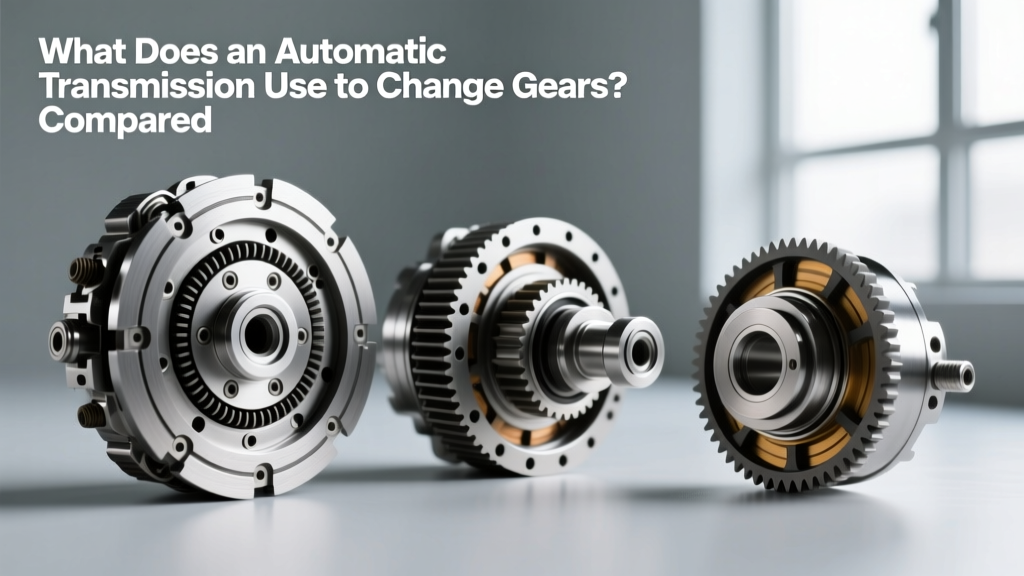
What Does an Automatic Transmission Use to Change Gears?
When buyers and enthusiasts ask what does an automatic transmission use to change gears, they are usually met with a simplified answer: 'hydraulics and computers.' While the Transmission Control Module (TCM) and valve body dictate the timing, the physical execution of a gear shift relies on one of three distinct mechanical systems: planetary gearsets with friction clutches, synchronizers with shift forks, or variable-diameter pulleys. Let us compare these mechanisms from a buyer's perspective, evaluating their durability, application, and maintenance realities.
1. Planetary Gearsets and Friction Clutches (Traditional Automatics)
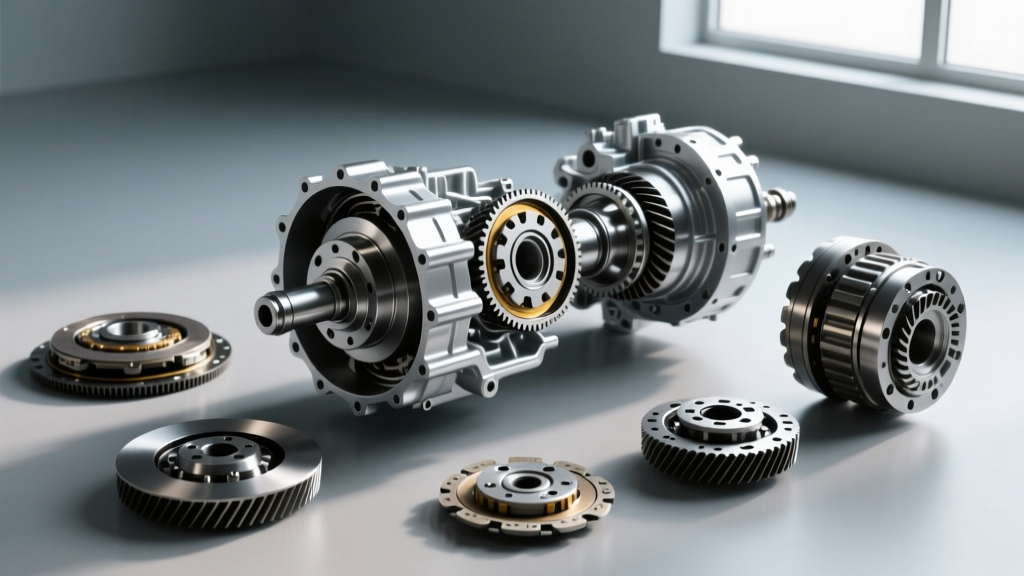
The traditional torque-converter automatic remains the most ubiquitous transmission on the road. Instead of sliding gears on shafts like a manual transmission, these units use compound planetary gearsets. To change gears, the transmission must hold one member of the gearset stationary while driving another.
This is achieved using multi-plate friction clutch packs and transmission bands. When hydraulic fluid is directed into a specific clutch piston, it compresses a stack of alternating friction and steel plates, locking them together. For example, in the ubiquitous General Motors 6L80 6-speed automatic, there are five distinct clutch packs (such as the 1-2-3-4 clutch and the 3-5-R clutch). By applying different combinations of these clutches via the solenoid-controlled valve body, the transmission achieves six forward speeds and one reverse. The torque converter itself acts as a fluid coupling, multiplying torque during initial acceleration and smoothing out the shock of the clutch packs engaging.
2. Synchronizers, Dog Rings, and Shift Forks (Dual-Clutch Transmissions)
Dual-Clutch Transmissions (DCTs) represent a hybridization of manual and automatic designs. Internally, a DCT resembles two manual transmissions housed in a single casing, each with its own input shaft and clutch pack. But what does an automatic transmission use to change gears when it is a DCT? The answer is synchronizer assemblies, dog rings, and shift forks.
Unlike traditional automatics that rely on the slip of friction clutches to manage shifts, DCTs use electromechanical or electrohydraulic actuators to physically move shift forks. These forks slide synchronizer collars and dog rings along the shafts to lock specific gears to the output shaft. Because the next anticipated gear is already pre-selected on the secondary clutch, shifts occur in milliseconds with zero interruption in torque delivery. The Porsche Doppelkupplung (PDK) and the Getrag 7DCT300 are prime examples of this technology, utilizing high-pressure hydraulic cylinders or precision electric motors to actuate the shift drums and forks.
3. Variable-Diameter Pulleys and Steel Belts (Continuously Variable Transmissions)
Continuously Variable Transmissions (CVTs) abandon fixed gear ratios entirely. Instead of asking what gear the transmission is in, a CVT constantly adjusts the ratio to keep the engine at its most efficient or powerful RPM. The mechanism used to 'change gears' here consists of variable-diameter conical pulleys and a high-strength steel push-belt or chain.
Each pulley is made of two conical halves. By using immense hydraulic line pressure (often exceeding 450 PSI in modern units like the Jatco CVT8), the TCM forces the conical halves together or apart. This alters the effective diameter where the belt rides, seamlessly transitioning the ratio from a low gear equivalent to an overdrive equivalent. The belt itself, often a LuK push-belt comprising hundreds of steel elements held together by flexible steel rings, relies on extreme friction to transmit torque without slipping.
Expert Insight: The 'rubber-band' effect commonly associated with early CVTs has been largely mitigated in modern iterations. Manufacturers like Subaru (with their Lineartronic TR690 chain-driven CVT) now program the TCM to simulate fixed 'stepped' gear ratios under heavy throttle application, satisfying driver expectations while maintaining the mechanical efficiency of the pulley system.
Buyer’s Guide: Matching the Mechanism to Your Needs
Understanding the physical components used to change gears is crucial when selecting a vehicle for specific use cases. The table below compares these architectures across critical buyer metrics.
| Transmission Type | Gear-Changing Mechanism | Notable Examples | Avg. Fluid Capacity | Rebuild/Replace Cost |
|---|---|---|---|---|
| Traditional Auto | Planetary Gearsets & Friction Clutches | GM 6L80, ZF 8HP45 | 10-12 Quarts | $2,500 - $4,200 |
| Dual-Clutch (DCT) | Synchronizers, Dog Rings & Shift Forks | Porsche PDK, Getrag 7DCT | 6-9 Quarts | $4,000 - $7,500 |
| CVT | Variable Pulleys & Steel Push-Belts/Chains | Jatco CVT8, Subaru TR690 | 8-10 Quarts | $3,500 - $5,500 |
Best for Heavy Towing and Off-Road: Traditional Automatics
If you are purchasing a heavy-duty truck or an SUV for towing, the planetary gearset and friction clutch design is mandatory. The torque converter provides fluid-based torque multiplication without the mechanical shock that would destroy a DCT's shift forks or a CVT's steel belt. The ZF 8-speed (8HP series), widely used in Ram and BMW applications, utilizes a combination of multi-plate clutches and dog clutches to handle up to 1,000 Nm of input torque, making it the gold standard for heavy-duty buyer applications.
Best for Track Performance and Sport Driving: DCTs
For buyers prioritizing lap times and shift speed, the DCT's synchronizer and shift fork mechanism is unparalleled. Because power is never interrupted by a torque converter slipping, acceleration is relentless. However, buyers must be wary of low-speed clutch wear in stop-and-go traffic, as the friction clutches managing the odd/even shafts can overheat during prolonged creep situations.
Best for Urban Commuting and Fuel Economy: CVTs
If your primary use case is city driving and maximizing MPG, the pulley-and-belt CVT is the optimal choice. By eliminating the parasitic loss of shifting and keeping the engine strictly in its optimal BSFC (Brake Specific Fuel Consumption) island, CVTs offer superior efficiency. However, buyers should avoid using CVT-equipped vehicles for heavy towing, as the immense clamping pressure required to prevent belt slip will rapidly degrade the pulley surfaces and the belt elements.
Maintenance Realities: Fluids, Filters, and Torque Specs
The mechanism your transmission uses to change gears dictates its maintenance requirements. Neglecting these specific needs is the leading cause of catastrophic failure.
- Traditional Automatics (e.g., GM 6L80): The friction clutches shed microscopic material into the fluid as they engage. This material can clog the intricate passages in the valve body. When performing a fluid drop on a 6L80, the transmission pan bolts must be torqued precisely to 18 lb-ft (25 Nm). Over-torquing will strip the aluminum case threads, while under-torquing leads to air ingestion and clutch slip. Furthermore, the filter seal must be fully seated; a double-stacked O-ring will starve the oil pump, resulting in immediate clutch pack burnout.
- ZF 8HP Series: Despite the 'sealed for life' marketing myth, ZF Friedrichshafen explicitly recommends fluid and filter changes every 60,000 miles (or 8 years) under severe operating conditions. The mechatronic unit's plastic sealing sleeves are prone to cracking, leading to cross-leaks that cause harsh 3-4 or 4-5 shifts.
- CVTs (e.g., Jatco JF011E / CVT8): CVTs rely heavily on the specific friction modifiers in their fluid to maintain the coefficient of friction between the steel belt and the pulleys. Using standard ATF in a CVT will result in immediate belt slip and pulley scoring. Always use OEM-specified fluids like Nissan NS-3 or Subaru CVTF-II, and adhere strictly to the 30,000-mile severe-service replacement interval.
Final Verdict for Buyers
Understanding what an automatic transmission uses to change gears transforms you from a passive consumer into an informed buyer. If your lifestyle demands rugged durability and heavy load capacity, seek out the proven reliability of planetary gearsets and torque converters. If you demand uncompromised performance and lightning-fast shifts, the synchronizers and shift forks of a DCT will serve you well on the canyon roads. Finally, for the efficiency-focused commuter, the continuous ratio adjustments of a CVT pulley system remain the undisputed king of urban fuel economy. Match the mechanical architecture to your driving reality, and your drivetrain will reward you with hundreds of thousands of miles of seamless operation.
For deeper technical analyses on transmission fluid dynamics and valve body hydraulics, refer to the engineering publications available through SAE International.