The Imposter Syndrome of Drivetrain Diagnostics
When an acrid, burnt odor permeates the cabin of your vehicle, the immediate instinct for most drivers and even some junior technicians is to blame the transmission. The phrase 'burnt clutch' is universally associated with slipping friction materials, glazed flywheels, or overheated automatic transmission fluid (ATF). However, in front-engine, longitudinal drivetrains, a remarkably similar and equally pungent odor is frequently generated by a completely different component: the auto fan clutch. Misdiagnosing a failing viscous fan hub as a catastrophic transmission failure can lead to unnecessary drivetrain drops, wasted labor hours, and thousands of dollars in misdirected repair costs. As of 2026, with the increased complexity of thermal management systems in both internal combustion and hybrid platforms, isolating the true source of a burning smell requires a methodical, chemistry-based diagnostic approach.
Chemical Olfactory Profiles: What Are You Actually Smelling?
To accurately perform a clutch burning smell diagnosis, you must first understand the chemical composition of the materials burning. The human nose can actually differentiate between the specific polymers and fluids involved if you know what to look for.
1. The Manual Transmission Clutch (Organic & Kevlar)
When a traditional manual clutch disc slips excessively, the friction material (typically a composite of fiberglass, Kevlar, and phenolic resins) overheats. This produces a harsh, acrid smell often compared to burning hair, asbestos, or heavily abused brake pads. It is a dry, sharp odor that lingers in the nostrils and is usually accompanied by a noticeable loss of power transfer to the wheels.
2. The Automatic Transmission Clutch (ATF-Soaked Friction Plates)
Automatic transmissions utilize multi-plate clutch packs (such as the notorious 3-4 clutch pack in the GM 4L60E or the A/B clutch assemblies in the ZF 8HP) that are bathed in automatic transmission fluid. When these slip, the fluid overheats and oxidizes. Modern fluids like Dexron ULV or Mercon LV contain specific friction modifiers and synthetic base oils. When burned, they produce a sweet, sickly-syrup odor that quickly turns into the smell of burnt toast or harsh chemical solvents.
3. The Auto Fan Clutch (Silicone Fluid & Seized Bearings)
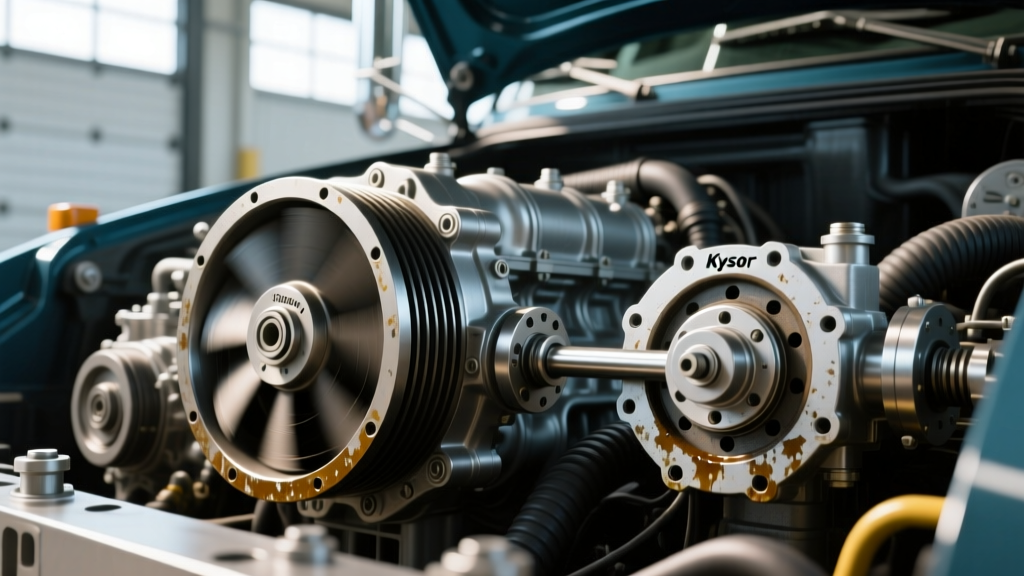
The viscous auto fan clutch relies on a precise volume of polydimethylsiloxane (PDMS) silicone fluid to transfer torque from the engine-driven hub to the fan blades. When the internal seal fails, this thick silicone fluid leaks out onto the hot radiator shroud, engine block, or exhaust manifolds. Burning PDMS produces a distinct, sweet, plastic-like chemical odor. Furthermore, if the fan clutch bearing seizes due to contamination, the serpentine belt will drag across the locked pulley, generating a massive cloud of burning rubber (sulfur) that easily mimics a severely slipping drivetrain component.
Pro-Tip: If the burning smell is most prominent at the front of the hood and intensifies when the vehicle is idling in traffic or climbing a grade at low speeds, suspect the auto fan clutch before dropping the transmission pan.
Diagnostic Matrix: Fan Clutch vs. Transmission Clutch
Use the following table to cross-reference your vehicle's symptoms during the initial road test and static inspection.
| Symptom / Observation | Auto Fan Clutch Failure | Transmission Clutch Failure |
|---|---|---|
| Odor Location | Front of engine bay, pulled through HVAC cowl | Undercarriage, firewall, or transmission dipstick tube |
| Slippage Sensation | None (RPMs match vehicle speed normally) | Engine RPMs flare during gear changes or heavy load |
| Visual Evidence | Silicone streaks on shroud, wobbly fan blades | Dark, burnt-smelling ATF on dipstick or pan debris |
| Noise Profile | Roaring fan at cold start, squealing belt | Whining torque converter, clunking gear engagements |
| Temperature Trigger | Worse in stop-and-go traffic, high ambient heat | Worse during towing, highway passing, or launch |
Step-by-Step Isolation Protocol
Follow this sequence to definitively rule the auto fan clutch in or out of your diagnosis.
Step 1: The Cold-Start Auditory & Visual Check
Start the engine completely cold. A functioning thermal auto fan clutch will be partially engaged, pulling hard and sounding like a roaring jet engine for the first 30 to 60 seconds until the internal bimetallic strip adjusts and the silicone fluid drains back into the reservoir. If the fan is completely silent and freewheeling immediately on a cold start, the viscous coupling is empty. Inspect the radiator shroud and the water pump weep hole area for a greasy, translucent residue—the hallmark of leaked PDMS silicone fluid.
Step 2: The Engine-Off Spin Test
With the engine off and cool, reach in and attempt to spin the fan blades by hand. A healthy fan clutch will offer noticeable resistance, moving only a fraction of a turn before stopping. If the fan spins freely for multiple revolutions like a bicycle wheel, the internal fluid is gone. Conversely, if the fan is completely locked and cannot be moved by hand, the internal shear plate has fused, meaning the fan is locked 1:1 with the engine. This locked state causes massive parasitic drag, overheating the serpentine belt and creating a severe burning rubber smell that mimics a slipping clutch.
Step 3: Infrared Thermometer Targeting
Use an IR thermometer after a 15-minute test drive. Point it at the automatic transmission bell housing and the transmission fluid pan. Normal operating temperatures should be between 175°F and 200°F (80°C - 93°C). If the pan is reading over 250°F, you have internal transmission clutch slip. Next, point the IR gun at the auto fan clutch hub and the water pump pulley. A seized fan hub bearing will show localized, extreme heat (often exceeding 300°F) right at the pulley center, confirming the source of the burning belt odor.
When the Gearbox is Actually Guilty
If the auto fan clutch passes all physical and thermal inspections, you must pivot to the transmission. Certain platforms are notorious for specific clutch pack failures that generate immense heat and odor. For example, the GM 4L60E and 4L80E transmissions frequently suffer from 3-4 clutch pack burnout due to the failure of the apply piston seals or the accumulator checkballs. Similarly, the ZF 8HP (found in BMW, Chrysler, and Ford applications) can experience severe torque converter clutch (TCC) slip if the mechatronic adapter sleeve leaks, dropping line pressure and causing the friction linings to glaze and burn. In these cases, pulling the transmission pan will reveal a thick, black sludge and a distinct smell of oxidized synthetic ATF, confirming the drivetrain as the culprit.
Replacement Specs, Torques, and Costs
Understanding the financial and mechanical scope of both repairs highlights why accurate diagnosis is critical.
Auto Fan Clutch Replacement
- Part Example: Hayden Automotive 2728 (Heavy Duty Thermal Fan Clutch for GM LS V8 applications).
- Cost: $85 to $180 for the part.
- Labor Time: 0.8 to 1.2 hours.
- Torque Spec: The four M10x1.25 flange bolts securing the fan clutch to the water pump bracket must be torqued to 15-18 lb-ft. Over-torquing can crack the aluminum water pump snout.
Transmission Clutch Pack Overhaul
- Part Example: Raybestos GPZ High-Energy Friction Clutch Kit.
- Cost: $350 to $600 for master rebuild kits; $1,800 to $3,500+ for professional R&R and machine shop labor.
- Fluid Note: A dry-fill 6L80E requires nearly 11.2 quarts of Dexron ULV, which must be verified at a specific sump temperature (usually 140°F-158°F) using the internal leveling plug.
By leveraging chemical odor identification, thermal imaging, and mechanical resistance testing, you can confidently separate a simple cooling system failure from a catastrophic drivetrain event. For further reading on viscous coupling diagnostics, consult the Hayden Automotive Tech Tips database, and for deep-dive automatic transmission failure modes, reference Sonnax Transmission Tech Resources. Always verify your specific vehicle's OEM service manual for exact torque specifications and fluid capacities before turning a wrench.