The 8th-generation Honda Civic Si (2006-2011) and the Acura TSX (K24Z3) remain benchmark platforms in the tuning community. However, as these K-Series engines age, owners frequently encounter a frustrating intersection of symptoms: a spongy clutch pedal that sinks at stoplights, paired with a deep harmonic vibration felt through the pedal bracket at idle. Because the clutch pedal directly interfaces with the engine’s rotational mass via the hydraulic release bearing, diagnosing the root cause requires isolating the hydraulic circuit from the accessory drive. Too often, DIYers misinterpret belt-driven vibrations and prematurely pursue an auto air conditioning compressor clutch repair, completely missing the underlying hydraulic failure. This model-specific guide dissects the exact failure modes of the K-Series clutch master cylinder (CMC) and provides a definitive framework for separating hydraulic sponginess from parasitic A/C compressor drag.
The Spongy Pedal Epidemic: OEM Master Cylinder & Delay Valve Failure
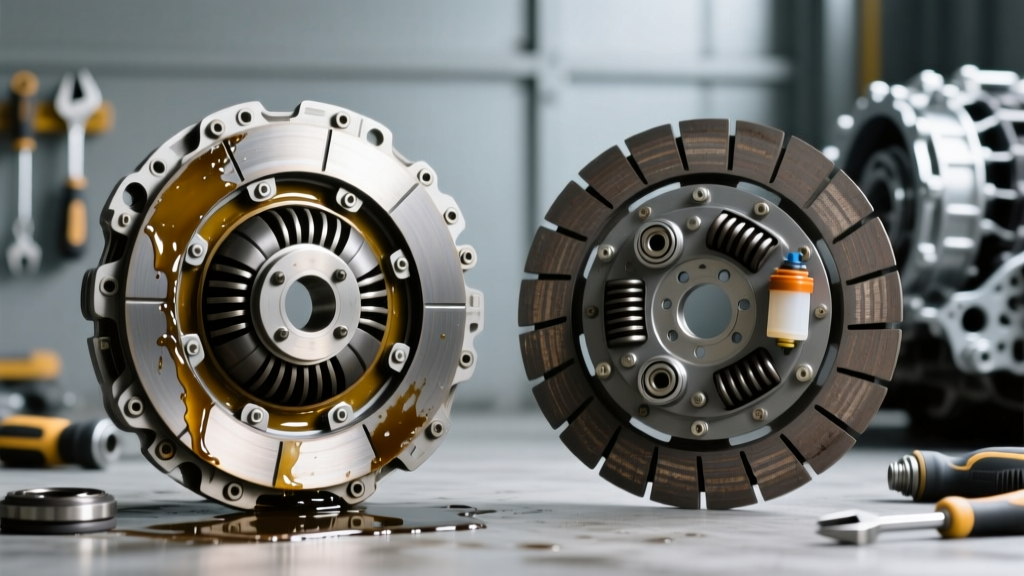
The hallmark of a failing K-Series clutch hydraulic system is a pedal that feels 'soft' or 'spongy,' particularly after sitting in traffic. The OEM Clutch Master Cylinder (Part # 46920-SVB-A05) is notorious for internal bypass failure. Over time, the internal rubber cup seals harden and shrink, allowing DOT 3/4 fluid to bypass the piston rather than pushing it down the hydraulic line to the slave cylinder.
Compounding this issue is Honda’s factory-installed 'delay valve' located in the clutch line. Designed to smooth out engagement for novice drivers, the delay valve restricts fluid flow, which inadvertently traps micro-bubbles in the hydraulic circuit and accelerates slave cylinder wear. By 2026, finding a pristine OEM delay valve is nearly impossible, and the aftermarket consensus is clear: delete it. If your pedal sinks to the floor while holding the car in first gear at a red light, your CMC is internally bypassing. No amount of bleeding will fix a worn internal seal; replacement is mandatory.
Harmonic Vibrations: Dual-Mass Flywheel vs. Accessory Drive
While a spongy pedal is strictly a hydraulic issue, a vibrating clutch pedal is a mechanical resonance issue. When you depress the clutch pedal, you alter the engine's load profile and change the chassis harmonic frequencies. If a vibration travels up the pedal arm, the culprit is typically a failing Dual-Mass Flywheel (DMF) or a compromised input shaft bearing. However, there is a secondary, frequently overlooked culprit: the serpentine belt accessory drive.
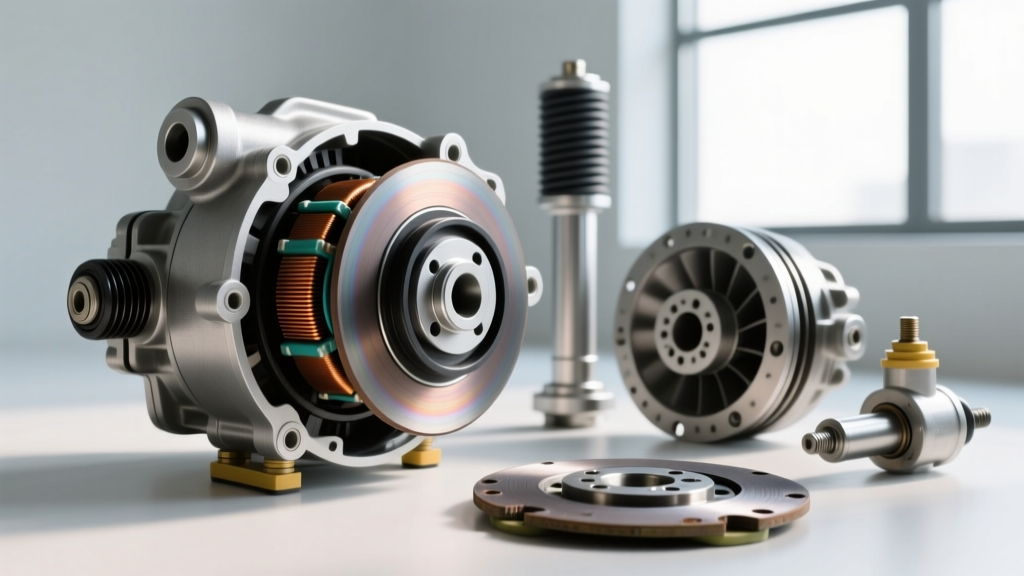
The Denso A/C compressors used in the K-Series platform are robust, but their magnetic clutch pulley bearings are prone to premature drying and seizing. When the bearing begins to fail, it creates a severe rotational imbalance. The clutch pedal assembly is bolted directly to the steering column support and the firewall. When the A/C compressor bearing introduces a high-frequency lateral shake into the serpentine tensioner, it bypasses the hydraulic engine mounts and travels through the aluminum subframe directly into the firewall. Because the pedal bracket acts as a tuning fork for these specific frequencies, the driver feels it in their left foot long before the vibration becomes audible in the cabin.
Do You Actually Need an Auto Air Conditioning Compressor Clutch Repair?
Before you drop the subframe or order parts for an auto air conditioning compressor clutch repair, you must perform a definitive isolation test. Many owners assume the A/C clutch coil has failed because the compressor isn't engaging, but the vibration is often mechanical, not electrical.
- The Feeler Gauge Test: With the engine off, use a 0.4mm to 0.6mm feeler gauge to measure the gap between the clutch friction plate and the pulley. If the gap exceeds 0.8mm, the magnetic coil cannot pull the plate, resulting in slipping and chatter.
- The Multimeter Test: Disconnect the clutch coil connector and measure resistance. A healthy Denso coil should read between 3.5 and 4.5 ohms. An open circuit (OL) confirms a burnt coil.
- The Spin Test: Remove the serpentine belt and spin the A/C pulley by hand. It should rotate smoothly with slight magnetic resistance. If you feel grinding, notchiness, or lateral play, the bearing is seized. In this scenario, an auto air conditioning compressor clutch repair is indeed required, as the destroyed bearing is throwing off the harmonic balancer and causing your pedal vibration.
Step-by-Step Hydraulic Bleed & Master Cylinder Upgrade Protocol
If your diagnosis points to a spongy pedal, upgrading to an aftermarket CMC (such as the K-Tuned or Fast Intentions billet units) eliminates the delay valve and restores crisp pedal feel.
- Bench Bleed the New CMC: Before installation, fill the reservoir and stroke the piston until no air bubbles emerge.
- Firewall Installation: Mount the new CMC to the firewall. The factory 10mm nuts require a precise torque spec of 9.8 Nm (7.2 lb-ft). Overtightening will crack the aluminum firewall bracket.
- Line Routing: Run a new stainless steel braided clutch line directly from the CMC to the slave cylinder, bypassing the factory delay valve location.
- Pivot Ball Inspection: While the line is disconnected, inspect the clutch fork pivot ball. On high-mileage K-Series engines, the stamped steel fork often wears a groove into the pivot ball, altering the pedal engagement point and contributing to a spongy feel even with a new CMC. If the pivot ball shows a divot deeper than 0.5mm, replace it with an upgraded stainless steel unit torqued to 22 Nm.
- Pressure Bleeding: Connect a Motive pressure bleeder to the master cylinder reservoir. Pressurize the system to exactly 15 PSI. Do not exceed 20 PSI, as the OEM Honda slave cylinder seals are highly susceptible to blowout under excessive static pressure.
- Fluid Selection: Use a high-quality DOT 4 fluid that meets SAE J1703 standards, such as Motul RBF 600, to resist the high thermal loads generated near the K-Series exhaust manifold. For more on hydraulic fluid standards, refer to the SAE J1703 documentation.
2026 Diagnostic & Parts Cost Matrix
Pricing for K-Series drivetrain and accessory components has shifted significantly as we move through 2026, driven by supply chain adjustments and the aging of the platform. Below is a realistic cost breakdown for resolving these specific clutch pedal and A/C issues.
| Component | OEM Part Number | 2026 Avg. Cost | Symptom Resolved |
|---|---|---|---|
| Clutch Master Cylinder (OEM) | 46920-SVB-A05 | $65 - $85 | Spongy Pedal / Sinking |
| Billet CMC Upgrade (Aftermarket) | K-Tuned / Fast Intentions | $140 - $180 | Spongy Pedal / Engagement |
| A/C Clutch Coil Assembly | 38920-RBB-006 | $90 - $120 | Compressor Non-Engagement |
| A/C Pulley Bearing | NSK 35BD219 | $25 - $40 | Pedal Vibration / Belt Squeal |
| Complete A/C Compressor (Denso) | 471-1630 | $320 - $450 | Catastrophic Bearing Seizure |
*Note: Prices sourced via RockAuto and verified against 2026 dealer MSRP averages.
Final Decision Framework
When tackling clutch pedal problems on the K-Series platform, always follow the path of least resistance. A soft, spongy pedal is almost exclusively a hydraulic failure—start with the CMC and delete the delay valve. Conversely, a vibrating pedal requires you to look beyond the transmission. By systematically testing the A/C clutch gap and bearing health, you can confidently determine whether you are facing a drivetrain harmonic issue or if an auto air conditioning compressor clutch repair is the actual solution to your chassis resonance. Proper diagnosis saves hundreds of dollars in unnecessary transmission pulls and gets you back on the road with a crisp, predictable pedal.