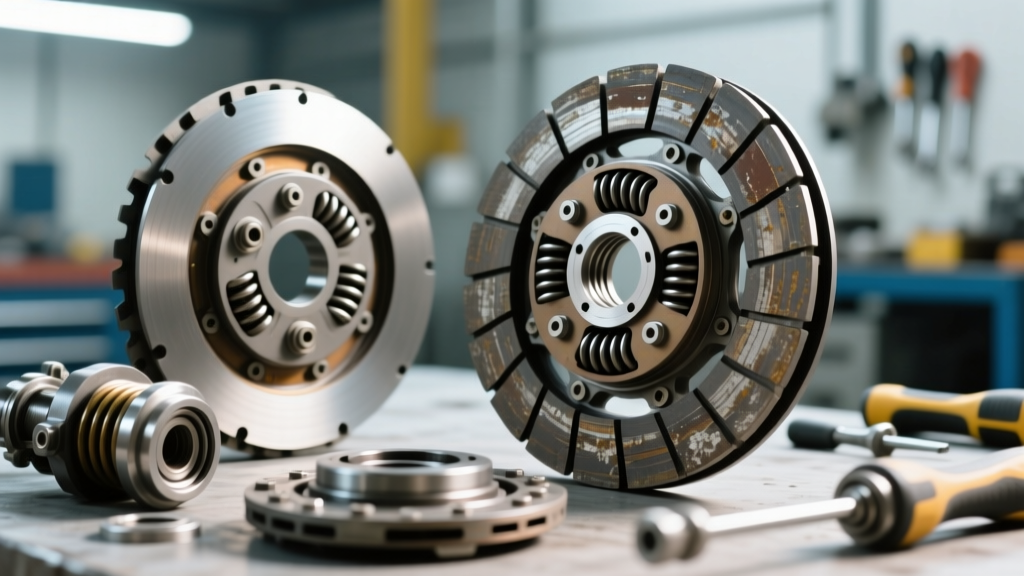
If you have landed on this diagnostic guide after a voice-search for a 'carmella clutch naked,' you have likely encountered a modern autocorrect anomaly for ceramic naked clutch kits. In the automotive aftermarket, a 'naked' kit refers to a clutch replacement package that includes the friction disc, pressure plate, and release bearing, but excludes the heavy flywheel. While ceramic naked kits are highly sought after for manual and Dual Clutch Transmission (DCT) track builds, a massive portion of our readership is actually dealing with clutch problems in automatic transmissions. Traditional planetary automatics do not use single-plate naked clutches; instead, they rely on complex, multi-disc internal clutch packs. This 2026 comparison and buyer's guide bridges the gap, diagnosing automatic transmission clutch failures and comparing the friction materials used in both worlds to help you make the right purchasing decision for your rebuild or upgrade.
Decoding the Search: Ceramic Naked Kits vs. Automatic Clutch Packs
When enthusiasts search for ceramic naked clutch kits, they are usually chasing the aggressive bite and extreme heat tolerance (up to 1,200°F) required for high-horsepower manual or DCT applications. Brands like Competition Clutch or Exedy dominate this space. However, when those same friction principles are applied to the internal clutch packs of a traditional torque-converter automatic transmission, the results can be disastrous for daily drivability. Ceramic materials in an automatic clutch pack can cause severe low-speed shudder, harsh garage shifts, and premature wear on the planetary gearsets due to the lack of 'slip' required during automatic shift events. Therefore, understanding the distinct clutch problems in automatic transmissions is critical before sourcing your friction materials.
Diagnosing Clutch Problems in Automatic Transmissions
Unlike a manual transmission where a slipping clutch is felt directly through the pedal and engine RPM, automatic transmission clutch pack failures manifest as shift flares, harsh engagements, or diagnostic trouble codes (DTCs) related to gear ratio errors. Here is a deep dive into the most common automatic clutch failures in modern vehicles.
1. RPM Flares and Slipping: The GM 6L80 3-5-R Issue
The GM 6L80 and 6L90 transmissions are notorious for a specific clutch pack failure: the 3-5-R clutch wave plate. Under heavy towing or modified torque loads, the OEM stamped steel wave plate can fatigue and snap. When this happens, the broken fragment is often driven into the 3-5-R clutch piston, puncturing the hydraulic seal. The result is a massive RPM flare during the 2-3 or 4-5 shift, accompanied by DTCs like P0733 (Gear 3 Incorrect Ratio). Diagnosing this requires dropping the transmission pan, removing the valve body, and performing an air-check test. By applying 40-60 PSI of compressed air to the 3-5-R clutch feed hole in the case, a healthy piston will 'thud' as it applies. If you hear a continuous hiss of air escaping into the transmission case, the piston seal is compromised, necessitating a full teardown and clutch pack replacement.
2. Torque Converter Shudder vs. Clutch Pack Drag: The ZF 8HP
The ZF 8HP (found in BMW, Audi, Dodge, and Ford applications) is an engineering marvel, but it suffers from Mechatronic unit sleeve wear. The plastic sleeves inside the TEHCM (Transmission Electro-Hydraulic Control Module) crack over time, bleeding off line pressure destined for the 'A' and 'B' clutch packs. Drivers often misdiagnose this as torque converter shudder. However, if the shudder occurs specifically during the 3-4 or 5-6 shift under light throttle, it is likely clutch pack starvation. Upgrading the friction plates will not fix this; the buyer must invest in a Mechatronic sleeve repair kit or a remanufactured valve body before addressing the clutch packs.
3. Harsh Engagements: Ford 10R80 C-Clutch Hub Wear
The Ford 10R80 utilizes a unique C-clutch and D-clutch arrangement. A widespread issue in 2018-2023 models involves the soft aluminum clutch hub splines wearing down. When the splines round off, the friction plates cannot release cleanly, causing a harsh, binding engagement when shifting into Reverse or Park. Diagnosing this requires measuring the hub spline depth with a micrometer; if wear exceeds 0.005 inches of OEM spec, the hub must be replaced with a billet aftermarket unit alongside new frictions.
Friction Material Showdown: Ceramic vs. OEM Paper/Kevlar
When sourcing replacement frictions, the material composition dictates the transmission's behavior. Below is a comparison of the friction materials used in ceramic naked manual kits versus those required for automatic transmission clutch packs.
| Material Type | Coefficient of Friction | Heat Tolerance | Best Application | Drawbacks |
|---|---|---|---|---|
| Ceramic (Naked Kits) | 0.35 - 0.45 (High) | 1,200°F+ | Manual/DCT Track Cars | Too aggressive for auto planetary sets; causes shudder. |
| OEM Paper/Cellulose | 0.12 - 0.15 (Low) | 400°F - 500°F | Daily Driver Automatics | Burns quickly under high-torque towing conditions. |
| Kevlar / High-Energy | 0.18 - 0.22 (Medium) | 700°F - 800°F | Heavy Duty Towing / Tuned Autos | Requires higher line pressure to prevent glazing. |
| Sintered Bronze | 0.20 - 0.25 | 900°F+ | ZF 8HP High-Performance | Expensive; requires specialized steel separator plates. |
'Never put a ceramic friction plate inside a standard planetary automatic transmission. The lack of initial slip will shock-load the planetary gears and snap the sun shell. Stick to High-Energy Kevlar or Raybestos GPZ for automatic clutch packs.' — Master Transmission Rebuilder, AutogearNexus Technical Advisory Board.
Buyer's Guide: Sourcing Automatic Clutch Components in 2026
If you are rebuilding an automatic transmission to cure slipping or harsh shifts, you need a master overhaul kit that includes high-quality frictions, steels, and sealing rings. Here is what you should be buying in 2026:
- Raybestos Powertrain GPZ Line: The gold standard for high-torque automatics. The GPZ friction material uses a proprietary weave that handles 30% more torque than OEM paper without sacrificing shift smoothness. Expect to pay between $350 and $550 for a master GPZ kit for a 6L80 or 10R80.
- Sonnax Zip Kits: While not a friction plate, Sonnax Zip Kits (like part number 15774-01K for the ZF 8HP) are mandatory purchases when doing an automatic clutch rebuild. They replace the worn, leaking valve body circuits that cause clutch pack starvation. Price: ~$180 - $250.
- Alto PowerPak Kits: For applications where clutch drum space is limited, Alto offers PowerPak kits that utilize thinner, high-energy steels and frictions, allowing you to fit an extra clutch plate into the drum to increase holding capacity by up to 25%. Price: ~$400 - $600.
- TransGo Shift Kits: To increase the hydraulic clamping force on the new clutch packs, a TransGo shift kit (e.g., TF-8HP) modifies the valve body to raise line pressure during shifts, preventing the new frictions from slipping. Price: ~$90 - $140.
Crucial Installation Specs: Clearances and Torque
Diagnosing clutch problems in automatic transmissions is only half the battle; proper assembly is where most DIY rebuilds fail. Unlike a manual naked clutch kit where the pressure plate dictates the clamp load, automatic clutch pack clearance must be manually measured and adjusted using selective snap rings.
Clutch Pack Clearance Specifications
Using a dial indicator and a feeler gauge, you must measure the gap between the top friction plate and the pressure plate retainer. If the clearance is too tight, the clutch will drag and burn up in neutral. If it is too loose, the piston will bottom out in its bore before the clutch fully applies, resulting in immediate slipping.
- GM 6L80 (3-5-R Clutch): Target clearance is 0.060' - 0.085'. Always use the selective snap ring to dial this in.
- ZF 8HP ('A' and 'B' Clutches): Target clearance is much tighter, typically 0.50mm - 0.70mm (0.020' - 0.028').
- Ford 10R80 (C-Clutch): Target clearance is 0.045' - 0.065'. Ensure the waved snap ring is installed with the wave facing the correct direction per the OEM service manual.
Valve Body and Case Torque Specs
Over-torquing valve body bolts will distort the aluminum casting, causing the valves to bind and the clutch packs to receive erratic hydraulic pressure. Always use a calibrated inch-pound torque wrench.
- ZF 8HP Mechatronic to Case: 10 Nm (7.4 lb-ft). Do not exceed this, or you will crack the TEHCM plastic housing.
- GM 6L80 Valve Body to Case: 8 Nm (71 lb-in) for the M6 bolts.
- Oil Pump to Case (6L80/10R80): 10 Nm (89 lb-in). Misalignment here will shear the pump gears on first startup.
Final Verdict: Which Path Should You Take?
If you are building a dedicated track car with a sequential manual or a high-strung DCT, a ceramic naked clutch kit is the correct choice to handle the extreme heat and rapid engagement requirements. However, if you are diagnosing clutch problems in automatic transmissions like the 6L80, ZF 8HP, or 10R80, ceramic materials are the wrong tool for the job. Instead, invest your 2026 budget into high-energy Kevlar or GPZ automatic clutch packs, pair them with a Sonnax or TransGo hydraulic correction kit, and strictly adhere to OEM clearance and torque specifications. By understanding the fundamental differences in how these friction materials operate, you can ensure your transmission survives the next 100,000 miles without slipping, shuddering, or failing.