The Critical First Step: Reading Your ATF Color Spectrum
Before you attempt any maintenance or search for tutorials on how to put automatic transmission fluid in car systems, you must first diagnose the current state of the fluid inside your transmission. Automatic Transmission Fluid (ATF) is a highly engineered hydraulic medium, coolant, and lubricant. Its color is the most immediate, non-invasive diagnostic tool available to automotive technicians and DIY enthusiasts alike. In 2026, with modern transmissions operating at higher thermal loads and tighter hydraulic tolerances, ignoring fluid color before topping off can lead to catastrophic valve body failure or clutch pack burnout.
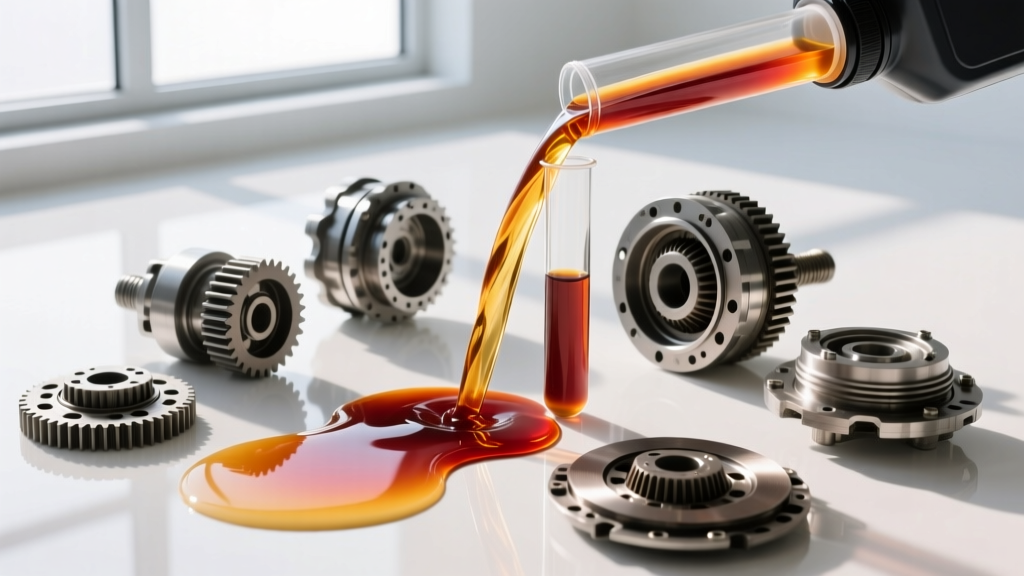
According to Sonnax Technical Resources, fluid color indicates the remaining life of the friction modifiers and the oxidation state of the base oil. Adding fresh fluid to a severely degraded system will not reverse chemical breakdown and can actually accelerate sludge mobilization, clogging narrow solenoid screens.
The 2026 Transmission Fluid Color & Condition Matrix
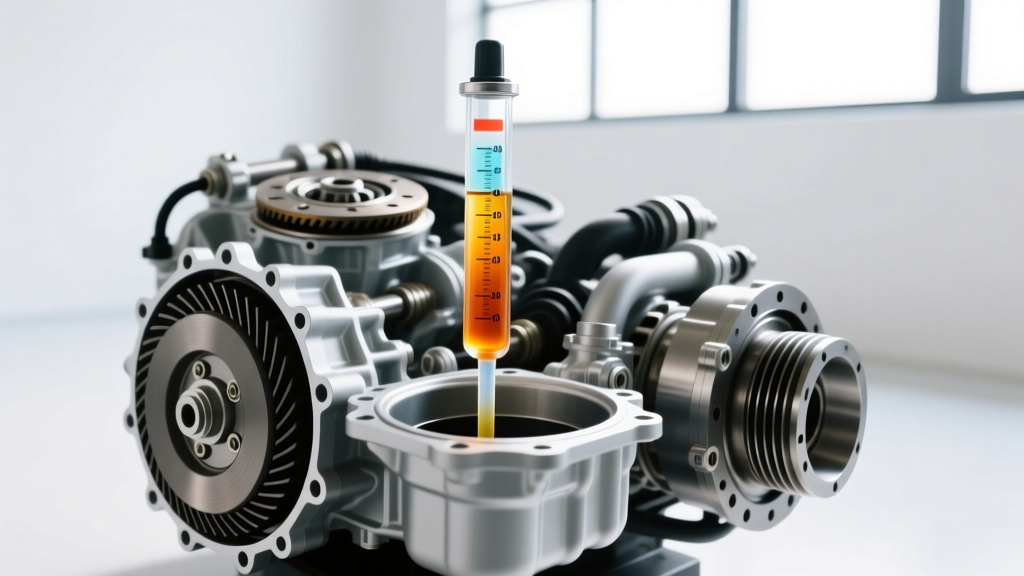
Use this diagnostic matrix to interpret your dipstick or overflow plug reading. Always wipe the dipstick with a clean, lint-free white shop towel to accurately assess the true hue and opacity.
| Fluid Color | Visual & Olfactory Cue | Chemical Meaning | Recommended Action |
|---|---|---|---|
| Bright Cherry Red | Translucent, sweet/petroleum scent | Fresh; optimal friction modifiers and VI improvers intact. | No action needed. Safe to top off if level is low. |
| Light Pink/Orange | Slightly opaque, normal scent | Normal wear; mild thermal cycling and oxidation. | Safe to add fluid. Schedule drain-and-fill within 10k miles. |
| Light Brown | Opaque, faint burnt smell | Moderate thermal breakdown; friction modifiers depleting. | Do not just top off. Perform full drain-and-fill immediately. |
| Dark Brown/Black | Opaque, sharp burnt/acrid smell | Severe oxidation; clutch material wear; high particulate count. | Stop driving. Inspect for internal damage or rebuild. |
| Milky/Pink Foam | Strawberry milkshake consistency | Coolant cross-contamination via failed radiator heat exchanger. | DO NOT ADD FLUID. Tow to shop to prevent total failure. |
The Chemistry of Degradation: Why ATF Changes Hue
To understand the transmission fluid color guide and meaning, you must understand the chemistry of modern synthetic ATFs. Most contemporary fluids (like Dexron VI or Mercedes-Benz MB 236.15) utilize Group III or Group IV (PAO) base stocks combined with complex additive packages.
Oxidation and Thermal Shear
When ATF is subjected to extreme heat—commonly exceeding 220°F (104°C) in the torque converter during heavy towing or stop-and-go traffic—the hydrocarbon chains begin to oxidize. This oxidation process creates varnish and sludge, shifting the color from red to brown. Furthermore, Viscosity Index (VI) improvers, which are long-chain polymers designed to maintain fluid thickness across temperature ranges, undergo mechanical shearing. As these polymers break down, the fluid loses its hydraulic pressure-holding capabilities, leading to delayed shifts and clutch slip.
Friction Modifier Depletion
ATF contains organic and metallic friction modifiers (such as molybdenum compounds) that allow clutch packs to engage smoothly without shuddering. As the clutch material wears during normal operation, microscopic cellulose and Kevlar fibers suspend in the fluid, darkening its appearance. If your fluid is black and smells burnt, the friction modifiers are entirely depleted, and the clutch packs are physically disintegrating.
Temperature-Dependent Color and Level Checking
Evaluating color is only half the battle; evaluating the level accurately requires strict adherence to temperature protocols. Modern transmissions do not use traditional 'Hot' and 'Cold' dipstick marks. Instead, they require precise thermal readings via OBD2 scan tools.
GM 6L80 / 6L90 Protocol
The GM 6L80 and 6L90 transmissions require Dexron VI. To check the fluid, the transmission pan temperature must be between 86°F and 122°F (30°C and 50°C). If the fluid is light brown or darker at this temperature, a pan drop is required. Note that the 6L80 pan bolts are notoriously soft; the exact torque specification for reinstallation is 8 Nm (71 lb-in). Overtorquing will strip the aluminum case threads.
ZF 8HP (Chrysler/BMW/Audi) Protocol
The ubiquitous ZF 8HP transmission (found in the Chrysler 850RE, BMW, and Audi platforms) features a sealed plastic pan with an integrated filter. There is no dipstick. You must use a scan tool to monitor the transmission fluid temperature. Once the fluid reaches 30°C-50°C, the vehicle must be perfectly level. You then remove the overflow plug (torque spec: 35 Nm) on the bottom of the pan. If the fluid is black or contains metallic glitter on the magnetic plug, internal planetary gear failure is imminent.
Deciding Your Next Move: Flush, Drain-and-Fill, or Top-Off?
Once you have interpreted the color and verified the temperature, you must decide on the maintenance path. As AAA Automotive advises, high-mileage vehicles with dark, burnt fluid should never undergo high-pressure machine flushes, as this can dislodge varnish that is currently providing friction for worn clutch packs.
Expert Rule of Thumb: If the fluid is Dark Brown or Black and the vehicle has over 120,000 miles with no prior fluid changes, do not flush. Perform a gentle drain-and-fill to restore some additive chemistry without shocking the hydraulic system.
How to Put Automatic Transmission Fluid in Car (Top-Off Procedure)
If your diagnostic matrix confirms the fluid is Bright Red or Light Pink, but the level is below the minimum threshold, you must replenish it. Here is exactly how to put automatic transmission fluid in car systems safely:
- Preparation: Ensure the vehicle is on a level surface. Engage the parking brake and chock the wheels. The engine should be running and at operating temperature for most modern dipstick checks (consult your specific owner's manual, as some Honda/Acura models require the engine to be OFF).
- Tooling: Use a dedicated, clean, long-neck transmission funnel. Never use a funnel that has been exposed to motor oil or coolant; even a few drops of cross-contamination can degrade the ATF's friction profile.
- Incremental Addition: Add the exact OEM-specified fluid in 0.25-quart (8 oz) increments. Overfilling a transmission is just as dangerous as running it low. Overfilling causes the rotating planetary gears to aerate the fluid, creating foam. Foam is compressible and will lead to immediate hydraulic pressure drops and clutch slip.
- Verification: After each 0.25-quart addition, wait 60 seconds for the fluid to drain down the dipstick tube or fill stem, then recheck the level or monitor the overflow plug drip rate.
Expert Part Numbers and Fluid Specifications
Using the wrong fluid will instantly alter the friction characteristics, leading to torque converter shudder and check engine lights. Always reference these OEM and high-quality aftermarket specifications:
- GM/Chevy (Dexron VI): ACDelco Part # 10-9395. Pricing: $8 - $11 per quart. Capacity (Pan Drop): ~6.0 quarts.
- ZF 8HP (LifeguardFluid 8): ZF Part # S671 090 312. Pricing: $28 - $35 per quart. Capacity (Pan Drop): ~5.5 to 7.0 liters depending on cooler lines.
- Toyota/Aisin (World Standard): Toyota Genuine ATF WS (00289-ATFWS). Pricing: $9 - $13 per quart.
- Multi-Vehicle Alternative: Valvoline MaxLife Multi-Vehicle ATF. Pricing: $7 - $9 per quart. Excellent for high-mileage drain-and-fills on older Ford and Asian imports, as noted in the Mobil 1 Maintenance Guide regarding synthetic blend benefits.
By mastering the transmission fluid color guide and meaning, you transform a simple fluid top-off into a comprehensive health assessment of your vehicle's drivetrain. Never blindly add fluid; always diagnose the chemistry first.