Beyond the Drivetrain: The Electromagnetic Clutch
When automotive technicians and engineers discuss clutch systems, the focus naturally gravitates toward manual transmission friction discs, automatic transmission torque converter lock-up clutches, or AWD electromagnetic coupling systems. However, the modern vehicle relies on a secondary network of power-transfer mechanisms to manage parasitic accessory loads. The most critical of these is the air conditioning compressor clutch. Understanding the nuances of an ac compressor clutch repair is not merely an HVAC concern; it is a vital diagnostic skill for drivetrain specialists. A failing accessory clutch can introduce harmonic vibrations through the serpentine belt system, masking or mimicking transmission input shaft bearing noise, torque converter shudder, or harmonic balancer degradation.
In this technical deep-dive, we transition from traditional friction clutches to electromagnetic clutches, exploring the precise wear signs, lifespan indicators, and diagnostic metrics required to accurately evaluate and repair AC compressor clutches in the 2026 automotive landscape.
Electromagnetic vs. Friction Clutches: A Functional Comparison
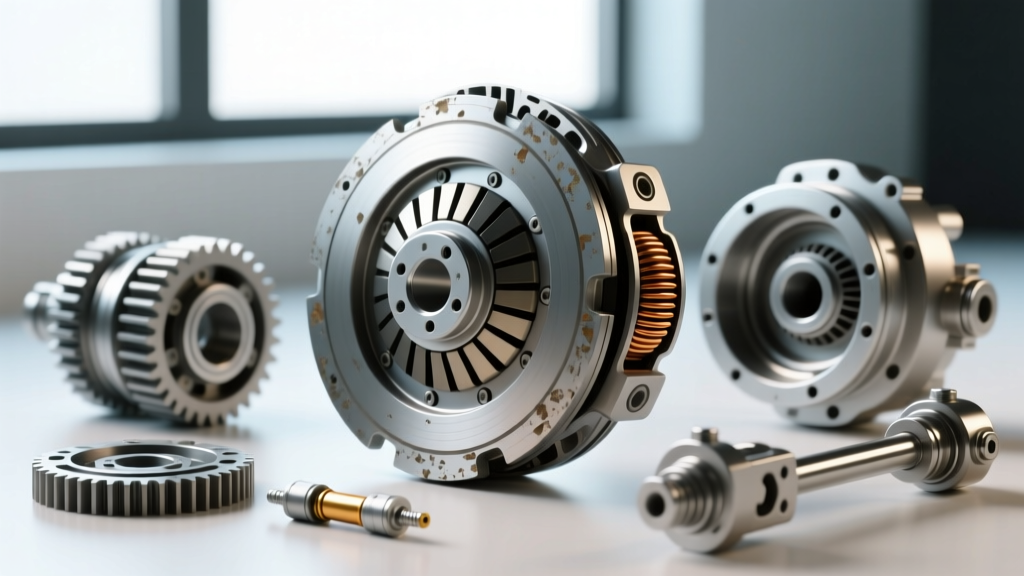
Unlike a manual transmission clutch that relies on mechanical clamping force and organic or sintered friction materials to manage high-torque drivetrain loads, an AC compressor clutch operates on electromagnetic principles. The system consists of three primary components:
- The Electromagnetic Coil: A stationary copper winding mounted on the compressor housing that generates a magnetic field when energized by the vehicle's 12V/48V electrical system.
- The Pulley and Bearing Assembly: Driven continuously by the serpentine belt, this component freewheels when the clutch is disengaged.
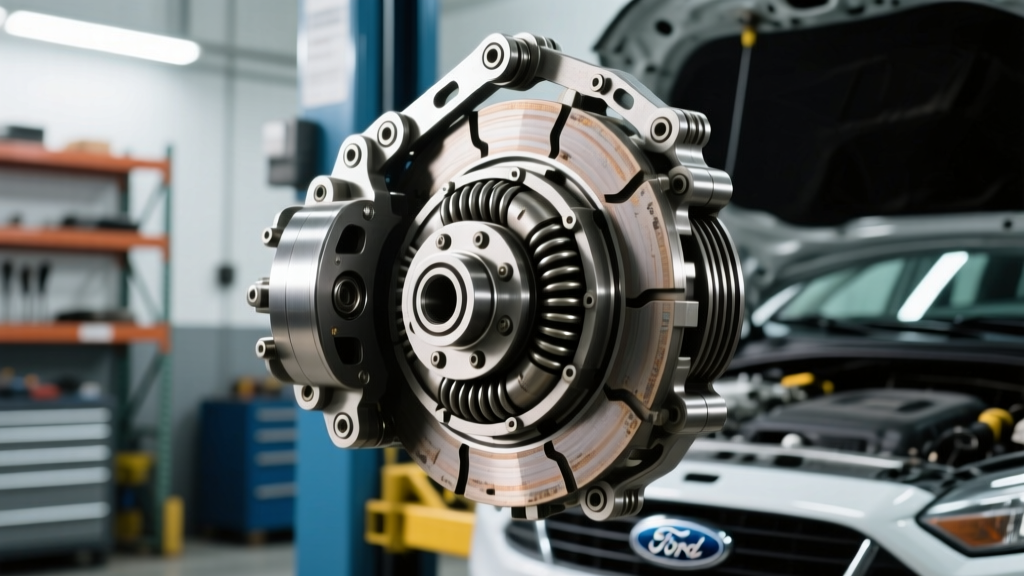
- The Friction Hub (Armature): Splined to the compressor input shaft. When the coil is energized, the magnetic field pulls the hub against the pulley face, creating friction that drives the compressor's internal swashplate or scroll mechanism.
Because the engagement relies entirely on magnetic flux density overcoming a physical air gap, the tolerances for wear are measured in fractions of a millimeter, making diagnostics highly sensitive to mechanical degradation.
The Drivetrain Cross-Contamination Effect
Why should a transmission specialist care about AC clutch wear? Consider the serpentine belt routing on transverse FWD platforms utilizing transmissions like the GM 6T70 or Ford 6F35. The AC compressor is often mounted low on the engine block. If the compressor clutch pulley bearing begins to fail, it introduces a high-frequency harmonic vibration into the accessory drive belt. This vibration travels directly to the crankshaft harmonic balancer and can be transmitted through the engine block into the transmission bell housing. Technicians frequently misdiagnose this as a failing transmission input shaft bearing or a degraded torque converter clutch (TCC) apply solenoid, leading to unnecessary transmission removals. Identifying AC compressor clutch wear signs early prevents catastrophic misdiagnosis.
Quantifiable Wear Signs: The Diagnostic Matrix
Diagnosing an AC compressor clutch requires moving beyond simple visual inspections. True E-E-A-T in automotive diagnostics relies on quantifiable metrics. Below are the primary wear indicators and the exact testing procedures required to confirm them.
1. Air Gap Tolerances and Friction Surface Wear
The most common cause of AC clutch slipping is an excessive air gap. As the friction surfaces of the pulley and hub wear down over thousands of engagement cycles, the gap widens. The magnetic field strength decreases exponentially as the distance increases. If the gap exceeds the manufacturer's threshold, the coil cannot generate enough attractive force to pull the hub flush against the pulley, resulting in a slipping clutch that generates immense heat and glazes the friction surfaces.
Diagnostic Procedure: Use a non-magnetic brass feeler gauge to measure the gap between the hub and pulley face at three equidistant points. An uneven gap indicates a bent hub or a failing internal compressor shaft bearing.
2. Electromagnetic Coil Degradation
Thermal cycling and exposure to road salt cause the copper windings inside the coil to degrade, increasing electrical resistance. According to Ohm's Law, higher resistance results in lower current draw, which directly reduces the magnetic field strength. A coil that is out of specification will fail to engage the clutch, especially when the engine bay is heat-soaked and ambient resistance increases.
Diagnostic Procedure: Disconnect the coil connector and measure resistance across the terminals using a digital multimeter (DMM). Compare the reading to the OEM specifications detailed in the table below. Additionally, perform a voltage drop test across the clutch circuit; a drop greater than 0.5V under load indicates corroded wiring or a failing compressor clutch relay.
Comparative Specifications Table
Reference this matrix when diagnosing the most prevalent compressor platforms on the road today. Data sourced from Sanden Manufacturing and Denso Automotive Aftermarket engineering bulletins.
| Compressor Platform | Optimal Air Gap | Max Wear Limit | Coil Resistance (at 20°C) | Hub Retaining Bolt Torque |
|---|---|---|---|---|
| Sanden SD7V16 | 0.30 - 0.50 mm | 0.80 mm | 3.2 - 3.6 Ω | 12 Nm (8.8 lb-ft) |
| Denso 10S17C / 10PA17C | 0.40 - 0.60 mm | 0.90 mm | 3.8 - 4.2 Ω | 14 Nm (10.3 lb-ft) |
| Harrison / Delphi HT6 | 0.50 - 0.75 mm | 1.00 mm | 3.0 - 3.5 Ω | 15 Nm (11 lb-ft) |
| Zexel DKS | 0.35 - 0.55 mm | 0.85 mm | 3.5 - 4.0 Ω | 11 Nm (8.1 lb-ft) |
Lifespan Indicators and Thermal Degradation
The average lifespan of an OEM AC compressor clutch is between 120,000 and 150,000 miles. However, this lifespan is heavily dictated by thermal management and system pressures. Modern vehicles utilize variable displacement compressors (like the Sanden SD7V16) which often keep the clutch engaged continuously while the AC system is active, modulating cooling via an internal electronic control valve rather than cycling the clutch on and off. While this reduces mechanical wear from engagement impacts, it subjects the clutch bearing to continuous rotational stress.
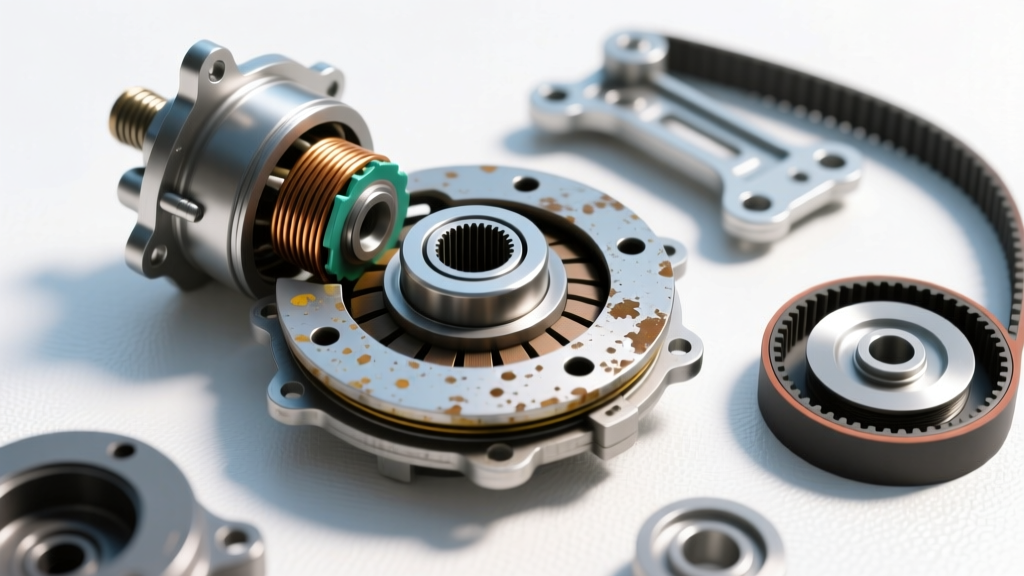
Conversely, older fixed-displacement systems cycle the clutch rapidly. The primary lifespan indicator for these systems is the condition of the friction surface. If the hub exhibits a bluish tint, the sintered iron material has undergone thermal annealing due to slipping, destroying its coefficient of friction. Furthermore, if the compressor's internal shaft seal leaks, PAG (Polyalkylene Glycol) oil will migrate onto the clutch friction surfaces. PAG oil acts as a severe contaminant, causing immediate clutch slip and necessitating a full compressor replacement rather than a simple clutch repair.
AC Compressor Clutch Repair: Procedures and 2026 Cost Analysis
When diagnostics confirm that the compressor internals are healthy, the shaft seal is intact, and the coil is within specification, an ac compressor clutch repair is the most cost-effective solution. However, the procedure requires specialized tooling to prevent damage to the delicate swashplate mechanisms inside the compressor housing.
Expert Technician Note: Never use a standard three-jaw gear puller to remove an AC clutch hub. The localized stress will crack the cast aluminum hub or damage the compressor's front shaft bearing. Always use a dedicated clutch puller tool, such as the OTC 4521 or Lisle 46100, which threads directly into the hub and applies even, axial extraction force.
Step-by-Step Hub and Coil Replacement Protocol
- System Isolation: Disconnect the negative battery terminal to prevent accidental engagement during the repair.
- Hub Extraction: Thread the dedicated puller tool into the friction hub. Apply steady torque to the center forcing screw until the hub pops free from the splined shaft.
- Circlip Removal: Use internal snap-ring pliers to remove the pulley retaining circlip. Slide the pulley and bearing assembly off the compressor snout. Inspect the bearing for axial play or rotational roughness.
- Coil Replacement: Remove the coil retaining clip. Disconnect the electrical pigtail. Slide the new electromagnetic coil into place, ensuring the anti-rotation tab seats perfectly in the compressor housing notch.
- Reassembly and Air Gap Setting: Install the new pulley and bearing, securing it with a new circlip. Slide the new friction hub onto the splined shaft. Install the center retaining bolt and torque to the exact OEM specification (e.g., 12 Nm for Sanden). Use the feeler gauge to verify the air gap. If the gap is too wide or narrow, remove the hub and add or subtract precision shims located on the compressor shaft until the optimal tolerance is achieved.
2026 Repair Cost Breakdown
Pricing for HVAC and drivetrain-adjacent repairs has shifted with supply chain adjustments and the integration of higher-voltage mild-hybrid accessory systems. Below is the current market average for a standard internal combustion vehicle:
- OEM Clutch Kit (Hub, Pulley, Coil): $120 - $180
- Aftermarket Clutch Kit (e.g., Four Seasons, GPD): $65 - $95
- Specialized Puller Tool Set: $45 - $85 (One-time shop investment)
- Labor Time: 1.0 - 1.5 Hours
- Total Repair Cost: $220 - $450 (Dependent on regional labor rates of $150-$200/hr)
Warning: If the compressor shaft seal is leaking, or if the internal swashplate is scoring (evidenced by metallic flakes in the orifice tube), a clutch repair is futile. The entire compressor must be replaced, and the system flushed, pushing the repair cost to $750 - $1,200.
Summary
While it operates outside the transmission bell housing, the AC compressor clutch is a vital electromagnetic coupling device that demands the same rigorous, spec-driven diagnostic approach as any drivetrain component. By measuring air gap tolerances with precision feeler gauges, verifying coil resistance with a DMM, and understanding the cross-contamination of harmonic vibrations into the drivetrain, technicians can accurately diagnose AC compressor clutch wear signs. Mastering these lifespan indicators ensures accurate repairs, prevents misdiagnosis of transmission components, and restores optimal vehicle performance.
For further technical standards on mobile climate systems and their integration with modern powertrain cooling modules, refer to the Mobile Air Climate Systems (MACS) society guidelines and service bulletins.