Introduction: Accessory Clutches vs. Drivetrain Clutches
At AutogearNexus, we spend countless hours dissecting transmission friction clutches, torque converter clutch (TCC) apply maps, and dual-clutch mechatronics. However, the accessory drive system relies on an equally critical electromagnetic component: the AC compressor clutch. When you are facing an AC compressor clutch not engaging scenario, the diagnostic methodology shares striking similarities with drivetrain clutch diagnostics. Both systems rely on precise air gaps, friction surfaces, and hydraulic/electromagnetic apply forces to manage parasitic load and torque transfer.
In modern 2026 vehicles equipped with R-1234yf refrigerant and variable-displacement compressors, a non-engaging clutch is rarely just a "bad coil." It is often a symptom of systemic pressure anomalies, relay voltage drops, or mechanical air-gap degradation. This step-by-step guide will teach you how to diagnose the root cause by profiling the noise, vibration, and tactile feel of the system, bridging the gap between HVAC diagnostics and traditional drivetrain NVH (Noise, Vibration, and Harshness) analysis.
The Symptom Matrix: Noise, Vibration, and Feel
Before breaking out the multimeter, use your senses. The way the clutch fails to engage—or partially engages—provides immediate clues about the failure mode. Review the matrix below to map your initial observations to the likely mechanical or electrical fault.
| Observed Symptom | Clutch State | Probable Root Cause | Primary Verification Tool |
|---|---|---|---|
| Rapid 2-4 Hz cabin shudder at idle when AC is commanded ON | Slipping / Cycling | Excessive air gap, worn friction plate, or low refrigerant charge causing short-cycling. | Feeler gauge, Manifold gauge set |
| Loud metallic "click" followed by serpentine belt squeal | Engaging but Dragging | Seized compressor shaft bearing or internal swash-plate failure creating immense rotational resistance. | Stethoscope, Clutch hub holding tool |
| Faint relay click in the fuse box, but zero clutch movement or noise | Dead / No Apply | Open electromagnetic coil circuit, blown thermal fuse in the clutch pigtail, or PCM ground-side inhibit. | Digital Multimeter (Ohms/Voltage) |
| Chirping noise that changes pitch with engine RPM, regardless of AC button state | Disengaged but Dragging | Failed pulley bearing or bent clutch friction plate rubbing against the rotor. | Stethoscope, Visual runout inspection |
Step 1: Auditory Diagnosis (Noise Profiling)
The "Click-Clack" of a Failing Coil vs. Relay Chatter
When you command the AC ON, listen to the compressor clutch relay in the under-hood fuse box. According to Mobile Air Climate Systems (MACS) diagnostic guidelines, a healthy system will produce a single, authoritative relay click, followed immediately by the metallic "clack" of the clutch friction plate snapping against the electromagnetic rotor. If you hear rapid relay chatter (clicking multiple times per second), the PCM is detecting an anomaly—often a high-side pressure transducer reading out of bounds due to a restricted condenser or a failing R-1234yf system pressure sensor—and is rapidly cycling the ground circuit to protect the compressor.
Serpentine Belt Squeal vs. Clutch Plate Drag
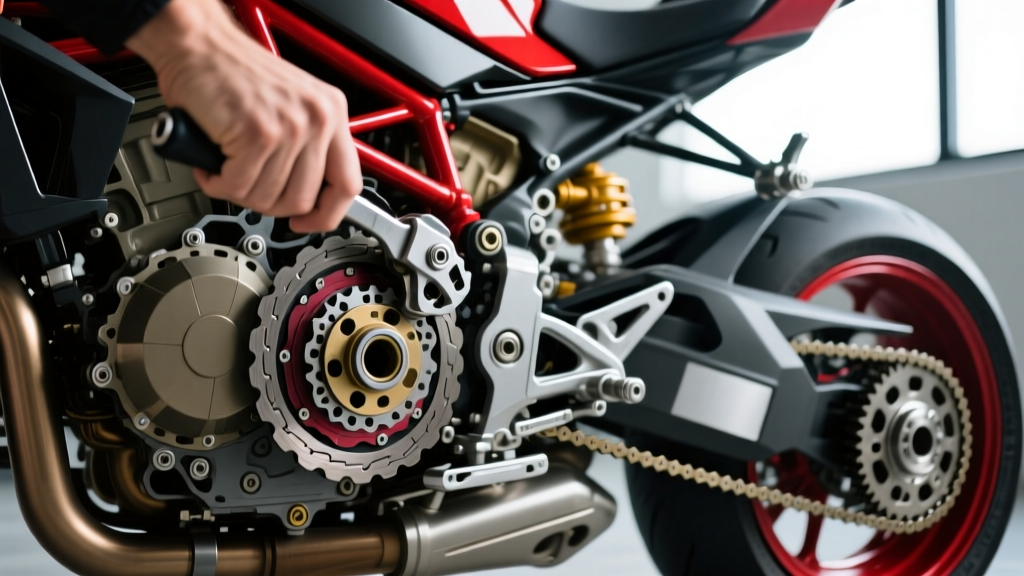
If the clutch engages but the serpentine belt immediately squeals, the clutch is doing its job, but the compressor is locked. To verify, use a clutch hub holding tool and a socket on the center retaining bolt. If the hub will not rotate by hand with the clutch disengaged, the internal swash-plate or main shaft bearing has seized. Conversely, if the friction plate itself emits a continuous chirping sound even when the AC is OFF, the clutch pulley bearing has failed, or the friction plate is warped and dragging on the rotor.
Step 2: Tactile Diagnosis (Vibration and Cabin Feel)
Differentiating AC Clutch Shudder from Torque Converter Shudder
Drivetrain experts know that a failing Torque Converter Clutch (TCC) in a ZF 8HP or GM 6L80 transmission causes a distinct 40-50 Hz shudder under light throttle at 45-55 mph. AC compressor clutch shudder feels entirely different. Because the AC clutch engages at idle or low RPM, a slipping clutch plate will transmit a low-frequency, high-amplitude 2-4 Hz vibration through the engine mounts into the cabin. This happens because the electromagnet is pulling the plate, but the rotational shear force of the compressor is breaking the friction bond, causing the plate to slip, grab, slip, and grab. This is almost always caused by an excessive air gap or oil contamination on the friction surfaces.
Engine RPM Dip and Accessory Drive Load
Monitor the tachometer or scan tool PID for engine RPM when the clutch engages. A healthy variable-displacement compressor will cause a momentary 50-100 RPM dip, immediately compensated by the electronic throttle body. If the RPM drops by 250+ RPM and the engine struggles to return to base idle, the clutch is engaging against a mechanically bound compressor, or the clutch coil is drawing excessive amperage due to internal shorted windings, dragging down the alternator output.
Step 3: Electrical and Mechanical Verification
Testing the Electromagnetic Coil (Ohms & Voltage)
Do not simply apply 12V directly to the clutch pigtail and assume the circuit is healthy. You must perform a voltage drop test under load. With the engine running and AC commanded ON, back-probe the clutch connector. You should read within 0.5V of battery voltage (typically 13.2V - 14.1V). If voltage is present but the clutch does not engage, disconnect the pigtail and measure the coil resistance. Per Standard Motor Products (SMP) engineering specifications, most 12V automotive AC clutch coils should measure between 3.0 and 5.0 Ohms at 68°F (20°C). A reading of infinity indicates an open circuit (often a blown internal thermal limiter), while a reading below 2.0 Ohms indicates shorted windings that will fry your AC relay.
Measuring and Adjusting the Air Gap
If the coil has 4.0 Ohms of resistance, receives 13.5V, but still fails to engage or slips under load, the air gap is too wide. As the clutch friction material wears over 100,000 miles, the gap increases. Use a feeler gauge to measure the gap between the friction plate and the rotor pulley. The specification for nearly all Denso and GM HT6 compressors is 0.020" to 0.030" (0.5mm - 0.8mm). If your gap measures 0.045" or wider, the electromagnet lacks the magnetic flux density to pull the plate across the gap.
The Fix: Remove the center retaining bolt (typically torqued to 15 Nm / 11 lb-ft), pull the friction plate using a dedicated puller or a 6mm bolt threaded into the extraction hole, and remove one or two internal shims. Reassemble, torque the center bolt to spec, and re-measure the gap.
Repair Costs and OEM vs. Aftermarket Part Data
When the clutch assembly is definitively failed, you must decide between replacing just the clutch/pulley assembly or the entire compressor. While SAE International standards dictate that internal compressor wear often coincides with clutch failure, replacing just the clutch is viable if the compressor shaft turns smoothly and holds static pressure. Below is a 2026 pricing and part-number matrix for common applications.
| Component | Example Part Number | Estimated Cost (2026) | Application Notes |
|---|---|---|---|
| Clutch & Coil Assembly Only | Four Seasons 47181 / Motorcraft YB-3120 | $45 - $95 | Requires air-gap shimming. Best if compressor is verified healthy. |
| Complete Compressor w/ Clutch | Denso 471-9104 (10S17C Series) | $220 - $380 | Requires system evacuation, receiver-drier replacement, and oil balancing. |
| AC Compressor Relay | Standard Motor Products RY-116 | $12 - $18 | Replace if contacts are pitted from clutch coil inductive kickback. |
| Clutch Shim Kit | Universal HVAC Shim Assortment | $8 - $15 | Critical for setting the 0.020" - 0.030" air gap specification. |
Summary
Diagnosing an AC compressor clutch not engaging requires looking past the HVAC system and treating the clutch as a vital electromechanical torque-transfer device. By systematically profiling the auditory engagement cues, isolating cabin vibration frequencies, and verifying both electrical resistance and mechanical air-gap tolerances, you can accurately pinpoint the failure without throwing unnecessary parts at the vehicle. Whether you are adjusting a 0.040" air gap down to spec or identifying a seized swash-plate through tactile belt-squeal feedback, precision diagnostics remain the hallmark of professional drivetrain and accessory repair.