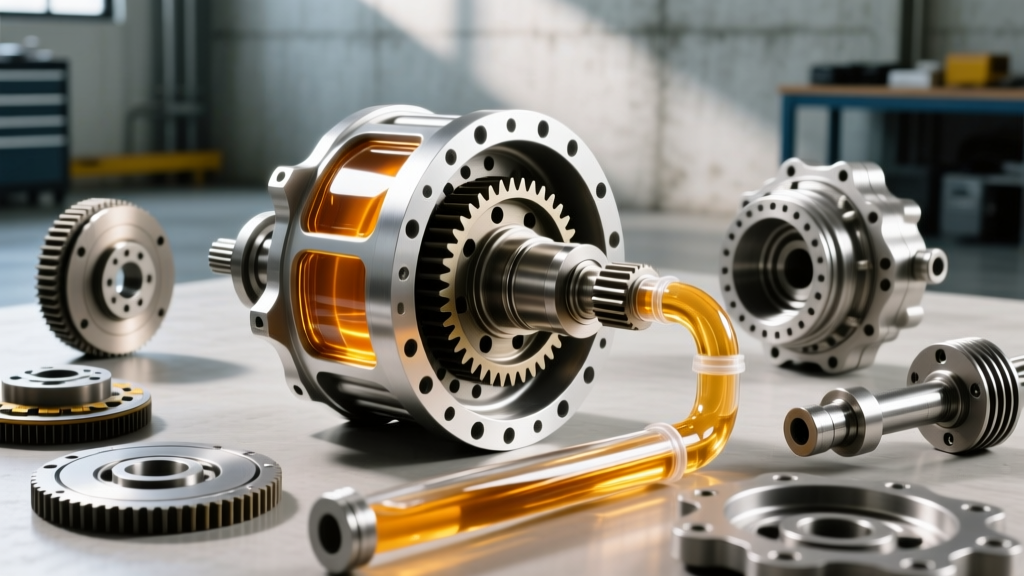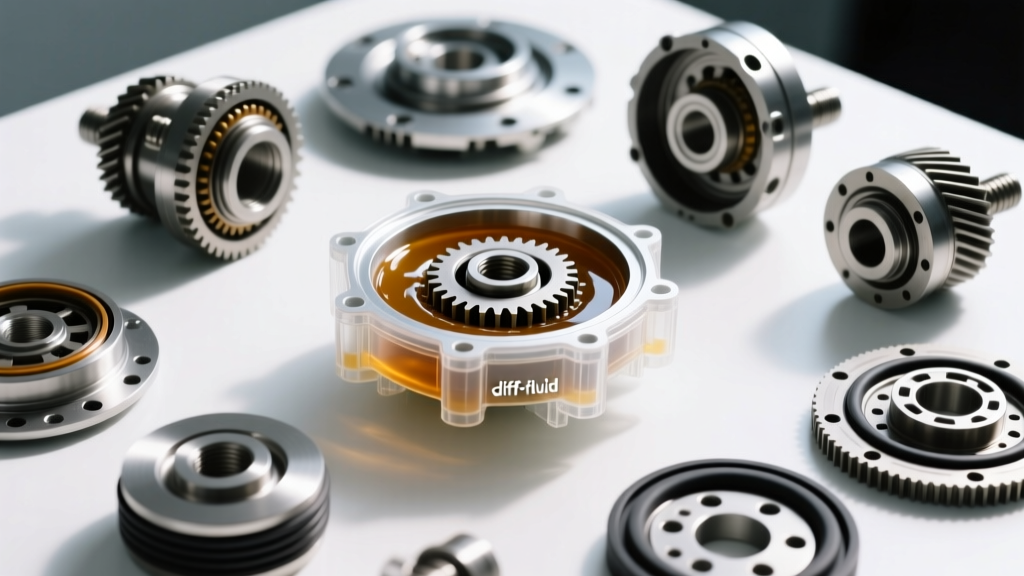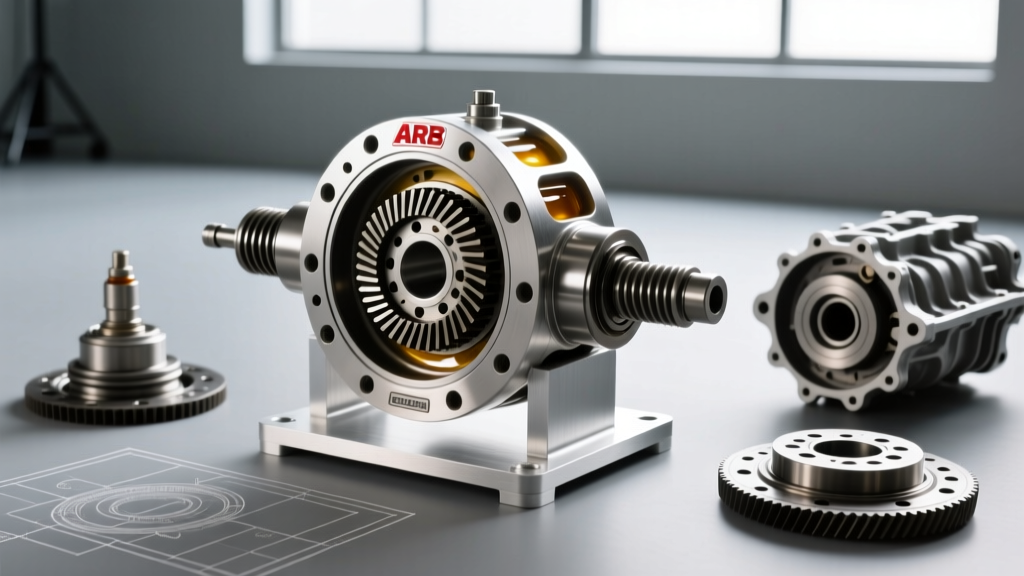
The Toyota Tacoma has long been the benchmark for mid-size off-road trucks, but even the most capable trims leave room for drivetrain improvement. Whether you are crawling through deep ruts in Moab or tackling icy forest service roads, traction is only as good as your weakest axle. For Tacoma owners, upgrading to an aftermarket locking differential is the single most transformative modification you can make. However, navigating the maze of axle spline counts, ring gear diameters, and gear oil requirements can be daunting.
The Factory Differential Bottleneck
From the factory, most Tacomas are equipped with open differentials or, in the case of the TRD Off-Road and TRD Pro models, a rear electronic locking differential (e-locker). While the factory e-locker is adequate for moderate trails, it suffers from slow engagement times, fragile internal wiring harnesses that are prone to chafing, and a reliance on the vehicle's ECU logic that sometimes prevents engagement on steep inclines. Furthermore, the front differential on almost all Tacomas remains an open unit, relying heavily on brake limited-slip differential (LSD) simulation via the truck's ABS system. This brake-based traction control overheats rotors and fades quickly on sustained, technical climbs. Upgrading to a dedicated front and rear Tacoma locking differential setup eliminates these compromises, providing 100% mechanical traction on demand.
Decoding Tacoma Axle Architecture: Ring Gears and Splines
Before selecting a locker, you must accurately identify your axle housing. Toyota transitioned rear axle designs between the 2nd and 3rd generations, which completely changes the carrier and locker part numbers you will need. The front axle remained largely consistent, utilizing a reverse-rotation 8-inch clamshell design, though 4th-generation models and heavy-duty swap enthusiasts often look to the 8.75-inch Tundra front axle for increased strength.
| Generation | Front Axle | Front Splines | Rear Axle | Rear Splines | Common Rear Locker PN |
|---|---|---|---|---|---|
| 2nd Gen (2005-2015) | 8" Clamshell | 30 | 8.4" Standard | 30 | ARB RD132 |
| 3rd Gen (2016-2023) | 8" Clamshell | 30 | 8.75" Heavy Duty | 32 | ARB RD233 / Eaton 19818-01 |
| 4th Gen (2024+) | 8" / 8.75" Swap | 30 / 32 | 8.75" / 9.5" | 32 / 34 | Yukon Grizzly (Model Dependent) |
Selectable vs. Automatic: Choosing Your Tacoma Locking Differential
When browsing catalogs from Yukon Gear & Axle or ARB, you will encounter two primary categories of lockers: selectables and automatics. Your choice should be dictated by your typical driving environment and your tolerance for on-road drivetrain quirks.
Air and Cable Selectables (ARB & Ox)
Selectable lockers operate as standard open differentials on the street, ensuring smooth cornering and zero driveline bind, but lock into a solid spool at the push of a button. The ARB Air Locker (such as part number RD233 for the 3rd-gen 8.75-inch rear) uses an onboard air compressor to actuate an internal O-ring sealed piston. Cable-actuated options like the Ox Locker use a mechanical cable, eliminating the need for air lines but requiring periodic cable tension adjustments. Selectables are the gold standard for daily-driven Tacomas that see weekend trail duty.
Electronic Selectables (Eaton E-Locker)
The Eaton E-Locker (part number 19818-01 for the 3rd-gen rear) uses an electromagnetic coil to engage a locking collar. It requires no air compressor, making installation simpler for those without onboard air. However, the Eaton unit relies on a 12V electrical signal; if a wire chafes or a relay fails on the trail, you lose your locker. Furthermore, the Eaton's internal coil takes up space, meaning it is generally only available for the rear 8.75-inch axle and not the front 8-inch clamshell.
Automatic Lockers (Detroit & Spartan)
Automatic lockers, such as the Detroit NoSPIN or the Yukon Spartan, replace the factory spider gears and lock the axles together under torque. They unlock automatically when the wheels need to rotate at different speeds (like during a turn) via a ratcheting mechanism. While they are incredibly robust and cost significantly less than selectables, they produce a noticeable 'clunk' during low-speed parking maneuvers and can induce unpredictable handling on wet or icy pavement. For a dedicated trail rig or a rock-crawler, automatics are excellent; for a daily driver, they are often a compromise too far.
The Fluid Fallacy: Gear Oil and Friction Modifiers
Because locking differentials fundamentally alter the mechanical operation of the axle, they also change your differential fluid requirements. A common and costly mistake made by novice Tacoma owners is adding limited-slip friction modifiers to a full locking differential.
Do not use friction modifiers with full lockers. Friction modifiers are designed for clutch-pack LSDs (like the factory TRD Sport LSD) to prevent shuddering during cornering. In an ARB, Eaton, or Detroit locker, there are no clutch packs. Adding modifier to a 75W-90 GL-5 gear oil in a locker application can lead to excessive foaming, reduced film strength under extreme heat, and premature degradation of the ARB O-ring seals or Eaton electromagnetic coil potting.
For a Tacoma locking differential setup, you require a high-quality, synthetic GL-5 gear oil without LSD additives. Excellent choices include:
- Red Line 75W-90 GL-5: Exceptional thermal stability for slow-speed rock crawling where axle housings act as heat sinks.
- Amsoil Severe Gear 75W-90: High shear strength, ideal for 3rd and 4th gen Tacomas towing or running 33-inch+ tires.
- Mobil 1 Synthetic 75W-90: Readily available and perfectly adequate for standard trail use (ensure it does not state 'LS' on the bottle).
Regarding capacities, the 2nd-gen 8.4-inch rear axle holds approximately 3.8 pints (1.8 liters), while the 3rd-gen 8.75-inch rear requires roughly 4.2 pints (2.0 liters). The front 8-inch clamshell takes about 1.6 pints. Always fill until the fluid reaches the bottom of the fill plug threads on a level surface.
Precision Installation: Torque Specs and Backlash
Installing a locker is not a simple bolt-in job; it requires precise measurement of gear backlash and bearing preload. If you are upgrading your Tacoma locking differential, you must reset the ring gear to the new locker carrier. According to factory service manuals and expert consensus on TacomaWorld, adhering to exact torque specifications is non-negotiable to prevent catastrophic ring gear separation under load.
- 8.4" Rear Ring Gear Bolts: Torque to 96 lb-ft (130 Nm). Use Red Loctite 263 on all threads.
- 8.75" Rear Ring Gear Bolts: Torque to 76 lb-ft (103 Nm). Use Red Loctite 263.
- Carrier Bearing Cap Bolts (8.75"): Torque to 95 lb-ft (128 Nm). Note: Carrier caps are line-bored from the factory and are not interchangeable between different axle housings. Keep them matched and oriented correctly.
- Backlash Settings: For new ring and pinion gears, target 0.005" to 0.008". If reusing your existing factory gears with a new locker carrier, aim to match the original factory backlash, typically between 0.006" and 0.010".
2026 Cost Breakdown: Parts, Fluids, and Labor
Budgeting for a dual-locker Tacoma setup requires looking beyond just the part numbers. As of 2026, here is a realistic financial breakdown for a complete front and rear selectable locker upgrade on a 3rd-generation Tacoma:
- Rear ARB Air Locker (RD233): $1,250
- Front ARB Air Locker (RD131): $1,150
- ARB Twin Motor Compressor Kit & Air Lines: $350
- Red Line 75W-90 Gear Oil & Seals: $120
- Professional Installation & Setup (Both Axles): $1,400 - $2,000
While the total investment hovers between $4,200 and $4,800, the resulting capability transforms the Tacoma from a capable light-duty truck into a class-leading off-road platform. By selecting the correct locker type for your driving style, adhering to strict gear oil protocols, and respecting installation torque specs, your Tacoma's drivetrain will deliver relentless traction for hundreds of thousands of miles.