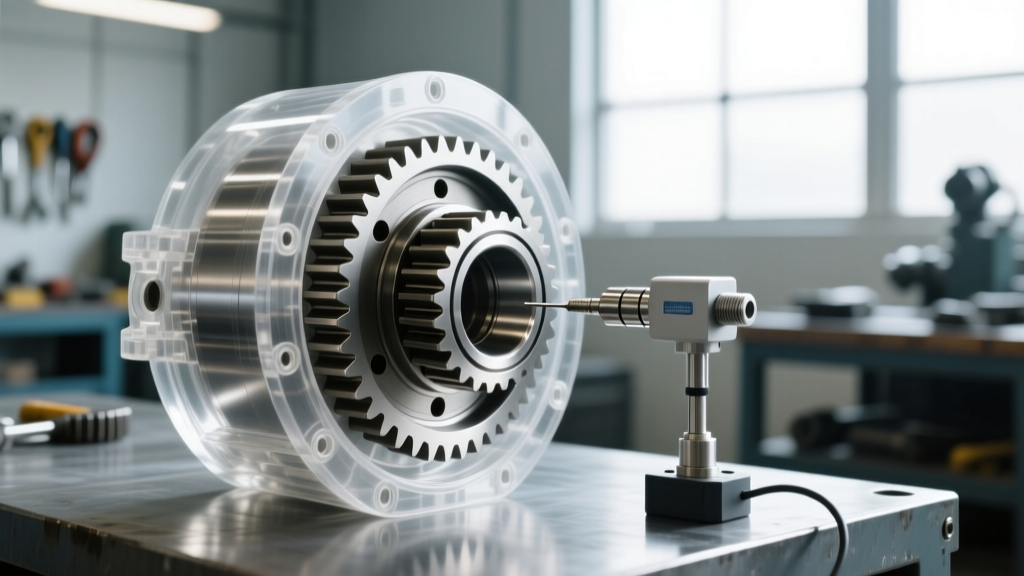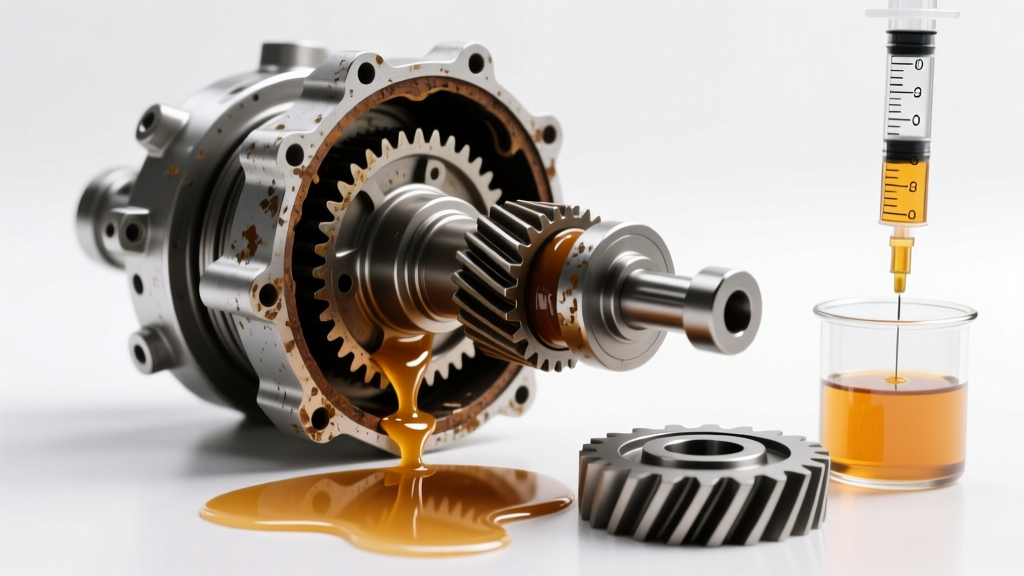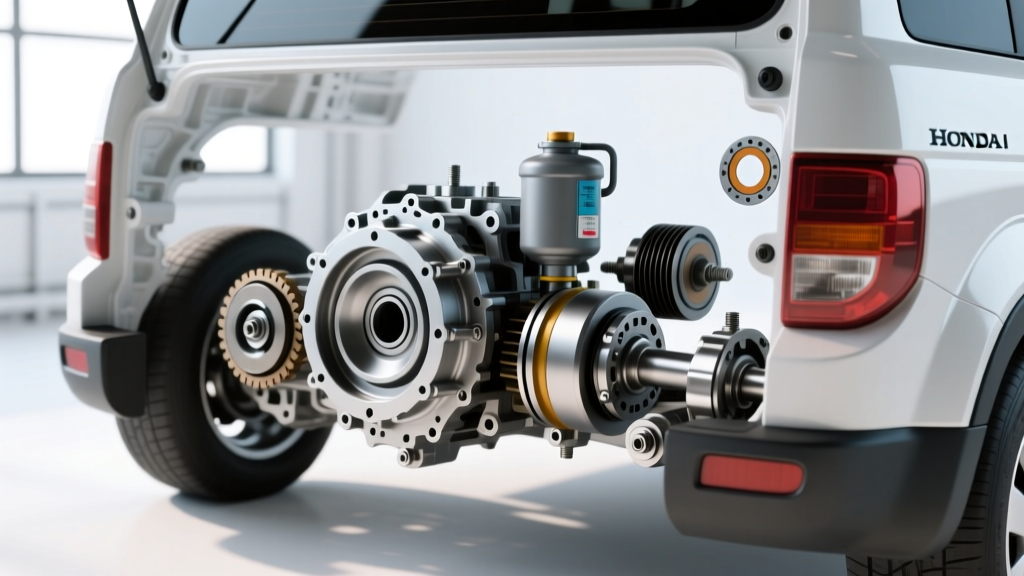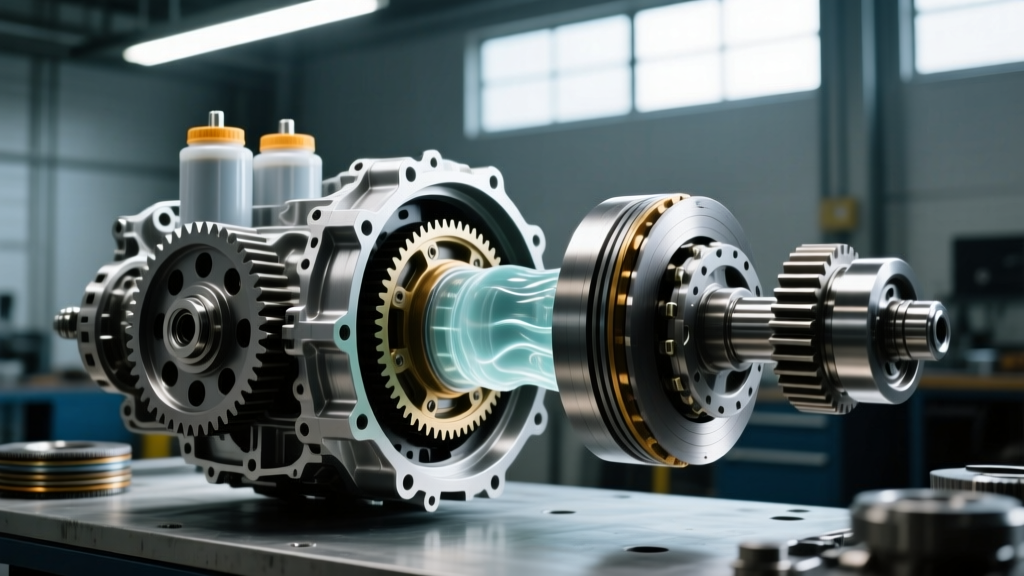
When navigating salvage yard databases, OEM parts catalogs, and specialist forums, Acura vehicles are frequently abbreviated as 'AC'. Consequently, searches for AC differential repair are overwhelmingly dominated by technicians and enthusiasts working on one of the most complex all-wheel-drive systems ever put into production: the Acura Super Handling All-Wheel Drive (SH-AWD) rear differential. Unlike traditional open or limited-slip differentials that merely split torque left-to-right, the SH-AWD rear unit is an active torque-vectoring marvel that relies on precise internal gear ratios and wet-clutch packs to manipulate vehicle yaw.
As of 2026, the SH-AWD system remains a benchmark in performance AWD, but its complexity demands exacting maintenance and highly specific repair protocols. This model-specific repair guide dives deep into the differential gear ratios, dual-chamber fluid dynamics, and step-by-step service procedures required to keep the Acura MDX, TLX, and RDX platforms performing at their peak.
The Engineering Behind SH-AWD Step-Up Gear Ratios
To understand AC differential repair on an SH-AWD unit, you must first understand the acceleration gear (commonly called the step-up gear). In a standard AWD system, the front and rear axles rotate at the same speed. However, the SH-AWD system utilizes a planetary step-up gear set located at the front of the rear differential housing. This gear set intentionally overdrives the rear axle relative to the front axle.
Generation 1 vs. Generation 2+ Ratio Differences
- First Generation (2005–2013 MDX/RL): The step-up gear ratio was calibrated to spin the rear axle 1.7% faster than the front axle. This provided a subtle rearward torque bias during cornering.
- Second Generation & Beyond (2014–2026 MDX, TLX, RDX): Acura engineers aggressively revised the step-up gear ratio to spin the rear axle up to 5.7% faster than the front. This massive speed differential allows the system to vector up to 70% of total rear torque to a single outside rear wheel, effectively 'pushing' the car through the apex and eliminating understeer.
Because the hypoid ring and pinion gear set must handle this constant speed differential and the resulting parasitic drag, the gear teeth are subjected to extreme shearing forces. According to Acura's official SH-AWD technology documentation, this overdriven state is what necessitates the twin wet-clutch packs located on either side of the rear axle shafts. These clutches modulate the 5.7% speed advantage, engaging and disengaging hundreds of times per second to match wheel speeds during straight-line cruising and lock in torque during cornering.
Dual-Chamber Fluid Dynamics and Specifications
The most common catastrophic failure in SH-AWD units stems from cross-contamination or the use of incorrect fluid. The rear differential is not a single sump; it is divided into two distinct, sealed chambers. Using standard 75W-90 gear oil in the clutch chamber will destroy the friction modifiers, leading to immediate clutch glazing and shudder.
| Chamber | Function | OEM Fluid Specification | Part Number | Capacity |
|---|---|---|---|---|
| Hypoid Gear Chamber | Lubricates ring/pinion and step-up gear bearings. | Acura SH-AWD Fluid (or API GL-5 75W-90 in older TSBs) | 08200-9007 | ~1.1 Quarts (1.0L) |
| Clutch Pack Chamber | Cools and provides friction for twin torque-vectoring clutches. | Dual Pump Fluid II (DPSF-II) | 08200-9008 | ~2.6 Quarts (2.5L) |
Pro-Tip: Always verify your specific chassis code via the Honda/Acura Automotive Parts Catalog. Some late-model RDX units have consolidated sumps, but the MDX and TLX retain the dual-chamber architecture.
Diagnosing Ratio-Related Performance Degradation
When a customer complains of drivetrain binding, rear-end shudder, or cornering noise, technicians must differentiate between mechanical gear failure and clutch pack degradation.
The Shudder vs. Whine Matrix
- Low-Speed Cornering Shudder (15-30 mph): This is rarely a gear ratio issue. It is almost exclusively caused by degraded DPSF-II fluid losing its friction-modifying properties, or worn clutch plates failing to modulate the 5.7% speed differential smoothly. Fix: Perform a 3x drain-and-fill of the DPSF-II chamber.
- Highway Deceleration Whine (60+ mph): A whining noise that changes pitch with load indicates hypoid gear wear or bearing failure in the step-up gear assembly. The constant 5.7% overdrive creates high RPMs on the pinion bearings even at highway speeds. Fix: Complete AC differential teardown or replacement.
- AWD Warning Light with DTCs (e.g., P0985, P0986): The ECU detects a discrepancy between the commanded clutch pressure and the actual wheel speed sensor data. This implies the clutches are slipping due to severe wear or a failed solenoid valve on the differential housing.
Step-by-Step AC Differential Repair & Service Protocol
For independent shops and advanced DIYers tackling an SH-AWD fluid service or clutch pack inspection, precision is mandatory. Below is the factory-aligned service protocol for the 2014–2026 MDX (JNC1 chassis) rear differential.
- Vehicle Preparation: Lift the vehicle on a level hoist. The dual-chamber design requires the vehicle to be perfectly level to ensure accurate fill volumes. Remove the under-skid plate.
- Draining the Hypoid Chamber: Remove the lower 10mm Allen hypoid drain plug. Allow the 08200-9007 fluid to drain completely. Inspect the magnetic plug. Fine metallic paste is normal; chunky ferrous shards indicate step-up gear or bearing failure requiring a full rebuild.
- Draining the Clutch Chamber: Remove the secondary DPSF-II drain plug located on the opposite side or lower sump (depending on exact year). Drain the 2.5L of 08200-9008 fluid.
- Torque Specifications for Reinstallation: Clean all plugs. Reinstall the drain plugs with new aluminum crush washers. Torque all drain and fill plugs to 33 lb-ft (45 Nm). Over-torquing will strip the cast-aluminum differential housing.
- Refilling Sequence:
- Fill the Hypoid Gear chamber with 08200-9007 until it weeps from the upper fill hole. Reinstall plug.
- Fill the Clutch Pack chamber with 08200-9008 (DPSF-II) using a pneumatic pump. Capacity is exactly 2.5L. Do not overfill, as foaming will cause clutch cavitation and AWD warning lights.
- Propeller Shaft & Mounting Torques: If the differential was dropped for a clutch pack shim measurement, ensure the propeller shaft flange bolts are torqued to 58 lb-ft (79 Nm) and the differential mounting bracket bolts are torqued to 76 lb-ft (103 Nm).
Master Technician Note: When replacing the twin wet-clutch packs, the clutch clearance must be measured with a feeler gauge and adjusted via selective shims. The target clearance is typically between 0.50mm and 0.80mm. If the clearance is too tight, the 5.7% step-up gear will constantly drag the clutches, generating enough heat to boil the DPSF-II fluid and weld the friction discs together.
Performance Upgrades and Thermal Management
For enthusiasts tracking the Acura TLX Type S or MDX Type S, the SH-AWD system's performance is limited entirely by thermal capacity. The 5.7% speed differential generates immense heat in the clutch packs during sustained high-G cornering. When the DPSF-II fluid exceeds 120°C (248°F), the ECU will automatically disable torque vectoring and revert the car to standard AWD to prevent mechanical destruction.
To combat this, the performance aftermarket has developed bolt-on differential cooling kits. These kits replace the factory rear cover with a billet aluminum plate featuring AN-8 fittings, routing the DPSF-II fluid to a front-mounted Setrab or PWR heat exchanger via a thermostatically controlled inline pump. While you cannot physically change the internal 5.7% step-up gear ratio without replacing the entire differential housing and ECU mapping, managing the thermal load of that ratio is the single most effective performance upgrade available for the SH-AWD platform.
Cost Analysis: Rebuild vs. Replace (2026 Pricing)
When internal step-up gear or bearing failure is confirmed via magnetic plug inspection or NVH (Noise, Vibration, and Harshness) analysis, you face a critical decision:
- OEM Replacement: A brand-new SH-AWD rear differential assembly (e.g., P/N 41200-TZ5-A00) from the dealer currently ranges from $4,200 to $4,800, plus 3 hours of labor.
- Specialist Rebuild: A master rebuild kit (including OEM hypoid bearings, seals, and twin clutch packs) costs between $650 and $950. However, setting the step-up gear backlash and clutch shims requires specialized Acura service tools and a master drivetrain technician, bringing total rebuilt costs to roughly $2,200 to $2,800.
- Salvage 'AC' Units: Pulling a used unit from a salvage yard (often listed under 'AC' manufacturer codes) costs $800 to $1,500, but carries the risk of inheriting worn clutch packs and degraded step-up gear bearings.
Ultimately, mastering AC differential repair requires respecting the delicate balance between the hypoid gear's mechanical advantage and the wet-clutch system's hydraulic precision. By adhering strictly to dual-chamber fluid specifications, monitoring magnetic plug debris, and understanding the physics of the 5.7% step-up ratio, technicians can ensure the SH-AWD system continues to defy the laws of traditional AWD handling well past the 100,000-mile mark.