The Evolution of Drivetrain NVH: From Gears to Hydraulics
When most drivers and even seasoned technicians hear a whine, clunk, or chatter from the rear axle, their minds immediately jump to worn ring-and-pinion gears or failing carrier bearings. While mechanical wear remains a primary culprit in traditional open and limited-slip differentials, the modern automotive landscape has fundamentally shifted. Today, vehicles equipped with active torque-vectoring differentials, electronic locking axles, and advanced AWD couplings rely heavily on integrated hydraulic systems. Consequently, differential noise diagnosis and troubleshooting now requires an understanding of fluid dynamics, pump cavitation, and filtration health. This is where monitoring systems, and specifically differential pressure indicators, become critical diagnostic tools for isolating the root cause of complex drivetrain NVH (Noise, Vibration, and Harshness).
How Differential Pressure Indicators Prevent Cavitation Noise
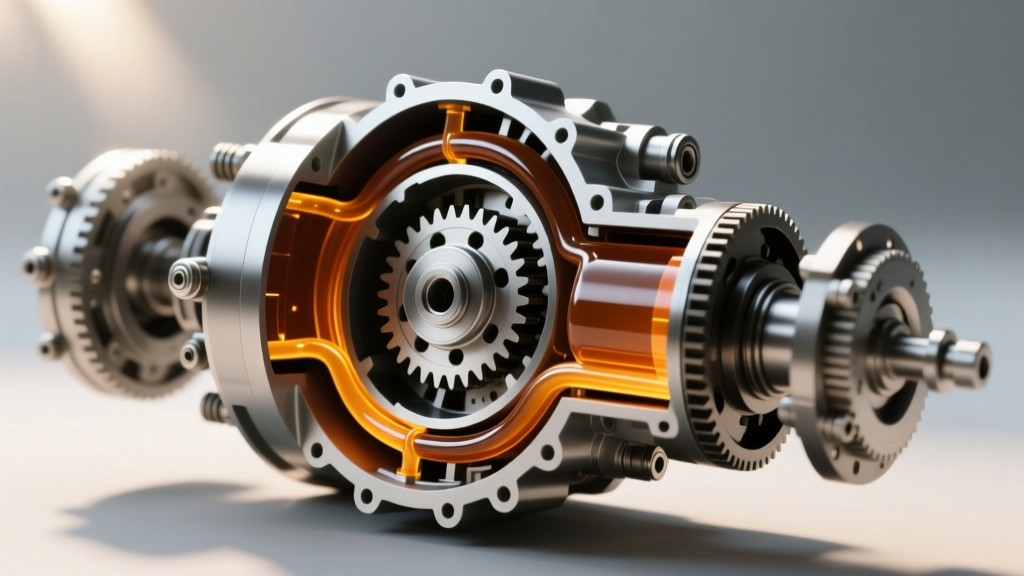
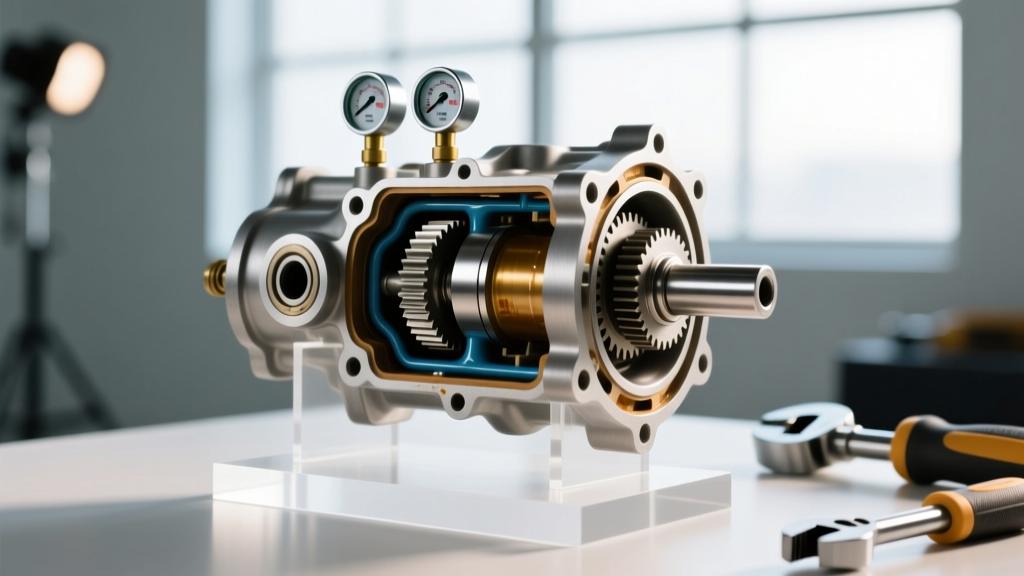
In heavy-duty commercial axles (such as Meritor and Dana Spicer models) and advanced active passenger vehicle differentials (like the ZF Torque Vectoring Differential or Haldex Gen 5/6 AWD couplings), hydraulic pumps circulate gear oil to lubricate bearings and actuate clutch packs. These systems utilize inline or sump-mounted filters to capture clutch friction material and metallic debris. As the filter loads with debris, the restriction increases. In heavy-duty and high-performance racing applications, mechanical or electronic differential pressure indicators are installed across the filter housing to measure the Delta-P (pressure drop). When the indicator trips or registers a high differential pressure, it warns of imminent fluid starvation.
The Acoustic Signature of Fluid Starvation
If a clogged filter is ignored, the hydraulic pump begins to draw in aerated fluid or operate under a severe vacuum, leading to cavitation. Cavitation produces a distinct, high-frequency whining or screaming noise that scales directly with pump RPM, not necessarily vehicle road speed. In passenger vehicles that lack a physical mechanical gauge, this 'indicator' is often a software-calculated Delta-P value derived from pump duty cycle and internal pressure sensor feedback, readable via advanced OBD2 bidirectional scan tools. If your scan tool shows the pump running at 90% duty cycle but line pressure remains below the 2.5 bar threshold, you have a restriction or internal leak causing the noise.
| Noise Profile | RPM Dependency | Probable Cause | Diagnostic Action |
|---|---|---|---|
| High-pitch whine / scream | Pump / Engine RPM | Pump cavitation due to clogged filter (High Delta-P) | Check differential pressure indicators / OBD2 pump duty cycle; replace filter. |
| Low-frequency clunk | Load reversal (Coast to Drive) | Excessive ring-and-pinion backlash or worn cross-pin | Measure backlash with dial indicator; inspect spider gears. |
| Growl / Hum | Vehicle Road Speed | Failing pinion or carrier bearings | Chassis ears or stethoscope diagnosis; check bearing preload. |
| Chatter / Shudder | Low-speed cornering | Depleted friction modifier in LSD or glazed clutches | Drain fluid, inspect for metallic glitter, refill with OEM modifier. |
Mechanical Noise Diagnosis: Ring, Pinion, and Bearings
While hydraulic issues plague active systems, traditional mechanical faults still dominate the landscape of solid-axle trucks and classic RWD platforms. Proper differential noise diagnosis requires isolating the noise based on load states: Drive, Coast, Float, and Load-Cross.
Coast vs. Drive Whine and Backlash Specs
A whine that occurs only under acceleration (Drive) typically points to a worn drive side of the ring and pinion gear teeth, or an improperly set pinion depth. Conversely, a whine on deceleration (Coast) indicates wear on the coast side of the teeth or excessive backlash. For a standard Ford 8.8-inch or Dana 60 axle, the target ring gear backlash is typically between 0.006 and 0.010 inches. If your dial indicator reads 0.015 inches or higher, the gears are slapping against one another under load reversal, creating a rhythmic clunking or knocking noise. Adjusting the carrier shims or threaded adjusters to bring backlash back to the 0.008-inch sweet spot is mandatory for silent operation.
Bearing noise presents differently. A failing pinion bearing will emit a continuous growl that changes pitch with vehicle speed but remains relatively constant whether you are on the throttle or coasting. To verify, safely elevate the vehicle on a hoist, run the drivetrain in gear, and use a mechanic's stethoscope on the pinion snout. Pinion bearing preload is critical; for example, a Dana 60 requires a rotating preload of 15 to 25 in-lbs on the pinion nut. Over-tightening will whine immediately; under-tightening will allow harmonic deflection and destroy the gear set within 5,000 miles.
Fluid Shear, Filtration, and Service Best Practices
The lifeblood of any differential is its gear oil. Modern synthetic 75W-90 and 75W-140 fluids are engineered to resist shear, but the extreme sliding friction of hypoid gears eventually breaks down the long-chain polymers. When fluid shears, its viscosity drops, leading to boundary lubrication conditions where metal-to-metal contact generates high-frequency acoustic emissions.
- Standard Open Differentials (e.g., GM 10-Bolt): Require standard 75W-90 GL-5 gear oil. No friction modifier needed. Fill torque spec: 30 Nm (22 lb-ft) for typical aluminum cover plugs.
- Clutch-Type Limited Slip (e.g., Ford 8.8 Trac-Lok): Requires 75W-140 or 75W-90 GL-5 PLUS a dedicated Friction Modifier (e.g., Motorcraft XL-3). Without the modifier, the clutches will stick-slip during low-speed turns, causing severe chatter.
- Active AWD Couplings (e.g., Haldex Gen 5): Requires specialized low-viscosity hydraulic fluid (e.g., VW G 055 175 A2). Using standard heavy gear oil here will destroy the internal pump and trigger immediate cavitation noise.
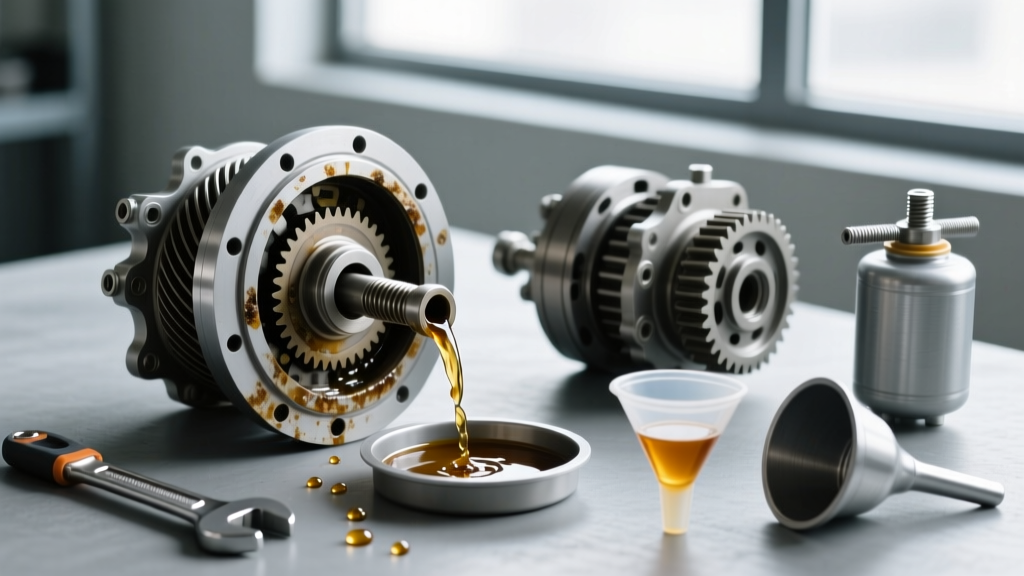
Expert Tip: Never rely solely on the 'lifetime fluid' claim found in many modern owner's manuals. In severe-duty or towing applications, hypoid gear oil should be swapped every 30,000 to 50,000 miles. When draining a limited-slip differential, inspect the fluid under a bright LED light. A gold or bronze tint indicates severe synchro or thrust washer wear, while a silver glitter confirms ring-and-pinion micro-spalling.
Summary Checklist for Drivetrain Technicians
Effective differential noise diagnosis and troubleshooting is no longer just about feeling for gear tooth wear. It requires a systematic approach that bridges mechanical geometry and hydraulic health. Before tearing down an axle for a suspected gear failure, verify the following:
- Scan the vehicle for active drivetrain codes and monitor hydraulic pump duty cycles and differential pressure indicators to rule out cavitation.
- Perform a road test to isolate the noise into Drive, Coast, or Float categories.
- Verify fluid level, specification, and condition, ensuring the correct friction modifiers are present for LSDs.
- Measure ring gear backlash and pinion bearing preload against OEM specifications before condemning the gear set.
By integrating hydraulic system awareness with traditional NVH diagnostics, technicians can accurately pinpoint faults, avoid unnecessary teardowns, and restore drivetrains to factory-quiet operation. For further reading on OEM drivetrain specifications and lubricant requirements, consult the engineering resources provided by ZF Friedrichshafen AG and the Eaton automotive differential catalog.