Cross-Segment Diagnostics: From Compact Cars to Class 8 Rigs
As we navigate the 2026 landscape of fleet maintenance and transmission diagnostics, the fundamental principles of clutch actuation remain remarkably consistent across weight classes. While a technician might initially balk at comparing a compact commuter car to an 80,000-pound Class 8 semi-truck, the core physics of hydraulic and pneumatic clutch displacement are identical. Understanding the notorious failure modes of the 2015 Ford Focus clutch actuator provides an invaluable diagnostic baseline for troubleshooting and upgrading heavy-duty commercial automated manual transmissions (AMTs). This performance and upgrade guide bridges the gap between light-duty hydraulic bypass issues and severe-duty commercial clutch problems, offering fleet managers and master technicians actionable frameworks for maximizing drivetrain uptime.
The Baseline: 2015 Ford Focus Clutch Actuator Failure Modes
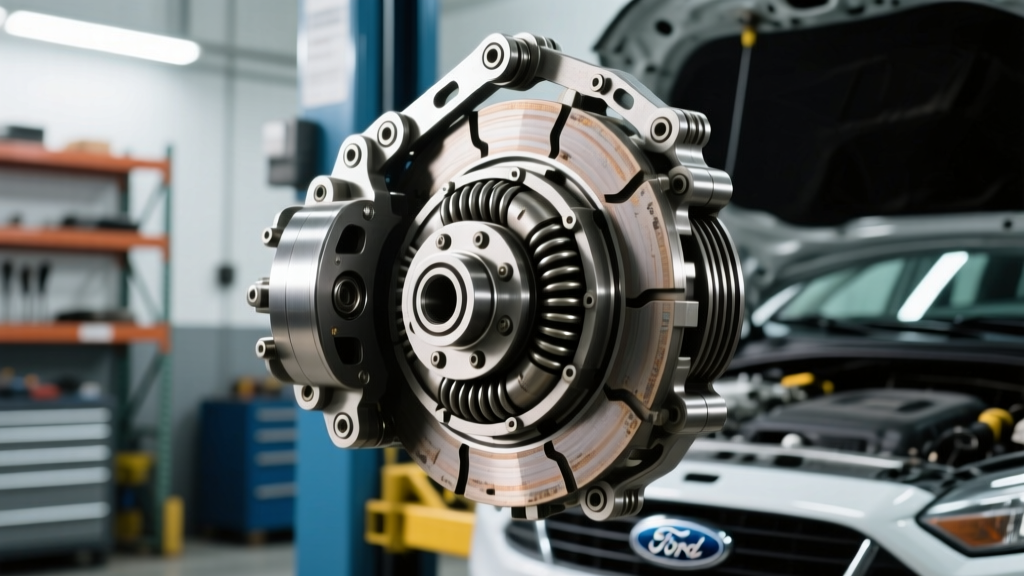
The 2015 Ford Focus, particularly those equipped with the MTX-75 manual transmission, relies on a hydraulic Concentric Slave Cylinder (CSC) or external actuator (Motorcraft part #CM640043). The primary failure mode in this light-duty application is internal seal degradation. Over time, DOT 4 LV fluid absorbs moisture, leading to bore scoring and internal hydraulic bypass. When the actuator fails to maintain line pressure (typically peaking around 1,200 to 1,500 PSI during pedal depression), the result is incomplete clutch disengagement, gear grinding, and eventual friction disc glazing. The diagnostic hallmark is a measurable discrepancy between the master cylinder's physical stroke and the slave cylinder's actual displacement.
Scaling Up: Heavy-Duty AMT Actuator Architecture
In the commercial sector, vehicles utilizing transmissions like the Eaton Fuller UltraShift PLUS or the ZF TraXon replace simple hydraulic fluid with complex pneumatic and electromechanical actuator assemblies. Instead of a driver's foot providing the hydraulic pressure, an onboard air compressor supplies 120-130 PSI shop air to a solenoid-controlled pneumatic clutch actuator. However, the exact same diagnostic logic applied to the 2015 Ford Focus clutch actuator applies here: if the commanded stroke from the Transmission Control Module (TCM) does not match the physical stroke verified by the actuator's Hall-effect position sensor, the system will default to limp mode or refuse to engage the clutch brake.
Common Clutch Problems in Heavy-Duty Commercial Vehicles
Clutch problems in heavy-duty and commercial vehicles rarely stem from the friction disc itself; rather, they originate in the actuation and release mechanisms. When diagnosing Class 7 and Class 8 trucks, technicians must look for the following severe-duty failure modes:
- Pneumatic Actuator Air Leaks: Unlike hydraulic fluid leaks that leave a visible puddle, pneumatic actuator seal failures manifest as continuous air compressor cycling. A leaking clutch actuator piston seal will cause the TCM to constantly pulse the solenoid to maintain clutch disengagement during stops, leading to premature solenoid burnout.
- Clutch Brake Squeeze Loss: Commercial AMTs utilize a 2-plate clutch brake to halt the input shaft for stationary shifting. If the actuator stroke is miscalibrated, or the throw-out bearing has excessive wear, the clutch brake will not engage during the final 3/4-inch of pedal travel (or the electronic equivalent in automated systems), resulting in harsh, grinding stationary shifts.
- Position Sensor Drift: High-heat environments near the bellhousing can cause the actuator's internal position sensors to suffer from thermal resistance drift. The TCM reads incorrect positional data, leading to erratic clutch engagement and severe driveline shudder.
Performance & Upgrade Guide for Severe-Duty Fleets
For fleets operating in vocational, heavy-haul, or stop-and-go municipal environments, standard OEM clutch actuators often fall short of the required cycle life. Upgrading the clutch actuation system is critical for reducing total cost of ownership (TCO). Below is a comparative analysis of standard versus upgraded heavy-duty actuator components, using the light-duty Focus as a baseline for cost and complexity.
| Parameter | Light-Duty (2015 Focus MTX-75) | Standard HD (Eaton AutoShift) | Severe-Duty HD Upgrade (UltraShift PLUS) |
|---|---|---|---|
| Actuation Type | Hydraulic CSC (DOT 4 LV) | Pneumatic Piston (120 PSI) | High-Cycle Pneumatic w/ Reinforced Seals |
| Max Cycle Life | ~150,000 Cycles | ~1,500,000 Cycles | 3,000,000+ Cycles |
| Clutch Brake Type | N/A (Synchro Mesh) | Standard 2-Plate Friction | Severe-Duty Kevlar-Faced Clutch Brake |
| Avg. Replacement Cost | $250 - $400 (Part Only) | $2,800 - $3,500 | $4,200 - $5,500 (Includes Calibration) |
| Fluid / Air Capacity | 1.9L (Transmission) | 120 PSI Air System | 130 PSI Air System + Auxiliary Dryer |
Upgrade 1: Severe-Duty Clutch Brake and Actuator Kits
When rebuilding a commercial drivetrain, upgrade to a severe-duty clutch brake kit (such as Eaton part #K-3490X or equivalent vocational kits). These kits feature Kevlar-faced friction surfaces that resist the extreme thermal shock of stopping a high-inertia input shaft. Pairing this with a high-cycle pneumatic actuator ensures that the physical force applied to the clutch brake remains consistent even after millions of actuation events.
Upgrade 2: Synthetic AMT Lubricants and Auxiliary Cooling
Just as the Focus requires specific low-viscosity fluid for its hydraulic system, heavy-duty AMTs demand specialized synthetic lubricants to protect the actuator's internal release bearings and transmission gears. Upgrading to Eaton PS-386 approved synthetic fluids (Capacity: 28 pints / 13.2L for the FO-16E310C-LAS) reduces internal drag, allowing the pneumatic actuator to move the shift rails and clutch fork with less resistance, thereby extending solenoid life.
Torque Specs and Installation Protocols
Improper bellhousing alignment is a leading cause of actuator side-loading and premature failure in commercial trucks. When installing an upgraded heavy-duty clutch actuator and transmission assembly, strict adherence to torque specifications is mandatory:
- SAE #1 Bellhousing to Engine Block (5/8"-11 UNC): 155 - 175 lb-ft (Always verify with specific OEM engine data, e.g., Cummins X15).
- Clutch Housing to Transmission Case: 75 - 85 lb-ft.
- Clutch Actuator Mounting Bolts: 35 - 45 lb-ft (Apply medium-strength threadlocker to prevent vibration-induced backing out).
- Concentric Release Bearing Retainer: 18 - 22 lb-ft.
Advanced Diagnostics and Calibration Framework
When diagnosing clutch problems in heavy-duty and commercial vehicles, physical inspection must be paired with electronic verification. The methodology mirrors the stroke-verification tests used on the 2015 Ford Focus clutch actuator, but utilizes proprietary commercial software.
'The most common mistake technicians make with commercial AMTs is replacing the clutch disc without recalibrating the pneumatic actuator's wear stroke. The TCM must be forced to relearn the physical bite point, or the new clutch will slip under load within 10,000 miles.' — Fleet Drivetrain Engineering Standards, 2025
Step-by-Step Actuator Calibration:
- Connect the diagnostic laptop running Eaton ServiceRanger or ZF ProTraX software.
- Verify shop air supply is connected and maintaining a minimum of 120 PSI at the transmission air filter regulator.
- Initiate the 'Clutch Actuator Stroke Test'. The software will command the solenoid to fully extend and retract the actuator.
- Monitor the Hall-effect sensor feedback. The commanded position and actual position must be within 0.5mm of each other throughout the entire sweep. Any deviation indicates internal pneumatic bypass or mechanical binding in the clutch fork.
- Perform the 'Clutch Brake Squeeze Calibration' to establish the exact electronic threshold where the TCM engages the clutch brake for stationary gear engagement.
Conclusion: Proactive Fleet Management
Whether you are tracking the hydraulic seal integrity of a 2015 Ford Focus clutch actuator or managing the pneumatic solenoids of a 500-truck Class 8 fleet, the diagnostic philosophy remains identical: measure the commanded input against the physical output. By upgrading to severe-duty clutch brakes, utilizing high-cycle actuators, and adhering to strict SAE bellhousing torque specifications, fleet operators can virtually eliminate unplanned downtime related to commercial clutch actuation failures. In 2026, data-driven calibration and severe-duty component upgrades are no longer optional; they are the baseline for profitable heavy-haul operations.