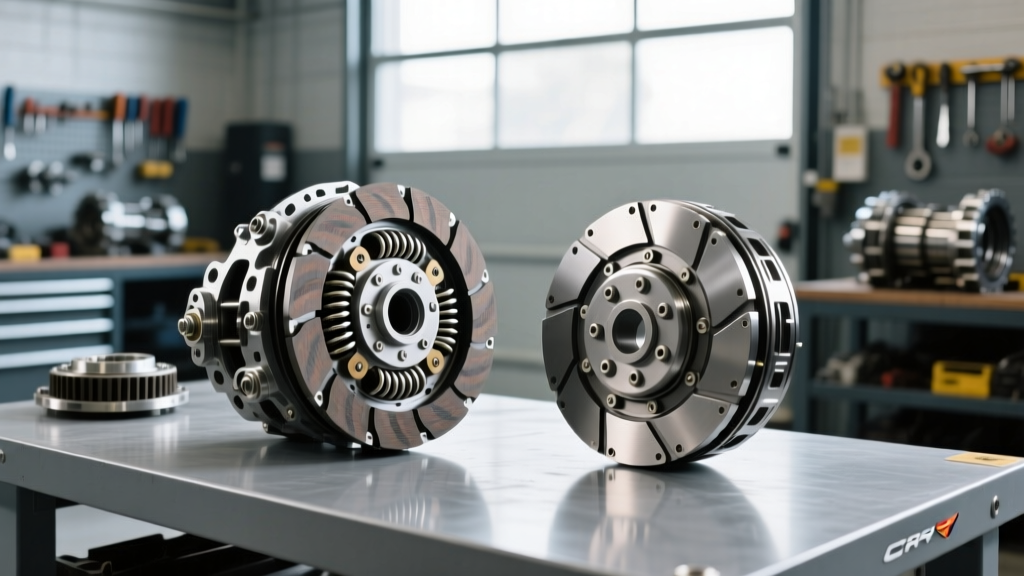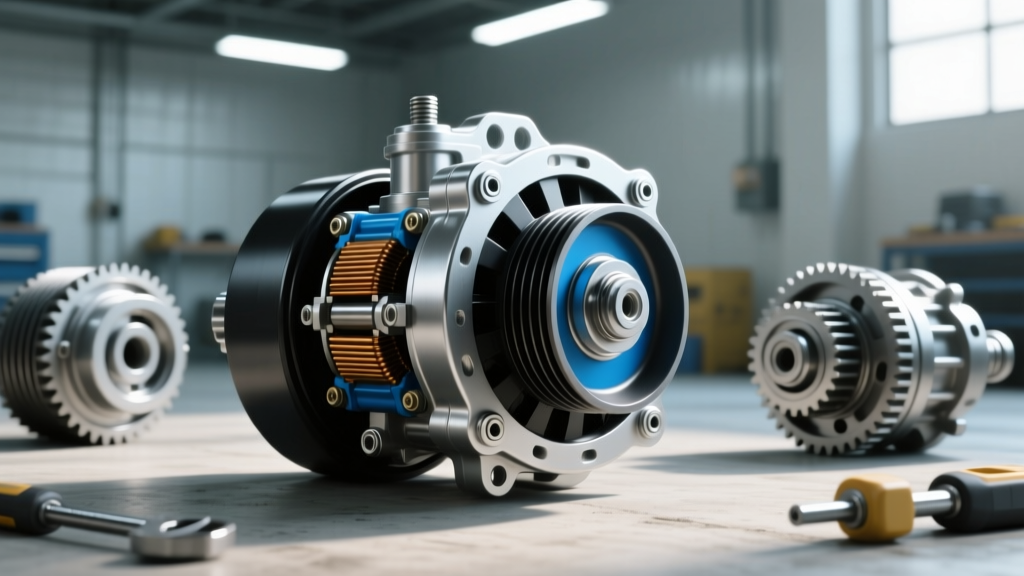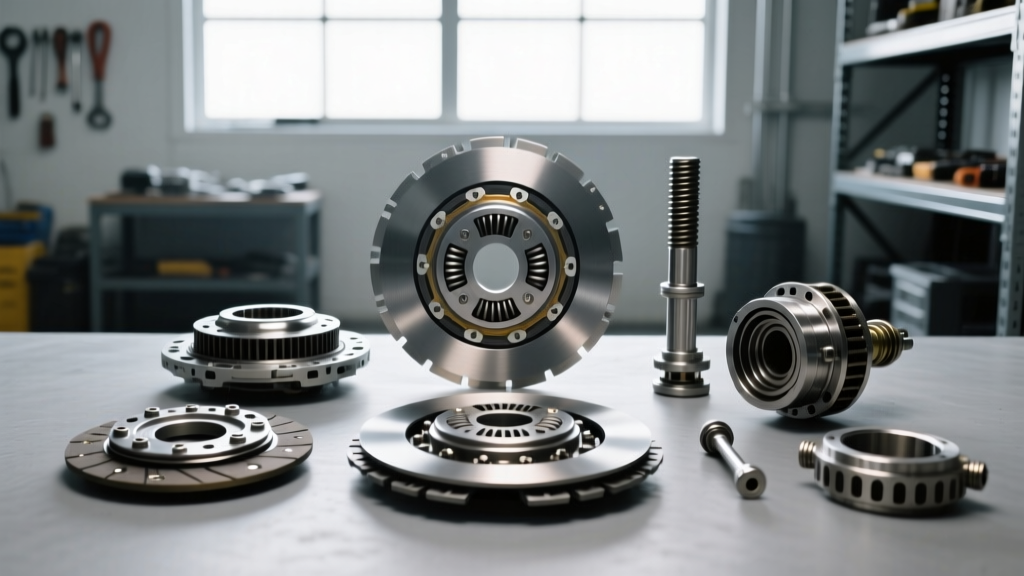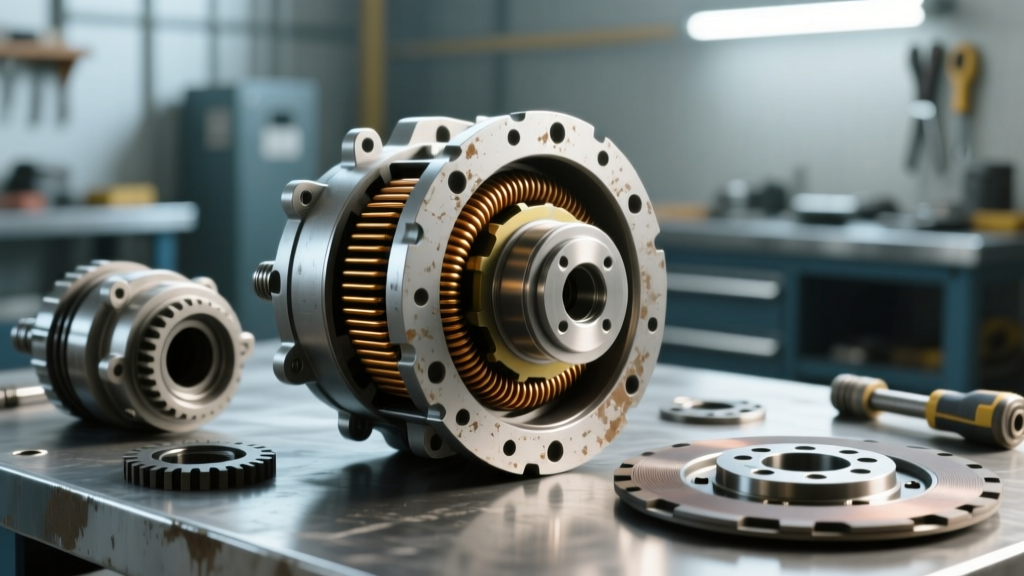
The Intersection of Accessory Drives and High-Performance Builds
When enthusiasts and professional tuners focus on drivetrain performance, the spotlight usually falls on the transmission. Whether you are building a reinforced 4L60E to handle 800 horsepower, upgrading a 6L80 for heavy-duty towing, or tuning a ZF 8HP for track duty, the accessory drive system is often an afterthought. However, as under-hood thermal management becomes increasingly critical in 2026's high-output platforms, the electromagnetic clutch on your air conditioning system faces extreme stress. Radiant heat from upgraded turbochargers, exhaust manifolds, and high-stall torque converters can easily push under-hood ambient temperatures past 220°F (104°C), cooking standard components and necessitating an a c compressor clutch replacement.
Unlike a manual transmission clutch that relies on mechanical clamping force, an AC compressor clutch is an electromagnetic device. It must bridge a physical air gap using magnetic flux to engage the compressor's internal swashplate or scroll mechanism. When this system begins to fail, it doesn't just rob you of cabin cooling; a slipping or seized AC clutch can destroy your serpentine belt, damage the harmonic balancer, or cause catastrophic engine bay fires. Below, we detail the exact diagnostic signs of failure and explore heavy-duty performance upgrades for your next replacement.
5 Critical Signs You Need an A C Compressor Clutch Replacement
1. The Air Gap Has Exceeded 0.035 Inches
The most common cause of AC clutch failure in high-performance applications is thermal expansion altering the critical air gap. The magnetic pull of the electromagnetic coil follows an inverse-square law regarding distance. Factory specifications for most Denso, Sanden, and GM Harrison compressors dictate an air gap between 0.020 and 0.030 inches (0.5mm to 0.75mm).
As the friction plate wears and the coil heats up, this gap widens. Once the gap exceeds 0.035 inches, the magnetic field is too weak to pull the clutch plate across the gap, especially when the system is under high head pressure. If you measure your gap with a feeler gauge and it reads 0.040 inches or higher, an a c compressor clutch replacement or immediate re-shimming is mandatory.
2. Electromagnetic Coil Resistance Drops or Spikes
A healthy AC clutch coil should read between 3.0 and 5.0 ohms at 68°F (20°C). High under-hood temperatures can melt the internal epoxy potting of standard OEM coils, leading to internal shorts or open circuits. Using a digital multimeter set to the 200-ohm scale, probe the clutch connector. If your reading is below 2.5 ohms, the coil is shorting internally and will blow your AC compressor fuse or fry the PCM driver circuit. If the reading is infinite (OL), the copper windings have broken. In either scenario, the coil is compromised, and a full clutch assembly replacement is required.
3. High-RPM Slippage Under High-Load Conditions
Performance vehicles and heavy-duty trucks operate at higher RPMs and generate higher AC system head pressures. At 4,500+ RPM, the centrifugal force acting on the clutch plate, combined with the rotational resistance of a high-pressure compressor (like a Sanden SD7V16), can overcome the magnetic holding force of a stock coil. If you hear a cyclic 'chirp-chirp-chirp' from the accessory drive under wide-open throttle or while towing up a grade, the clutch is micro-slipping. This glazes the friction surfaces and accelerates wear.
4. Glazed Friction Surfaces and Squealing
Inspect the mating surfaces of the pulley and the clutch plate. They should have a dull, matte finish. If they appear shiny, glass-like, or have blue heat-staining, the friction material has glazed due to chronic slippage. Glazing drastically reduces the coefficient of friction, meaning even if the magnet pulls the plate tight, it will slip under load. No amount of cleaning will restore a glazed high-carbon steel friction surface; replacement is the only viable performance solution.
5. Pulley Bearing Play and Parasitic Drag
The AC clutch pulley rides on a double-row angular contact bearing. If the bearing seal fails due to heat degradation, moisture enters and destroys the races. Grab the pulley (with the engine off) and attempt to rock it laterally. Any detectable play, or a rough 'grinding' sensation when spun by hand, indicates bearing failure. If left unchecked, the bearing will seize, snapping the serpentine belt and potentially causing the pulley to separate at high RPM—a lethal hazard on the track or highway.
Performance Upgrades: Beyond the OEM Replacement
When performing an a c compressor clutch replacement on a modified vehicle, simply installing another stock OEM unit is a band-aid fix. The aftermarket offers heavy-duty solutions designed for the extreme thermal and mechanical loads of performance applications.
| Feature | Standard OEM Clutch | Heavy-Duty / Performance Upgrade |
|---|---|---|
| Coil Insulation | Class F (155°C / 311°F) | Class H (180°C) or Class C (220°C) |
| Magnetic Holding Force | Standard (approx. 250-300 Nm) | High-Flux (350+ Nm for high head-pressure) |
| Friction Surface | Standard Machined Steel | Ceramic-Coated or High-Carbon Alloy |
| Bearing Type | Standard Sealed Radial | High-Temp Double-Row Angular Contact |
| Estimated Cost (2026) | $65 - $120 | $140 - $280 |
According to engineering data from Sanden Global, upgrading to a high-flux coil is essential for vehicles running modified AC systems with higher refrigerant charge pressures or those utilizing alternative, high-efficiency compressors that demand more rotational torque to engage.
Step-by-Step Diagnostic & Replacement Protocol
Replacing the clutch assembly requires precision. Improper installation will result in immediate failure or compressor destruction. Follow this protocol:
- Step 1: Safe Discharge & Belt Removal. While the clutch can technically be replaced without evacuating the refrigerant system, removing the serpentine belt is mandatory. Use a proper belt tensioner tool to relieve pressure.
- Step 2: Extract the Center Hub. Use a dedicated clutch puller (e.g., OTC 4521 or Lisle 52650). Never pry the clutch plate off with a screwdriver, as you will bend the friction plate and ruin the air gap.
- Step 3: Measure and Adjust Shims. Behind the clutch plate are precision shims. When installing the new clutch, you must replicate or adjust the air gap. Target 0.025 inches. Use brass or stainless steel feeler gauges inserted through the slots in the clutch plate to verify the gap at three equidistant points.
- Step 4: Snap Ring Replacement. Remove the external snap ring holding the pulley/bearing assembly. Always use a new, heavy-duty snap ring upon reassembly to prevent the pulley from walking off the compressor nose under high-RPM vibration.
- Step 5: Torque Specifications. The center hub bolt is typically an M8x1.25 or M10x1.25 thread. Torque this bolt to exactly 11 to 15 lb-ft (15 to 20 Nm). Over-torquing will strip the soft aluminum threads of the compressor shaft or bind the internal swashplate, causing immediate mechanical failure.
Expert Tip: Before installing the new clutch coil, perform a voltage drop test at the harness connector. With the engine running and AC commanded ON, you must see a minimum of 13.5 volts at the plug. If voltage is lower, check the AC relay, ground wires, and PCM driver circuit. A weak voltage supply will cause even a brand-new performance clutch to slip and burn out within weeks.
The Track Car Alternative: AC Delete vs. Upgraded Clutch
For dedicated track cars or drag racing platforms where cabin cooling is irrelevant, the added rotational mass and parasitic drag of the AC compressor are detrimental to performance. Instead of performing an a c compressor clutch replacement, many performance builders opt for an AC Delete Kit.
An AC delete kit replaces the compressor with a lightweight CNC-machined aluminum idler pulley, freeing up anywhere from 3 to 8 horsepower at the crank and reducing accessory drive weight by up to 12 lbs. For popular platforms like the GM LS/LT V8s, this requires routing a shorter serpentine belt (such as the Gates K060740 or equivalent K060830 depending on the specific tensioner bracket). However, for dual-purpose street/track cars that endure heavy traffic or summer track days, retaining the AC with a high-temp, heavy-duty clutch upgrade remains the superior choice for engine bay heat management and driver endurance.
Final Thoughts on Accessory Drive Reliability
As automotive platforms continue to evolve, the thermal boundaries of the engine bay are constantly being pushed. Recognizing the signs of a failing AC clutch—widening air gaps, abnormal coil resistance, and high-RPM slippage—allows you to address the issue before it strands you or damages critical front-end accessories. By selecting heavy-duty, high-temperature clutch components and adhering to strict torque and air-gap specifications, you ensure that your accessory drive system is as reliable and performance-oriented as the transmission and engine it supports. For more detailed component specifications and OEM cross-references, consult the Standard Motor Products (SMP) Four Seasons Division technical catalog.