The Post-Repair Dilemma: Paying Twice for Cold Air
You just left the repair shop after dropping $900 to $1,400 on a full AC compressor replacement. You start the engine, turn the dial to MAX A/C, and wait for that familiar, satisfying mechanical click. Instead, you get nothing but warm air. Experiencing a car air conditioner compressor clutch not engaging immediately after a major repair is one of the most frustrating scenarios in automotive HVAC diagnostics. While the AC compressor clutch is an electromagnetic device rather than a traditional drivetrain friction clutch, it operates under strict mechanical tolerances and complex Powertrain Control Module (PCM) logic that frequently get botched during hasty replacements.
When this secondary failure occurs, you are suddenly faced with a new round of diagnostic fees, potential warranty disputes, and secondary parts costs. In this 2026 cost analysis and technical breakdown, we will dissect exactly why your newly installed AC clutch refuses to engage, the precise electrical and mechanical specifications required to fix it, and the out-of-pocket costs you can expect if the original shop refuses to honor their warranty.
Diagnostic Cost Breakdown: The Price of the 'Second Look'
If your vehicle was repaired at a dealership or a reputable independent shop, a post-repair failure should technically fall under their parts and labor warranty (typically 12 months/12,000 miles). However, if you attempt to diagnose it yourself, take it to a different HVAC specialist, or if the original shop claims 'user error' or an unrelated electrical fault, you will be hit with a secondary diagnostic fee.
In 2026, shop labor rates have continued their upward trajectory due to the increasing complexity of vehicle multiplex wiring systems and the rising cost of EPA Section 609 compliant refrigerant handling equipment. Below is the current market rate matrix for secondary AC clutch diagnostics.
| Service Type | Dealership (2026 Rates) | Independent HVAC Specialist | General Independent Mechanic |
|---|---|---|---|
| Initial Diagnostic Fee (1 Hour) | $185 - $240 | $145 - $190 | $120 - $160 |
| Manifold Gauge Hook-up & Evac/Recharge | $160 - $210 | $130 - $175 | $110 - $150 |
| Electrical Voltage Drop Testing | $190 - $250 | $150 - $180 | $130 - $160 |
| Air Gap Shimming / Clutch Hub R&R | $220 - $350 | $160 - $250 | $140 - $200 |
Note: If the shop that performed the original compressor replacement is still in business, they are legally and ethically obligated to verify their work. The air gap and refrigerant charge are intrinsic to the compressor installation. Do not pay a secondary diagnostic fee without first invoking the warranty.
Top 3 Technical Reasons the Clutch Won't Engage Post-Repair
When a car air conditioner compressor clutch not engaging is reported immediately following a swap, the root cause is almost never a 'bad new compressor.' It is almost always an installation error regarding mechanical tolerances, refrigerant pressures, or PCM logic inhibition.
1. Incorrect Electromagnetic Air Gap (The Most Common Culprit)
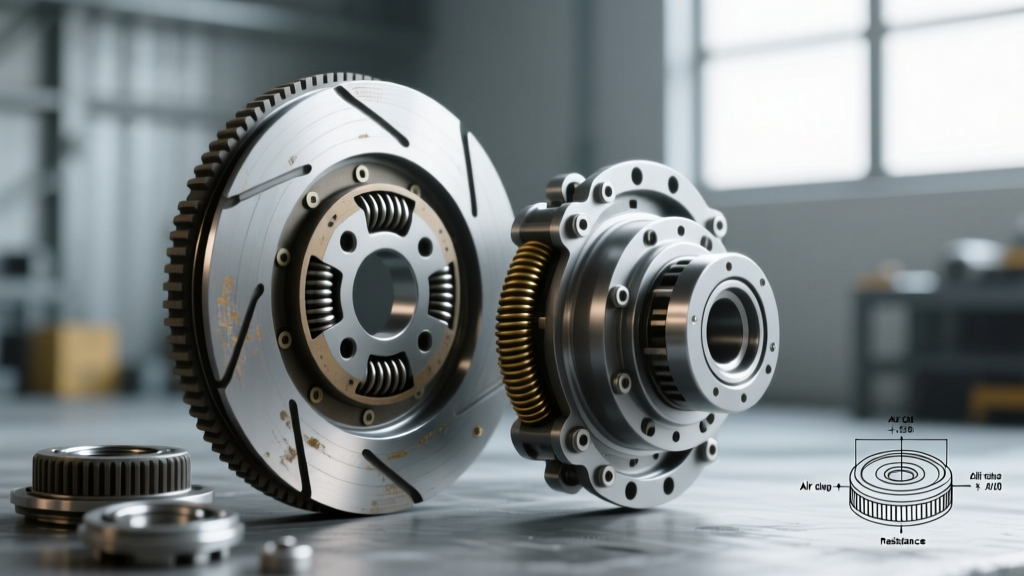
The AC compressor clutch relies on an electromagnetic coil to pull the friction hub against the compressor pulley. For this magnetic field to overcome the physical distance, the air gap between the hub and the rotor must be meticulously set. According to the Mobile Air Climate Systems Association (MACS), the standard air gap for most Denso, Sanden, and Harrison compressors is between 0.020' and 0.030' (0.5mm - 0.75mm).
The Post-Repair Failure Mode: Many budget-tier remanufactured compressors (from brands like UAC or GPD) ship with inconsistent clutch hub depths. If the mechanic bolts the unit on without measuring the gap with a feeler gauge, the gap may sit at 0.050' or wider. At this distance, the magnetic reluctance is too high. The coil will energize, but it physically cannot pull the hub in.
The Fix: Remove the center hub bolt (usually a 10mm or 6mm hex), add or remove machined steel shims behind the hub, and re-torque to 11-15 Nm (8-11 lb-ft).
Cost Impact: A shim kit costs $12-$25. If a shop has to do this, it adds 0.5 to 1.0 hours of labor.
2. Non-Condensable Air and the High-Pressure Transducer
Modern vehicles do not use simple binary low-pressure switches; they use 5-volt reference pressure transducers. If the mechanic who replaced your compressor failed to pull a deep vacuum (down to 500 microns for at least 30 minutes) using a proper recovery machine, non-condensable air remains in the condenser.
The Post-Repair Failure Mode: When the system is charged, this trapped air causes the high-side pressure to spike artificially. The pressure transducer reads this spike and signals the PCM that the system is in a dangerous over-pressure state (e.g., reading 450 PSI when it should be 220 PSI). The PCM immediately opens the compressor clutch relay to prevent a catastrophic hose blowout.
The Fix: The system must be recovered, vacuumed with a micrometer gauge to verify no leaks, and recharged with exact OEM-weight R-134a or R-1234yf.
Cost Impact: Expect to pay $150-$250 for a proper Evac and Recharge, plus the cost of the refrigerant (R-1234yf can cost $100+ per pound in 2026).
3. PCM Logic Inhibition and Drivetrain Overlap
On modern vehicles, the PCM manages the AC compressor clutch relay based on a complex matrix of engine and transmission data. Interestingly, the PCM will intentionally disable the AC clutch to reduce parasitic engine load during wide-open throttle (WOT) events, or if it detects a critical transmission fluid temperature (TFT) anomaly.
The Post-Repair Failure Mode: If your AC compressor was replaced concurrently with a transmission service, or if the engine wiring harness was disturbed, a poor PCM ground or a faulty Transmission Fluid Temperature (TFT) sensor can trick the PCM into 'load-shedding' mode. The PCM will keep the AC clutch relay open to protect the drivetrain, even if the HVAC system is perfectly fine. For instance, on GM vehicles equipped with the 8L90 or Ford vehicles with the 10R80, a CAN-bus communication fault triggered during a harness reconnection will inhibit the AC clutch.
The Fix: Scan the PCM for U-codes (network communication) or P-codes related to TFT sensors. Verify the PCM ground straps near the transmission bellhousing.
Cost Impact: Advanced bidirectional scanning and network diagnostics typically cost $180-$250.
Parts Pricing Matrix: What You Will Actually Pay
If the diagnosis confirms that the new compressor's clutch coil is genuinely defective (a Dead-On-Arrival part), or the clutch hub is warped, you will need replacement components. Below is the 2026 pricing breakdown for AC clutch components. We highly recommend consulting resources like Denso Auto Parts for OEM-equivalent specifications rather than relying on ultra-cheap white-box alternatives.
| Component | OEM / Premium Aftermarket (Denso, Four Seasons) | Economy Aftermarket (UAC, GPD) | Warranty Coverage? |
|---|---|---|---|
| Complete Clutch Coil Assembly | $140 - $280 | $65 - $110 | Yes (If part of compressor warranty) |
| Clutch Hub & Pulley Bearing Kit | $90 - $160 | $45 - $85 | Yes |
| AC Compressor Clutch Relay | $25 - $60 | $12 - $25 | No (Considered wear/electrical) |
| Machined Air Gap Shim Kit | $15 - $30 | $10 - $20 | N/A (Installation hardware) |
| Clutch Coil Wiring Pigtail | $35 - $75 | $18 - $35 | No (Electrical repair) |
Step-by-Step Technical Verification (Save Yourself the Return Trip)
Before authorizing any secondary repair costs, demand that the technician perform these three verifications in front of you, or perform them yourself if you have the tools:
- Step 1: The Feeler Gauge Test. With the engine off, slide a standard automotive feeler gauge between the clutch friction surface and the pulley rotor. If a 0.030' gauge slides through with zero drag, but a 0.040' gauge also slides through, your air gap is too wide. The clutch will never engage when the coil heats up and resistance increases.
- Step 2: The Multimeter Coil Test. Disconnect the clutch wiring harness. Set a Fluke multimeter to Ohms (Ω). Probe the two terminals on the compressor clutch coil. A healthy 12V electromagnetic coil should read between 3.5 and 4.5 ohms. If it reads 'OL' (Open Loop), the internal winding is broken. If it reads near 0.0 ohms, it is shorted and will blow your AC fuse immediately upon engagement.
- Step 3: The Voltage Drop Test. Back-probe the clutch harness connector while the engine is running and AC is set to MAX. You must see a minimum of 11.8 volts under load. If you only see 9V, you have a severe voltage drop caused by a corroded PCM relay socket, a failing alternator, or a bad ground strap, not a bad compressor.
Navigating the Warranty Dispute
If your car air conditioner compressor clutch not engaging is the result of an improper air gap or a botched vacuum procedure, the original repairing shop is 100% liable for the secondary labor costs under standard automotive repair warranty laws. The EPA's Section 609 guidelines strictly mandate proper recovery and vacuuming procedures; a shop cannot legally blame 'a bad batch of refrigerant' for a high-pressure switch inhibition if they failed to verify the vacuum with a micron gauge.
However, if the failure is traced to a burnt clutch coil pigtail, a blown PCM relay, or a transmission-induced CAN-bus fault, you will likely be responsible for the secondary diagnostic and electrical repair costs. By understanding the exact mechanical tolerances (0.020' air gap) and electrical parameters (3.5 - 4.5 ohms) outlined in this guide, you can confidently challenge inflated diagnostic quotes and ensure your vehicle's HVAC and drivetrain systems operate in perfect harmony.