Defining the Architecture: What Does 6 Speed Automatic Transmission Mean?
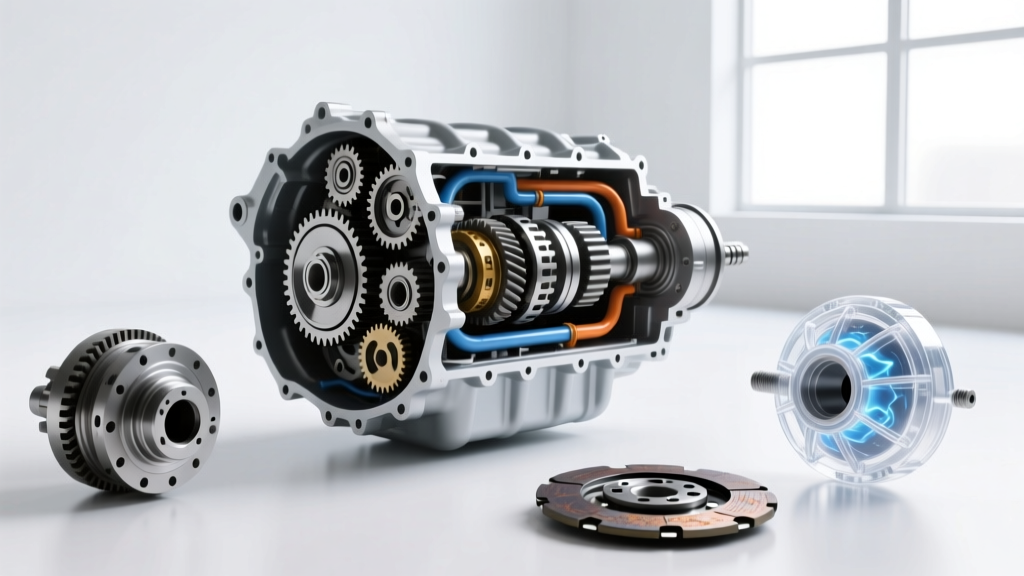
When a driver, technician, or enthusiast asks, what does 6 speed automatic transmission mean, they are inquiring about a drivetrain architecture that utilizes six distinct forward gear ratios to transfer engine torque to the wheels. Unlike older 3-speed or 4-speed automatics that relied heavily on Simpson or Ravigneaux compound planetary gearsets, the modern 6-speed automatic represents a masterclass in packaging efficiency and computational shift logic. It means the transmission can offer a steep first gear for heavy towing and acceleration, alongside a deeply overdriven sixth gear (often a 0.67:1 or 0.74:1 ratio) to reduce engine RPMs at highway speeds, thereby optimizing fuel economy and minimizing NVH (Noise, Vibration, and Harshness).
From an engineering standpoint, a 6-speed automatic achieves these ratios without requiring the massive physical footprint of older multi-clutch designs. This is primarily due to the adoption of the Lepelletier gearset, a configuration that pairs a simple planetary gearset with a compound Ravigneaux planetary gearset. This breakthrough allowed engineers to extract six forward speeds and one reverse from just five shift elements (clutches and brakes), fundamentally changing the trajectory of automatic transmission evolution.
The Evolutionary Leap: Packaging 6 Ratios into a 4-Speed Footprint
The transition from 4-speed to 6-speed automatics in the mid-2000s was not merely an exercise in adding gears; it was a necessary evolution driven by increasingly stringent global emissions standards and consumer demand for better towing capabilities. The ZF 6HP26, introduced in the early 2000s for BMW and Jaguar applications, was the pioneer. General Motors followed with the robust 6L80 (RPO MYC) for their truck and SUV lineup, while Ford utilized the ZF-derived 6R80 for the F-150 and Mustang platforms.
Clutch-to-Clutch Shifting and the Death of the One-Way Clutch
One of the most critical technological milestones in the 6-speed evolution was the elimination of one-way sprag clutches in favor of clutch-to-clutch shifting. In older transmissions, sprags were used to hold components stationary during specific gear changes. However, they cannot be modulated, leading to harsh shift overlaps. The 6-speed architecture relies entirely on electronically modulated friction clutches. The Transmission Control Module (TCM) precisely times the apply and release of opposing clutches down to the millisecond. While this resulted in smoother, faster shifts and a more compact case, it also meant that solenoid health and valve body bore integrity became paramount to transmission longevity.
2026 Cost Analysis: The 6-Speed Rebuild and Replacement Economy
As we navigate the automotive landscape in 2026, millions of vehicles equipped with GM 6L80, Ford 6R80, and ZF 6HP26 transmissions are crossing the 150,000 to 200,000-mile threshold. This has created a massive aftermarket ecosystem dedicated to rebuilding and remanufacturing these specific units. Because the 6-speed is no longer the 'cutting edge' (having been superseded by 8-speed and 10-speed units), the tooling, diagnostic software, and aftermarket support for 6-speeds are highly mature, making them incredibly cost-effective to overhaul compared to newer, proprietary 10-speed models.
Comparative Cost & Specification Matrix
| Transmission Model | Primary Applications | Dry Fill Capacity | Avg. Reman Cost (2026) | Master Rebuild Kit Cost | Common Failure Point |
|---|---|---|---|---|---|
| GM 6L80 (MYC) | Silverado, Tahoe, Camaro SS | 11.2 Quarts | $2,400 - $3,100 | $380 - $550 | Valve Body Bore Wear, 3-5-R Clutch Wave Plate |
| Ford 6R80 | F-150 (2009-2017), Mustang | 13.1 Quarts | $2,200 - $2,800 | $350 - $480 | Molded Lead Frame, Bushing Wear |
| ZF 6HP26 / 6HP28 | BMW E60/E70, Jaguar XK/XF | 9.5 - 10.5 Liters | $3,200 - $4,500 | $500 - $750 | Mechatronic Sleeve Leaks, Bridge Seals |
Note: Remanufactured costs reflect unit pricing plus standard core charges and do not include labor, which typically ranges from $800 to $1,400 depending on regional shop rates and 4WD/AWD complexity.
Deep Dive: GM 6L80 Rebuild Economics and Technical Specs
The GM 6L80 is arguably the most prevalent 6-speed automatic on North American roads today. When a 6L80 experiences slipping in 3rd, 5th, or Reverse, it is usually indicative of a failed 3-5-R clutch assembly or severe wear in the valve body pressure regulator bore. According to technical bulletins from Sonnax, the cast aluminum valve body in the 6L80 is prone to wear at the solenoid regulator valves, leading to cross-leaking and delayed engagements.
Rather than replacing the entire valve body (which costs upwards of $450 for an OEM unit), the industry standard in 2026 is to utilize a Sonnax ZIP Kit (Part # 6L80-ZIP), which retails for approximately $165. This kit includes drop-in steel sleeves and upgraded valves to restore hydraulic integrity. Furthermore, upgrading the fragile OEM 3-5-R wave plate to a thicker, hardened aftermarket steel plate (approx. $45) is mandatory during any tear-down to prevent future catastrophic drum failure.
Critical Torque Specifications & Assembly Data
For DIYers and independent shops tackling a 6L80 rebuild or filter service, adhering to exact torque specifications is non-negotiable. The case and valve body are aluminum and highly susceptible to thread stripping.
- Oil Pan to Case Bolts (M6x1.0): 8 Nm (71 lb-in). Do not exceed, or you will crack the cast aluminum pan rail.
- Valve Body to Case Bolts (M6x1.0): 10 Nm (89 lb-in). Follow the factory spiral tightening sequence.
- TCM (Transmission Control Module) Housing Bolts: 7 Nm (62 lb-in).
- Clutch Pack Clearances: 1-2-3-4 Clutch: 0.040' - 0.060'; 3-5-R Clutch: 0.050' - 0.070'.
ZF 6HP26 & Ford 6R80: Mechatronic and Electronic Failures
While the GM units suffer from hydraulic bore wear, the ZF 6HP26 and its Ford 6R80 cousin face distinct electronic and sealing challenges. The ZF 6HP integrates the TCM directly into the valve body, creating a single unit known as the 'Mechatronic.' A highly common and relatively inexpensive failure on the ZF 6HP is the degradation of the Mechatronic sealing sleeve (Part # ZF 0501 216 243). This plastic sleeve hardens and cracks over time, allowing fluid to leak onto the electrical pins, causing the vehicle to enter 'limp mode' with a transmission fault code. The part itself costs less than $40, but labor requires dropping the pan and valve body.
On the Ford 6R80, the internal molded lead frame (which houses the output speed sensor and manual position switch) is a known failure point. When the plastic warps or the solder joints crack, the PCM loses track of gear position. A replacement OEM Motorcraft lead frame (Part # AL3Z-7G101-A) costs around $280 in 2026 and can be replaced without removing the transmission from the vehicle, requiring only the pan drop and valve body removal.
Routine Maintenance: Fluid Costs and Intervals
The cost of maintaining a 6-speed automatic is highly dependent on using the exact OEM-specified fluid. The friction modifiers in these fluids are calibrated specifically for the clutch-to-clutch shift algorithms programmed into the TCM. Using a generic 'multi-vehicle' ATF can result in shudder during torque converter lockup and premature clutch glazing.
- GM 6L80: Requires Dexron VI (e.g., ACDelco 10-9395). A standard pan-drop and filter change (using ACDelco 24236933 filter kit, ~$65) takes 6 quarts, costing about $75-$90 in materials.
- Ford 6R80: Requires Mercon LV. Pan drop takes roughly 5.5 quarts. The 6R80 uses a reusable plastic pan with an integrated filter, meaning you only need to replace the O-ring seal (approx. $15).
- ZF 6HP26: Requires ZF LifeguardFluid 6. Sourced directly from ZF Aftermarket or licensed suppliers like Pentosin, this fluid is more expensive, averaging $18-$24 per liter. A service requires roughly 6 liters.
Expert Warning for 2026: Never perform high-pressure power flushes on high-mileage 6-speed automatics. The aggressive flow can dislodge clutch material trapped in the cooler lines and force it into the narrow passages of the mechatronic or valve body solenoids, causing immediate failure. Always opt for a gravitational drain-and-fill or a low-pressure dialysis exchange.
Final Verdict: Is the 6-Speed Worth Saving in 2026?
Understanding what a 6-speed automatic transmission means in today's context is about recognizing its position as the ultimate 'sweet spot' of modern drivetrain technology. It lacks the extreme complexity, $6,000+ replacement costs, and proprietary programming lockouts associated with modern 10-speed units like the GM 10L80 or Ford 10R80. Yet, it provides vastly superior fuel economy and towing manners compared to the ancient 4-speeds they replaced.
From a cost-analysis perspective, rebuilding a 6-speed automatic in 2026 remains one of the most financially sound investments a vehicle owner can make. With master kits hovering around $400, ZIP kits under $200, and a vast network of independent transmission specialists who have spent the last decade perfecting these exact units, the 6-speed automatic will remain a highly serviceable, economically viable cornerstone of the automotive aftermarket for years to come.