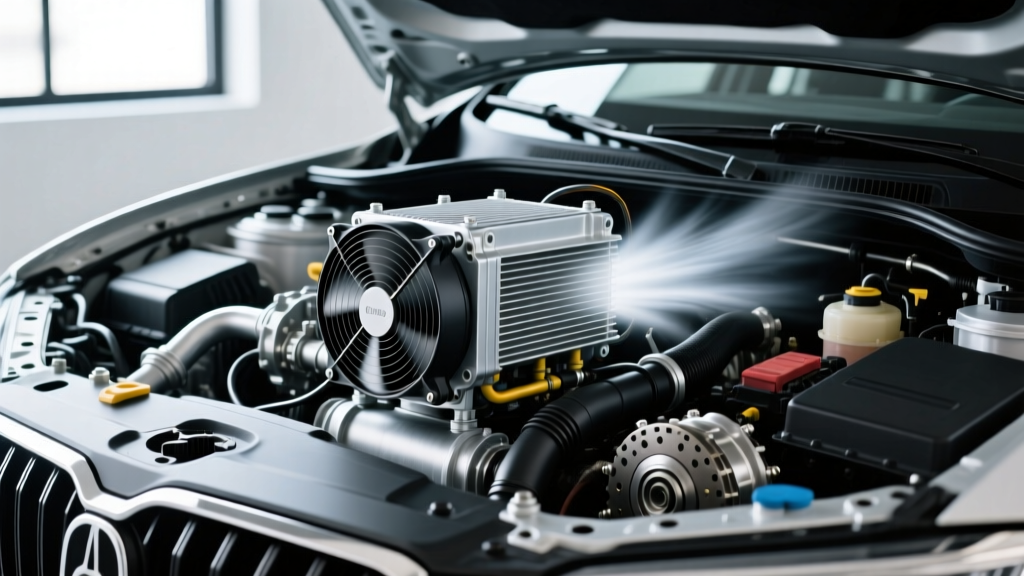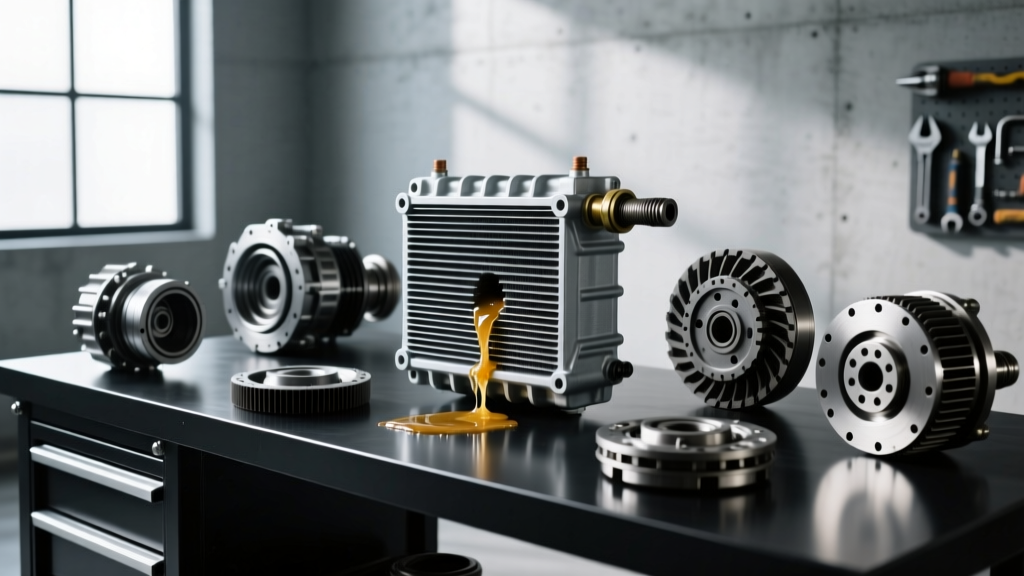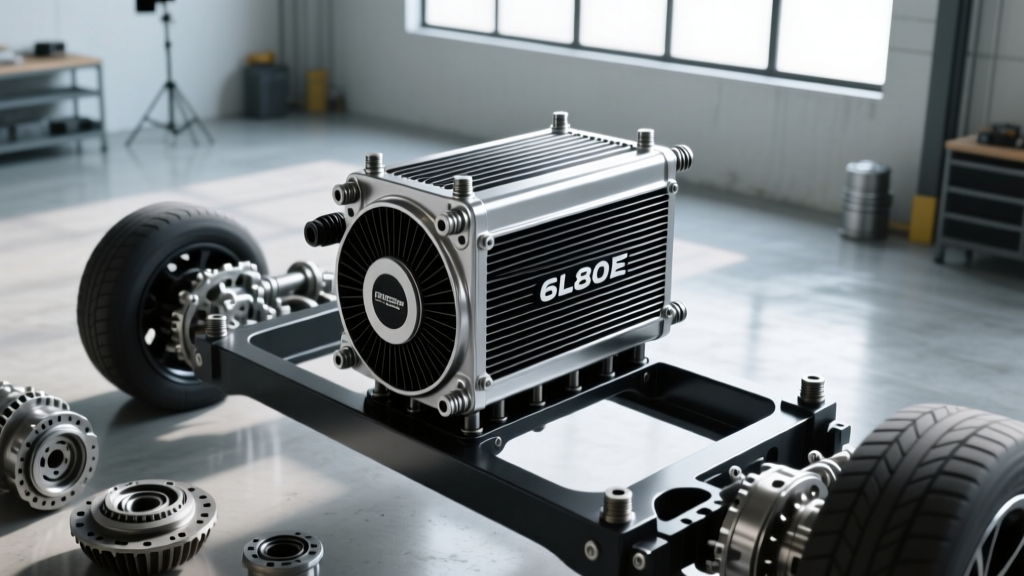
The 6L80 Thermal Challenge: Why Factory Cooling Falls Short
The GM 6L80 and 6L80E six-speed automatic transmissions are engineering marvels, capable of handling immense torque loads in everything from Silverado HD trucks to C6 Corvettes. However, as of 2026, with modern heavy-duty towing packages pushing Gross Combined Weight Ratings (GCWR) to their absolute limits, the factory cooling architecture is frequently overwhelmed. The 6L80 utilizes a complex torque converter clutch (TCC) lockup strategy and a dedicated 3-5-R clutch pack that generate significant localized heat. When paired with the factory radiator-mounted transmission cooler, fluid temperatures can easily spike past 220°F during sustained highway towing or low-speed off-road crawling.
For fleet managers, owner-operators, and dedicated DIY mechanics, treating your cooling system as a critical preventive maintenance (PM) item is non-negotiable. Installing a dedicated, high-capacity auxiliary 6L80E transmission cooler is the single most effective hardware upgrade you can perform to extend the lifecycle of your clutch packs, solenoids, and valve body.
The Mathematics of ATF Thermal Degradation
To understand the benefits of an auxiliary cooler, you must first understand the chemical vulnerability of modern synthetic fluids. ACDelco Dexron VI (Part # 10-9395) is a highly refined, low-viscosity synthetic fluid designed for precise hydraulic actuation. However, it is highly susceptible to thermal shearing and oxidation.
According to tribology research published by Machinery Lubrication, the Arrhenius equation dictates that for every 18°F (10°C) increase in operating temperature above the baseline 195°F, the chemical life of the lubricant is cut exactly in half. This is not a linear degradation; it is an exponential failure curve.
| Operating Temp (°F) | Dexron VI Fluid Life Expectancy | Mechanical Risk Factor |
|---|---|---|
| 175°F - 195°F | 100,000+ Miles (Optimal) | Minimal wear, optimal hydraulic pressure |
| 215°F | 50,000 Miles | Varnish begins to form on valve body spools |
| 235°F | 25,000 Miles | Clutch plate glazing, TCC shudder initiates |
| 255°F | 12,500 Miles | Seal hardening, catastrophic 3-5-R failure |
| 275°F+ | Under 5,000 Miles | Total fluid breakdown, immediate transmission rebuild required |
Core Benefits of an Auxiliary 6L80E Transmission Cooler
Upgrading to an aftermarket stacked-plate or plate-and-fin cooler provides compounding preventive maintenance benefits that go far beyond simply dropping the temperature gauge reading.
- Preservation of the 3-5-R Clutch Pack: The 6L80E is notorious for burning up the 3-5-R reverse clutch when subjected to high heat and heavy loads. By maintaining fluid temperatures below 200°F, the friction material retains its porosity and structural integrity, preventing the dreaded 'no reverse' condition.
- Prevention of Torque Converter Shudder: Overheated Dexron VI loses its friction modifiers, leading to micro-slip during TCC lockup. This shudder physically destroys the converter clutch lining and sends metallic debris directly into the transmission oil pump and solenoid screens.
- Stabilization of Line Pressures: As ATF overheats, it thins out, causing the transmission control module (TCM) to command higher line pressures to compensate. This overworks the internal pump, leading to cavitation and parasitic horsepower loss. An auxiliary cooler maintains optimal fluid viscosity, ensuring precise hydraulic actuation.
- Extended Service Intervals: By keeping the fluid in the 'green zone' (175°F - 195°F), you can safely extend your severe-duty drain intervals from 45,000 miles to 60,000+ miles, provided you utilize a high-quality bypass filtration setup.
Sizing and Selecting Your Stacked-Plate Cooler
Not all coolers are created equal. For the 6L80E, which flows roughly 1.5 to 2.5 gallons per minute (GPM) through the cooler circuit depending on RPM and pump wear, you need a cooler with low flow restriction and high thermal transfer. Stacked-plate designs are the undisputed champions for this application.
| Application / GVWR | Recommended Cooler Model | Estimated BTU Drop | Approx. Cost (2026) |
|---|---|---|---|
| Light Duty / Commuting (Under 8,000 lbs) | Hayden Rapid-Cool 676 (Tube & Fin) | 15°F - 25°F | $65 - $85 |
| Medium Towing / Overlanding (8k - 12k lbs) | Hayden Rapid-Cool 678 (Stacked Plate) | 30°F - 45°F | $110 - $140 |
| Heavy Towing / Commercial (12k+ lbs) | Derale Series 9000 / Tru-Cool 4921 | 50°F - 70°F | $160 - $220 |
Preventive Maintenance Install Protocols
A proper installation is where the preventive maintenance philosophy truly shines. Slapping a cooler in front of the AC condenser and zip-tying the hoses is a recipe for blown lines and contaminated fluid. Follow these exact specifications for a bulletproof 6L80E auxiliary cooler install.
Routing and the Thermal Bypass Valve Delete
The factory 6L80E cooling circuit routes fluid from the transmission to the radiator, then to a small factory auxiliary cooler (if equipped), and back to the transmission. More critically, early and mid-generation 6L80s utilize a thermal bypass valve in the cooler pressure line. This valve blocks cooler flow entirely until the fluid reaches roughly 190°F to aid in cold-weather warmup. Under heavy towing, this valve can stick or fail to open fully, causing catastrophic heat spikes.
As a core PM step, experts highly recommend deleting or upgrading this valve. The Sonnax 95401-01K Thermal Bypass Valve Upgrade Kit replaces the restrictive factory valve with a high-flow, precision-machined unit that ensures continuous cooler circulation. For severe-duty applications, many builders bypass the factory valve entirely and route the fluid directly to the auxiliary cooler.
Optimal Severe-Duty Routing: Transmission OUT → Auxiliary Stacked-Plate Cooler → Radiator Cooler → Transmission IN. This ensures the fluid receives the maximum ambient air cooling first, and the radiator acts as a secondary heat exchanger and fluid de-aerator before re-entering the pan.
Fittings, Hoses, and Torque Specifications
The 6L80E utilizes 5/16" and 3/8" steel cooler lines with compression or inverted flare fittings. When adapting to an aftermarket cooler, avoid cheap push-on barbs and hose clamps, which are prone to blowing off under the 6L80's 30+ PSI cooler line pressures.
- Hose Selection: Use only SAE J1532 rated transmission cooler hose or Gates 4219 Power Steering/ATF hose. Standard fuel line will dissolve internally when exposed to hot Dexron VI.
- AN Fitting Conversion: Cut the factory hard lines and use a 5/16" or 3/8" tube nut to -6 AN male adapter. Connect to the cooler using high-quality -6 AN braided stainless steel hoses.
- Torque Specs: When tightening -6 AN aluminum fittings to the cooler plate, use two wrenches to prevent twisting the cooler brazing. Torque AN fittings to 12-15 lb-ft. If using factory-style steel compression nuts on the hard lines, torque to 15-18 lb-ft. Do not overtighten, as this will crush the internal Teflon or copper olive and cause a slow weep.
Post-Install Fluid Analysis and PM Schedule
Installing the cooler is only half the battle. To establish a true preventive maintenance baseline, you must verify the system's performance.
- The 500-Mile Shakedown: After installation, drive the vehicle under normal and loaded conditions for 500 miles. Inspect all AN fittings and compression nuts with a UV flashlight (if using UV-dyed fluid) or white paper towels for micro-leaks. Re-torque fittings if necessary, as thermal cycling can cause initial seating shifts.
- Fluid Level Verification: The 6L80E requires the fluid to be checked via the side-level plug on the transmission pan, not a traditional dipstick. The TCM must read the Transmission Fluid Temperature (TFT) sensor between 86°F and 122°F (30°C - 50°C) for the level to be accurate. Adding an auxiliary cooler increases total system capacity by roughly 0.5 to 1.0 quarts; ensure you account for this during your initial fill.
- Annual UOA (Used Oil Analysis): Send a 4oz sample of your Dexron VI to a lab like Blackstone Laboratories every 12 months or 15,000 miles. Look specifically at the Viscosity at 100°C and Oxidation/Nitration numbers. If your auxiliary cooler is doing its job, your oxidation numbers will remain remarkably low, and your fluid will easily last 60,000+ miles even under severe towing conditions.
Conclusion
The GM 6L80E is a robust transmission, but its Achilles' heel is undeniably thermal management. By treating an auxiliary 6L80E transmission cooler not as an accessory, but as a vital piece of preventive maintenance equipment, you fundamentally alter the lifecycle of your drivetrain. Coupled with a thermal bypass valve upgrade, proper AN plumbing, and rigorous fluid analysis, you can confidently tow heavy loads while keeping your Dexron VI in the optimal temperature window, saving thousands of dollars in premature rebuilds and downtime.