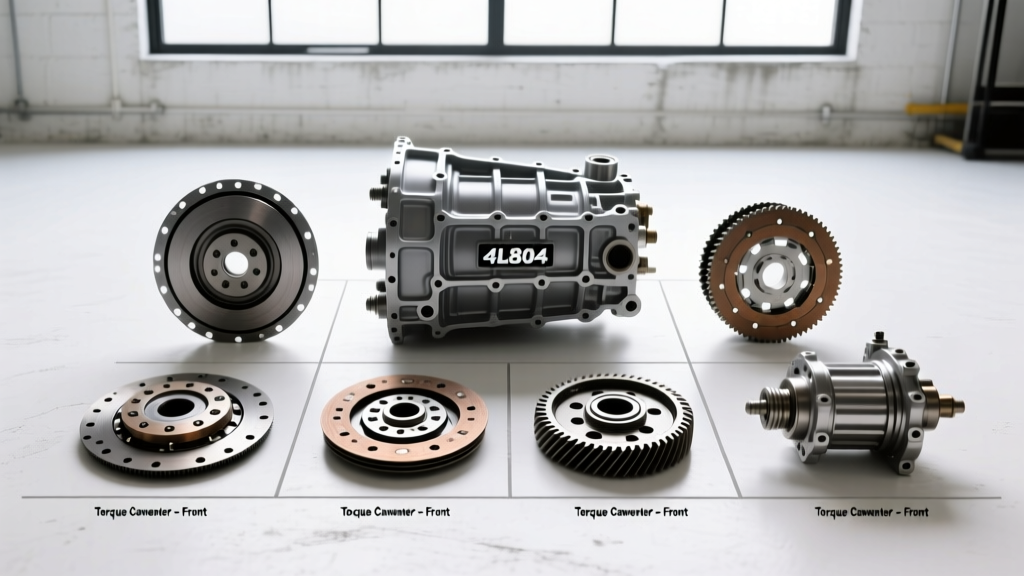
Introduction: The 6L80 vs. Heavy-Duty Expectations
When your GM truck or SUV starts slipping, shifting harshly, or throwing a check engine light, your first instinct might be to search for the allison transmission rebuild cost to gauge what a heavy-duty repair looks like. However, unless you are driving a heavy-duty Duramax diesel, your vehicle is likely equipped with the GM 6L80 (or 6L80E) 6-speed automatic transmission. While the Allison 1000 series is legendary for towing and severe abuse, the 6L80 is the workhorse for gas-powered V8 applications like the Chevy Silverado 1500, Tahoe, Suburban, and GMC Sierra.
As of 2026, the 6L80 remains one of the most common transmissions on the road, and its aging fleet means rebuilds are at an all-time high. This beginner-friendly guide will walk you through the most common 6L80 failure points, the rebuild process, and how its repair costs stack up against its heavy-duty Allison sibling.
Why the 6L80 Fails: A Beginner’s Diagnostic Checklist
Before tearing into a transmission, you must understand its weak points. The 6L80 is generally a robust unit, but it suffers from a few well-documented Achilles' heels that dictate the rebuild strategy.
The Infamous 3-5-R Wave Plate Failure
The most catastrophic and common failure in the 6L80 is the 3-5-R (3rd, 5th, and Reverse) clutch wave plate. Over time, the OEM wave plate fatigues and shatters. When this happens, it doesn't just burn up the 3-5-R clutch pack; it sends microscopic metal shards directly into the transmission's lube circuit. This debris circulates through the cooler and into the rest of the transmission, scoring the valve body, destroying the oil pump, and contaminating the torque converter. If you find metallic glitter in your transmission pan, a full teardown and hot-flush of the cooler lines are mandatory.
TEHCM and Solenoid Issues
The 6L80 utilizes a TEHCM (Transmission Electro-Hydraulic Control Module). This unit houses the Transmission Control Module (TCM), solenoids, and pressure switches. A frequent issue is the failure of the internal pressure switches, leading to harsh shifts or a 'limp mode' state. While you can replace individual switches, many professional rebuilders opt for a complete remanufactured TEHCM or a valve body upgrade kit to ensure long-term reliability.
Oil Pump and Stator Support Wear
The front pump is driven by the torque converter hub. If the converter hub is scored or out-of-round, it will chew through the pump gears and the stator support bushing. This results in low line pressure, causing delayed engagements and eventual clutch burnout. Always inspect the pump halves and measure the stator support bushing inner diameter during your rebuild.
Essential Tools for a DIY 6L80 Rebuild
Rebuilding a modern 6-speed automatic is not a weekend job for the faint of heart. To do it correctly, you will need specialized tools beyond a standard mechanic's socket set:
- Internal and External Snap Ring Pliers: Essential for removing clutch pack retainers and the pump stator rings.
- Dial Indicator and Magnetic Base: Required for measuring clutch pack clearances and end-play.
- Feeler Gauge Set: For verifying precise clearance specs on the 1-2-3-4 and 3-5-R clutch packs.
- Inch-Pound and Foot-Pound Torque Wrenches: The 6L80 valve body requires delicate inch-pound torque settings.
- Transmission Jack and Leveler: The 6L80 weighs roughly 215 lbs dry; safe removal and installation require a proper jack.
Step-by-Step 6L80 Rebuild Overview
While a full factory service manual spans hundreds of pages, here is the high-level workflow for a standard 6L80 overhaul.
1. Teardown and Inspection
Remove the TEHCM and valve body. Extract the oil pump using a slide hammer or pump puller. Carefully remove the clutch pack drums (1-2-3-4, 3-5-R, and 4-5-6). Disassemble the clutch packs and inspect the friction discs, steel separator plates, and backing plates. If the 3-5-R wave plate is broken, discard all OEM wave plates and upgrade to a flat steel apply plate or an aftermarket heavy-duty wave plate.
2. Cleaning and Machining
Every part must be spotless. Use a parts washer and compressed air to blow out all fluid galleries in the transmission case. Never use shop towels that leave lint behind; use only lint-free wipes. Inspect the case for cross-leakages or worn bushing bores. If the stator support bore is worn, it must be machined and sleeved.
3. Component Replacement and Upgrades
Install a master rebuild kit. According to Alto Products, upgrading to their Red Eagle or High Energy friction clutches provides vastly superior heat tolerance compared to OEM paper clutches. Replace all sealing rings, O-rings, and bonded pistons. Install a new front pump assembly or rebuild the existing one with new gears and bushings.
4. Valve Body and TEHCM
To address valve body wear, install a recalibration kit. Sonnax offers a highly regarded Zip Kit for the 6L80 that replaces worn valve trains and restores proper hydraulic pressure, preventing future flare shifts and solenoid fatigue.
5. Reassembly and Clearance Checking
As you stack the clutch packs, you must measure the clearance using a dial indicator. The 1-2-3-4 clutch pack typically requires a clearance of 0.060' to 0.090', while the 3-5-R pack requires 0.040' to 0.070' (always verify with your specific rebuild kit instructions). Select the appropriate selective snap rings to achieve these exact measurements.
Cost Breakdown: 6L80 vs. Allison Transmission Rebuild Cost
Many truck owners confuse the gas-powered 6L80 with the diesel-pulling Allison 1000. Understanding the financial difference between these two platforms is crucial when budgeting for a repair or deciding whether to trade in the vehicle.
| Feature | GM 6L80 (Gas V8 Applications) | Allison 1000 (Duramax Diesel) |
|---|---|---|
| Primary Application | 1500 Series Trucks, SUVs (Gas) | 2500HD/3500HD Trucks (Diesel) |
| Master Rebuild Kit Cost | $450 - $750 | $1,200 - $2,100 |
| TEHCM / TCM Replacement | $400 - $900 (if required) | N/A (TCM is external on older models) |
| Average Shop Labor Hours | 12 - 16 Hours | 14 - 20 Hours |
| Total Professional Rebuild Cost (2026) | $2,800 - $4,200 | $5,500 - $8,500+ |
| Fluid Capacity (Dry Fill) | ~11.2 Quarts (Dexron VI) | ~12.7 Quarts (TES 668 / Transynd) |
As the table illustrates, the allison transmission rebuild cost is significantly higher due to the sheer size of the components, the heavy-duty nature of the clutch packs, and the additional labor required to remove and reinstall the heavier unit from a 2500HD/3500HD chassis. The 6L80 is much more budget-friendly to rebuild, and parts availability is vastly superior in the aftermarket space.
Critical Fastener Torque Specifications
One of the most common mistakes beginners make is applying incorrect torque to internal fasteners. Over-tightening can warp the valve body or crack the aluminum case, leading to immediate cross-leaks and failure upon startup.
Pro Tip: Never use a standard foot-pound torque wrench on the valve body bolts. The specification is in inch-pounds. Using foot-pounds will strip the threads out of the aluminum case instantly, requiring expensive Time-Sert repairs or a scrap case.
- Oil Pump to Case Bolts: 18 lb-ft (25 Nm)
- Valve Body to Case Bolts: 89 lb-in (10 Nm)
- Transmission Pan Bolts: 106 lb-in (12 Nm)
- Bellhousing to Engine Block: 37 lb-ft (50 Nm)
- Torque Converter to Flexplate: 30 lb-ft (41 Nm)
- TEHCM to Valve Body: 89 lb-in (10 Nm)
Fluid Selection and Programming Requirements
Upon reassembly, the 6L80 requires Dexron VI (or the newer Dexron ULV depending on specific late-model application updates, though Dexron VI remains the standard for the vast majority of 6L80s). The dry fill capacity is approximately 11.2 quarts, but a standard pan-drop service only takes about 6.0 quarts. Always fill via the dipstick tube or fill plug, start the engine, cycle through the gears, and check the level with the fluid temperature between 185°F and 205°F using a bidirectional scan tool.
Finally, if you replaced the TEHCM or the TCM, the vehicle will not shift correctly until the module is flashed with the correct calibration files and a 'Fast Learn' adaptation procedure is performed. According to the Automatic Transmission Rebuilders Association (ATRA), skipping the fast learn procedure is a leading cause of warranty claims on newly rebuilt 6-speed GM units, as the solenoids require baseline pressure mapping to account for new clutch pack clearances.
Final Verdict: Should You DIY or Hire a Pro?
The GM 6L80 is an excellent transmission when built correctly. For a mechanically inclined beginner with access to a clean workspace, specialized tools, and a factory service manual, a DIY rebuild is achievable and can save you upwards of $2,000 in labor. However, if you lack a dial indicator, inch-pound torque wrenches, or the ability to flash a TEHCM, you are better off removing the transmission yourself and handing it to a professional rebuilder. By understanding the true cost differences between the 6L80 and the heavy-duty Allison platforms, you can make an informed, financially sound decision to get your GM truck back on the road for years to come.