The 4L80E Legacy: Strength, Overdrive, and the Rebuild Dilemma
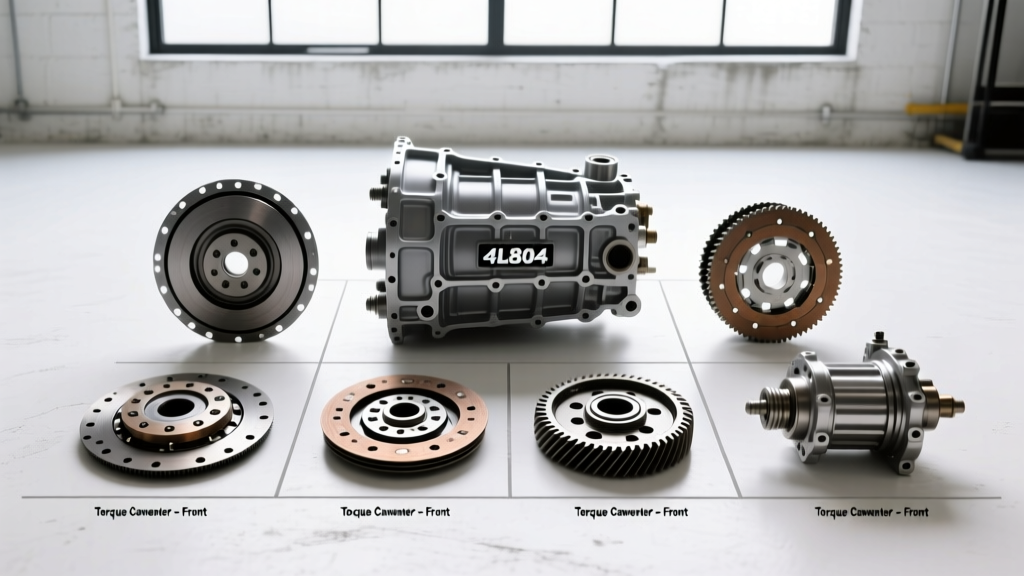
The GM 4L80E is widely regarded as the modern evolution of the legendary TH400. Introduced in the early 1990s for heavy-duty truck and high-torque applications, it remains a cornerstone of the performance automotive world in 2026. Capable of handling well over 1,000 horsepower with the right internal modifications, the 4L80E is the go-to transmission for drag racing, sled pulling, and high-horsepower street builds. However, when a stock unit inevitably fails under extreme stress, builders face a critical financial and mechanical crossroads.
When facing a shattered intermediate sprag or burnt direct clutches, the immediate question every gearhead asks is: is it cheaper to rebuild a transmission or replace it? The answer is rarely a simple yes or no. It depends entirely on your horsepower goals, your mechanical aptitude, and the hidden costs of core charges and freight. In this performance rebuild guide, we will dissect the true cost of 4L80E ownership, outline mandatory high-horsepower upgrades, and provide the exact torque specifications needed to build a transmission that survives the track.
Cost Analysis: Rebuilding vs. Replacing the 4L80E
To accurately determine whether a rebuild or a replacement makes more financial sense, we must look at the 2026 aftermarket landscape. Replacing a transmission usually means buying a remanufactured unit from a corporate supplier or pulling a used unit from a salvage yard. Rebuilding means purchasing a master overhaul kit, performance hard parts, and investing your own labor (or paying a specialist).
| Replacement / Rebuild Option | Estimated Cost (2026) | Horsepower Capacity | Pros & Cons |
|---|---|---|---|
| Salvage Yard Used 4L80E | $450 - $850 | ~400 HP (Stock) | Lowest upfront cost; massive risk of hidden internal wear and immediate failure. |
| Corporate Remanufactured 4L80E | $1,900 - $2,800 | ~450 HP (Stock) | Warranty included; lacks performance upgrades, core charge & freight add $400+. |
| DIY Performance Rebuild | $800 - $1,400 | 600 - 850+ HP | Most cost-effective for performance; requires specialized tools and clean space. |
| Pro-Shop Custom Performance Build | $3,500 - $5,500+ | 1,000 - 2,500+ HP | Turnkey high-horsepower solution; highest upfront cost but unmatched reliability. |
The Verdict on Cost
So, is it cheaper to rebuild a transmission or replace it? If you are building a high-horsepower street/strip car, rebuilding is significantly cheaper and vastly superior. A corporate remanufactured 4L80E will not survive the torque of a built LS or big-block Chevy because they use stock cast-aluminum center supports and 16-element sprags. By performing a DIY performance rebuild, you can install billet shafts and heavy-duty clutch packs for roughly $1,200 in parts, saving thousands compared to a pro-shop build while achieving a stronger result than a stock replacement.
Mandatory 4L80E Performance Upgrades
The stock 4L80E is incredibly robust, but GM designed it for 450 lb-ft of torque, not the 800+ lb-ft generated by modern forced-induction V8s. Before you assemble your transmission, you must address its known weak points. Sourcing parts from industry leaders like Sonnax and TransGo is non-negotiable for a serious build.
1. The 34-Element Intermediate Sprag
The stock 16-element intermediate sprag is the most notorious failure point in the 4L80E. Under heavy load, the sprag can roll over, instantly locking the transmission and destroying the case. Upgrading to a 34-element sprag (often sourced from the TH400 parts bin or specialized aftermarket manufacturers) distributes the load across more than double the contact points. This single upgrade is mandatory for any 4L80E pushing past 500 horsepower.
2. Billet Input and Output Shafts
The factory input shaft is prone to twisting and snapping under aggressive trans-brake launches. For builds exceeding 600 lb-ft, a 300M billet steel input shaft is required. Furthermore, the factory output shaft can shear at the splines in heavy, high-traction vehicles. Upgrading to a billet output shaft ensures that rotational energy actually reaches the wheels rather than twisting the steel inside the case.
3. Center Support and Direct Clutch Piston
The 4L80E utilizes a cast aluminum center support. Over time, and especially under high line pressure, the support flexes and wears against the direct clutch backing plate. This leads to direct clutch burnout and a loss of reverse and fourth gear. Installing a billet aluminum or steel center support eliminates this flex. Pair this with a heavy-duty direct clutch piston and a Raybestos GPZ or Pro-Series master rebuild kit to ensure clamping force remains consistent.
4. Valve Body and Line Pressure Modifications
High horsepower requires high clamping pressure to prevent clutch slippage. The TransGo SK-4L80E-HD2 shift kit is the industry standard for performance builds. It includes heavier separator plates, revised accumulator springs, and a line pressure booster plug. According to data published by the Automatic Transmission Service Group (ATSG), modifying the Third Feed (TF-OD) orifice in the separator plate is critical for firming up the 3-4 shift, which is often sluggish in stock 4L80E units.
Critical 4L80E Rebuild Specifications
When assembling the 4L80E, precision is everything. Improper clearances will lead to immediate failure, while incorrect torque specs can warp the aluminum case or crack the pump housing. Below are the critical specifications you must adhere to during your rebuild.
| Component / Measurement | Specification / Torque Value | Notes & Best Practices |
|---|---|---|
| Oil Pump to Case Bolts | 13 ft-lbs (18 Nm) | Over-torquing will warp the pump housing and cause gear bind. |
| Valve Body to Case Bolts | 97 in-lbs (11 Nm) | Use an inch-pound torque wrench. Follow the star pattern sequence. |
| Extension Housing to Case | 32 ft-lbs (43 Nm) | Apply thread sealant to bolts that enter the fluid cavity. |
| Bellhousing to Engine Block | 37 ft-lbs (50 Nm) | Ensure dowel pins are perfectly aligned to prevent pump gear shearing. |
| Total Endplay | 0.010" - 0.022" | Adjusted via selective thrust washers behind the rear sun gear shell. |
| Direct Clutch Pack Clearance | 0.040" - 0.060" | Use a feeler gauge; tighter clearances cause drag and burnt frictions. |
| Fluid Capacity (Pan & Converter) | ~13.5 Quarts (Dry) | Always use Dexron VI or a dedicated synthetic ATF for high-heat racing. |
The Importance of Bellhousing Alignment
One of the most frequently overlooked steps in a 4L80E installation is checking bellhousing runout. The 4L80E oil pump is driven directly by the torque converter, which is bolted to the engine's flexplate. If the bellhousing is misaligned by more than 0.005 inches, the torque converter will pull the pump gear off-center. This results in the pump gear shearing the tabs off the torque converter hub, instantly destroying the transmission upon first startup. Always use a dial indicator to measure runout and utilize offset dowel pins to correct any misalignment before bolting the transmission to the engine block. You can find precision dial indicators and offset dowels at major retailers like Summit Racing.
Final Thoughts: Rebuild for Performance, Replace for Stock
Ultimately, answering whether it is cheaper to rebuild a transmission or replace it comes down to your end goal. If you are restoring a stock 1995 Chevy C3500 dually for light towing, buying a remanufactured replacement unit is the most time-efficient and cost-effective route. However, if you are dropping a 4L80E behind a supercharged LS3 or a twin-turbo 6.6L Duramax, a stock replacement will disintegrate. By investing in a DIY performance rebuild, upgrading the sprag, center support, and clutch packs, and strictly following GM torque specifications, you will build a transmission capable of surviving the brutal demands of modern horsepower for a fraction of the cost of a pro-shop turnkey unit.