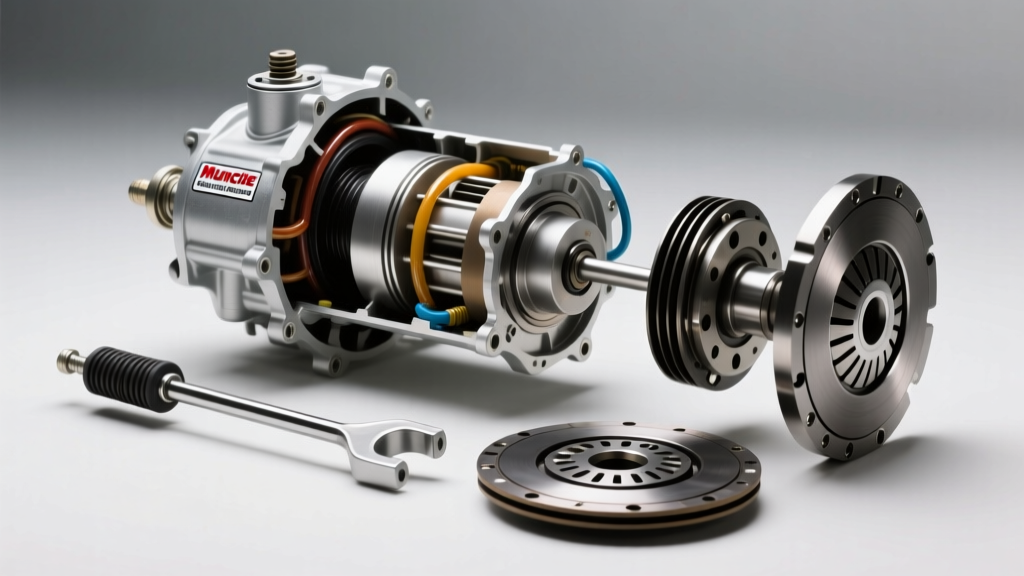
The 2003-2007 Ford 6.0L Powerstroke is notorious for its complex cooling system demands, particularly when towing heavy loads or navigating steep grades. At the heart of this thermal management system is the electro-viscous fan clutch. Unlike a traditional manual transmission clutch that engages via friction plates, the fan clutch utilizes a combination of silicone-based viscous fluid and an electromagnetic solenoid to modulate engine cooling. When this component begins to fail, it rarely does so completely. Instead, mechanics and DIYers are faced with intermittent clutch problems diagnosis—a frustrating scenario where the fan locks up on Tuesday but fails to engage on Wednesday.
In this comprehensive diagnostic guide, we will break down the exact failure modes of the 6.0L Powerstroke fan clutch, outline the electrical and mechanical testing procedures required to isolate the fault, and detail why utilizing the correct 6.0 powerstroke fan clutch removal tool is non-negotiable to prevent catastrophic collateral damage to your water pump.
The Anatomy of 6.0L Electro-Viscous Clutch Failures
To accurately diagnose intermittent engagement issues, you must understand the operating parameters of the unit. The 6.0L fan clutch receives a constant 12V reference voltage (typically routed through the FICM relay or PCM power relay) and is controlled by a Pulse Width Modulated (PWM) ground signal from the Powertrain Control Module (PCM). Inside the clutch hub, an electromagnetic coil actuates a valve that allows viscous silicone fluid to transfer torque from the water pump shaft to the fan blades.
Intermittent failures generally stem from three distinct vectors:
- Viscous Fluid Degradation: Over time, the silicone fluid shears and loses its kinematic viscosity, or leaks past the bimetallic spring seal.
- Electrical Chafing: The wiring harness routing near the driver-side valve cover and fan shroud is prone to rubbing, causing intermittent shorts to ground or open circuits.
- Solenoid Coil Breakdown: Thermal cycling causes micro-fractures in the internal electromagnetic windings, leading to resistance spikes when the engine bay reaches peak operating temperatures.
Intermittent Clutch Problems Diagnosis: The Core Symptoms
Because the PCM monitors the fan clutch circuit, hard electrical failures will usually trigger a Diagnostic Trouble Code (DTC) such as P0480 (Fan Control Circuit Malfunction). However, mechanical degradation and marginal electrical faults often fly under the radar, presenting only as drivability symptoms.
Symptom 1: Parasitic Drag and Roaring Noise
If the fan clutch fails to disengage, the engine will sound like a jet spooling up above 2,000 RPM. This parasitic drag can rob the 6.0L of up to 30 horsepower at the rear wheels and severely degrade fuel economy. Intermittently, this may only occur after the engine reaches 190°F, pointing to a failing bimetallic strip that is sticking in the 'open' valve position, continuously flooding the shear gap with viscous fluid.
Symptom 2: Overheating Under Load and AC Head Pressure Spikes
Conversely, if the clutch fails to engage, the engine coolant temperature (ECT) will climb rapidly on inclines. A secondary, highly reliable diagnostic metric is your Air Conditioning head pressure. The condenser relies entirely on the fan clutch at low vehicle speeds. If the fan fails to lock up when the AC is demanded, the high-side AC pressure will rapidly spike past 350 PSI, causing the high-pressure switch to cycle the AC compressor off to prevent hose rupture.
Electrical Verification: Ruling Out the FICM and PCM
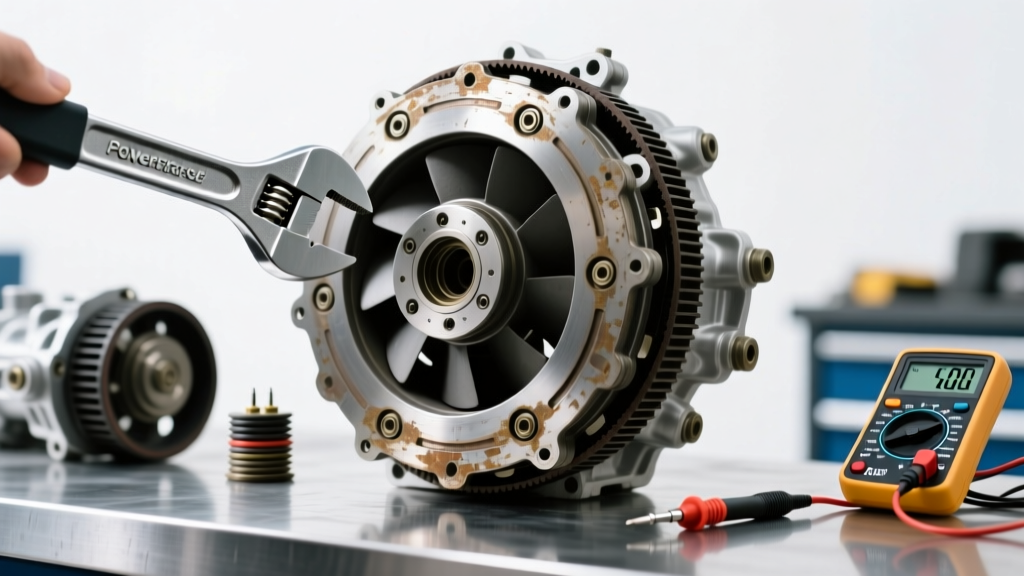
Before condemning the mechanical clutch assembly, you must verify the electrical delivery. Intermittent clutch problems diagnosis requires a digital multimeter (DMM) and a breakout probe.
- Reference Voltage Check: With the key on, engine off (KOEO), back-probe the fan clutch connector. You should read a steady 11.5V to 12.5V. If this voltage drops intermittently while wiggling the harness near the FICM, you have found your chafe point.
- PWM Ground Signal: Connect a test light or oscilloscope to the control wire. As the engine warms up or the AC is turned on, the PCM should begin pulsing the ground. An oscilloscope will show a clean square wave; a test light will flicker. If the PCM commands engagement but the fan does not lock, the internal solenoid is at fault.
Expert Insight: Never apply direct 12V and ground to the fan clutch solenoid pins with jumper wires to 'test' it. The solenoid is designed for PWM duty cycles, and applying continuous raw voltage can overheat and melt the internal coil windings in a matter of minutes, turning a borderline clutch into a dead one.
The 6.0 Powerstroke Fan Clutch Removal Tool: Why It Matters
Once diagnosis confirms the mechanical or internal electrical failure of the clutch assembly, extraction is required. The 6.0L fan clutch is threaded onto the water pump shaft with a 36mm nut. From the factory, this nut is torqued to approximately 65-85 lb-ft and secured with a mild threadlocker. Furthermore, the 6.0L water pump bearings are notoriously fragile; applying lateral shock loads (e.g., using a hammer and chisel on the pulley) will instantly brinell the bearing races, leading to premature water pump failure and coolant leaks.
To safely remove the assembly, a dedicated 6.0 powerstroke fan clutch removal tool set is mandatory. This typically consists of a 36mm offset wrench and a pulley holding tool that locks into the water pump pulley holes to prevent the shaft from spinning.
| Item / Component | Part Number / Spec | Function / Notes | Est. 2026 Cost |
|---|---|---|---|
| Fan Clutch Wrench Set | OTC 6614 / Lisle 43650 | 36mm wrench + pulley holding bar | $45 - $75 |
| OEM Fan Clutch Assembly | Motorcraft YC3Z-8A616-AA | Factory electro-viscous unit (Highly Recommended) | $280 - $360 |
| Aftermarket Clutch | Hayden 2747 / Dorman 622-001 | Budget alternative (Prone to earlier PWM drift) | $160 - $220 |
| Serpentine Belt | Motorcraft 4C3Z-8620-AA | Replace if glazed or cracked during service | $45 - $65 |
Step-by-Step Extraction Protocol
When utilizing your 6.0 powerstroke fan clutch removal tool, follow this precise sequence to ensure component safety:
1. Belt and Shroud Clearance
Remove the serpentine belt using a 1/2-inch breaker bar on the automatic tensioner. Do not attempt to remove the fan shroud entirely; simply unbolt the upper torque-to-spec brackets and tilt the shroud back toward the firewall to expose the water pump pulley.
2. Securing the Pulley Holding Tool
Insert the pins of the holding tool into the corresponding holes on the water pump pulley. Rest the handle of the tool against the engine block or a sturdy bracket to prevent the pulley from rotating. Never hold the pulley by hand while breaking the 36mm nut; the rotational force will cause severe knuckle injuries.
3. Breaking the 36mm Nut
Place the 36mm offset wrench onto the fan clutch hub nut. Note: The 6.0L Powerstroke fan clutch nut utilizes standard right-hand threads. You must turn the wrench counter-clockwise (toward the driver's side of the engine bay) to loosen it. Apply steady, heavy pressure. If the nut refuses to budge, apply a small amount of penetrating fluid to the threads and allow it to sit for 15 minutes. Avoid using an induction heater near the hub, as the heat will destroy the internal viscous fluid and solenoid.
4. Thread Inspection and Reinstallation
Once removed, inspect the water pump shaft threads for galling. Clean the threads with a wire brush and apply a single drop of blue Loctite (243) before threading the new Motorcraft clutch assembly on by hand. Torque the new 36mm nut to 70 lb-ft using your holding tool and a calibrated torque wrench.
2026 Market Sourcing: The OEM Imperative
As of 2026, the aftermarket is flooded with budget-friendly fan clutch assemblies priced under $200. While tempting, our diagnostic data from Powerstroke.org community teardowns and Ford Service Content bulletins overwhelmingly suggest sticking to the Motorcraft YC3Z-8A616-AA. Aftermarket units frequently suffer from inaccurate PWM mapping, causing the PCM to throw phantom circuit codes or resulting in a clutch that engages too late, allowing ECT spikes during heavy towing.
Diagnosing intermittent clutch problems on the 6.0L Powerstroke requires patience, a solid understanding of PWM electrical circuits, and the right mechanical leverage. By investing in the proper 6.0 powerstroke fan clutch removal tool and relying on OEM friction and viscous components, you ensure your Super Duty remains cool, quiet, and reliable for the long haul.