The Evolution of the Automatic ATV With Clutch Systems
When navigating the modern powersports market, finding an ATV with clutch systems that operate automatically requires a deep understanding of drivetrain engineering. As of 2026, the term 'automatic' in the ATV and UTV segment primarily refers to two vastly different architectures: the belt-driven Continuously Variable Transmission (CVT) and the geared Dual-Clutch Transmission (DCT). While both eliminate the need for a manual foot-clutch, their internal clutch mechanisms, failure modes, and diagnostic procedures are entirely distinct.
For buyers, mechanics, and enthusiasts, diagnosing clutch problems in these automatic transmissions is critical. A slipping CVT belt or a failing DCT hydraulic solenoid can leave you stranded on a trail or result in thousands of dollars in catastrophic drivetrain damage. This guide compares the diagnostic symptoms, technical specifications, and ownership costs of CVT versus DCT automatic clutch systems to help you make an informed purchase or accurately troubleshoot your current rig.
CVT Clutch Diagnostics: The Friction and Weight Paradigm
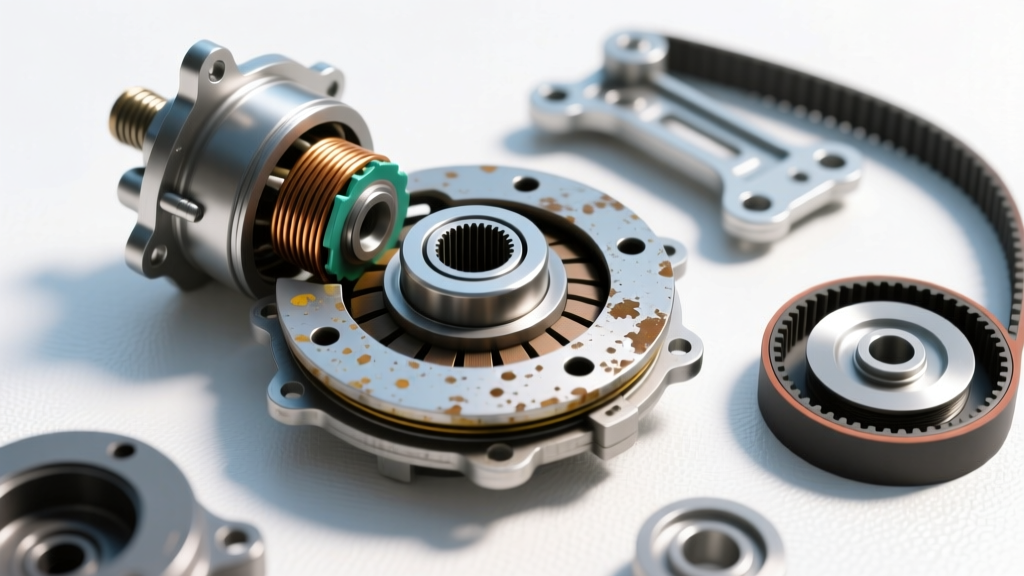
The CVT system, popularized by brands like Polaris and Can-Am, does not use traditional friction clutch packs. Instead, it relies on a primary (drive) clutch and a secondary (driven) clutch connected by a heavy-duty Kevlar-reinforced drive belt. 'Clutch problems' in this automatic transmission usually manifest as pulley wear, spring fatigue, or one-way bearing failure.
Common CVT Clutch Symptoms
- Belt Slip and Chatter: A burnt rubber smell or erratic RPM surging at low speeds indicates the primary clutch sheaves are failing to grip the belt. This is often caused by worn sheave bushings or glazed belt faces.
- Loss of Engine Braking: If your ATV rolls freely when decelerating, the sprag bearing (one-way bearing) inside the primary EBS (Engine Braking System) clutch has likely failed. This is a notorious failure point on older Polaris RZR models.
- Delayed Engagement: A noticeable lag when shifting from Neutral to Drive points to a worn secondary clutch torsion spring or incorrect roller weights in the primary clutch.
Technical Specs and Torque Requirements
Proper diagnosis requires precision measurement and adherence to factory torque specifications. According to Polaris Industries Official Support, the primary clutch retaining bolt on most modern RZR and Ranger platforms must be torqued to 120 ft-lbs, while the secondary clutch bolt requires 55 ft-lbs. Using a specialized puller (e.g., Polaris tool PU-47068) is mandatory; prying the clutches off will destroy the crankshaft taper.
Pro-Tip: Always measure CVT belt deflection. With the belt seated in the secondary clutch, apply moderate thumb pressure to the top span. Ideal deflection is between 1.25 and 1.50 inches. Excessive slack causes low-end slip, while excessive tightness causes overheating and premature bearing wear.
DCT and Geared Automatic Clutch Problems
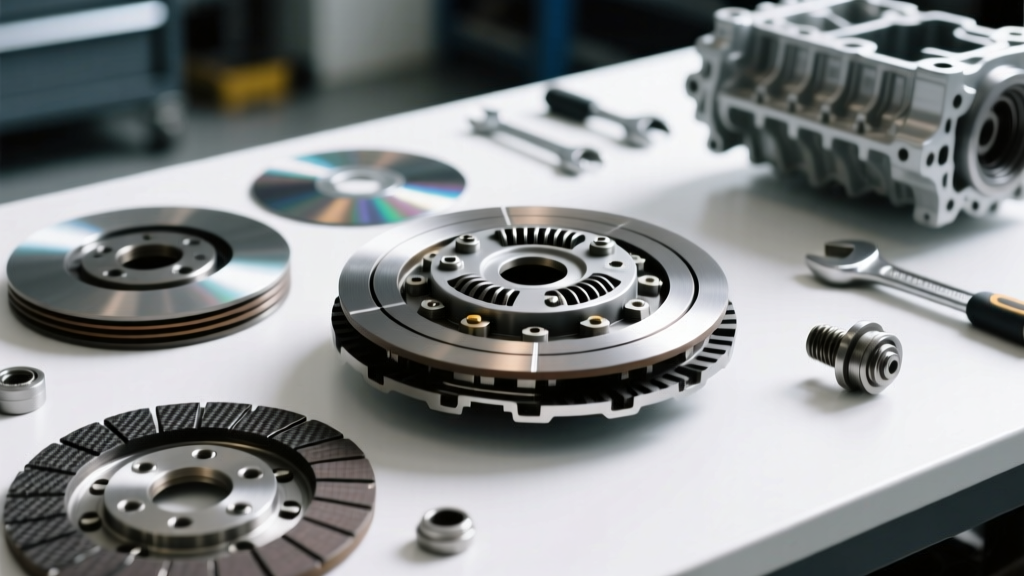
Honda’s Dual-Clutch Transmission (DCT), found in the Pioneer 1000 and select Foreman models, represents the pinnacle of geared automatic off-road drivetrains. It utilizes two wet, multi-plate clutch packs (one for odd gears, one for even gears) actuated by hydraulic linear solenoids. Diagnosing clutch problems in this automatic transmission requires a hydraulic and electrical approach rather than a mechanical pulley inspection.
Identifying DCT Clutch Failure Modes
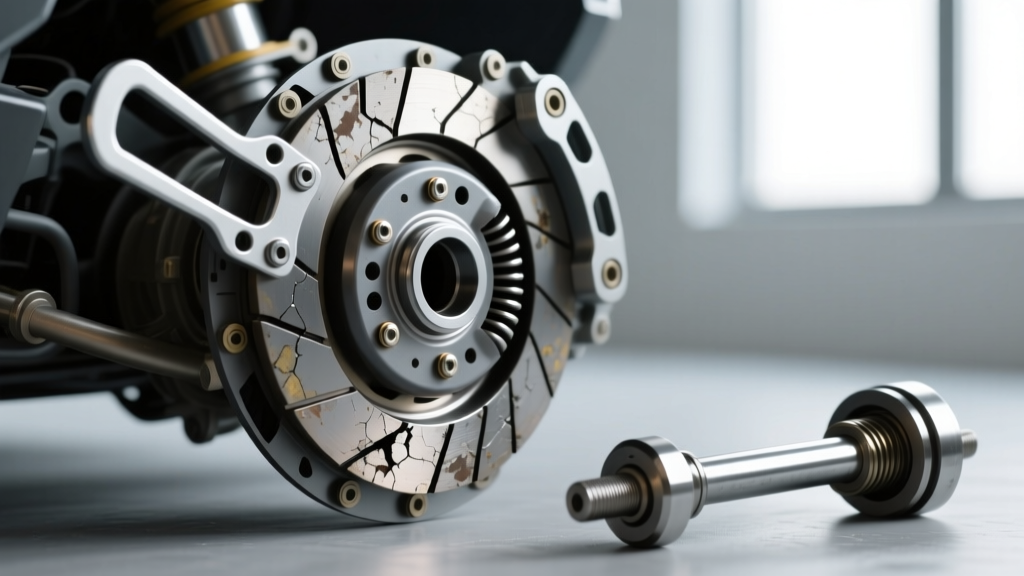
- Harsh Engagement and Clunking: If the ATV lurches violently when shifting from 1st to 2nd gear, the hydraulic line pressure may be too high, or the clutch pack friction plates are warped.
- Slipping Under Load: When winching or climbing steep inclines, a slipping DCT will cause the RPMs to flare without a corresponding increase in wheel speed. This triggers the DCT temperature warning light and forces the ECU into limp mode.
- Solenoid Valve Codes: Flashing dashboard indicators often correlate to failing linear solenoids. If the solenoid cannot modulate hydraulic fluid to the clutch pack, the transmission will default to a single gear to protect the internal components.
DCT Diagnostic Measurements
According to Honda Powersports Technical Documentation, inspecting a DCT clutch pack requires measuring the pack clearance with a feeler gauge. The acceptable clearance specification for the main clutch pack is typically 1.2mm to 1.8mm. If the measurement exceeds 2.0mm, the friction discs (Part #22200-HL6-A00 equivalent) are worn beyond service limits and must be replaced. Furthermore, DCT systems require specialized friction-modified fluids; using standard gear oil will cause immediate clutch chatter and pack destruction.
Comparison Chart: CVT vs. DCT Automatic Clutch Systems
| Diagnostic Feature | CVT (Belt-Driven Pulleys) | DCT (Geared Wet Clutch Packs) |
|---|---|---|
| Primary Engagement Mechanism | Centrifugal weights and spring pressure | Hydraulic fluid pressure via solenoids |
| Most Common Failure Point | Drive belt snap / Sprag bearing failure | Friction plate glazing / Solenoid failure |
| Key Diagnostic Tool | Calipers, Belt deflection gauge, Puller | Feeler gauge, OBD2 Scanner, Pressure gauge |
| Maintenance Interval | Belt inspection every 1,000 miles | Fluid change every 2,000 - 3,000 miles |
| Trailside Repairability | High (Spare belt and tools can be carried) | Low (Requires clean environment and fluid) |
The Buyer's Diagnostic Checklist: Inspecting a Used Automatic ATV
If you are purchasing a used ATV with an automatic clutch system, a standard test ride is insufficient. You must perform targeted diagnostic tests to uncover hidden transmission flaws.
- The Cold Start Test: Start the machine completely cold. Engage Drive. A CVT should engage smoothly around 1,200-1,500 RPM. A DCT should engage with a firm, predictable 'clunk'. Any metallic grinding on a CVT indicates a failing primary bearing; any severe shuddering on a DCT points to warped clutch plates.
- The Load Test: Find a steep, safe incline or use a heavy drag. Apply wide-open throttle (WOT). If the CVT RPMs spike to 8,000+ but the vehicle speed doesn't match, the belt is slipping or the secondary spring has collapsed. If the DCT flares between 3rd and 4th gear, the odd-gear clutch pack is burnt.
- The Deceleration Test: Reach 30 MPH and let off the throttle completely without touching the brakes. The ATV should actively slow down. If it coasts freely, the CVT one-way bearing is shattered, requiring a $400+ primary clutch rebuild.
2026 Cost of Ownership: Repair and Rebuild Pricing
Understanding the financial implications of clutch problems in automatic transmissions is vital for buyers comparing long-term ownership costs. Based on current 2026 aftermarket and OEM pricing, here is what you can expect to pay for common repairs:
CVT System Costs
- Replacement Drive Belt: $150 - $280 (OEM or high-end aftermarket like Gates)
- Primary Clutch Rebuild Kit: $120 - $200 (Includes bushings, springs, and weights)
- Complete OEM Primary Clutch Assembly: $650 - $950
- Sprag Bearing Replacement: $80 for the part, but requires specialized pressing tools.
DCT System Costs
- DCT Clutch Pack Assembly: $350 - $600 per pack (Odd or Even)
- Linear Solenoid Valve: $150 - $250 per unit
- Complete DCT Rebuild (Labor + Parts): $1,500 - $2,500+ (Requires splitting the engine cases)
For comprehensive fluid specifications and friction modifier requirements for both systems, consult resources like AMSOIL Synthetic Drivetrain Fluids to ensure you are using lubricants that meet the exact static friction coefficients required by modern wet clutches and CVT pulleys.
Final Verdict: Which Automatic Clutch System is Right for You?
If your primary use case involves deep mud, rock crawling, or frequent trailside repairs, an ATV with a CVT clutch system offers unmatched simplicity and trailside serviceability. Carrying a spare belt and a clutch puller can save your weekend. However, if you prioritize precise throttle control, heavy towing, and a driving experience that mimics a traditional geared manual without the fatigue of a foot pedal, a DCT-equipped automatic is vastly superior. By understanding the distinct diagnostic symptoms and maintenance requirements of each, you can confidently evaluate any automatic ATV on the market and avoid costly transmission failures.