Diagnosing Heavy-Duty Clutch Failures Under Maximum GCW
When fleet managers and owner-operators evaluate heavy-duty truck clutch repairs, the focus must shift from simple OEM replacement to comprehensive driveline optimization. Modern commercial vehicles operating at the legal 80,000 lbs Gross Combination Weight (GCW)—and specialized heavy-haul rigs pushing 120,000 lbs or more—place immense thermal and kinetic stress on the clutch assembly. Standard 15.5-inch single-plate clutches paired with high-torque engines like the Cummins X15 Efficiency Series (up to 2,050 lb-ft) or the Detroit DD15 are increasingly reaching their thermal limits. Recognizing the precise failure modes of commercial clutches is the first step toward executing a performance-oriented upgrade rather than a temporary band-aid repair.
Torsional Vibration and Damper Spring Fatigue
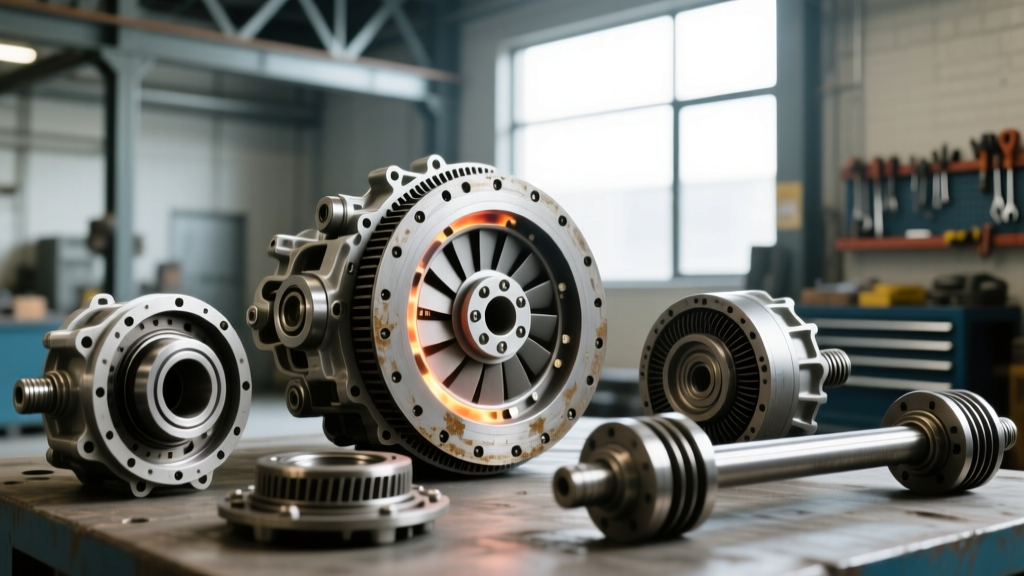
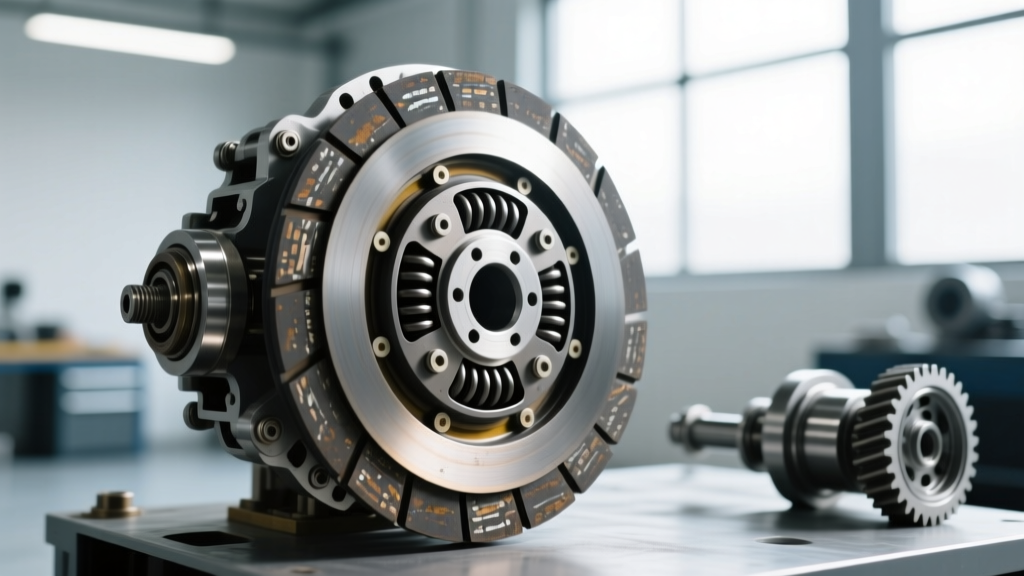
One of the most misdiagnosed symptoms in commercial drivetrains is severe low-frequency vibration during engagement, often mistaken for a warped flywheel or failing engine mounts. In heavy-duty applications, this is typically caused by torsional damper spring fatigue inside the clutch disc. High-torque diesel engines produce aggressive torsional spikes. Over time, the polyurethane dampers and steel springs inside the disc hub compress, lose their rebound tension, or fracture entirely. If a driver reports a 'shuddering' sensation specifically between 900 and 1,200 RPM during heavy-load starts, the clutch disc's internal dampening mechanism has failed. Upgrading to a rigid-hub twin-plate system with an integrated flywheel damper or switching to a high-capacity modular clutch system is the definitive performance cure.
Clutch Brake Squeeze and Release Bearing Diagnostics
Unlike passenger vehicles, heavy-duty manual transmissions (such as the Eaton Fuller 10, 13, and 18-speed variants) utilize a clutch brake. This mechanism stops the input shaft from spinning to allow smooth engagement of first and reverse gears. A primary diagnostic symptom of a failing release bearing or improperly adjusted linkage is the loss of 'clutch brake squeeze.' If the driver experiences grinding when shifting into first gear from a standstill, or if the transmission refuses to engage reverse without double-clutching, the clutch brake is not making contact with the transmission input bearing retainer. This is a critical diagnostic pivot point: before tearing down the transmission for a $4,000 rebuild, verify the clutch brake gap and pedal free travel.
Performance Upgrades: Moving from Single to Twin-Plate Systems
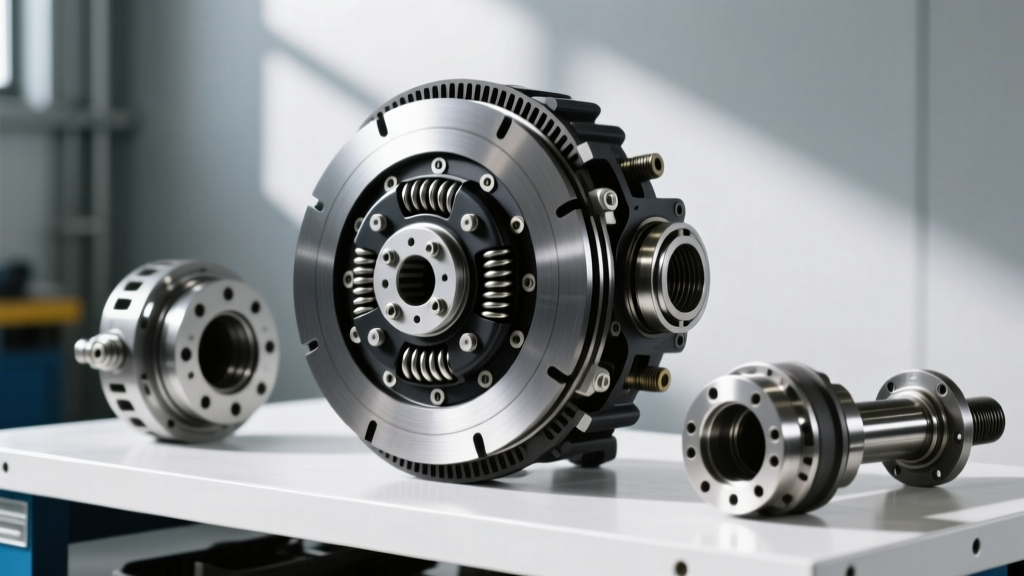
For trucks frequently operating in mountainous terrain, logging operations, or heavy-haul sectors, standard OEM single-plate replacements are an inefficient use of downtime. The labor cost to pull a heavy-duty transmission (often exceeding $1,500 in shop time) justifies upgrading to a twin-plate clutch system. Twin-plate setups double the friction surface area, drastically reducing the clamping load required on the pedal while increasing maximum torque capacity by up to 30%. Furthermore, modern twin-plate designs utilize ceramic or advanced Kevlar-infused organic friction materials that resist glazing under extreme thermal cycling.
| Clutch System Type | Example Part Number | Max Torque Capacity | Estimated Kit Cost (2026) | Best Application |
|---|---|---|---|---|
| Eaton Solo 15.5" (Single Plate OEM) | 08920100 | 1,850 lb-ft | $1,400 - $1,800 | Regional Haul, Flatland LTL |
| Eaton Advantage Twin-Plate | 08930250 | 2,250 lb-ft | $2,800 - $3,400 | Heavy Haul, Mountainous Routes |
| ZF Sachs Twin Plate (Rigid) | 8818619990 | 2,050 lb-ft | $2,500 - $3,100 | High-Performance Vocational |
According to engineering data published by Eaton Heavy-Duty Drivetrain, upgrading to their Advantage twin-plate system not only increases torque capacity but also extends service life by up to 40% in severe-duty cycles due to superior heat dissipation across the intermediate drive plate.
Precision Measurement Protocols for Commercial Drivetrains
Executing high-performance truck clutch repairs requires adherence to strict tolerances. Heavy-duty diesel engines and massive cast-iron transmission housings are subject to thermal expansion and mechanical stress that can warp mating surfaces. Skipping precision measurements during a clutch swap is the leading cause of premature throwout bearing failure and input shaft seal leaks.
Flywheel Runout and Resurfacing Limits
Before installing any performance clutch assembly, the flywheel face runout must be measured using a dial indicator. The maximum allowable runout for most Cummins ISX/X15 and Detroit DD15 flywheels is 0.005 inches. If the runout exceeds this specification, the clutch cover will distort when torqued down, leading to uneven pressure plate loading and immediate chatter. Furthermore, step height (the distance from the friction surface to the clutch cover mounting pad) must be verified. For a standard Eaton 15.5-inch clutch, the step height must be maintained within 0.010 inches of the OEM specification. If the flywheel has been resurfaced multiple times, a shim kit or a replacement billet flywheel is mandatory to maintain proper clutch brake geometry.
Bellhousing Concentricity (TIR)
Commercial bellhousings are massive and prone to misalignment from chassis flex and engine mount degradation. Using a dial indicator mounted to the crankshaft flange, measure the inside bore of the bellhousing. The Total Indicator Reading (TIR) must not exceed 0.020 inches. If the bellhousing is out of concentricity, the transmission input shaft will bind against the pilot bearing and the clutch disc hub, causing catastrophic spline wear and release bearing seizure. As highlighted in TMC Recommended Practices (RP 632), correcting bellhousing runout using offset dowel pins is a non-negotiable step in heavy-duty clutch overhauls.
Torque Specifications and Fastener Protocols
Heavy-duty drivetrains do not forgive improper fastener torque. The rotational mass of a commercial clutch and flywheel assembly can exceed 250 lbs, and the harmonic vibrations of a high-compression diesel engine will quickly back out under-torqued hardware.
- Flywheel to Crankshaft Bolts (Cummins X15): These must be torqued to 258 lb-ft, followed by a 90-degree turn (torque-to-yield). Always use new OEM fasteners; never reuse TTY flywheel bolts.
- Clutch Cover to Flywheel Bolts: For Grade 8 heavy-duty clutch cover bolts, the standard torque specification is 90 to 110 lb-ft. These must be tightened in a strict crisscross (star) pattern, incrementally increasing torque in 20 lb-ft steps to ensure the pressure plate diaphragm springs compress evenly without binding.
- Transmission to Bellhousing: Typically 180 to 220 lb-ft depending on the specific SAE #1 or #2 housing configuration. Apply medium-strength threadlocker to the lower bolts, which are highly susceptible to road-spray corrosion and vibration loosening.
Pedal Linkage, Free Travel, and Clutch Brake Adjustment
The final phase of any commercial truck clutch repair is the external adjustment. Unlike hydraulic passenger car systems, heavy-duty trucks utilize complex mechanical linkages, air-assisted hydraulic servos, or fully automated manual transmission (AMT) actuators. For traditional manual setups, achieving the correct pedal geometry is vital for the survival of the clutch brake.
The 1.5-Inch Free Travel Rule:
There must be exactly 1.5 inches to 2.0 inches of free travel at the top of the clutch pedal before the release bearing makes contact with the clutch brake fingers. If free travel is insufficient, the release bearing will ride constantly against the fingers, generating immense heat, glazing the friction discs, and destroying the bearing within 10,000 miles.
The Clutch Brake Squeeze Measurement:
With the pedal fully depressed to the floor, measure the distance from the bottom of the pedal to the floorboard. The clutch brake should engage when the pedal is 0.5 inches to 0.625 inches off the floor. This 'squeeze' compresses the clutch brake disc against the transmission input bearing retainer, halting the input shaft. If the squeeze is greater than 0.75 inches, the clutch brake will not fully engage, resulting in gear grinding. Adjust the external turnbuckle on the clutch linkage or the internal cab pedal stop to achieve these precise parameters.
Conclusion: Investing in Driveline Longevity
Treating heavy-duty truck clutch repairs as an opportunity for performance optimization is the hallmark of elite fleet maintenance. By diagnosing torsional failures accurately, upgrading to high-capacity twin-plate systems from industry leaders like ZF Commercial Vehicle Solutions, and adhering to strict bellhousing and torque specifications, operators can eliminate driveline downtime. In the demanding landscape of 2026 commercial trucking, where engine torque outputs continue to climb and freight margins remain tight, precision clutch upgrades are not a luxury—they are a fundamental requirement for operational survival.