The Hidden Link Between TCC Solenoid Problems and Torque Converter Debris
When a vehicle presents with Torque Converter Clutch (TCC) solenoid problems, the immediate instinct for many technicians is to drop the pan, replace the faulty solenoid, and refill the fluid. However, this approach frequently leads to a comeback within 500 to 1,000 miles. Why? Because the root cause of the solenoid failure is often microscopic clutch material and metallic debris shed from a degrading torque converter. If you do not understand how to clean a torque converter and the associated hydraulic circuits properly, the new solenoid will quickly become clogged, jammed, or electrically compromised by the remaining contamination.
In modern automatic transmissions like the GM 6L80, Ford 6R80, and the legendary 4L60E, the TCC solenoid operates under tight hydraulic tolerances. Even a particle of friction material measuring 0.005 inches can restrict the Pulse Width Modulated (PWM) signal or block the exhaust port, resulting in TCC shudder, slip codes, or harsh engagement. Addressing TCC solenoid problems requires a holistic approach that prioritizes total system decontamination.
Diagnosing TCC Solenoid Failure: Codes and Symptoms
Before attempting to clean the system, confirm that the TCC solenoid is indeed the victim of debris rather than an electrical fault. Common OBD-II codes associated with TCC hydraulic restrictions include:
- P0741: Torque Converter Clutch Circuit Performance or Stuck Off (Highly common in GM 4L60E and 6L80 due to debris in the TCC apply valve or solenoid screen).
- P0742: Torque Converter Clutch Circuit Stuck On (Often caused by a jammed solenoid plunger or skewed separator plate).
- P2763 / P2764: Torque Converter Clutch Pressure Control Solenoid Control Circuit High/Low (Frequent in ZF-based transmissions like the Ford 6R80 when the solenoid coil is shorted by metallic dust).
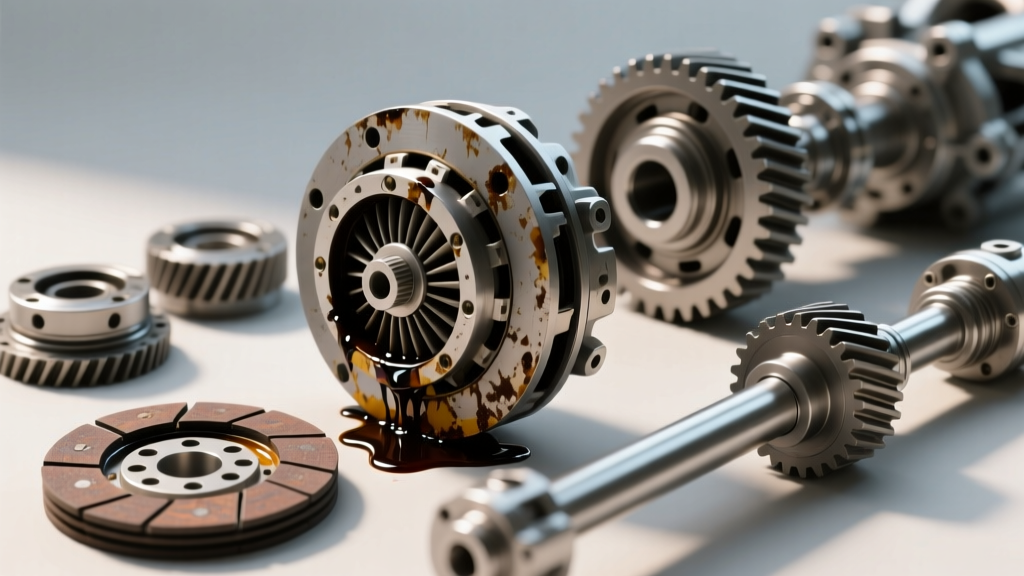
If you pull the transmission pan and find a heavy coating of dark, glittering paste on the magnets, or if the fluid smells distinctly burnt, the torque converter clutch lining is deteriorating. This is your cue that a simple solenoid swap will not suffice.
The Myth of the 'Magic' Chemical Flush Additive
A critical best practice in transmission repair is abandoning the reliance on chemical flush additives to clean a failing torque converter. While solvent-based additives can dissolve varnish on valve body spool valves, they cannot dissolve the physical Kevlar, carbon, or ceramic friction material shedding from the TCC lining inside the converter. Furthermore, aggressive chemical flushes can degrade the rubber seals and O-rings on the solenoid plungers and accumulator pistons. True decontamination requires mechanical force, high-volume fluid exchange, and in severe cases, physical remanufacturing.
How to Clean a Torque Converter: Professional Protocol
Understanding how to clean a torque converter requires distinguishing between an in-car flush and an off-car remanufacturing process. Because the torque converter is a sealed, welded unit, you cannot simply open it up in the bay to wipe out the debris.
Method 1: High-Volume Back-Flushing (In-Car Service)
If the TCC material wear is mild to moderate, and you are replacing the solenoid and valve body components, you must aggressively flush the torque converter and cooler circuit. This is done using a dedicated transmission flushing machine equipped with a back-flush capability.
- Bypass the Radiator: Disconnect the transmission cooler lines at the radiator or auxiliary cooler. Use a bypass tool to loop the lines directly to the flush machine.
- Reverse Flow Agitation: Standard forward flushing only pushes debris deeper into the stator and turbine fins. You must use compressed air and solvent in a reverse-flow pattern (pumping fluid backward through the cooler lines and into the converter's exit port) to dislodge trapped friction material.
- Pulse the Air: Introduce short bursts of 100 PSI shop air into the fluid stream. This cavitation effect helps break up clumps of TCC clutch material trapped in the converter's internal labyrinth.
- Filter Capture: Run the fluid through a 40-micron inline filter. Continue the back-flush cycle until the fluid exiting the filter runs completely clear and free of metallic glitter.
Method 2: Cutting and Hot-Tanking (Remanufacturing)
If the transmission has suffered a catastrophic TCC failure, or if back-flushing fails to yield clear fluid, the torque converter must be removed, cut open on a lathe, and hot-tanked. According to guidelines from the Automatic Transmission Rebuilders Association (ATRA), hot-tanking involves submerging the disassembled converter halves in a heated, highly alkaline chemical bath to strip all friction material, carbon, and burnt oil from the impeller, turbine, and stator. The unit is then steam-cleaned, inspected for hub wear, re-welded, and dynamically balanced. If you are dealing with severe TCC solenoid problems caused by heavy debris, installing a remanufactured converter is the only guaranteed fix.
Step-by-Step Valve Body and Solenoid Screen Inspection
Cleaning the torque converter is only half the battle. The debris travels from the converter, through the cooler lines, and directly into the valve body and solenoid screens. When addressing TCC solenoid problems in a GM 4L60E, you must remove the TCC PWM solenoid (often Part # 24230298) and inspect the small mesh screen located at the base of the solenoid bore. If this screen is torn or clogged with black sludge, the solenoid will fail to modulate apply pressure, resulting in a harsh TCC lockup or a P0741 code.
For the GM 6L80, the solenoids are integrated into the TEHCM (Transmission Electro-Hydraulic Control Module). If TCC debris has infiltrated the TEHCM, Sonnax technical resources strongly recommend replacing the entire TEHCM assembly, as the microscopic mesh filters inside the module cannot be reliably cleaned without specialized ultrasonic equipment.
Transmission-Specific TCC Solenoid & Cleaning Data
| Transmission Model | Common TCC Solenoid Issue | Cleaning / Service Protocol | Estimated Part Cost (OEM) |
|---|---|---|---|
| GM 4L60E | PWM Solenoid screen clogging; TCC apply valve bore wear. | Back-flush converter; replace solenoid screen; install Sonnax TCC valve sleeve kit. | $35 - $55 |
| GM 6L80 / 6L90 | TEHCM internal filter blockage causing TCC shudder (P0741). | Machine flush cooler lines; replace TEHCM if debris is present; install new TCC clutch kit. | $250 - $400 (TEHCM) |
| Ford 6R80 | Solenoid block contamination from ZF-style clutch wear. | Hot-tank torque converter; replace mechatronic sleeve and solenoid block. | $180 - $250 |
| ZF 8HP (Chrysler/BMW) | Mechatronic unit pressure loss due to TCC material in the valve body. | Complete transmission removal; replace torque converter; flush integrated cooler. | $450+ (Mechatronic) |
Best Practices for Reassembly and Torque Specs
Once the torque converter, cooler lines, and valve body have been thoroughly cleaned or replaced, precision during reassembly is vital to prevent new TCC solenoid problems.
- Separator Plate Verification: Always check the separator plate orifice that feeds the TCC apply circuit. In high-mileage 4L60E units, the steel check balls can peen the aluminum orifice, altering the hydraulic volume and mimicking a bad solenoid. Use a vacuum test station to verify circuit integrity.
- Torque Specifications: When reinstalling the valve body, adhere strictly to manufacturer torque specs to prevent warping the casting, which can cause cross-leaks in the TCC apply circuit. For the GM 4L60E, valve body bolts should be torqued to 8-11 Nm (72-97 lb-in). For the Ford 6R80 mechatronic unit, follow the specific sequence and torque the mounting bolts to 10 Nm (89 lb-in).
- Priming the Converter: Never install a dry torque converter. Pre-fill the converter with 1.5 to 2 quarts of the exact OEM-specified ATF (e.g., Dexron ULV for 6L80, Mercon LV for 6R80) before sliding it onto the transmission input shaft. This prevents immediate dry-start friction material shedding upon first ignition.
Expert Insight: If you are diagnosing TCC shudder on a 6L80, do not immediately condemn the torque converter or the solenoids. GM released updated calibrations for the TEHCM to alter the TCC apply strategy. Always check for TSBs and perform a reflash before tearing down the hydraulic system. However, if the fluid is black and smells burnt, no software update will save degraded friction material.
When to Replace Instead of Clean
Knowing how to clean a torque converter is an essential skill for minimizing warranty comebacks, but it is not a cure-all. If the torque converter clutch hub shows scoring, if the internal stator one-way clutch is seized, or if the converter exhibits excessive end-play (greater than 0.030 inches), cleaning is a waste of time. In these scenarios, the internal mechanical damage will continue to generate debris, inevitably destroying the new TCC solenoid and valve body components. Invest in a high-quality, remanufactured torque converter from a reputable supplier, pair it with a rigorous cooler-line flush, and you will permanently resolve the TCC solenoid problems plaguing the vehicle.