The Anatomy of Torque Converter Shudder
Torque converter shudder remains one of the most misunderstood and frequently misdiagnosed drivability complaints in modern automatic transmissions. Typically occurring between 35 and 55 mph during light throttle application, this vibration is often felt through the seat and steering wheel. While many technicians immediately blame degraded transmission fluid or worn friction materials, a severe mechanical anomaly—a ballooned torque converter—can mimic these exact symptoms while quietly destroying the transmission's thrust bearings and input shafts.
As a preventive maintenance guide, understanding the distinction between standard Electronic Controlled Capacity Converter (ECCC) slip issues and structural torque converter deformation is critical for saving your drivetrain. In this deep dive, we will explore how to diagnose shudder, identify the telltale signs of a ballooning torque converter, and implement preventive measures for notorious platforms like the GM 6L80/6L90, Ford 10R80, and ZF 8HP series.
Understanding the Ballooning Phenomenon
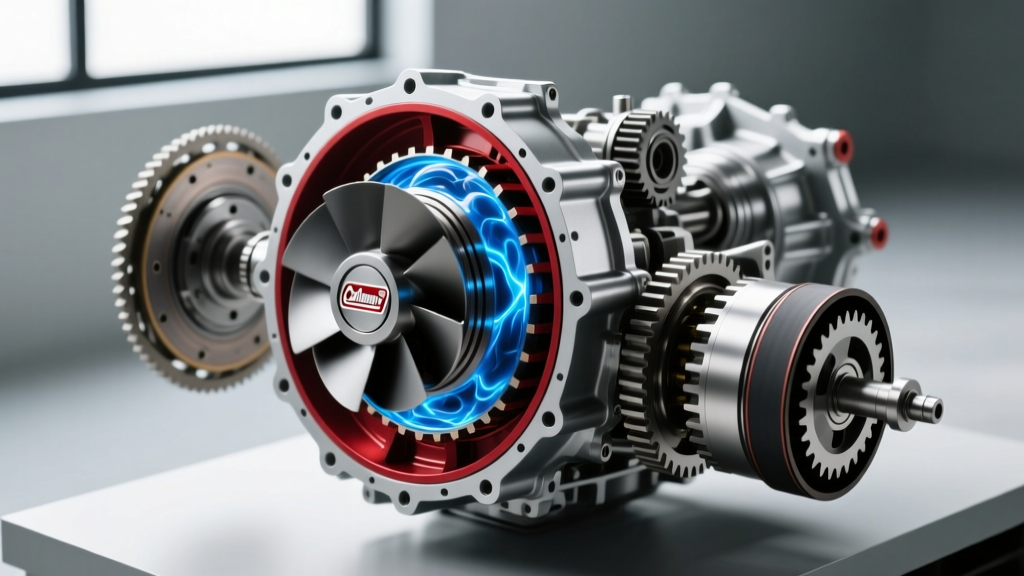
A torque converter is essentially a fluid coupling encased in a welded steel shell. Inside, the impeller, turbine, and stator manage hydraulic pressure and torque multiplication. When the Torque Converter Clutch (TCC) applies, it mechanically locks the engine to the transmission input shaft to eliminate slip and improve fuel economy.
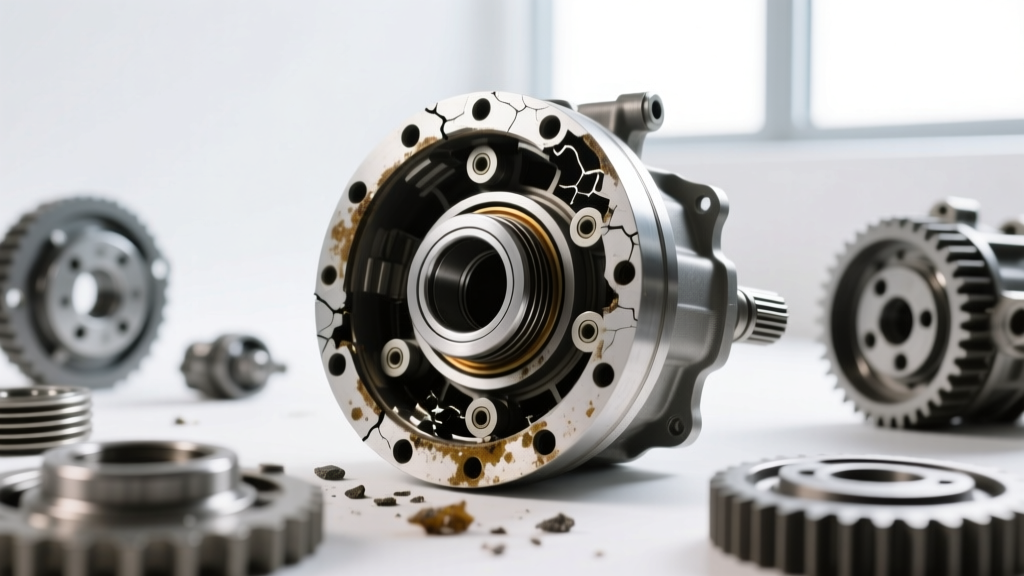
Ballooning occurs when the internal hydraulic pressure exceeds the structural yield strength of the converter's steel shell. This is rarely a factory defect; it is almost always the result of aftermarket tuning. When enthusiasts use handheld programmers to increase transmission line pressure for "firmer shifts," the hydraulic fluid acts like a balloon inflating inside a rigid container. The front cover of the torque converter bulges outward toward the engine block.
This outward deformation causes three catastrophic issues:
- Altered TCC Apply Geometry: The piston inside the TCC can no longer apply evenly against the friction surface, causing aggressive, oscillating slip (shudder).
- Thrust Bearing Overload: The ballooned shell pushes the entire rotating mass forward, crushing the transmission's front thrust bearing and pump gears.
- Flexplate Stress: The uneven pulling force on the flexplate can lead to micro-fractures around the crankshaft bolt pattern.
Diagnostic Protocol: Scan Tool PIDs and Road Testing
Before tearing into the bellhousing, you must isolate the shudder using OEM-level scan tool data. Relying on "seat-of-the-pants" diagnostics will lead to unnecessary fluid flushes that won't fix a mechanical failure.
Step 1: Monitor TCC Slip RPM
Connect a bi-directional scan tool and pull up the TCC Slip Speed PID (Parameter Identification). Modern transmissions utilize a controlled slip strategy (usually 10 to 20 RPM of slip) to dampen engine harmonics.
- Normal Operation: Slip RPM holds steady between 10-25 RPM during ECCC apply.
- Friction Degradation: Slip RPM fluctuates wildly (e.g., jumping from -40 to +60 RPM) in a rhythmic pattern, correlating with the shudder vibration.
- Ballooning Indicator: The TCC commands 100% lockup (0 RPM slip), but severe vibration persists, accompanied by a low-frequency growl from the bellhousing area. This indicates physical imbalance or the TCC piston binding due to shell deformation.
Step 2: The Wide-Open Throttle (WOT) Test
Find a safe, legal stretch of road. Accelerate through the gears at WOT. Under WOT, the TCC is completely disengaged. If the shudder disappears entirely under heavy load but returns violently during light-load cruise, the issue is isolated to the TCC circuit or converter geometry. If the vibration persists under WOT, you are likely dealing with engine misfires, driveline U-joints, or severe internal converter fin damage.
Comparison: Friction Degradation vs. Ballooned Torque Converter
Distinguishing between a simple friction issue and a ballooned torque converter requires analyzing the vehicle's history and symptom profile. Refer to the diagnostic matrix below:
| Diagnostic Parameter | Standard TCC Friction Shudder | Ballooned Torque Converter Shudder |
|---|---|---|
| Primary Trigger | Depleted ATF friction modifiers, contaminated fluid | Aftermarket tuning, excessive line pressure, high-stall misuse |
| Scan Tool TCC Slip | Oscillating wildly (e.g., -50 to +50 RPM) | Erratic, or zero slip with severe physical vibration |
| Transmission Temperatures | Normal (180°F - 210°F) | Often elevated due to restricted cooler flow from deformed shell |
| Associated DTCs | P0741 (TCC Stuck Off), P1744 (TCC Excessive Slip) | P0741, P0742, alongside pump whine or input shaft speed sensor errors |
| Effect of "Shudder Fix" Additives | Temporary improvement (masks the symptom) | No improvement; mechanical geometry cannot be fixed chemically |
Mechanical Verification and Torque Specifications
If your data points toward a ballooned torque converter, the unit must be removed. However, preventive maintenance dictates that you must verify the collateral damage before installing a replacement. According to Sonnax Technical Resources, failing to check flexplate runout is the leading cause of repeat TCC failures.
Measuring Flexplate Runout
Once the transmission is lowered, mount a magnetic dial indicator to the engine block and rest the probe on the torque converter mounting pad of the flexplate. Rotate the engine by hand through 360 degrees.
- Maximum Allowable Runout: 0.015 inches (0.38 mm) for GM 6L80/6L90 and Ford 10R80 applications.
- Corrective Action: If runout exceeds this spec, the flexplate is warped (likely due to the pulling force of the ballooned converter) and must be replaced. Installing a new torque converter to a warped flexplate will destroy the new TCC lining within 5,000 miles.
Critical Torque Specs for Reassembly
When installing a new OEM or billet torque converter, adhere strictly to manufacturer torque specifications. Over-torquing the converter nuts can distort the new converter's cover, inducing instant shudder.
- GM 6L80 / 6L90 (Flexplate to Crankshaft): 74 Nm (55 lb-ft) + 90 degrees.
- GM 6L80 / 6L90 (TC to Flexplate): 45 Nm (33 lb-ft).
- Ford 10R80 (Flexplate to Crankshaft): 115 Nm (85 lb-ft).
- Ford 10R80 (TC to Flexplate): 48 Nm (35 lb-ft).
Preventive Maintenance: Fluids, Cooling, and Tuning
Preventing a ballooned torque converter and subsequent shudder requires a holistic approach to drivetrain maintenance. The era of "lifetime" transmission fluids is a marketing myth that costs consumers thousands in premature replacements. Industry experts at Transmission Digest consistently emphasize the importance of fluid shear stability in modern 8- and 10-speed units.
1. Strict Adherence to OEM Fluid Specifications
Modern transmissions require ultra-low viscosity (ULV) fluids to manage the micro-slip of the TCC.
- GM 8L90 / 10L90: Requires Dexron ULV. Using older Dexron VI will alter the TCC apply rate, causing immediate shudder and potential overheating.
- Ford 10R80: Requires Mercon ULV. These fluids contain highly specific friction modifiers designed for the ECCC strategy.
Preventive Interval: Perform a drain and fill (not a high-pressure flush) every 45,000 to 60,000 miles under normal driving conditions, or every 30,000 miles if towing or operating in high-ambient-temperature environments.
2. Upgrading Cooler Flow and Bypass Valves
Many modern transmissions utilize a thermal bypass valve that prevents fluid from reaching the cooler until the ATF reaches operating temperature (often around 190°F). While this aids in cold-start emissions, it allows the torque converter to heat-soak during sustained highway driving, degrading the fluid's ability to maintain the hydraulic boundary layer required for TCC apply. Installing a calibrated thermal bypass delete (available from manufacturers like PPE or Mishimoto) ensures continuous cooler flow, keeping converter temperatures below 200°F and preserving the steel shell's structural integrity.
3. The Dangers of Aftermarket Tuning
If you own a modified truck or performance sedan, audit your ECU/TCM tune immediately. Many "canned" tunes artificially raise transmission line pressure to maximum PSI across all gears to achieve aggressive shift times. This constant high-pressure state is the primary catalyst for a ballooned torque converter. If you demand firmer shifts, invest in a custom calibration that optimizes shift timing via solenoid ramp rates rather than brute-forcing line pressure, or upgrade to a billet front cover torque converter designed to withstand 300+ PSI without deformation.
Conclusion
Torque converter shudder is a warning sign that should never be ignored or masked with chemical additives. By utilizing scan tool PIDs to monitor TCC slip, verifying flexplate runout with precision instruments, and adhering to strict preventive maintenance intervals with ULV-spec fluids, you can protect your drivetrain from catastrophic failure. Remember, a ballooned torque converter is a mechanical death sentence for your transmission; identifying the root cause early is the difference between a simple fluid service and a $4,500 rebuild.