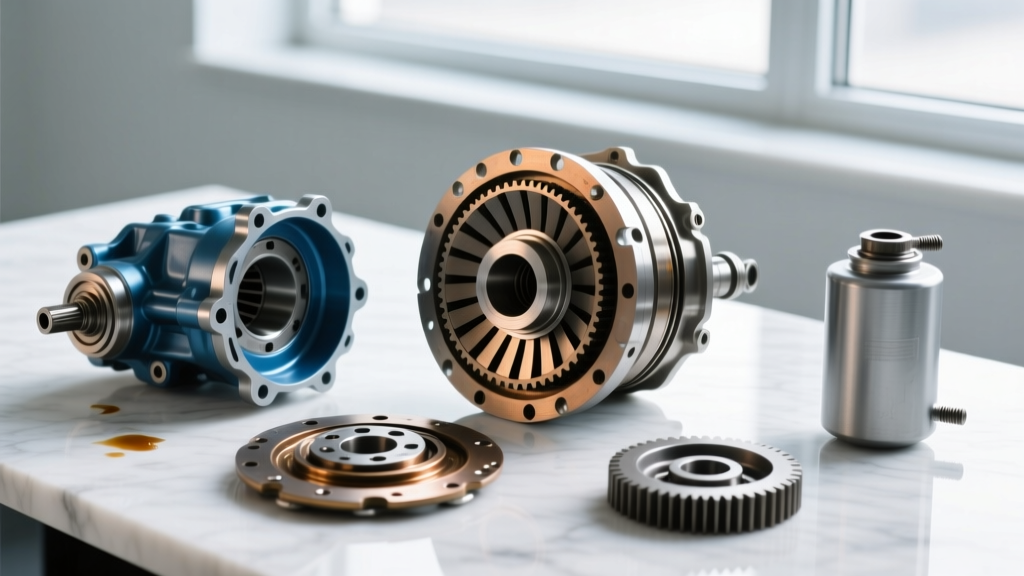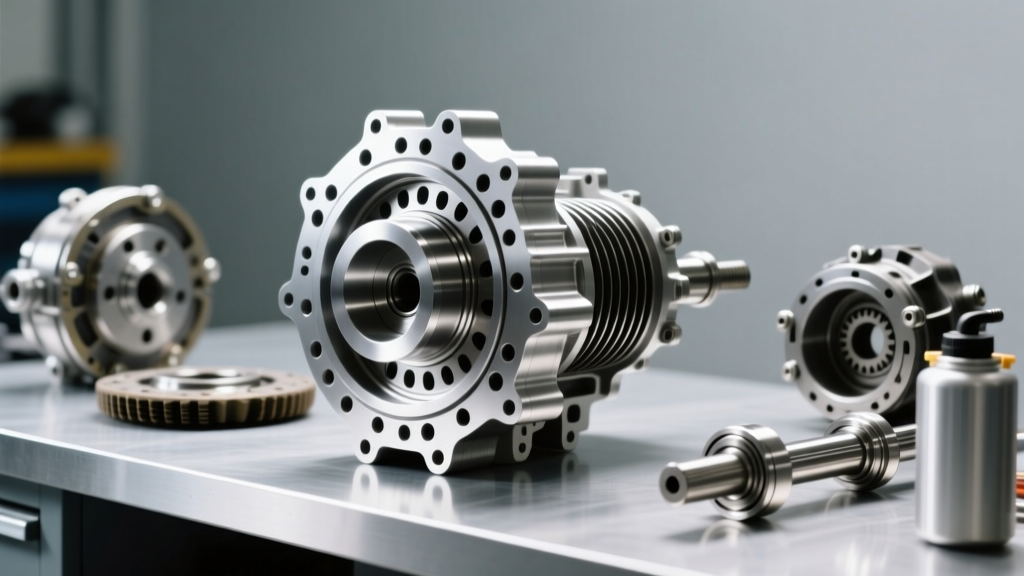
The Mechanical Root of 4L60E TCC Shudder
The GM 4L60E transmission is a legendary staple of the automotive world, powering millions of trucks, SUVs, and performance cars from 1993 through the late 2010s. However, as these units age, owners frequently encounter the infamous "TCC shudder"—a rhythmic, 20-to-45 Hz vibration that mimics driving over rumble strips. This phenomenon typically occurs between 35 and 45 mph under light throttle during the Torque Converter Clutch (TCC) apply phase. In 2026, with the average 4L60E-equipped vehicle well over a decade old, addressing this issue requires more than just a fluid swap; it demands a deep understanding of hydraulic apply circuits and metallurgy.
The TCC is a hydraulically applied friction disc designed to lock the engine to the transmission input shaft, eliminating slip and improving fuel economy. The inherent flaw in the OEM 4L60E design lies in the torque converter front cover, which is manufactured from thin stamped steel. When the Transmission Control Module (TCM) commands TCC apply via the Pulse Width Modulation (PWM) solenoid (GM Part #24230298), line pressure—often regulated between 90 and 150 PSI—pushes the TCC piston against the front cover.
Because the stamped steel cover lacks structural rigidity, it micro-flexes under this hydraulic load. This deflection causes the friction material to rapidly grab and release the cover surface, creating the harmonic vibration known as shudder. Over time, this oscillating slip glazes the friction lining, scores the cover surface, and sheds debris into the transmission pan, leading to permanent lockup failure and contaminated valve body circuits.
Step-by-Step Diagnostic Protocol
Before tearing into the drivetrain or ordering replacement parts, you must isolate the shudder from engine misfires, worn U-joints, or driveline harmonics. Follow this precise diagnostic sequence:
1. The Brake-Tap Test
Drive the vehicle at the exact speed and throttle position where the shudder occurs (usually 40 mph in 4th gear, around 1,500 RPM). Lightly tap the brake pedal with your left foot. This signals the TCM to instantly release the TCC. If the vibration immediately ceases and returns the moment you release the brake, the issue is strictly TCC-related. If the vibration persists, investigate engine misfires or driveshaft imbalance.
2. Scan Tool Data Analysis
Connect a bi-directional OBD2 scanner capable of reading manufacturer-specific GM transmission PIDs. Monitor the "TCC Slip Speed" parameter, which calculates the difference between Engine RPM and Turbine Shaft RPM. During steady-state cruise with the TCC commanded "ON", slip should be a rock-solid 0 to 20 RPM. If you observe the slip RPM oscillating rapidly between 20 and 100 RPM in tandem with the physical vibration, the friction interface is failing, or the PWM solenoid is starving for fluid due to a clogged screen.
3. Fluid Chromatography and Inspection
Pull the transmission dipstick or drop the pan. OEM fluid should be translucent cherry red. If the fluid is brown, smells of burnt toast, or contains a fine, glitter-like brass or steel particulate, the friction material has delaminated. According to the Automatic Transmission Rebuilders Association (ATRA), continuing to drive with delaminated friction material will destroy the TCC apply valve in the valve body, clog the cooler circuit, and starve the rear planetary gearset of vital lubrication.
Preventive Maintenance and Fluid Specifications
If the shudder is caught in its absolute infancy—characterized by minor glazing but no severe scoring or particulate in the pan—preventive maintenance can temporarily restore friction coefficients and buy you time. GM transitioned to Dexron VI, a synthetic blend with a highly stable viscosity profile and advanced friction modifiers designed to mitigate shudder.
| Fluid / Additive Type | Part Number | Application Scenario | Friction Modifier Notes |
|---|---|---|---|
| ACDelco Dexron VI | 10-9243 | Standard OEM Replacement / Flush | None Required (Advanced modifiers built-in) |
| Lubegard Platinum | 10001 | Universal Synthetic Protectant | 1 oz per quart (Preventive conditioning) |
| Dr. Tranny Shudder Fixx | 10515 | Emergency Glaze Removal | Entire bottle per transmission (Temporary fix) |
Note: While additives alter the static friction coefficient to mask flex-induced shudder, they are strictly a chemical band-aid. They do not solve the mechanical deflection of the OEM stamped cover.
The Permanent Solution: Billet Torque Converter 4L60E Upgrades
For vehicles subjected to towing, modified engines, or simply those whose owners demand absolute reliability, replacing the failing OEM unit with a billet torque converter 4l60e is the only true mechanical cure. Upgrading addresses the root cause of the failure rather than masking the symptoms.
Why Billet Steel Eliminates Shudder
A billet front cover is CNC-machined from a solid block of 1045 carbon steel or chromoly. It is typically .135 inches thicker than the OEM stamped cover and weighs significantly more. This immense rigidity ensures that when 150 PSI of apply pressure hits the TCC piston, the cover does not flex a single micron. The friction disc applies evenly across its entire surface area, resulting in buttery-smooth lockup and zero harmonic oscillation. Furthermore, billet covers are precision-balanced to within 1-2 grams, eliminating high-RPM vibrations that can destroy the transmission pump bushing.
Multi-Disc TCC Configurations
High-end billet converters often replace the single-disc OEM TCC with a 2-disc or 3-clutch pack. This increases the friction surface area by up to 300%. By spreading the torsional load across multiple discs, the clamping force required per square inch is drastically reduced. This eliminates the localized heat generation that causes OEM single-disc failures, making multi-disc billet converters mandatory for any 4L60E pushing over 400 lb-ft of torque.
Cost Analysis: OEM Rebuild vs. Billet Upgrade
When budgeting for a torque converter replacement, it is vital to weigh the initial cost against the expected lifespan and application requirements. Below is a 2026 market breakdown for 4L60E torque converters.
| Converter Type | Average Cost (2026) | TCC Design | Expected Lifespan | Best Application |
|---|---|---|---|---|
| OEM Remanufactured | $250 - $350 | Single-Disc (Stamped Cover) | 60k - 80k miles | Stock daily drivers, low budget |
| Performance Billet | $450 - $650 | Single-Disc (Billet Cover) | 150k+ miles | Towing, mild cam upgrades, daily use |
| Heavy-Duty Billet | $700 - $950 | Triple-Disc (Billet Cover) | 200k+ miles | Supercharged/Turbo, Heavy Towing, Racing |
Critical Installation Torque Specs & Procedures
Installing a new billet torque converter requires strict adherence to torque specifications. Improper installation will result in pump gear shearing, flexplate warping, or catastrophic driveline separation. Always reference the ACDelco Official Parts Catalog and GM service manuals for your specific vehicle application.
- Flexplate to Crankshaft Bolts: M10x1.5, Torque to 60 lb-ft. Apply Red Loctite 271 to the threads to prevent backing out under high-torque loads.
- Torque Converter to Flexplate: M10x1.5 Grade 10.9 bolts. Torque to 46 lb-ft. Apply Blue Loctite 243 to threads. Never use standard hardware store bolts; they lack the tensile strength and will stretch and snap under torsional load.
- Bellhousing to Engine Block: M10x1.5 bolts, Torque to 37 lb-ft in a crisscross pattern to ensure even seating and prevent pump misalignment.
- Cooler Line Flush (Mandatory): You must use a thermal flush machine to push 140-degree fluid through the radiator cooler to dislodge trapped friction material and glaze. According to Sonnax Technical Resources, failing to flush the cooler is the number one cause of premature failure in replacement torque converters, as restricted flow leads to instant TCC overheating.
Final Thoughts on 4L60E Longevity
Torque converter shudder is rarely an isolated event; it is a symptom of a mechanical deficiency compounded by age, heat, and hydraulic fatigue. While chemical additives and fluid swaps serve as excellent diagnostic tools and temporary stop-gaps, they cannot rewrite the laws of physics regarding stamped steel deflection. By accurately diagnosing the slip RPM data, verifying the integrity of the PWM solenoid circuit, and ultimately upgrading to a billet torque converter 4L60E, you transform a notoriously weak link into an unbreakable component capable of handling modern performance demands for hundreds of thousands of miles.