Navigating the 2020 Silverado Torque Converter Recall and Fluid Degradation
As of 2026, owners and technicians dealing with the 10-speed GM trucks are increasingly searching for definitive answers regarding the 2020 Silverado torque converter recall. While the National Highway Traffic Safety Administration (NHTSA) tracks formal safety recalls, GM has primarily addressed the widespread torque converter shudder, vibration, and lockup clutch failures through aggressive Technical Service Bulletins (TSBs), such as TSB 18-NA-355 and subsequent warranty extension programs. For transmission specialists, the root cause of these failures almost always traces back to torque converter fluid issues within the 10L80 (RPO MQE) transmission.
Understanding the intricate relationship between the 10L80's Early Converter Clutch Capacity (ECCC) strategy and the chemical properties of Dexron ULV fluid is critical. If you are experiencing the dreaded 'rumble strip' vibration between 40 and 60 MPH, this expert guide will walk you through the diagnostic best practices, fluid flush procedures, and hardware replacement specifications required to solve the issue permanently.
The Reality Behind the 'Recall' and TSB Campaigns
Technically, GM has not issued a blanket federal safety recall exclusively for the 2020 Silverado torque converter. Instead, the automaker has relied on customer satisfaction programs and TSBs to address the defect. The core issue lies in the torque converter clutch (TCC) lining material and the fluid's ability to maintain friction modifiers under extreme thermal cycling. When the friction modifiers deplete, the TCC cannot apply smoothly during the ECCC micro-slip phase, resulting in severe harmonic shudder that can eventually destroy the clutch lining and contaminate the entire transmission.
Expert Insight: Never ignore early-stage shudder in a 10L80. What starts as a minor fluid friction issue will rapidly escalate into catastrophic hard-part failure, sending metallic debris through the sensitive solenoid body and check balls.
Dexron ULV and the 10L80 Transmission ECCC Strategy
The 10L80 transmission relies on ACDelco Dexron ULV (Ultra Low Viscosity) fluid, specifically part number 19355656. This fluid was engineered to reduce parasitic drag and improve fuel economy. However, its ultra-low viscosity makes it highly susceptible to shearing and thermal breakdown when the torque converter is subjected to heavy towing or frequent stop-and-go traffic.
How Friction Modifier Depletion Causes Shudder
During ECCC operation, the TCC is commanded to slip by exactly 20 to 40 RPM to dampen engine vibrations while maintaining fuel efficiency. Dexron ULV contains specific friction modifiers designed to allow this micro-slip without grabbing. When these modifiers shear out of the fluid base, the clutch material alternates between sticking and slipping hundreds of times per second. According to Sonnax technical resources, this stick-slip phenomenon generates a 30-50 Hz harmonic vibration that transfers directly through the drivetrain and into the vehicle chassis.
Diagnostic Table: Fluid Degradation vs. Mechanical Failure
Before authorizing a costly torque converter replacement, it is imperative to use a bi-directional scan tool (like GM's GDS2 or a high-end aftermarket equivalent) to monitor TCC slip RPM and analyze the fluid condition. Use the following matrix to determine your next step:
| Diagnostic Parameter | Fluid Degradation (Shudder) | Hard Part Mechanical Failure |
|---|---|---|
| TCC Slip RPM | Fluctuates wildly between 0-120 RPM | Consistent high slip (>200 RPM) or 0 RPM |
| Fluid Color & Odor | Dark brown, smells like burnt brake pads | Black, metallic flakes, severe burnt odor |
| Vibration Frequency | 30-50 Hz (feels like driving on rumble strips) | Clunking, grinding, or RPM flares on shifts |
| Occurrence | Light throttle, 40-60 MPH, ECCC apply | Any gear, heavy load, or immediate upon engagement |
| Recommended Action | Triple drain-and-fill flush & TCC relearn | Transmission teardown and TC replacement |
Expert Step-by-Step Fluid Flush Procedure
GM explicitly advises against using high-pressure aftermarket flushing machines on the 10L80, as the pressure can dislodge debris into the valve body or damage the delicate solenoid check balls. Instead, perform a 'triple drain and fill' or use the transmission's internal pump to exchange fluid via the cooler return line.
- Initial Pan Drop: Remove the transmission pan. Note that the 10L80 pan is sealed with RTV or a specific gasket depending on the exact build date. Clean the pan and replace the filter (ACDelco Part # 24283093).
- Refill and Circulate: Refill with approximately 7.5 quarts of Dexron ULV. Start the vehicle, cycle through the gears, and let it reach operating temperature (180°F - 200°F).
- Cooler Line Exchange: Disconnect the transmission cooler return line at the radiator. Route it into a clear collection jug. Start the engine and let the internal pump push out 2 quarts of old fluid, then shut off the engine and add 2 quarts of fresh Dexron ULV.
- Repeat: Repeat the 2-quart exchange process until the fluid in the clear jug runs cherry red and matches the new fluid color. This typically requires 14 to 16 quarts of total fluid.
- Level Check & Relearn: Check the fluid level using the dipstick or level plug procedure at the specified temperature. Finally, use your scan tool to perform a 'TCC Apply Adapt' and 'Fast Adapt' reset to clear the old stick-slip memory from the TCM.
Critical Torque Specs and Capacity Data
Precision is mandatory when servicing the 10L80. Over-torquing the pan bolts will strip the aluminum case, while under-torquing the flexplate bolts will result in catastrophic drivetrain failure.
- Transmission Pan Bolts: 106 lb-in (inch-pounds, NOT foot-pounds)
- Torque Converter to Flexplate Bolts: 46 lb-ft
- Bellhousing to Engine Block Bolts: 37 lb-ft
- Total Dry Fill Capacity: 11.2 Quarts
- Pan Drop Refill Capacity: ~7.5 Quarts
When to Ignore the Flush and Replace the Torque Converter
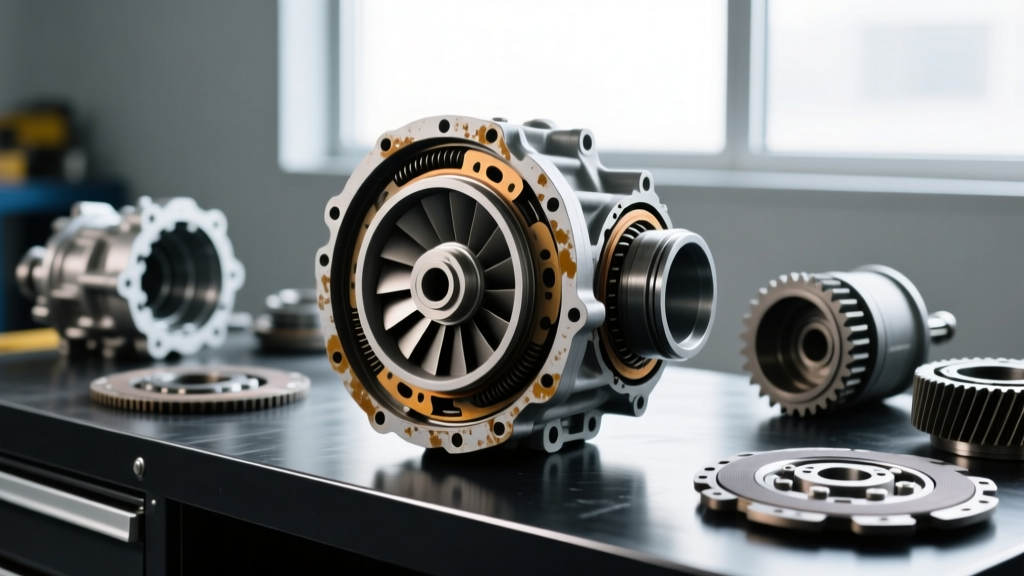
If your diagnostic scan reveals that the TCC slip is consistently above 150 RPM without fluctuating, or if the dropped pan contains heavy metallic glitter and chunks of friction material, a fluid flush will not save the truck. The torque converter clutch is physically destroyed, and continuing to drive will contaminate the 10L80's intricate clutch packs and solenoids.
In these cases, you must replace the torque converter. While OEM ACDelco replacements are available, many transmission experts in 2026 recommend upgrading to an aftermarket billet torque converter (such as those from Circle D or Precision Industries). Billet converters feature reinforced covers and superior friction materials that resist the shearing forces that destroy the OEM units, effectively bulletproofing the truck against future shudder issues.
Long-Term Prevention and Maintenance Intervals
To prevent a recurrence of the issues that sparked the 2020 Silverado torque converter recall campaigns, the 'lifetime fluid' myth must be abandoned. For trucks used for towing, off-roading, or heavy city driving, we recommend a 5-quart drain-and-fill service every 30,000 miles. For standard commuter trucks, a full fluid exchange every 60,000 miles using strictly Dexron ULV will preserve the friction modifiers and ensure the ECCC strategy operates exactly as the engineers intended.