The 4L60E 3-4 Clutch Pack Bottleneck
As of 2026, the GM 4L60E (along with its 4L65E and 4L70E siblings) remains one of the most popular automatic transmissions for budget LS-swaps, restomods, and budget drag builds. However, any seasoned transmission builder knows its Achilles heel: the 3-4 clutch pack. Responsible for engaging third and fourth gears, this assembly is subjected to immense thermal and mechanical stress. When pushing beyond 400 lb-ft of torque, the stock configuration will inevitably slip, glaze, or physically shatter the apply plates.
In manual transmission terminology, mechanics refer to the diaphragm spring and pressure plate assembly when discussing clamp load. In an automatic transmission like the 4L60E, the equivalent 'pressure plate' clamping force is generated hydraulically via an apply piston acting against a backing plate and selective apply plates. Understanding how to manipulate this hydraulic clamp load is the difference between a transmission that survives 600 horsepower and one that grenades on the first 2-3 shift.
Decoding the 4L60E 3 4 Clutch Pack Diagram
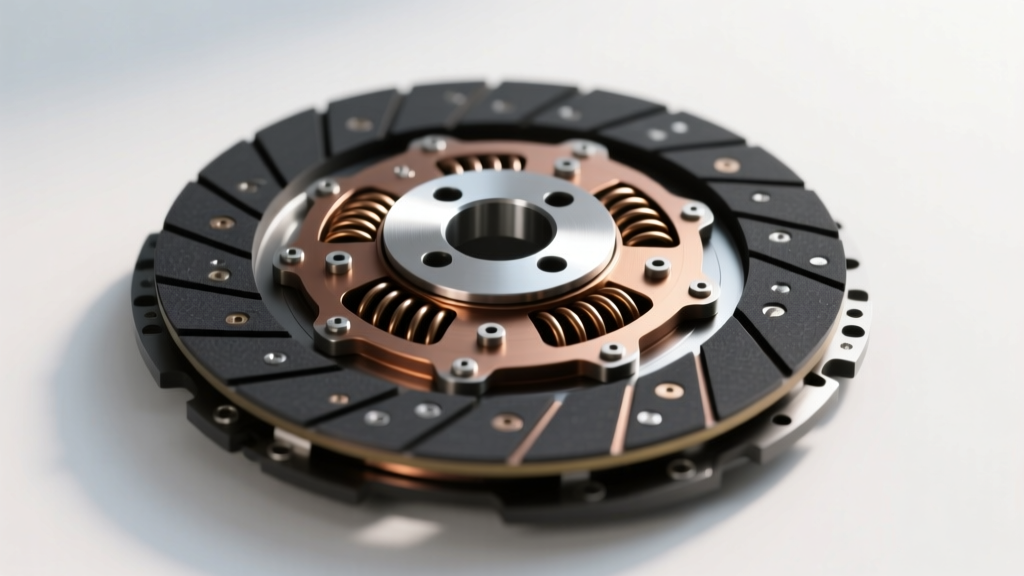
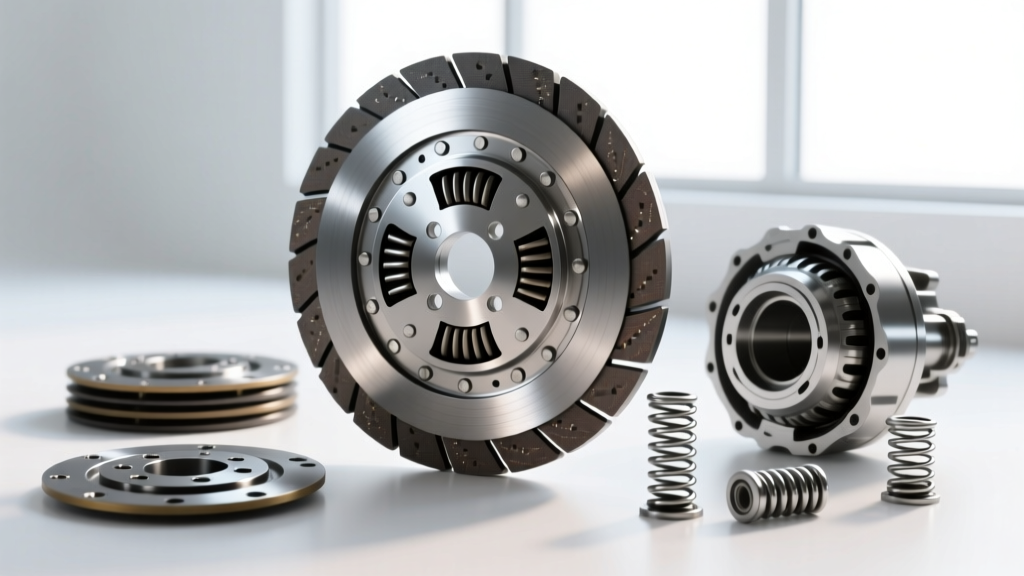
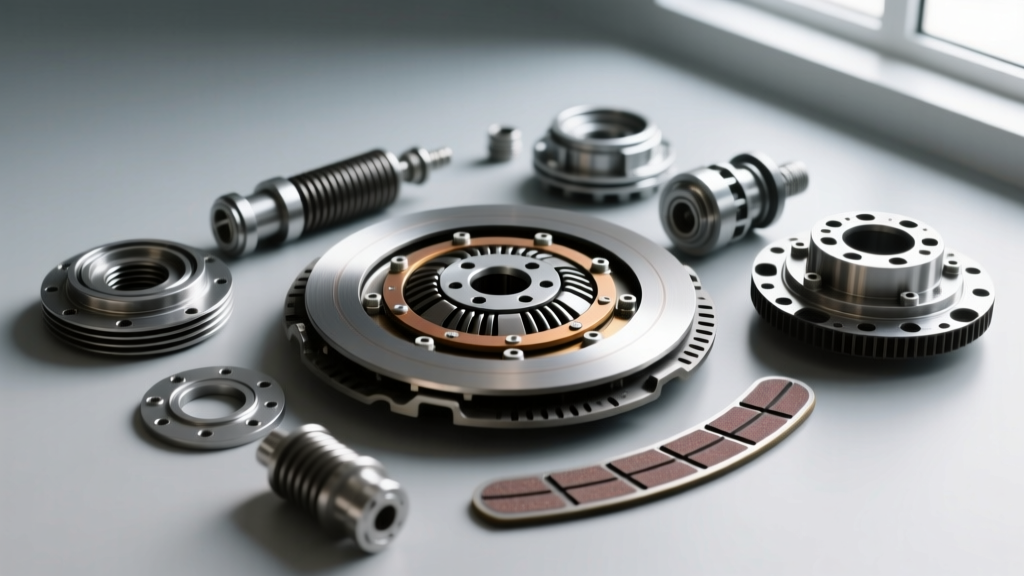
When reviewing a standard 4L60E 3 4 clutch pack diagram, you will notice the assembly is housed entirely within the input housing (also known as the 3-4 clutch housing). The power flow in third and fourth gear relies on this pack locking the input sun gear to the input shaft. The physical stack-up from the bottom of the housing to the snap ring groove is as follows:
- Apply Piston & Inner/Outer Seals: The hydraulic actuator that provides the clamping force.
- Return Spring Assembly & Retainer: Pushes the piston back to disengage the clutch when hydraulic pressure drops.
- Friction Discs & Steel Apply Plates: The alternating friction and reaction surfaces.
- Backing Plate (Pressure Plate Equivalent): The thick steel plate that transfers the piston's force to the clutch pack.
- Selective Snap Ring: Retains the entire assembly within the housing.
Critical OEM and Aftermarket Part Numbers
To properly address clamp load selection, you must start with quality base components. Below are the industry-standard part numbers utilized in high-performance 2026 builds:
- OEM 3-4 Clutch Housing: AC Delco 24239178 (Always inspect for piston bore scoring).
- Heavy-Duty Apply Piston Kit: Sonnax 77733-01K (Features an anodized aluminum piston with improved seal geometry to prevent bore wear).
- High-Energy Frictions: Raybestos GPZ 77578GPZ (Kevlar-infused matrix for higher thermal thresholds).
- Performance Shift Kit: TransGo SK-4L60E-HD2 (Increases line pressure and modifies spring rates).
The Physics of Automatic Clamping Force
To select the correct 'pressure plate' clamp load in an automatic, we must calculate the net hydraulic force acting on the friction surfaces. Unlike a manual pressure plate where clamp load is a fixed mechanical value dictated by the spring fingers, automatic clutch pack clamping force is dynamic. It is calculated using the following formula:
Net Clamp Load = (Line Pressure × Piston Effective Area) - Return Spring Force
The 4L60E 3-4 clutch apply piston has an effective hydraulic area of approximately 14.1 square inches. In a stock calibration, Wide Open Throttle (WOT) line pressure in third and fourth gear typically maxes out around 160 PSI. Furthermore, the stock return springs exert roughly 180 lbs of opposing force to ensure the clutch releases quickly when the solenoid dumps fluid.
Clamp Load Comparison: Stock vs. High-Performance
| Configuration | Line Pressure (PSI) | Piston Area (sq in) | Gross Force (lbs) | Spring Opposing Force (lbs) | Net Clamp Load (lbs) |
|---|---|---|---|---|---|
| Stock OEM Setup | 160 | 14.1 | 2,256 | 180 | 2,076 |
| Stage 1 (TransGo HD2) | 195 | 14.1 | 2,749 | 220 (HD Springs) | 2,529 |
| Stage 2 (Manual Valve Body) | 240 | 14.1 | 3,384 | 280 (Severe Duty) | 3,104 |
As the data illustrates, simply increasing line pressure via the PR (Pressure Regulator) valve and booster spring yields massive gains in clamping force. However, pushing line pressure beyond 250 PSI in a 4L60E risks blowing out the forward clutch piston seals or cracking the aluminum input housing. Therefore, clamp load selection requires a balanced approach involving piston upgrades, spring selection, and precise pack clearances.
Selection Strategies for High-Torque Builds
When building a 4L60E for 500+ lb-ft applications, addressing the 3-4 clutch pack requires a multi-faceted approach to maximize clamp load without sacrificing shift quality or component longevity.
1. Upgrading the Apply Piston and Seals
The stock cast-aluminum or stamped steel pistons are prone to flexing under high line pressure, which leads to uneven clamping across the friction discs. Furthermore, the stock rubber lip seals can roll or extrude past 200 PSI. Upgrading to the Sonnax 77733-01K reinforced piston kit is mandatory. This kit utilizes a rigid, machined piston with a specialized O-ring and lip seal combination that maintains integrity up to 280 PSI, ensuring that 100% of the hydraulic pressure is translated into clamping force rather than lost to internal leakage.
2. Return Spring Rate & Spring Retainer Selection
It may seem counterintuitive to increase the return spring force when trying to maximize net clamp load. However, as RPM increases, centrifugal force causes the heavy stock springs to bow outward, losing their tension and potentially allowing the 3-4 clutch to 'centrifugally apply' in first or second gear, causing severe bind-up and transmission destruction. By selecting a high-tension, compact spring kit (often included in performance shift kits), you maintain positive piston retraction at 7,000+ RPM. While this subtracts slightly from your net clamping force math, the trade-off for high-RPM safety and faster fluid exhaust (quicker shifts) is non-negotiable.
3. Backing Plate Thickness & Clearance Specs
The final piece of the clamp load puzzle is the backing plate. In manual transmissions, the pressure plate fingers dictate the clamp; in the 4L60E, the backing plate acts as the anvil against which the piston crushes the friction pack. If the clutch pack clearance is too tight (under 0.030'), the plates will drag when disengaged, generating immense heat and burning the frictions. If clearance is too loose (over 0.090'), the piston travels too far, delaying the apply and causing a 'flare' shift that glazes the steels.
For high-torque street/strip applications using Raybestos GPZ frictions, the target clearance is 0.045" to 0.060". GM produces selective backing plates in various thicknesses (e.g., 0.210", 0.236", 0.260", 0.284"). Builders must measure the total stack height with a dial caliper and select the exact backing plate required to hit this clearance window while ensuring the selective snap ring seats fully in its groove with a firm, audible click.
Real-World Build Scenarios & Assembly Torque Specs
When assembling the input housing on the bench, cleanliness and precise torque values are critical. The 3-4 clutch housing is secured to the internal components via the turbine shaft and input shaft retainers. While the clutch pack itself does not have 'torque specs' like a manual flywheel, the surrounding retainers do.
- Input Housing to Pump Bolts: 11 lb-ft (15 Nm) - Ensure the housing is fully seated against the pump stator support.
- Turbine Shaft Retaining Ring: Must be fully expanded and seated; failure here results in the entire 3-4 pack ejecting under load.
- Clutch Pack Air-Check: Before installing the transmission to the engine, apply 60-80 PSI of compressed air to the 3-4 apply feed hole in the case. You should hear a solid, metallic 'thud' as the backing plate hits the snap ring, followed by zero air leakage. A hissing sound indicates a cut piston seal or scored housing bore.
Conclusion
Mastering the 4L60E 3 4 clutch pack diagram and understanding the hydraulic physics of apply plate clamp load selection separates amateur rebuilders from professional transmission engineers. By upgrading the apply piston to handle extreme line pressures, balancing return spring tension to combat centrifugal apply, and meticulously selecting backing plate thickness for optimal clearance, you can reliably push the 4L60E platform well past its factory limitations. Whether you are building a weekend track car or a high-torque street machine, treating the automatic clutch pack with the same mathematical rigor as a manual pressure plate is the key to ultimate drivetrain longevity.