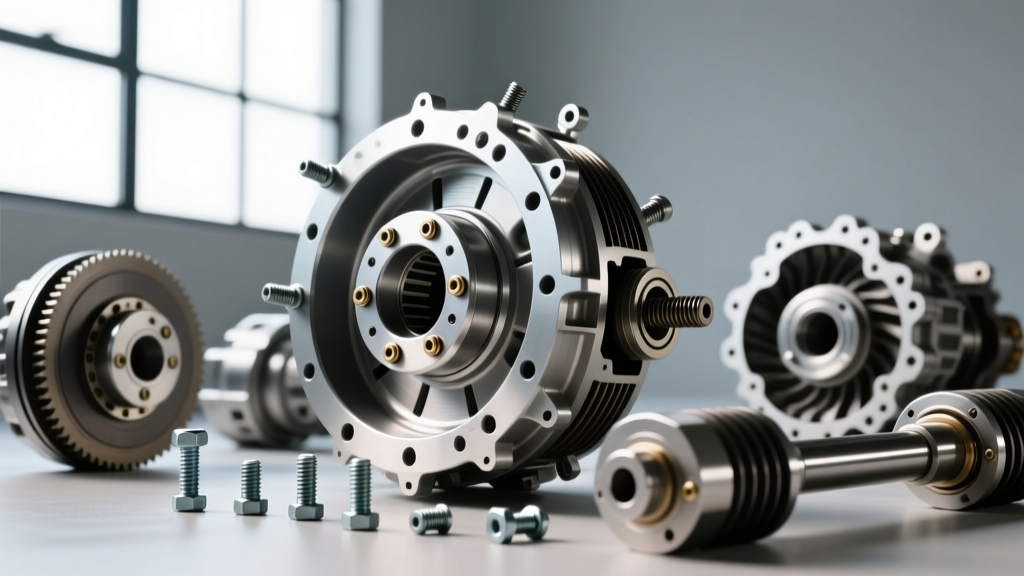
Why Getting the Torque Converter Explained Matters for Your Wallet
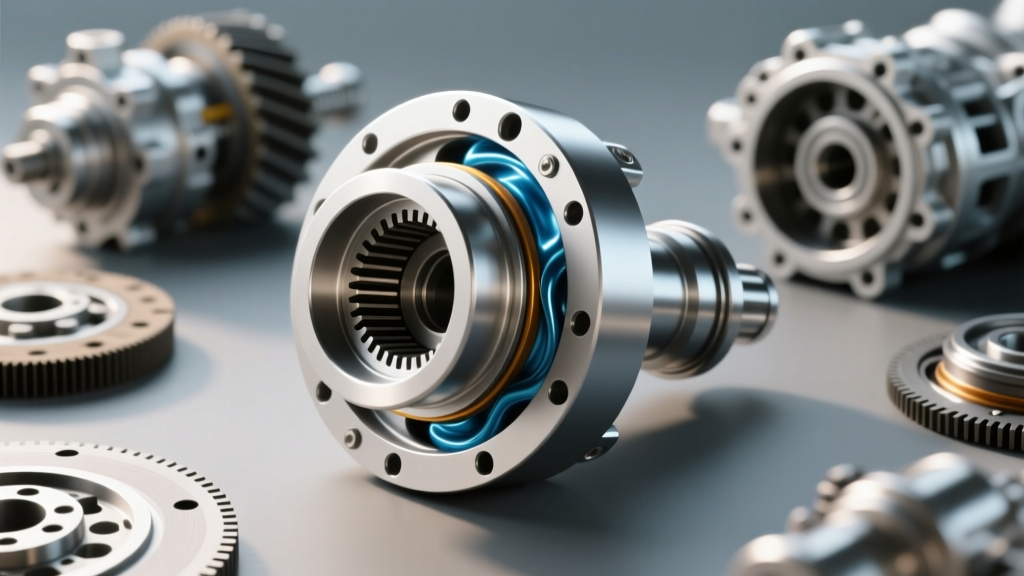
When an automatic transmission begins to shudder, slip, or overheat, the immediate culprit is often the torque converter. While having the torque converter explained by a service advisor usually focuses on the hydraulic multiplication of engine torque, the financial reality of replacing this sealed, welded component is rarely discussed until the teardown begins. In 2026, the cost of a torque converter replacement varies wildly depending on the specific transmission platform, the required fluid technology, and the labor intensity of the removal process.
This model-specific repair guide bypasses the generic estimates found on standard auto repair sites. We are diving deep into the exact part numbers, OEM fluid requirements, precision torque specifications, and real-world shop labor times for three of the most common automatic transmissions on the road today: the GM 6L80/6L90, the Ford 10R80, and the ZF 8HP series. Understanding these variables is critical for any vehicle owner or independent mechanic budgeting for a drivetrain overhaul.
GM 6L80 and 6L90: Silverado, Sierra, and Performance Applications
The GM 6L80 and its heavy-duty sibling, the 6L90, are ubiquitous in GM trucks, SUVs, and performance vehicles like the Camaro and Corvette. The most frequent failure point in these units is the torque converter clutch (TCC) lining, which degrades over time due to aggressive lockup strategies designed to meet CAFE fuel economy standards. This degradation leads to the infamous 'GM shudder,' often triggering a P0741 (TCC Stuck Off) or P0742 (TCC Stuck On) diagnostic trouble code.
Parts and Pricing
For a standard 6L80 application, the OEM replacement is typically the ACDelco Professional Torque Converter (Part # 24253204 or similar application-specific variant). As of early 2026, sourcing this unit directly through an ACDelco distributor or a verified OEM partner will cost between $380 and $520. Aftermarket remanufactured units from reputable builders like Precision of New Hampton or YPT can be found for $250 to $350, but they often require a core charge and may not feature the latest billet TCC piston upgrades that prevent repeat shudder issues.
Labor and Fluid Requirements
Replacing the torque converter on a GM truck requires dropping the transmission pan, unbolting the bell housing, and supporting the engine. Book time averages 6.2 to 7.5 hours depending on 4WD or 2WD configuration. At a national average shop rate of $145/hour in 2026, labor alone will range from $899 to $1,087. Furthermore, the 6L80 requires Dexron VI or the newer Dexron ULV (Ultra Low Viscosity) fluid. A dry fill capacity is roughly 11.5 quarts, adding another $90 to $130 to the bill for high-quality synthetic fluid and a new OEM transmission filter kit.
Ford 10R80: F-150, Mustang, and High-Torque Platforms
Co-developed by Ford and GM, the Ford 10R80 is a marvel of planetary gear packaging, but its torque converter is subjected to immense stress, especially in EcoBoost F-150s and supercharged Mustang applications. The 10R80 utilizes a specialized lockup clutch that operates in a controlled slip mode across multiple gears to smooth out torque delivery. When the friction material fails, it contaminates the intricate hydraulic body and the lead-frame adapter.
Parts and Pricing
The OEM Motorcraft torque converter for the 10R80 (Part # JL3Z-7902-D or application equivalent) is a highly engineered component. According to Ford Parts and verified 2026 dealership pricing, expect to pay between $550 and $780 for a brand-new OEM unit. Because the 10R80 is highly sensitive to fluid viscosity and clutch clearance, using an aftermarket 'universal' remanufactured converter is strongly discouraged, as it frequently results in immediate TCC slip codes upon relearn.
Labor and Fluid Requirements
The 10R80 is a physically long transmission, making extraction from the F-150's tight engine bay labor-intensive. Book time for removal and installation (R&R) hovers around 7.8 to 9.2 hours. The 10R80 strictly requires Mercon ULV fluid. This fluid is exceptionally expensive, often exceeding $14 per quart at the dealership. With a total system capacity of 13.1 quarts, fluid costs will easily surpass $180. Additionally, the transmission pan on the 10R80 is often sealed with RTV or a proprietary gasket that requires careful cleaning and resealing, adding to the shop's flat-rate time.
ZF 8HP45 and 8HP70: European and Stellantis Platforms
The ZF 8HP series is widely regarded as one of the best automatic transmissions ever engineered, found in everything from BMWs and Audis to the Dodge Charger, Challenger, and Jeep Grand Cherokee. However, the torque converter in the 8HP utilizes a torsional damper that can fail, causing a deep, rhythmic knocking sound at idle or severe driveline vibration. Furthermore, the mechatronics sealing sleeve often leaks into the bell housing, mimicking a torque converter seal failure.
Parts and Pricing
Sourcing a genuine ZF torque converter requires navigating the ZF Aftermarket network or purchasing through OEM channels (like Mopar for Stellantis vehicles). A genuine ZF 8HP70 torque converter (Part # 05079521AA or ZF 1068.027.199) commands a premium price, typically ranging from $750 to $1,100 in 2026. Unlike domestic units, the ZF converter is deeply integrated with the transmission's thermal management system, making cheap aftermarket alternatives a massive liability.
Labor and Fluid Requirements
In vehicles like the BMW 5-Series or Jeep Grand Cherokee Trackhawk, dropping the ZF 8HP often requires lowering the front subframe or manipulating complex exhaust and driveshaft assemblies. Labor times frequently exceed 9.5 hours. The ZF 8HP requires ZF Original 8-Speed Fluid (Shell M-1375.4 equivalent). This fluid is highly specialized, and a complete flush and fill can cost upwards of $250 just in materials. Additionally, the ZF mechatronics sealing sleeve and bridge adapter seals should absolutely be replaced while the unit is out, adding $80 to $120 in miscellaneous OEM hardware.
2026 Model-Specific Replacement Cost Table
The following table synthesizes the estimated out-the-door costs for a professional torque converter replacement in 2026, assuming a national average independent shop labor rate of $145/hour and OEM-level parts.
| Transmission Model | Common Vehicles | OEM Part Reference | Part Cost (2026) | Labor Hours | Total Estimated Cost |
|---|---|---|---|---|---|
| GM 6L80 / 6L90 | Silverado, Sierra, Camaro | ACDelco 24253204 | $380 - $520 | 6.5 - 7.5 | $1,450 - $1,900 |
| Ford 10R80 | F-150, Mustang, Expedition | Motorcraft JL3Z-7902-D | $550 - $780 | 7.8 - 9.2 | $1,850 - $2,500 |
| ZF 8HP45 / 8HP70 | BMW 3/5 Series, Dodge Charger | ZF 1068.027.199 | $750 - $1,100 | 8.5 - 10.5 | $2,200 - $3,100 |
Hidden Costs: Precision Torque Specs and Ancillary Hardware
A torque converter replacement is never just a 'drop it in and fill it' job. The reassembly phase requires strict adherence to manufacturer torque specifications to prevent catastrophic flexplate failure or pump drive damage. Ignoring these specs is a hallmark of amateur mechanics and a primary reason for warranty disputes.
- GM 6L80 Flexplate to Crankshaft: M10 bolts require a torque-to-yield sequence. The standard spec is 25 Nm (18 lb-ft) followed by a 50-degree turn, and a second 50-degree turn. Reusing old TTY bolts will result in sheared flexplates.
- Ford 10R80 TC to Flexplate: M8 bolts must be torqued to 25 Nm (18 lb-ft) plus an additional 60-degree rotation. The converter must be fully seated into the transmission oil pump gear before tightening, or the pump will crack upon engine start.
- ZF 8HP TC to Flexplate: M8x1.0 bolts are torqued to a precise 22 Nm (16 lb-ft). ZF also mandates the use of new alignment dowels if the original dowels show any signs of fretting corrosion.
Beyond bolts, shops must factor in the cost of new rear main seals, transmission cooler line O-rings, and OEM pan gaskets. A $15 O-ring failure on a cooler line after a $2,000 torque converter job is an unacceptable comeback for any reputable transmission shop.
Diagnostic Checklist: Confirming Failure Before Replacement
Before authorizing a teardown, ensure the shudder or slip is genuinely originating from the torque converter and not a failing solenoid or degraded valve body. In 2026, advanced scan tools allow technicians to monitor TCC slip RPM in real-time.
Expert Diagnostic Tip: Command the TCC solenoid to lock at 45 MPH in 4th gear while monitoring the slip RPM. If the slip erraticly bounces between 50 and 150 RPM, you are likely dealing with a degraded friction lining or a failing PWM solenoid. If the slip is a solid, unchanging 200+ RPM with zero lockup engagement, suspect a sheared stator clutch or a severe hydraulic leak in the TCC apply circuit, necessitating a full transmission removal.
Furthermore, always perform a fluid debris analysis. If the transmission pan contains heavy metallic glitter or chunks of aluminum, the torque converter failure has likely taken out the transmission's internal bearings and planetary gears. In these edge cases, replacing just the torque converter is a waste of money; a complete remanufactured transmission swap or a full master rebuild kit is the only viable path forward.