The Physics of Stall Speed in the 47RE Transmission
The Chrysler 47RE automatic transmission, primarily paired with the legendary 5.9L 24-valve Cummins turbo diesel (1996-2007), relies heavily on the torque converter to multiply engine torque and manage power delivery. For Cummins owners towing heavy loads or running modified fuel maps, understanding your 47RE torque converter stall speed is critical for drivetrain longevity and performance. Stall speed is fundamentally the maximum engine RPM achievable when the transmission is in gear, the output shaft is held completely stationary, and the throttle is wide open (WOT). In this state, the torque converter's impeller is spinning at maximum velocity while the turbine remains locked, creating massive hydraulic shear and torque multiplication.
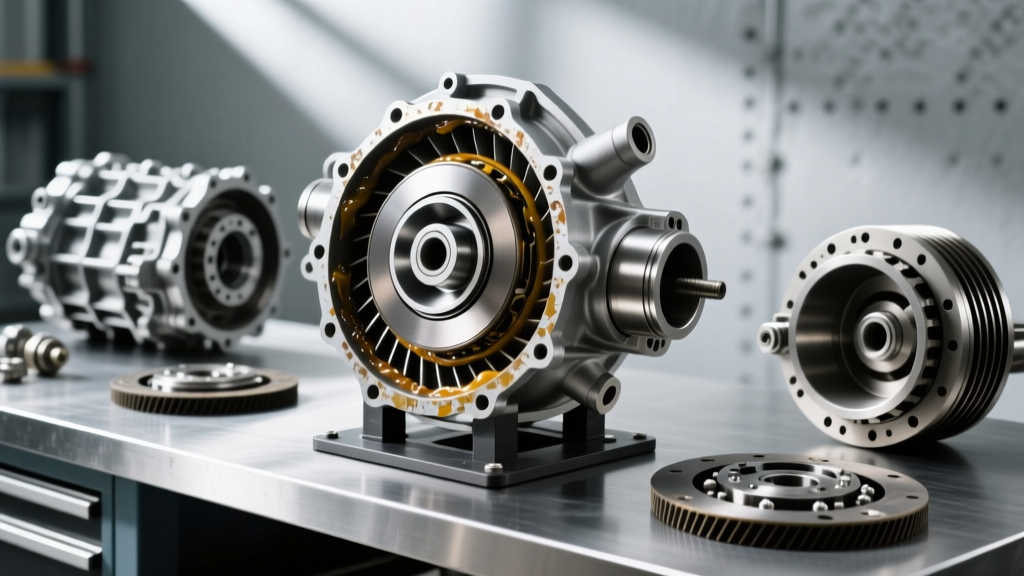
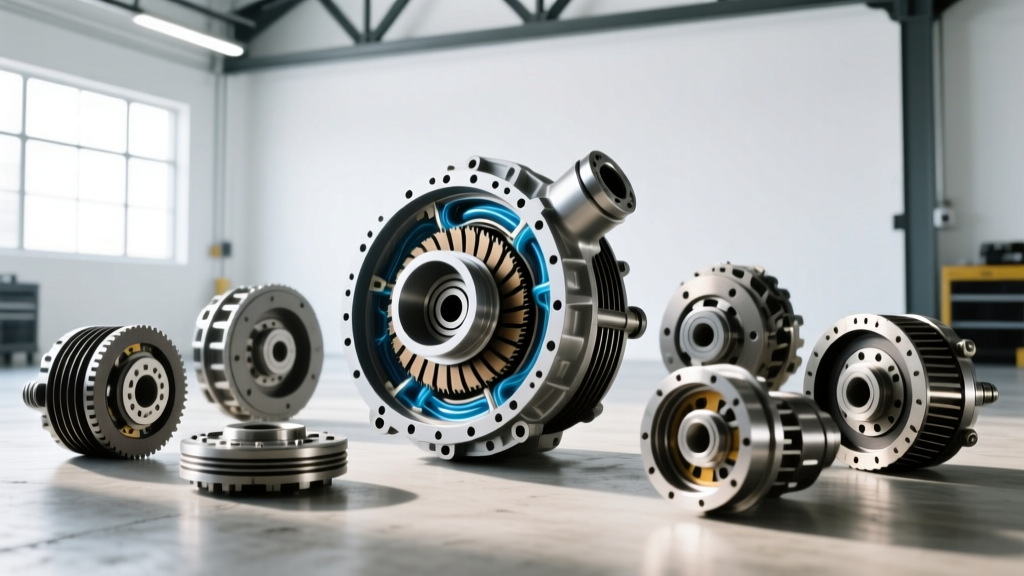
Inside the 47RE torque converter, three main components dictate this behavior: the impeller (driven by the engine flexplate), the turbine (splined to the transmission input shaft), and the stator (mounted on a one-way clutch). When the engine hits stall speed, the stator remains locked, redirecting fluid flow to multiply torque by a ratio of roughly 2.0:1 to 2.2:1. If the torque converter clutch (TCC) lockup mechanism fails to disengage during this test, or if the stator's one-way clutch fails, the stall speed will read incorrectly, often leading to catastrophic transmission failure if driven under heavy loads.
Symptoms of a Mismatched or Failing 47RE Torque Converter
Before performing a physical stall test, it is crucial to recognize the driving symptoms that indicate your 47RE torque converter is operating outside its intended stall parameters. A failing stator clutch, degraded ATF+4 fluid, or a mismatched aftermarket converter will manifest in distinct ways.
| Condition | Typical RPM Range | Driving Symptoms | Common Mechanical Cause |
|---|---|---|---|
| Stock / Healthy | 1,900 - 2,100 RPM | Smooth engagement, normal EGTs, predictable towing power. | N/A (Optimal Operation) |
| Stall Too Low (Lugging) | 1,400 - 1,700 RPM | Engine bogs down off the line, high EGTs when towing, feels like towing a boat anchor. | Stator one-way clutch seized; incorrect aftermarket converter sizing. |
| Stall Too High (Slipping) | 2,600+ RPM (Stock) | RPM flare between shifts, excessive trans heat, poor fuel economy, sluggish acceleration. | Worn impeller/turbine fins, low ATF+4 pressure, failed TCC solenoid. |
| Inconsistent / Erratic | Fluctuates wildly | Shudder at 45-55 MPH, TCC lockup hunting, surging. | Debris in the TCC lockup valve body circuit; failing lockup clutch disc. |
Step-by-Step Guide: Performing a Safe 47RE Stall Test
Performing a stall test on a heavy-duty diesel requires strict adherence to safety protocols. The 47RE generates immense internal heat during a stall event. Prolonged testing will instantly boil standard fluid, glaze the friction clutches, and potentially warp the steel reaction plates. Follow this step-by-step procedure to safely diagnose your 47RE torque converter stall speed.
Phase 1: Preparation and Safety Protocols
- Verify Fluid Condition and Level: Ensure the transmission is filled to the 'HOT' mark on the dipstick using only Mopar ATF+4 (Part # 68218925AB) or a licensed synthetic equivalent. Incorrect fluid will cause erratic hydraulic pressure and false stall readings.
- Monitor Temperatures: You must have a reliable transmission pan temperature gauge. The starting temperature should be between 150°F and 180°F (65°C - 82°C). Do not exceed 250°F during the test.
- Secure the Vehicle: Park on a flat, level surface. Place heavy-duty wheel chocks in front of and behind all four tires. The braking system must be in top condition to hold the 5.9L Cummins torque output.
- Disable Overdrive and Lockup: Ensure the O/D button is OFF. The TCC lockup solenoid should not engage during a stall test; if it does, it will stall the engine or break the input shaft.
Phase 2: The Testing Procedure
- Engage Drive: With your left foot firmly depressing the brake pedal to the floor, shift the 47RE into Drive (D).
- Apply Throttle: Using your right foot, smoothly but quickly apply Wide Open Throttle (WOT). Do not 'power brake' or hold the throttle wide open for more than 3 to 5 seconds.
- Record Peak RPM: Watch your tachometer. The RPM will climb and then stop increasing. This peak number is your stall speed. Note the exact RPM and the exhaust gas temperature (EGT).
- Release and Cool: Immediately release the throttle and shift into Neutral (N). Allow the engine to idle at 1,500 RPM for at least 60 seconds to circulate ATF+4 through the transmission cooler and drop the pan temperature.
- Repeat for Verification: Perform the test two more times, allowing adequate cooling between runs, to ensure your readings are consistent.
Interpreting Results: Stock vs. Upgraded Cummins Setups
Once you have your average stall speed RPM, you must compare it against your specific engine setup. A stock 5.9L 24-valve Cummins producing 235 to 325 horsepower requires a tighter converter to manage low-end torque without excessive slipping. However, if you have added larger injectors, a high-flow turbo (like an HX35/HE351 hybrid), or a performance tuning module (e.g., Smarty, Edge Comp), a stock stall speed will cause the engine to lug, driving EGTs into the danger zone (above 1,300°F) and risking piston cracking.
For modified 47RE applications, upgrading to a higher stall speed (typically 2,400 to 2,800 RPM) allows the Cummins to spool the turbocharger faster, entering the engine's optimal power band before the vehicle even begins to move. This drastically reduces towing EGTs and improves heavy-grade pulling power.
Upgrade Paths, Part Numbers, and Installation Specs
If your stall test reveals a failing converter or you need to match a modified fuel map, selecting the right replacement is paramount. The stock 47RE input shaft is notorious for twisting or stripping its splines when paired with aggressive aftermarket torque converters and high-horsepower tunes. Always pair an upgraded converter with at least a billet input shaft.
- SunCoast Diesel 47RE Billet Triple Disc Converter: Ideal for trucks making 400-600 HP. Features a billet stator and reinforced turbine hub. (Approx. $1,100 - $1,300).
- ATS Diesel ArcFlow Torque Converter: Excellent for heavy towing and street manners, offering a slightly tighter stall for better fuel economy while maintaining durability. (Approx. $900 - $1,100).
- BD Power X-Force Torque Converter: Designed for maximum torque multiplication and aggressive stall speeds for sled pulling or heavy mountain towing. (Approx. $1,200+).
When installing a new 47RE torque converter, precision is required to prevent pump gear failure. Ensure the converter is fully seated into the transmission oil pump before mating it to the engine block. You must measure the gap between the flexplate and the converter mounting pads. The ideal gap is between 1/8-inch and 3/16-inch. If the gap is too tight, you will crush the transmission pump; if too wide, you will flex the flexplate and cause harmonic vibrations.
Critical Torque Specifications for 47RE Installation:
Torque Converter to Flexplate Bolts: 35 lb-ft (47 Nm)
Bellhousing to Engine Block Bolts: 35 lb-ft (47 Nm)
Transmission Cooler Line Fittings: 15 - 20 lb-ft
Crossmember to Frame Bolts: 75 lb-ft
Understanding and correctly testing your 47RE torque converter stall speed is the difference between a reliable towing rig and a stranded vehicle with a melted transmission. By following this diagnostic guide and respecting the hydraulic limits of the Chrysler 4-speed platform, you can ensure your Cummins drivetrain operates at peak efficiency for hundreds of thousands of miles.
Technical References and Further Reading:
SunCoast Diesel Performance - 47RE Technical Archives
ATS Diesel - Torque Converter Engineering Specs
Cummins Forum - 2nd Gen 5.9L Drivetrain Diagnostics