The 2018 Silverado Drivetrain: A Masterclass in Thermal Stress
The 2018 Chevrolet Silverado 1500 represents a transitional era in GM’s drivetrain engineering, sitting right on the border of the legendary 6L80 and the highly complex 8L90 eight-speed automatic transmissions. For owners of the 6.2L V8 (RPO L86) equipped with the 8L90 (RPO M5U), the pursuit of fuel economy via early torque converter clutch (TCC) lockup has resulted in one of the most widely documented drivetrain complaints of the decade: the infamous 'Chevy Shake.' While many assume this vibration is purely a mechanical defect, the reality is deeply rooted in fluid dynamics, friction modifier shear, and thermal management. Understanding this relationship is the first step toward a successful repair.
As an automotive transmission specialist, I frequently see misdiagnosed 8L90 units where shops throw parts at a problem that requires a nuanced understanding of hydraulic friction. When planning a 2018 Silverado torque converter upgrade, you must address the underlying fluid environment, or your new hardware will suffer the exact same fate as the factory unit within 15,000 miles.
The Root Cause: 8L90 Fluid Degradation and TCC Slip
The 8L90 transmission utilizes ACDelco Dexron ULV (Ultra Low Viscosity) fluid. This fluid was engineered specifically to reduce parasitic drag and allow for lightning-fast shift events in a transmission that essentially operates as two interleaved four-speed gearboxes. However, ULV fluid is highly sensitive to thermal breakdown. When the transmission operates under heavy load—such as towing, driving in mountainous terrain, or even just prolonged highway cruising in Active Fuel Management (AFM) mode—the fluid temperatures in the torque converter can easily exceed 220°F.
At these temperatures, the friction modifiers in the Dexron ULV fluid begin to shear and degrade. The TCC relies on a precise coefficient of friction to maintain a 'controlled slip' state at low RPMs (often locking up as low as 1,100 RPM in 8th gear to save fuel). When the fluid degrades, the clutch material grabs and releases erratically, sending a 20-40 Hz resonance frequency through the driveline. This is felt in the cabin as a severe vibration, typically between 40 and 55 mph.
Expert Note: GM released Technical Service Bulletin (TSB) 18-NA-355 and various PIP (Product Information Publication) bulletins like PIP5616E acknowledging this shudder. The factory-approved fix often involves flushing the system and switching to Mobil 1 LV ATF HP, which boasts a superior friction modifier package and higher thermal stability.
Diagnosing Fluid Shear vs. Mechanical Torque Converter Failure
Before committing to a teardown or purchasing aftermarket hardware, you must accurately diagnose whether the torque converter is suffering from fluid-induced slip or permanent mechanical damage. Use the diagnostic matrix below to guide your troubleshooting.
| Symptom Profile | Fluid Shear / TCC Shudder | Mechanical TC Failure |
|---|---|---|
| Vibration RPM Range | 1,100 - 1,500 RPM (Light throttle, high gear) | Any RPM, often worsens under heavy load |
| Speed Range | 40 - 55 MPH (Usually in 7th or 8th gear) | Variable, may occur during initial takeoff |
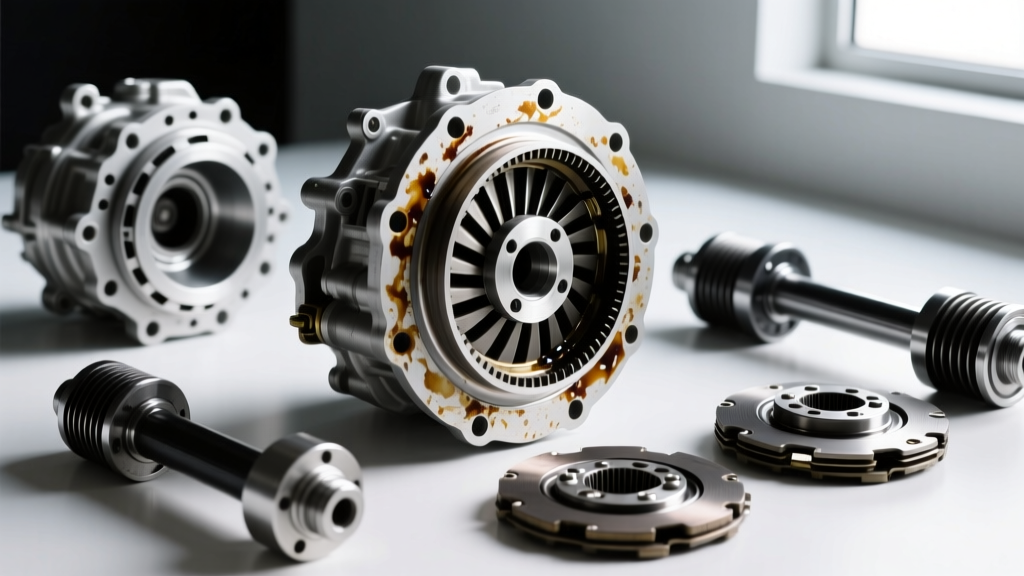
| Fluid Condition | Dark, smells burnt, but no visible glitter | Contains metallic particulate or clutch debris |
| Scan Tool Data (TCC Slip) | Fluctuates wildly between -20 and +40 RPM | Consistently high slip or zero lockup capability |
| Resolution Path | 3x Drain-and-Fill with Mobil 1 LV ATF HP | Full TC replacement and transmission flush |
When Fluid Fails: The 2018 Silverado Torque Converter Upgrade Path
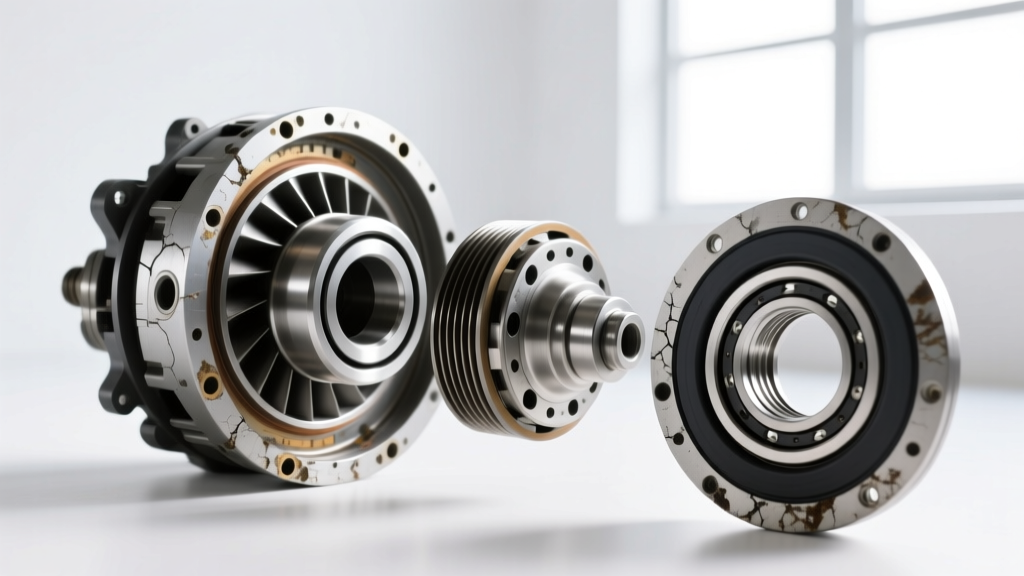
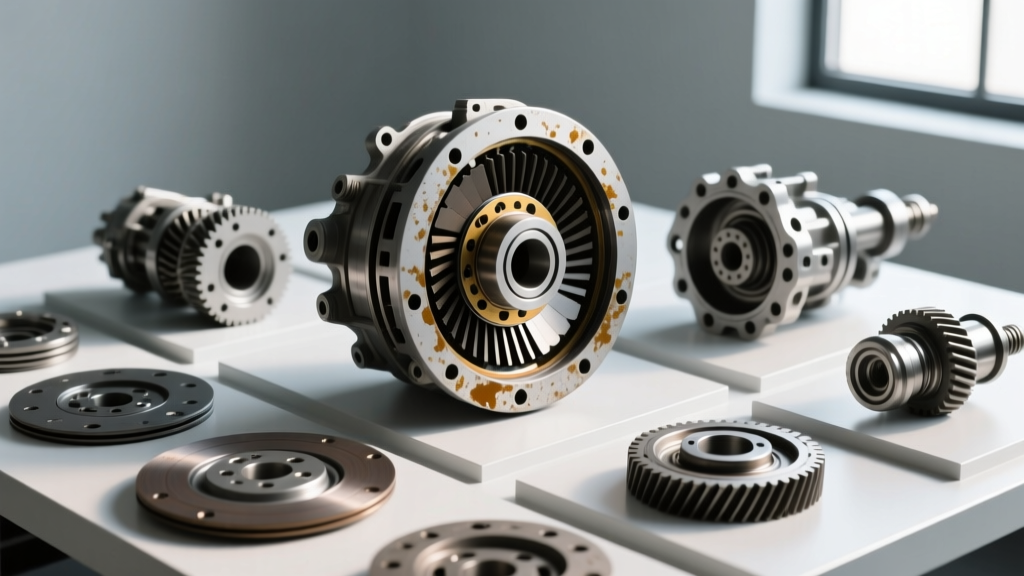
If the friction material on the factory TCC has become permanently glazed due to prolonged slipping, no fluid change will save it. The clutch surface is essentially turned into glass. This is where a dedicated 2018 Silverado torque converter upgrade becomes mandatory. The factory 8L90 torque converter utilizes a single-disc TCC clutch and a relatively thin stamped steel cover. Under high torque loads, this cover flexes, altering the hydraulic apply volume and contributing to premature wear.
When upgrading, you must look for three critical improvements:
- Billet Steel Covers: Eliminates cover flex, ensuring consistent hydraulic pressure against the TCC piston.
- Multi-Disc TCC Clutches: Upgrading from a single-disc to a dual or triple-disc clutch distributes the friction load, drastically reducing heat generation and eliminating shudder.
- Upgraded Stator and Fins: Improved internal hydrodynamics reduce parasitic heat generation inside the converter housing.
Brands like Circle D Specialty and Sonnax offer premium 8L90 billet torque converters that retain the factory 1,800-2,000 RPM stall speed for daily drivability while entirely eliminating the mechanical weaknesses of the OEM unit. According to the Sonnax 8L90 Technical Resources, addressing the internal clearances and valve body wear is also critical when replacing a failed converter to prevent cross-contamination.
Thermal Bypass Protocols: Why Standard Flushes Fail
One of the most common mistakes made by general repair shops is attempting to flush the 8L90 using a standard cooler-line exchange machine without accounting for the transmission's thermal management valve (TMV). The 8L90 features a thermal bypass valve located in the transmission case that blocks fluid flow to the external cooler until the fluid reaches approximately 185°F (85°C). This is designed to help the transmission reach operating temperature quickly for emissions purposes.
If a shop hooks up a flush machine to a cold 8L90, they are only exchanging the fluid trapped in the pan and the torque converter. The fluid in the cooler lines and the external radiator cooler remains untouched, meaning up to 30% of the old, degraded fluid is left in the system. Furthermore, if the factory torque converter is already shedding clutch material, forcing high-pressure fluid backward through the system can pack debris into the intricate 8L90 valve body and solenoid screens, causing immediate shift solenoid failures.
The Expert 3x Drain-and-Fill Method
For trucks exhibiting early-stage shudder without mechanical debris, the safest and most effective fluid replacement protocol is the sequential drain-and-fill:
- Prep and Temp Check: Drive the truck until the transmission fluid temperature (TFT) reads above 185°F on a bi-directional scan tool, ensuring the thermostat is open and the fluid is fully mixed.
- First Drain: Drop the transmission pan. The 8L90 holds roughly 11.5 quarts total, but the pan will only yield about 4.5 to 5 quarts. Clean the pan and reinstall with a new ACDelco filter (Part # 24236933). Torque the pan bolts to 9 lb-ft (12 Nm).
- First Fill: Add 5 quarts of Mobil 1 LV ATF HP. Drive the truck for 50 miles, utilizing all 8 gears and allowing the TCC to lock and unlock.
- Second Drain & Fill: Repeat the process after 50 miles. This dilutes the remaining OEM fluid.
- Third Drain & Fill: Repeat after another 500 miles. At this stage, the system is running on nearly 90% fresh fluid, and the new friction modifiers have had time to condition the TCC surface.
For a deep dive into owner experiences and real-world data logging of this exact procedure, the GM Truck Club 8L90 Shudder Fix Thread remains one of the most comprehensive crowdsourced databases on the internet regarding this specific fluid swap.
Real-World Cost Matrix: Fluid Service vs. Billet Upgrade
Understanding the financial commitment is crucial for Silverado owners weighing their options. Below is a realistic breakdown of costs based on current 2026 aftermarket pricing and independent shop labor rates.
- OEM Fluid Service (Dealer Flush): $250 - $350. (Often uses standard Dexron ULV; may not permanently solve severe shudder).
- Mobil 1 LV ATF HP 3x Drain-and-Fill (DIY): $180 - $220 (Requires ~15 quarts of fluid and two OEM filters).
- Mobil 1 LV ATF HP 3x Drain-and-Fill (Shop Labor): $450 - $650.
- Factory Replacement Torque Converter (OEM): $1,200 - $1,600 (Parts and Labor). Note: Reusing the flawed single-disc design.
- Billet Multi-Disc Torque Converter Upgrade (Aftermarket): $1,800 - $2,400 (Parts and Labor). Includes converter ($800-$1,100), new OEM fluid, filter, and 5-7 hours of R&R labor. Note: Requires removing the transmission, verifying flexplate runout, and torquing the TC-to-flexplate bolts to exactly 37 lb-ft (50 Nm).
Final Thoughts on 8L90 Longevity
The 2018 Silverado is a remarkably capable truck, but its pursuit of CAFE fuel economy standards placed undue stress on the torque converter assembly. By understanding the delicate relationship between the 8L90's thermal bypass system, the shear limits of ULV fluids, and the mechanical limits of single-disc clutches, you can make an informed decision. Whether you opt for the Mobil 1 fluid swap to cure early-stage shudder or invest in a full billet torque converter upgrade to future-proof your drivetrain, addressing the fluid environment is non-negotiable for long-term survival.