The 5VZ-FE Powertrain: Navigating Drivetrain and Cooling Diagnostics
The 3rd generation Toyota 4Runner (1996-2002), equipped with the legendary 3.4L 5VZ-FE V6, remains a staple of the off-road and daily driving community in 2026. However, as these vehicles surpass 250,000 miles, owners and technicians frequently encounter a complex diagnostic overlap: distinguishing between true transmission clutch slipping symptoms and parasitic drag caused by cooling system failures. When performing a comprehensive preventive maintenance inspection, misdiagnosing a seized viscous fan assembly as a failing drivetrain friction pack can lead to unnecessary transmission rebuilds costing upwards of $3,500. This guide provides a definitive, expert-level framework for isolating clutch slip from engine-driven accessory drag.
Understanding the Drivetrain: R150F Manual and A340F Automatic
To accurately diagnose slipping, you must first understand the specific friction interfaces in the 3rd Gen 4Runner. Toyota paired the 5VZ-FE with two primary transmissions:
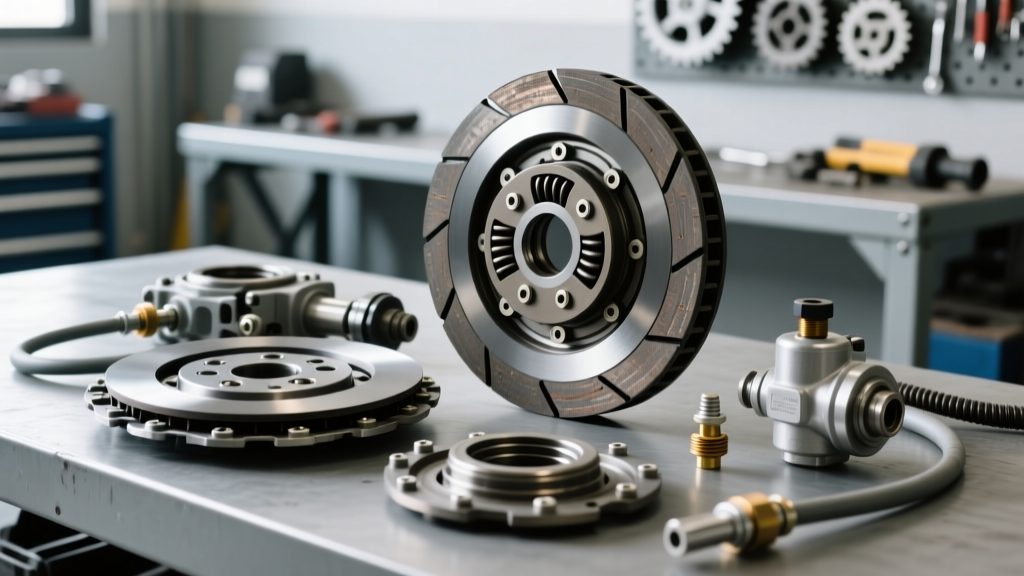
- R150F (Manual): A robust 5-speed manual utilizing a 272mm single-plate dry clutch. Slipping here is strictly mechanical, hydraulic, or friction-material related.
- A340F / A340H (Automatic): A 4-speed automatic relying on multiple wet clutch packs (C0, C1, C2) and bands. Slipping in this unit is often a byproduct of fluid degradation, valve body wear, or hardened O-rings on the clutch pistons.
Identifying True Transmission Clutch Slipping Symptoms
True clutch slip occurs when the engine's rotational speed (RPM) increases without a proportional increase in vehicle speed or transmission output shaft speed. The symptoms manifest differently depending on your transmission type.
R150F Manual Transmission Slip Indicators
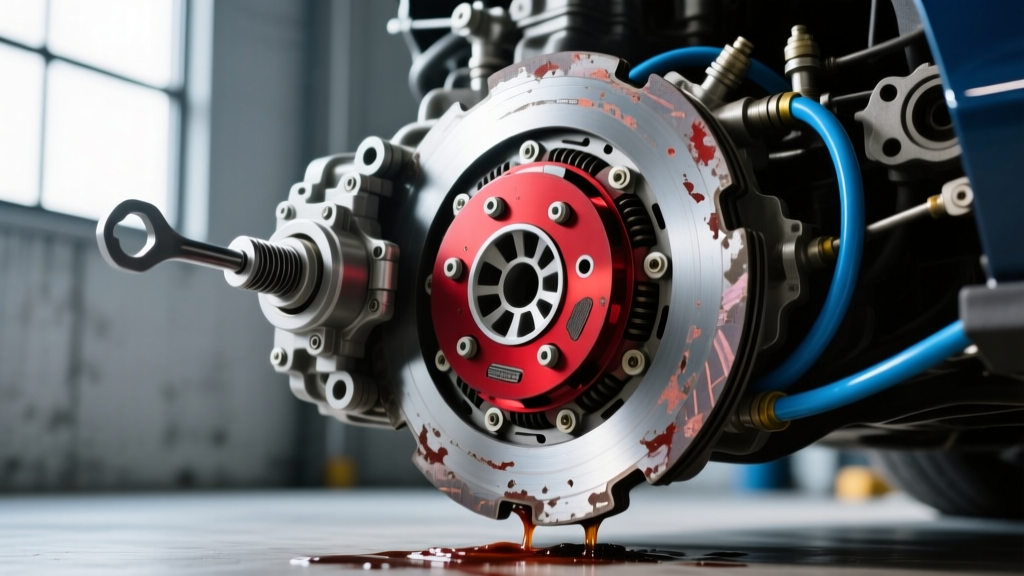
In the R150F, clutch slip is most noticeable under high-load conditions, such as climbing steep grades in 4th or 5th gear or towing. The primary symptom is an RPM flare: you press the accelerator, the tachometer spikes, but the speedometer lags. Preventive maintenance dictates checking the clutch master cylinder (CMC) and slave cylinder for internal bypassing. If the hydraulic system fails to fully disengage, it creates constant drag; conversely, if the clutch fork pivot ball wears down (a common issue past 180,000 miles), the pressure plate cannot apply its full 1,800 lb clamping force, resulting in slip under load.
A340F Automatic Friction Pack Degradation
Automatic clutch slip is insidious. It often begins as a delayed engagement when shifting from Park to Drive (taking longer than 1.5 seconds) or a 'soft' 1-2 shift that flares by 300-500 RPM. In the A340F, the C1 clutch pack handles 1st and 2nd gear, while the C0 (Overdrive) clutch handles 3rd and 4th. If you experience slipping specifically during the 3-4 shift or while cruising in Overdrive, the O/D clutch pack friction material is likely glazing or the direct clutch seals are leaking pressure. According to Toyota TechInfo service manuals, checking the line pressure via the transmission test port is mandatory before condemning the clutch packs. Idle line pressure should sit between 60-75 PSI, spiking to 160-185 PSI during a stall test.
The Diagnostic Trap: 3rd Gen 4Runner Fan Clutch vs. Drivetrain Slip
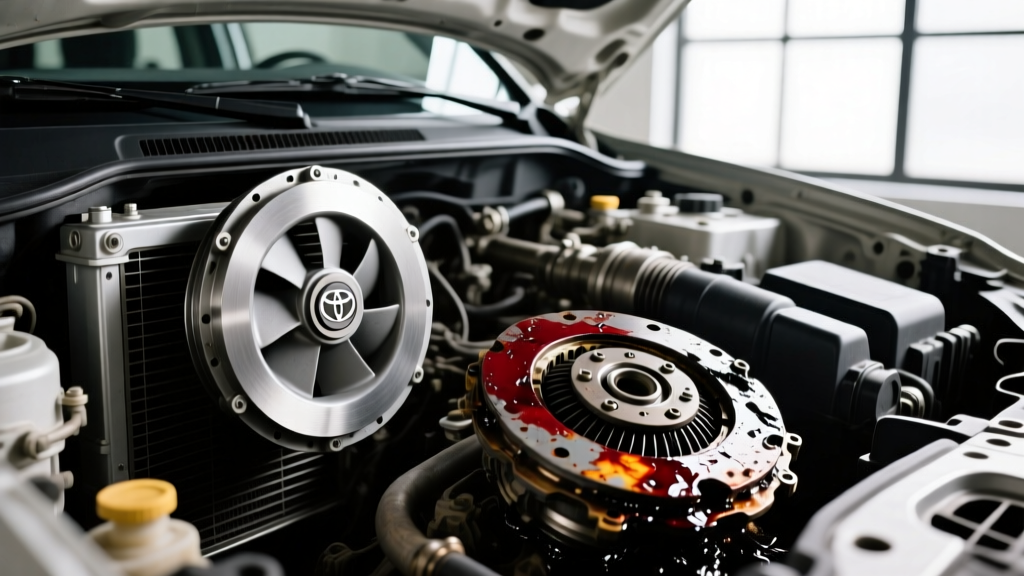
Here is where even seasoned mechanics make costly errors. The 5VZ-FE engine utilizes a thermally reactive viscous fan clutch. When this component fails in the 'locked' or 'seized' state, it creates massive parasitic drag on the engine crankshaft. To the driver, this feels exactly like a slipping transmission: the engine roars, RPMs climb sluggishly, and the vehicle struggles to accelerate, especially at highway speeds.
Furthermore, a failing 3rd gen 4runner fan clutch that remains permanently disengaged (free-spinning) will cause severe coolant temperature spikes. When engine coolant temperatures exceed 230°F, the transmission fluid in the A340F (which is cooled via a heat exchanger in the radiator) also overheats. Toyota T-IV ATF begins to oxidize and lose its frictional properties at temperatures above 220°F. Therefore, a bad fan clutch can literally cause your automatic transmission clutch packs to slip by destroying the fluid's friction modifiers.
The 'Newspaper Test' and Parasitic Drag Isolation
To rule out the fan clutch before dropping the transmission, perform the cold-start and hot-stall isolation tests:
- Cold Start: Start the engine cold. The fan should roar loudly for 30-60 seconds as the silicone fluid settles, then quiet down as the bimetallic strip closes the valve. If it stays silent, the clutch is dead.
- Hot Stoppages: With the engine fully warmed up and idling, attempt to roll up a tightly bound newspaper and gently push it into the fan blades from the front. If the fan stops instantly or the paper is thrown back without resistance, the viscous fluid has depleted, and the clutch is slipping internally. If the fan shreds the paper and the engine nearly stalls, the clutch is seized, causing the drivetrain-like drag you are feeling on the road.
Symptom Comparison Matrix: Slip vs. Drag
| Diagnostic Symptom | Transmission Clutch Slip | Seized Fan Clutch (Parasitic Drag) |
|---|---|---|
| RPM vs Speed Correlation | RPM flares independently of speed | RPM and speed climb together, but sluggishly |
| Engine Load Sound | Engine revs freely, sounds unloaded | Engine sounds labored, deep mechanical roar |
| Temperature Correlation | Slip worsens as ATF overheats | Drag is constant; coolant temp spikes rapidly |
| Coast-Down Behavior | Normal engine braking | Severe engine braking felt at all speeds |
Preventive Maintenance: Fluids, Torques, and Intervals
Preventing clutch slip requires strict adherence to fluid maintenance and mechanical tolerances. For the A340F automatic, a simple pan-drop and filter change only replaces about 2.0 quarts of the 11.2-quart total capacity. To maintain the friction modifiers necessary to prevent clutch pack slip, a 3x drain-and-fill procedure using genuine Toyota T-IV (or Aisin ATF-0T4) is recommended every 60,000 miles. Never use universal synthetic ATFs that claim 'multi-vehicle' compatibility, as their friction coefficients differ from Toyota's specific lock-up clutch requirements.
For the R150F manual, the clutch itself requires no fluid, but the hydraulic system demands attention. Flush the DOT 3 brake fluid in the clutch master circuit every 30,000 miles to prevent moisture ingress, which leads to slave cylinder corrosion and incomplete disengagement. When replacing the manual clutch, adherence to torque specifications is critical to prevent pressure plate warping, a leading cause of premature slip:
- Flywheel to Crankshaft Bolts: 64 ft-lbs (87 Nm) in a star pattern.
- Pressure Plate to Flywheel (8mm bolts): 14 ft-lbs (19 Nm) tightened sequentially in a crisscross pattern to ensure even diaphragm spring tension.
- Flywheel Runout Limit: Maximum 0.004 in (0.1 mm). Resurfacing is mandatory; do not install a new clutch on a glazed flywheel.
OEM and Aftermarket Part Numbers (2026 Sourcing Guide)
When your diagnostic steps confirm actual component failure, sourcing high-quality replacements is vital to prevent repeat slipping. Based on current 2026 aftermarket data from Aisin Aftermarket and OEM catalogs, utilize the following part numbers:
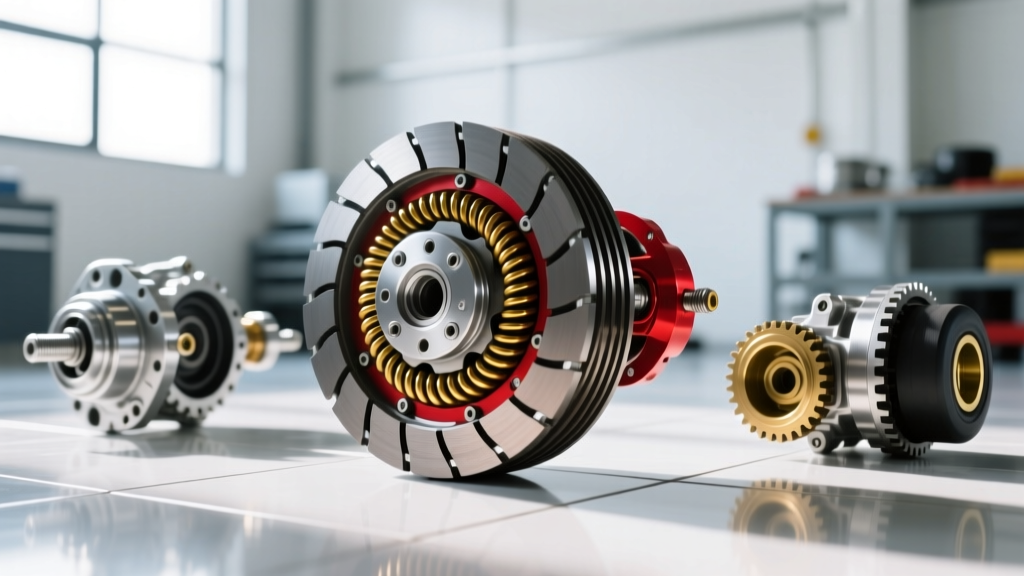
- Manual Clutch Kit (R150F): Exedy TYK5631A or Aisin CKT-1004. Includes 272mm disc, pressure plate, and release bearing. Avoid unbranded kits; they frequently suffer from weak diaphragm springs that cause slip under towing loads.
- Automatic ATF Filter Kit (A340F): Toyota OEM 04321-04010 (includes gasket and filter screen).
- Viscous Fan Clutch Assembly: Aisin FCT-0008 or Toyota OEM 16210-62030. Expert Warning: The water pump pulley nut holding the fan clutch is a left-hand (reverse) thread. You must turn it clockwise to loosen. Use a 32mm wrench and a specialized fan clutch holding tool to prevent destroying the water pump bearings during removal.
Conclusion
Diagnosing clutch slipping symptoms in the 3rd Gen 4Runner requires a holistic view of the vehicle's powertrain and cooling systems. By systematically isolating hydraulic faults, verifying ATF friction properties, and ruling out the parasitic drag of a seized 3rd gen 4runner fan clutch, you can accurately pinpoint the root cause of drivetrain inefficiency. Adhering to preventive maintenance schedules and OEM torque specifications ensures that whether you are navigating the R150F's mechanical linkages or the A340F's hydraulic valve body, your 4Runner remains reliable for the next quarter-million miles.