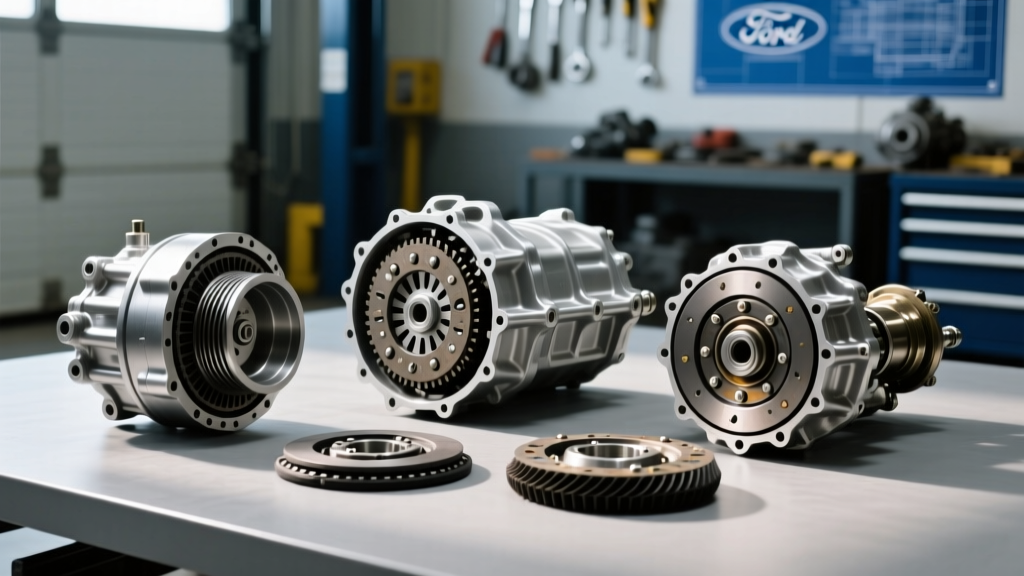
The 2019 Ford Edge represents a significant shift in Ford's drivetrain engineering, moving away from the older 6-speed automatics to the advanced 8F-series 8-speed transaxles. While these transmissions offer improved fuel economy and tighter gear ratios, they have introduced a new set of complexities for technicians and owners alike. One of the most frequently reported drivability issues in this generation revolves around the 2019 Ford Edge torque converter, specifically stemming from Torque Converter Clutch (TCC) solenoid problems.
As we navigate the service landscape in 2026, understanding the nuances of the 8F35 and 8F57 transmissions is critical. Misdiagnosing a TCC solenoid fault as a catastrophic torque converter failure can lead to unnecessary $2,500+ replacement bills. This expert guide breaks down the exact symptoms, diagnostic workflows, and best-practice repair procedures for TCC solenoid issues in the 2019 Ford Edge.
Understanding the 8F35 and 8F57 TCC Architecture
The 2019 Ford Edge utilizes two primary 8-speed transaxles depending on the engine configuration:
- 8F35: Paired with the 2.0L EcoBoost I4 engine.
- 8F57: Paired with the 2.7L EcoBoost V6 engine.
Both transmissions utilize a multi-plate Torque Converter Clutch (TCC) designed for early lockup. By locking the converter in lower gears and at lower speeds, Ford minimizes parasitic fluid losses and maximizes highway fuel efficiency. The TCC is controlled by a dedicated Pulse Width Modulated (PWM) solenoid located within the transmission's mechatronic solenoid body assembly. This solenoid meters hydraulic pressure to apply and release the multi-plate clutch pack inside the torque converter with extreme precision.
Why the TCC Solenoid Fails
TCC solenoid degradation in the 8F-series is rarely an electrical failure; it is almost always a hydraulic or mechanical issue. Over time, microscopic friction material from the multi-plate clutch and general wear debris bypass the filter and enter the valve body. This debris scores the precision-machined aluminum bore where the TCC solenoid spool valve resides. Once the bore is scored, hydraulic pressure bleeds off, preventing the solenoid from maintaining firm TCC lockup.
Identifying TCC Solenoid Symptoms vs. Torque Converter Failure
Owners often report a 'shudder' and immediately assume the torque converter is destroyed. However, distinguishing between a failing TCC solenoid, degraded fluid, and a physically failing converter clutch is the hallmark of expert diagnosis.
The Shudder vs. Slip Distinction
TCC Shudder: Usually felt as a rhythmic vibration or rumble strip sensation between 30 and 50 mph, typically in 4th, 5th, or 6th gear when the TCC is attempting to maintain a partial or full lock. This can be caused by degraded friction modifiers in the fluid or a sticking TCC solenoid spool valve.
TCC Slip: Manifests as RPM flaring. You will see the tachometer jump 100-300 RPM without a corresponding increase in vehicle speed or a gear shift command. This triggers the P0741 (Torque Converter Clutch Circuit Performance/Stuck Off) code.
Expert Diagnostic Workflow Using FORScan
Before authorizing a teardown, professional technicians rely on OBD-II PID (Parameter Identification) data. Using a tool like Ford's IDS or the enthusiast-favorite FORScan software, you can monitor the exact behavior of the TCC solenoid in real-time.
| PID / Parameter | Normal Operating Spec | Failing TCC Solenoid / Bore Wear |
|---|---|---|
| TCC_SLIP_ACT (Actual Slip) | 0 - 20 RPM (Locked) | > 50 RPM or erratic fluctuations |
| TCC_DUTY_CYCLE | 40% - 65% (Modulating) | Maxed at 90%+ (PCM compensating for leak) |
| TFT (Transmission Fluid Temp) | 180°F - 205°F | > 220°F (Excess heat from clutch slip) |
| TCC_SOL_PSI (Commanded Pressure) | 15 - 45 PSI (Apply phase) | High commanded PSI but high actual slip |
If the PCM is commanding maximum duty cycle and high pressure, but the TCC_SLIP_ACT PID shows the converter is still slipping by 80+ RPM, you have confirmed a hydraulic leak. This leak is either at the TCC solenoid bore in the valve body, the TCC apply piston seals inside the transmission, or the clutch material inside the torque converter itself has been completely worn away.
Best Practices for Repair and Replacement
If your diagnostic data points to the solenoid body or valve body bore, follow these strict best practices to ensure a lasting repair.
1. The MERCON ULV Fluid Mandate
The most critical mistake made by general repair shops in 2026 is using the wrong fluid. The 8F35 and 8F57 transmissions require MERCON ULV (Ultra Low Viscosity) fluid. MERCON LV is NOT backwards compatible and will cause rapid clutch failure. Always use OEM Motorcraft MERCON ULV (Part Number: XT-12-QULV). You can verify the latest Motorcraft fluid specifications directly via Ford's support portal.
2. Solenoid Body Replacement Procedure
The TCC solenoid on the 8F-series is integrated into the lower solenoid body assembly. To replace it:
- Fluid Drain & Pan Removal: Drain the fluid and remove the stamped steel transmission pan. Note that the 8F35 uses a specific reusable gasket or RTV sealant depending on the exact build date.
- Filter Replacement: The transmission filter is serviceable. Replace it with an OEM Motorcraft filter to ensure proper flow rate to the solenoid block.
- Solenoid Body Swap: Unbolt the solenoid body assembly from the valve body. Disconnect the electrical harness carefully—the plastic tabs become brittle from heat cycling.
- Torque Specifications: When reinstalling the new solenoid body and valve body bolts, strict torque specs must be followed to prevent warping the aluminum mating surfaces. Torque the valve body/solenoid body M6 bolts to 10 Nm (89 lb-in). The transmission pan bolts should also be torqued to 10 Nm (89 lb-in) in a crisscross pattern.
3. Adaptive Learning Reset
Replacing the hardware is only half the battle. The Transmission Control Module (TCM) has adapted to the failing solenoid by altering shift pressures and TCC apply ramps. You must use a bi-directional scan tool to perform a 'TCM Adaptive Learning Reset' and execute the 'TCC Break-In Procedure'. Failure to do this will result in harsh engagements and premature wear on the new solenoid assembly.
Addressing Code P0741 and P0743
According to standard OBD-II diagnostic databases, P0741 indicates a performance issue or stuck-off condition, while P0743 indicates an electrical circuit fault. In the 2019 Ford Edge, P0743 is incredibly rare because the solenoid coils rarely burn out. If you see P0743, inspect the main transmission case wiring harness connector for pin push-out or corrosion before condemning the solenoid body. P0741, conversely, is the hallmark of the hydraulic bore wear and debris contamination described earlier.
2026 Cost Breakdown: OEM Parts vs. Labor
Understanding the financial investment required for a proper repair helps set expectations. Here is the current market breakdown for a 2019 Ford Edge TCC Solenoid repair:
- OEM Solenoid Body Assembly: $450 - $650 (Prices vary between 8F35 and 8F57 specific part numbers).
- Motorcraft MERCON ULV Fluid (8 Quarts): ~$120 - $140.
- OEM Filter & Pan Gasket Kit: $60 - $90.
- Professional Labor (3.5 - 4.5 Hours): $500 - $750 (Based on $140-$170/hr shop rates).
Total Estimated Repair Cost: $1,130 - $1,630.
Expert Warning: If the TCC solenoid failure was ignored for thousands of miles, the resulting friction material debris will have contaminated the torque converter and the transmission cooler lines. In these severe cases, the torque converter must be replaced (adding $800-$1,200 in parts) and the cooler lines must be flushed using a heated, pressurized flush machine to prevent immediate failure of the new solenoid body.
Final Expert Takeaways
Torque converter clutch solenoid problems in the 2019 Ford Edge are a manageable issue when diagnosed with data rather than guesswork. By leveraging FORScan to monitor TCC slip RPMs, strictly adhering to MERCON ULV fluid requirements, and following precise torque specs during the solenoid body replacement, you can restore the 8F-series transmission to factory-level smoothness. Always address shudder and slip symptoms early; catching a sticking TCC solenoid before it destroys the multi-plate clutch pack is the key to keeping your Edge on the road and out of the salvage yard.