The Thermodynamics of Torque Converter Auto Overheating
In any torque converter auto system, heat is the byproduct of hydrodynamic slippage. Before the Torque Converter Clutch (TCC) engages, the impeller and turbine rely on shearing transmission fluid to multiply torque. While this provides smooth acceleration, it generates immense thermal energy. For every 100 RPM of continuous slip, transmission fluid temperatures can spike by 10°F to 15°F.
Modern synthetic fluids like Dexron ULV and Mercon LV are engineered to withstand higher baseline temperatures, but they still begin to rapidly oxidize and break down above 250°F (121°C). When a torque converter fails to lock up due to a worn friction surface, a failing TCC solenoid, or a leaky valve body circuit, the continuous slippage pushes fluid temperatures past 280°F. This varnishes the clutch packs, shrinks the sealing rings, and ultimately leads to catastrophic transmission failure.
If you are experiencing torque converter overheating problems, simply changing the fluid is a temporary band-aid. This 2026 buyer's guide compares the most effective hardware upgrades and diagnostic solutions to eliminate TC heat at the source.
2026 Buyer's Guide: Upgrades to Eliminate TC Heat
Addressing torque converter auto overheating requires a targeted approach based on your vehicle's application—whether it is a daily driver, a heavy-duty tow rig, or a high-horsepower build. Below, we compare the three primary upgrade paths.
1. Billet Heavy-Duty Torque Converters
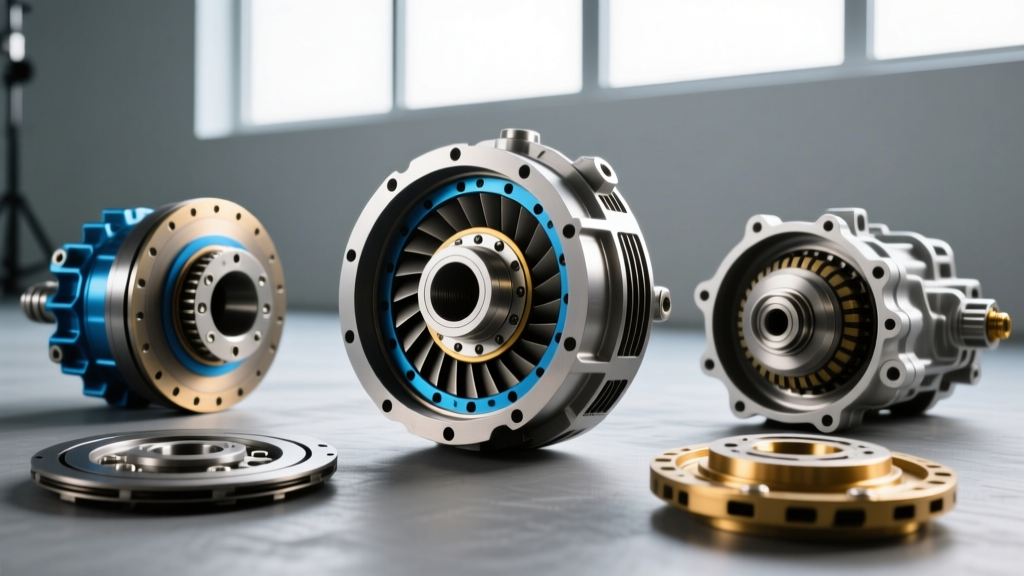
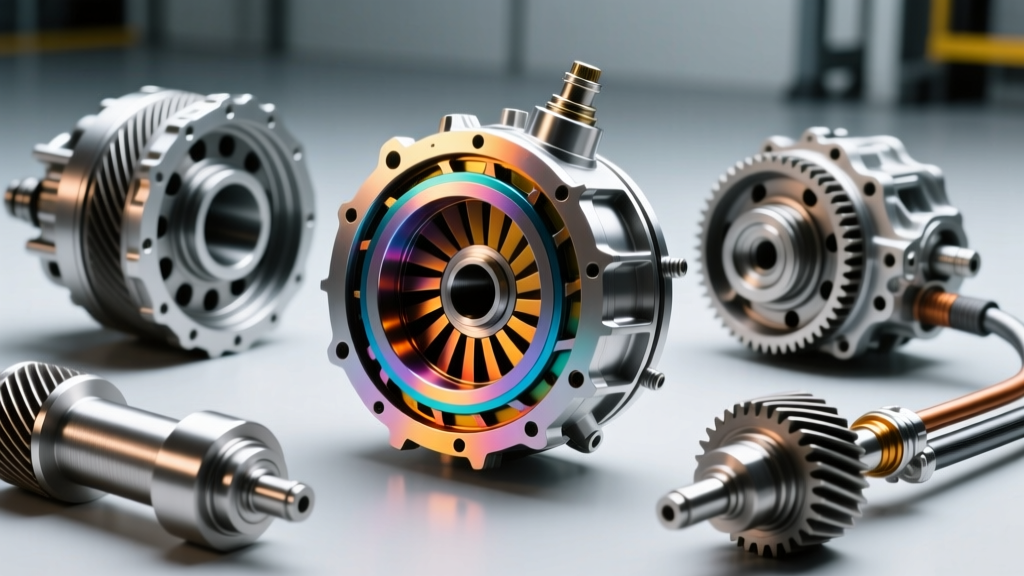
Factory torque converters utilize stamped steel covers that can flex under high line pressure, causing the TCC piston to lose seal integrity and slip. Upgrading to a billet steel cover converter eliminates this flex. Brands like Circle D Specialties and Precision Industries forge their covers from solid steel billets, ensuring the TCC piston applies perfectly flat against the friction surface.
- Top Pick: Circle D 6L80E Series (Part # 6L80-3400)
- Features: Forged steel cover, carbon-kevlar friction lining, heavy-duty stator.
- Cost Range: $950 - $1,250
- Best For: Towing, modified engines, and vehicles experiencing chronic TCC shudder.
2. Plate-and-Fin Auxiliary Coolers
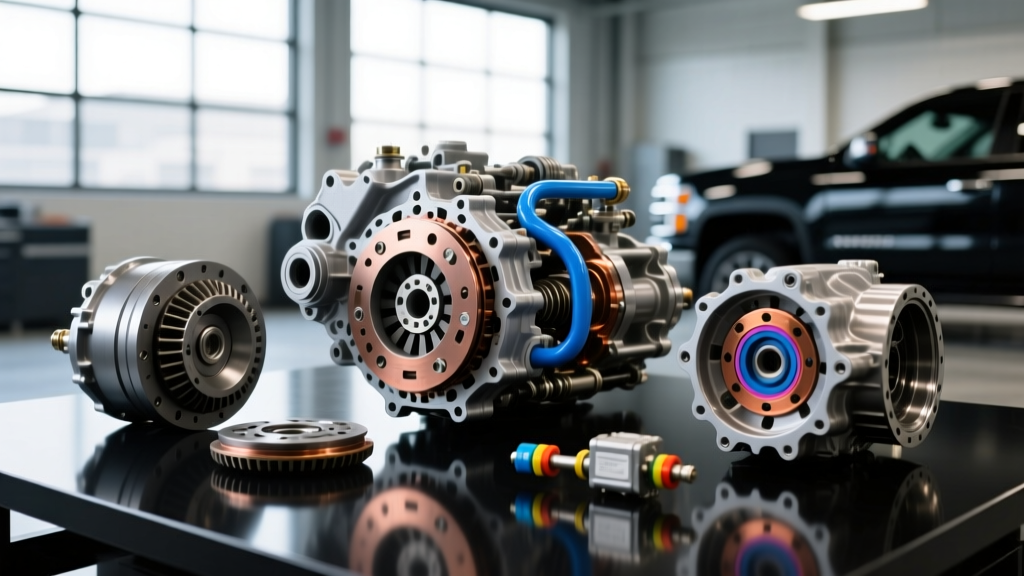
The factory transmission cooler is often integrated into the radiator's A/C condenser stack, which limits its cooling efficiency when ambient temperatures rise. Adding an auxiliary cooler in series with the factory radiator loop is the most cost-effective way to drop baseline temperatures. In 2026, plate-and-fin designs have largely superseded older tube-and-fin models due to their superior surface-area-to-volume ratio.
- Top Pick: Derale Hyper-Cool Remote Cooler (Part # 15960)
- Features: Stacked plate design, integrated 650 CFM fan, -8 AN O-ring boss fittings.
- Cost Range: $180 - $240
- Best For: Heavy towing, off-roading, and stop-and-go traffic scenarios.
3. Standalone TCC Lockup Controllers
Many modern automatic transmissions (like the Ford 10R80 or GM 8L90) are programmed to delay TCC lockup until higher gears to prioritize emissions and shift smoothness. This leaves the converter slipping in 3rd and 4th gear under load. A standalone lockup controller allows you to manually or programmatically force TCC apply in lower gears, instantly eliminating slippage heat.
- Top Pick: TCI Auto TCC Lockup Controller (Part # 376500)
- Features: Adjustable speed/TPS thresholds, plug-and-play harnesses.
- Cost Range: $280 - $350
- Best For: Engine swaps, diesel conversions, and custom tuning applications.
Comparative Analysis: Cooling & Converter Solutions
| Solution Type | Top Brand / Part | Est. Cost | Avg. Temp Drop | Installation Complexity |
|---|---|---|---|---|
| Billet Torque Converter | Circle D / Stallion | $950 - $1,500 | Eliminates Slip Heat | High (Trans Removal) |
| Auxiliary Plate Cooler | Derale Hyper-Cool | $150 - $250 | 20°F - 40°F | Low (Front Bumper) |
| Valve Body Boost Valve | Sonnax 57525-04K | $45 - $65 | Prevents TCC Slip | Medium (Pan Drop) |
| TCC Lockup Controller | TCI Auto / PCS | $280 - $400 | Eliminates Low-Gear Slip | Medium (Wiring/Tuning) |
Model-Specific Overheating Profiles
Torque converter auto overheating manifests differently across transmission platforms. Understanding your specific unit's weak points is critical for selecting the right upgrade.
GM 6L80 / 6L90 (Silverado, Camaro, Corvette)
The 6L80 is notorious for TCC shudder and overheating when towing near its 10,000 lb limit. The root cause is often a worn TCC regulator valve in the valve body, which fails to maintain adequate apply pressure. Before replacing the entire converter, install a Sonnax TCC Regulator Valve Kit (Part # 57525-04K). This oversized valve restores line pressure to the TCC piston, ensuring a firm lockup and eliminating the micro-slippage that boils Dexron ULV fluid.
Ford 10R80 (F-150, Mustang, Bronco)
The 10R80 utilizes a very tight torque converter and Mercon ULV fluid. To achieve seamless shifts, Ford's factory tuning skips TCC lockup in several intermediate gears. When towing up a 6% grade, the converter will slip in 4th and 5th gear, rapidly spiking fluid temps. The best fix here is a custom PCM tune that alters the TCC apply schedule, forcing lockup at lower speeds, paired with a Derale auxiliary cooler mounted behind the lower front grille.
Allison 1000 (Duramax Diesels)
Early and late-model Allison 1000 units handle immense torque but suffer from turbine hub failure and cover flex when tuned above 600 hp. Overheating in the Allison is usually a secondary symptom of the converter dumping debris into the lube circuit after the friction lining disintegrates. Upgrading to a Goerand or Triple Disc billet triple-disc converter is mandatory for modified Duramax trucks to maintain thermal stability.
Diagnostic Checklist: Is Your TC the Culprit?
Before purchasing parts, verify that the torque converter is actually the source of the heat. Use a bi-directional OBD2 scan tool to monitor live data:
- Monitor TCC Slip Speed PID: With the engine at operating temperature and cruising in top gear at a steady throttle, command the TCC to apply. The slip speed should drop to under 20 RPM. If it hovers between 80 and 200 RPM, your TCC friction material is worn or apply pressure is low.
- Check TCC Solenoid Duty Cycle: If the PCM is commanding 100% duty cycle but slip remains high, the electrical system is fine, but the hydraulic circuit or clutch is failing.
- Inspect for Debris: Drop the transmission pan. If you find a thick layer of black, magnetic sludge (friction material mixed with steel shavings), the converter is internally destroying itself and must be replaced.
Installation Specs & Fluid Requirements
When installing a new torque converter or auxiliary cooler, precision is mandatory to prevent immediate overheating upon startup.
- Pre-Fill: Always pre-fill the new torque converter with 1 to 1.5 quarts of the specified ATF before mating it to the flexplate. Running a dry converter for even 30 seconds will glaze the friction clutch instantly.
- Torque Specs (GM 6L80/6L90): The torque converter to flexplate bolts must be torqued to 45 lb-ft (61 Nm). The transmission to engine block bolts require 37 lb-ft (50 Nm).
- Fluid Capacities: A standard 6L80 service fill (pan drop and filter change) requires approximately 6.0 quarts. A completely dry fill (after a full rebuild and converter replacement) requires 11.2 quarts.
- Cooler Flushing: If your old converter failed, you must flush the factory transmission cooler lines using a pressure flush machine. Debris trapped in the OEM cooler will restrict flow to your new auxiliary cooler, causing immediate overheating.
Expert Insight: In 2026, we are seeing a massive influx of 'universal' torque converters flooding the market. Avoid these. Always purchase a converter calibrated to your exact transmission's TCC apply pressure and stall characteristics. A mismatched converter will either slip continuously (causing overheating) or apply too aggressively (causing engine stall and driveline shock).