The F-150 Drivetrain Dilemma: Maintenance vs. Catastrophic Failure
The Ford F-150 remains one of the most capable work trucks on the market, but its advanced automatic transmissions—specifically the 6R80 and the 10R80—place immense thermal and mechanical stress on the torque converter. When the Torque Converter Clutch (TCC) begins to slip, shudder, or throw diagnostic trouble codes like P0741, owners immediately begin researching the ford f150 torque converter replacement cost. In 2026, that cost is substantial. However, many of these catastrophic failures can be mitigated or entirely avoided through targeted, transmission-specific flushing and maintenance protocols.
This buyer's guide and technical comparison will break down the true costs of replacement versus proactive maintenance, examine the engineering differences between the 6R80 and 10R80 torque converters, and provide actionable data to help you decide whether to flush, repair, or replace.
Financial Breakdown: Replacement vs. Proactive Maintenance
Understanding the financial gap between a fluid exchange and a full teardown is critical for F-150 owners. Labor rates at specialized transmission shops in 2026 average between $165 and $225 per hour. Replacing a torque converter requires dropping the entire transmission assembly, replacing the rear main seal, and often replacing the integrated transmission pan.
| Service Procedure | 6R80 (2011–2017 F-150) | 10R80 (2018–2026 F-150) |
|---|---|---|
| Drain & Fill (Gravity) | $140 - $210 | $180 - $260 |
| Machine Fluid Exchange | $250 - $350 | $320 - $450 |
| Torque Converter Replacement | $1,900 - $2,800 | $2,600 - $3,900+ |
| OEM Fluid Cost (Per Quart) | $9 - $12 (MERCON LV) | $14 - $19 (MERCON ULV) |
As the data illustrates, the ford f150 torque converter replacement cost for the newer 10R80 models can easily approach $4,000 when factoring in the mandatory integrated pan/filter assembly, 14+ quarts of Ultra Low Viscosity (ULV) fluid, and 8.5 hours of book labor. Conversely, a bi-annual fluid exchange costs a fraction of that amount and drastically extends TCC life.
Transmission-Specific Maintenance Protocols
You cannot treat a 10R80 the same way you treat a 6R80. The internal architecture, fluid dynamics, and torque converter lockup strategies are fundamentally different.
The 6R80 (2011–2017 F-150)
The ZF-designed 6R80 utilizes a traditional drop-in filter screen and a separate bolt-on transmission pan. Total system capacity is roughly 13.1 quarts of Motorcraft MERCON LV. A standard drain and fill only removes about 5 to 6 quarts of fluid from the pan, leaving the majority of the degraded fluid trapped inside the torque converter and cooler lines. For the 6R80, a dialysis-style machine exchange is highly recommended every 60,000 miles to purge the TCC of friction material debris.
The 10R80 (2018–2026 F-150)
The 10-speed 10R80 is an engineering marvel but a maintenance nightmare if ignored. It requires Motorcraft MERCON ULV. The most critical difference is the integrated stamped-steel pan. The filter media is permanently bonded to the pan itself. You cannot simply drop the pan and swap a filter; you must replace the entire pan assembly (Motorcraft part number JK4Z-7A106-F or updated equivalents). Furthermore, the 10R80 applies the torque converter clutch as early as 3rd gear, keeping it locked through 10th to minimize slip and heat. This aggressive lockup strategy generates fine clutch dust that must be evacuated before it scores the valve body.
The Flushing Controversy: Machine Exchange vs. Power Flush
When addressing torque converter maintenance, terminology matters. There is a massive technical distinction between a 'Power Flush' and a 'Fluid Exchange'.
- Power Flushing (Avoid): This involves hooking a machine to the cooler lines and forcing fluid backward through the transmission under high pressure to 'clean' it. According to transmission valve body experts at Sonnax, forcing debris backward through the 10R80's intricate hydraulic circuits can dislodge large chunks of TCC friction material, lodging them directly into the TCC control valve bore, causing immediate and irreversible valve body failure.
- Dialysis Fluid Exchange (Recommended): This method intercepts the transmission cooler lines and uses the transmission's own internal pump to push out old fluid while simultaneously drawing in new fluid at a 1:1 ratio. It is a gentle, forward-flowing process that safely evacuates the torque converter without disturbing packed debris in the pan.
When Maintenance is No Longer Enough: TCC Failure Symptoms
While proactive flushing can prevent wear, it cannot fix mechanical destruction. If your F-150 exhibits the following symptoms, the ford f150 torque converter replacement cost is an unavoidable reality:
- The 35-50 MPH Shudder: A rhythmic vibration resembling driving over highway rumble strips. This indicates the TCC friction lining has glazed or worn through, causing micro-slip during light throttle apply.
- DTC P0741 (TCC Stuck Off): The Powertrain Control Module (PCM) detects a severe RPM discrepancy between the engine and the transmission input shaft. The TCC apply circuit has failed, or the converter clutch is physically destroyed.
- Turbo Underboost Codes (P0299) paired with Slip: On the EcoBoost F-150s, a slipping torque converter alters the engine's load calculation, frequently tricking the PCM into logging false turbocharger underboost codes alongside transmission slip codes.
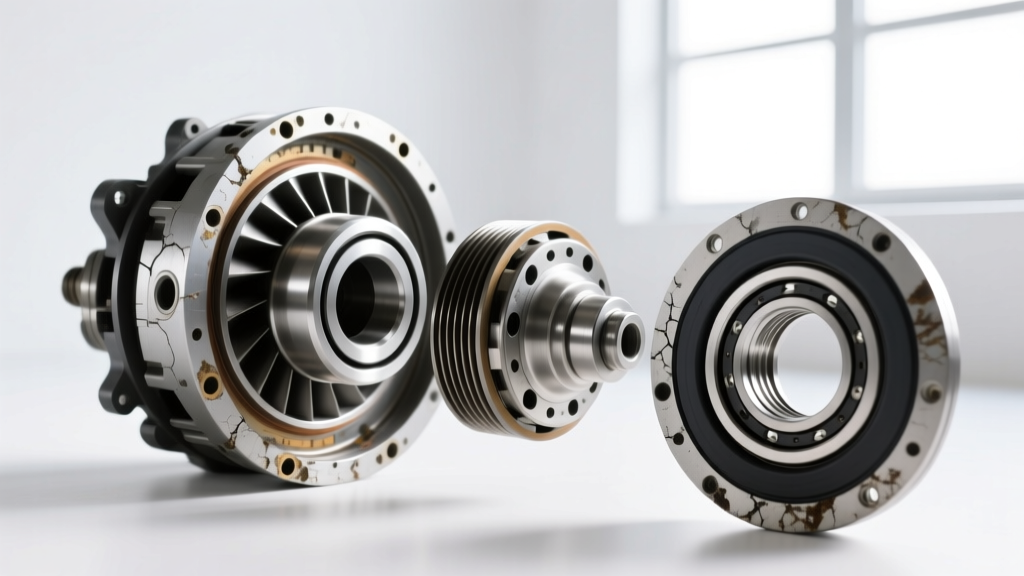
- Glitter in the Pan: If you drop the 10R80 integrated pan and find metallic glitter or heavy black sludge (burnt friction material), the torque converter is already shedding. Flushing at this stage will only accelerate valve body death.
The Chemistry of MERCON ULV vs. LV
A common mistake among DIY buyers attempting to save money on the ford f150 torque converter replacement cost or maintenance is substituting fluids. MERCON LV and MERCON ULV are not interchangeable. MERCON ULV (Ultra Low Viscosity) was engineered specifically for the 10R80's high-speed shift events and tight-clearance clutch packs. Using MERCON LV in a 10R80 will result in delayed shifts, TCC shudder, and eventual clutch burnout due to improper hydraulic flow rates through the solenoids. Always source genuine Motorcraft fluids from verified distributors like RockAuto or your local Ford dealer to avoid the rampant counterfeit fluids found on third-party marketplaces.
DIY Buyer's Guide: Torque Specs and Reassembly
For the advanced DIYer tackling a drain-and-fill or pan replacement on the 10R80, precision is mandatory. The transmission case is aluminum, and the integrated pan uses small metric bolts that are incredibly easy to strip.
- Pan Bolt Torque Spec: 11 Nm (97 lb-in). Note: This is inch-pounds, NOT foot-pounds. Using a standard 1/2-inch drive torque wrench set to 10 ft-lbs will snap the bolts and ruin the case threads.
- Fluid Level Verification: The 10R80 does not have a traditional dipstick. It utilizes a stand-pipe inside the pan. Fluid level must be checked with the transmission fluid temperature (TFT) between 185°F and 200°F, with the vehicle perfectly level and the engine idling in Park. Refer to the Ford Motor Company maintenance schedules for the exact OEM temperature verification procedures.
Final Verdict: Protecting Your Investment
The narrative surrounding the F-150's automatic transmissions doesn't have to end in a $3,500 repair bill. By understanding the mechanical realities of the 6R80 and 10R80 torque converters, owners can make informed decisions. If your truck is under 120,000 miles and shifting smoothly, invest in a 14-quart dialysis fluid exchange using the correct MERCON specification. If you are already experiencing TCC shudder or slip codes, cut your losses, prepare for the ford f150 torque converter replacement cost, and ensure the shop replaces the valve body TCC control valve and the integrated pan filter during the rebuild to guarantee longevity.