The Critical Link Between Fluid Spec and Axle Acoustics
When a 2018 Chevrolet Silverado 1500 develops a rear axle whine, clunk, or chatter, the immediate instinct for many owners is to suspect catastrophic gear failure. However, as drivetrain specialists, we consistently find that a significant percentage of these acoustic anomalies trace back to improper lubrication, degraded gear oil, or the misguided use of aftermarket additives. Understanding the exact 2018 Silverado rear differential fluid type is not just a matter of routine maintenance; it is the foundational baseline for accurate noise diagnosis and troubleshooting.
The 2018 Silverado 1500 platform primarily utilizes the GM 8.625-inch and 9.5-inch semi-floating rear axles. These housings are robust, but their ring and pinion gear sets, pinion bearings, and internal locking mechanisms operate under extreme shear stress and thermal loads. When the fluid film breaks down, or when the wrong chemical composition is introduced, the resulting metal-on-metal harmonics mimic severe mechanical failure. This guide provides an expert-level diagnostic framework to isolate rear differential noise, verify fluid integrity, and apply the correct factory specifications.
Identifying the Correct 2018 Silverado Rear Differential Fluid Type
Before tearing down a differential or ordering a master rebuild kit, you must verify what is currently inside the axle housing. GM engineers specified a highly particular lubricant for the 2018 Silverado rear axles to manage the heat generated by hypoid gear sliding action.
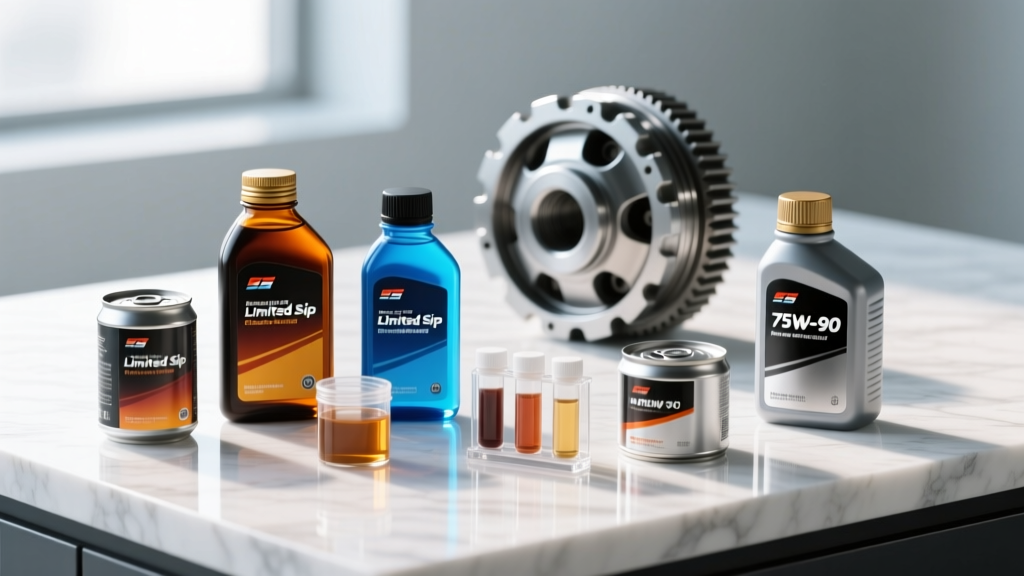
- OEM Specification: SAE 75W-90 Synthetic API GL-5 Axle Lubricant.
- GM Part Number: 88862624 (frequently superseded by ACDelco P/N 10-4016).
- Capacity: The 8.625-inch axle requires approximately 2.1 quarts (2.0 liters). The heavy-duty 9.5-inch axle (found on Max Trailering packages) requires roughly 2.75 quarts (2.6 liters).
Using a conventional 80W-90 mineral oil in a truck designed for full synthetic 75W-90 will lead to rapid thermal degradation, especially when towing. According to ACDelco's lubricant engineering guidelines, synthetic 75W-90 maintains its viscosity index and protects the hypoid gear's extreme pressure (EP) additive layer far better under sustained 200°F+ operating temperatures.
The Eaton G80 Gov-Lock and the Friction Modifier Trap
The most common fluid-related mistake made by DIYers and general repair shops involves the RPO G80 locking rear differential. The G80 is not a traditional clutch-pack limited-slip differential (LSD); it is an Eaton Gov-Lock mechanical locker. It utilizes a flyweight governor mechanism that engages a locking collar only when wheel speed differentiation exceeds 100 RPM.
Expert Warning: Never add a limited-slip friction modifier (like whale oil or synthetic esters) to a GM G80 differential. Friction modifiers alter the shear properties of the 75W-90 gear oil, causing the Gov-Lock collar to slip, engage harshly, or chatter violently during low-speed turns. If your 2018 Silverado has a G80 and is chattering on turns, a complete fluid flush with pure 75W-90 GL-5 (zero additives) is your first diagnostic step.
Acoustic Troubleshooting: Decoding Differential Noises
Once fluid integrity and specification are verified, the next phase of diagnosis requires mapping the acoustic signature of the axle to specific load conditions. Differential gears and bearings produce distinct frequencies depending on whether the drivetrain is under drive torque, coast torque, or lateral load.
| Noise Profile | Operating Condition | Probable Mechanical Root Cause | Diagnostic Action |
|---|---|---|---|
| High-Pitch Whine | Accelerating (Drive Load) | Coast side of ring/pinion gear wear; insufficient pinion bearing preload. | Check pinion nut torque; inspect gear pattern for edge-loading. |
| Low-Frequency Howl | Decelerating (Coast Load) | Drive side of gear wear; excessive backlash. | Measure backlash with dial indicator (Spec: 0.006' - 0.010'). |
| Rumbling / Growl | Constant Speed (45-60 mph) | Pinion bearing brinelling or carrier bearing race wear. | Use chassis ear or stethoscope on the axle tubes near bearings. |
| Violent Clunk | Shifting from Reverse to Drive | Excessive ring gear backlash; worn spider gear thrust washers. | Rotate driveshaft by hand to measure rotational free-play. |
| Chatter / Binding | Tight Low-Speed Turns | G80 Gov-Lock binding due to wrong fluid; broken governor spring. | Flush fluid (no additives); inspect locker mechanism internally. |
Step-by-Step Diagnostic Framework
Accurate noise diagnosis requires eliminating external variables before condemning the internal gear set. Follow this sequence to avoid unnecessary teardowns.
1. Isolate the Axle from the Driveline
Vibrations and noises from a failing transmission output shaft bearing, a worn U-joint, or an unbalanced driveshaft can easily transmit through the pinion yoke and mimic a differential whine. Support the truck on a hoist, run it up to highway speeds in gear, and use a wireless chassis ear attached to the differential housing. If the noise persists when the driveshaft is removed and the rear wheels are spun independently via the hub, the fault lies inside the axle.
2. The Fluid Drain and Debris Analysis
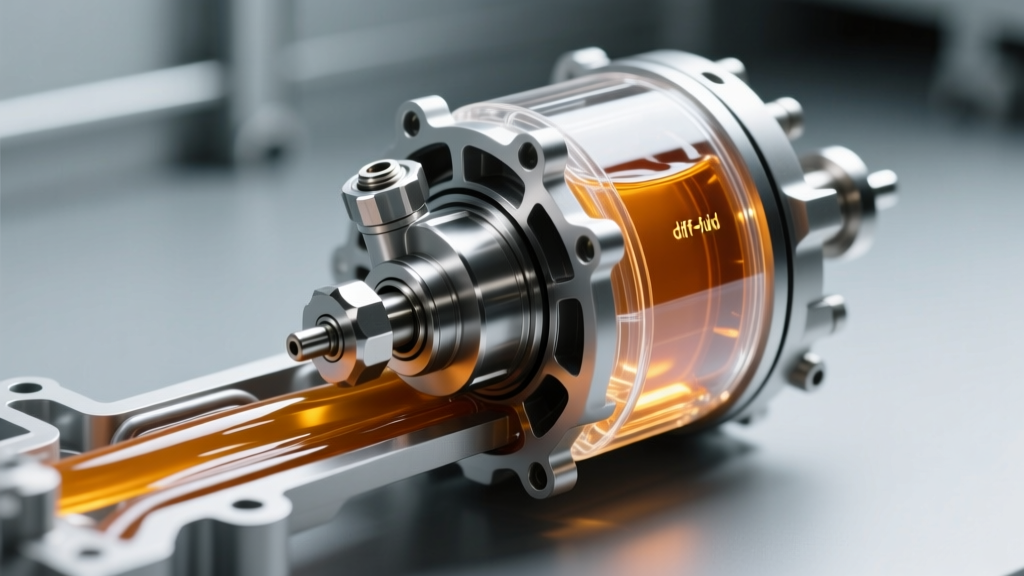
Because the GM 8.625-inch axle lacks a traditional drain plug, fluid extraction requires a pneumatic or manual fluid transfer pump inserted through the fill hole. As you extract the fluid, pay close attention to its condition:
- Glitter/Suspension: Fine metallic glitter is normal wear for a 60,000-mile axle. It indicates the EP additives are working and the gears are bedding.
- Chunky Metal / Shards: If you find needle bearings or chunks of steel on the magnetic fill plug, a pinion or carrier bearing has suffered catastrophic cage failure. Fluid replacement will not fix this; a full rebuild is required.
- Burnt Smell / Black Sludge: Indicates severe thermal breakdown, usually from towing beyond the truck's GCWR without an aftermarket differential cover for heat dissipation.
3. Backlash and Gear Pattern Analysis
If the fluid is clean but a whine persists, the ring and pinion may have shifted due to bearing preload loss. According to Randy's Ring & Pinion technical resources, checking the gear contact pattern with yellow marking compound is mandatory. A pattern that has walked off the toe or heel of the gear tooth indicates that the pinion depth shim or carrier side bearing adjusters need recalibration.
Service Specifications and Torque Data
If your diagnosis points to fluid degradation or requires a cover removal for internal inspection, adhering to exact torque specifications is vital to prevent housing distortion and subsequent oil leaks.
- Axle Housing Cover Bolts (M8/M10): 24 lb-ft (33 Nm). Use a star-pattern tightening sequence to ensure even gasket compression.
- Fill Plug (if equipped on 9.5' axle): 30 lb-ft (40 Nm).
- Pinion Nut (Prevailing Torque): Do not use an impact wrench to remove or install. The pinion nut crushes a sleeve to set bearing preload. Reusing a crushed sleeve or over-torquing the nut will destroy the pinion bearings in under 500 miles.
- Sealant: If your axle uses RTV instead of a pre-cut gasket, use GM P/N 12378497 (or equivalent high-temp silicone). Critical: Allow 4 hours of cure time before filling with gear oil to prevent the oil from washing out the uncured RTV.
Cost Analysis: DIY vs. Professional Rebuild
Understanding the financial implications of your diagnostic findings helps in planning the repair. Here is a realistic breakdown of costs for the 2018 Silverado rear axle as of current market rates:
- Routine Fluid Service (DIY): $45 - $65 (Includes 3 quarts of ACDelco 75W-90 Synthetic and RTV sealant).
- Routine Fluid Service (Dealership): $180 - $250 (Labor-intensive due to the pump-out and RTV curing process).
- Ring and Pinion Replacement (Shop): $1,200 - $1,800. This includes a master rebuild kit (Timken bearings, new crush sleeve, pinion seal, shims) and roughly 4-5 hours of specialized labor.
- Eaton G80 Locker Mechanism Replacement: $400 - $600 for the part, plus 2 hours of labor if the internal governor weights or locking collar are shattered.
For further reference on OEM axle configurations and towing limits that dictate thermal management needs, consult the Chevrolet Silverado 1500 official specifications portal.
Final Expert Takeaway
Differential noise diagnosis is an exercise in acoustic forensics and fluid chemistry. By strictly adhering to the correct 2018 Silverado rear differential fluid type—specifically avoiding friction modifiers in G80-equipped trucks—you eliminate the most common variables that cause chatter and whine. When mechanical failure is truly present, mapping the noise to drive vs. coast conditions will pinpoint the exact failing component, saving you from unnecessary parts swapping and ensuring your Silverado's drivetrain remains reliable for the long haul.