The Alpha Platform and the 2014 Cadillac ATS Rear Differential
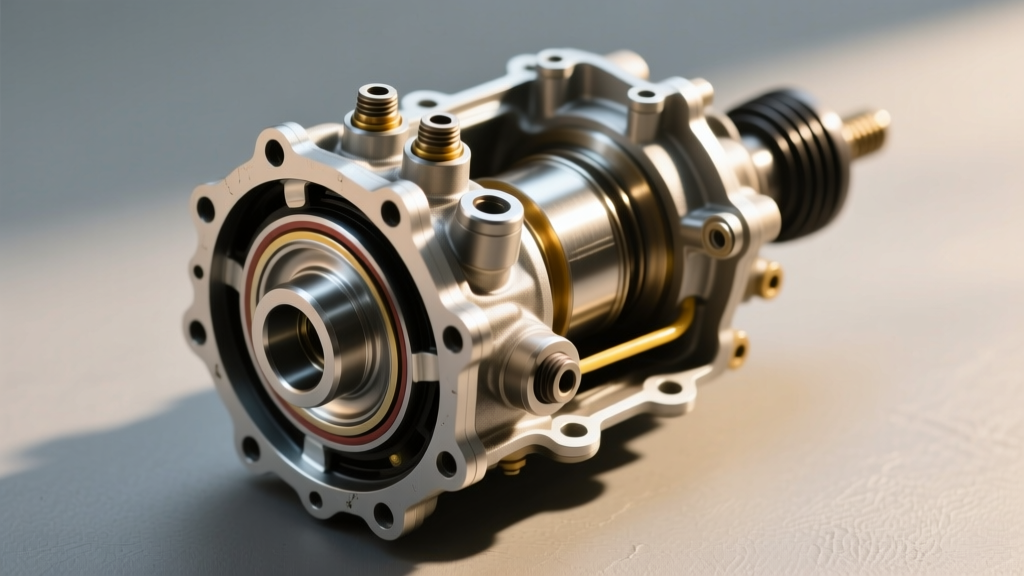
As we navigate the maintenance landscape in 2026, the 2014 Cadillac ATS has firmly entered its second decade of service. Built on GM's highly regarded Alpha platform, the ATS features a sophisticated Independent Rear Suspension (IRS) that relies on a compact, lightweight rear axle assembly. Whether your vehicle is equipped with the 2.0L Turbo (utilizing a 200mm / 7.875-inch ring gear) or the 3.6L V6 (utilizing the robust 218mm / 8.6-inch ring gear), the 2014 Cadillac ATS rear differential is a critical component for translating power to the pavement.
While many base models left the factory with an open differential, performance packages, dealer-installed upgrades, and aftermarket conversions frequently introduce a mechanical clutch-type Limited Slip Differential (LSD). Understanding the intricate operation of this LSD, alongside the precise fluid chemistry required to keep it functioning, is paramount for preserving the vehicle's dynamic handling characteristics.
The Mechanics of Clutch-Type LSD Operation
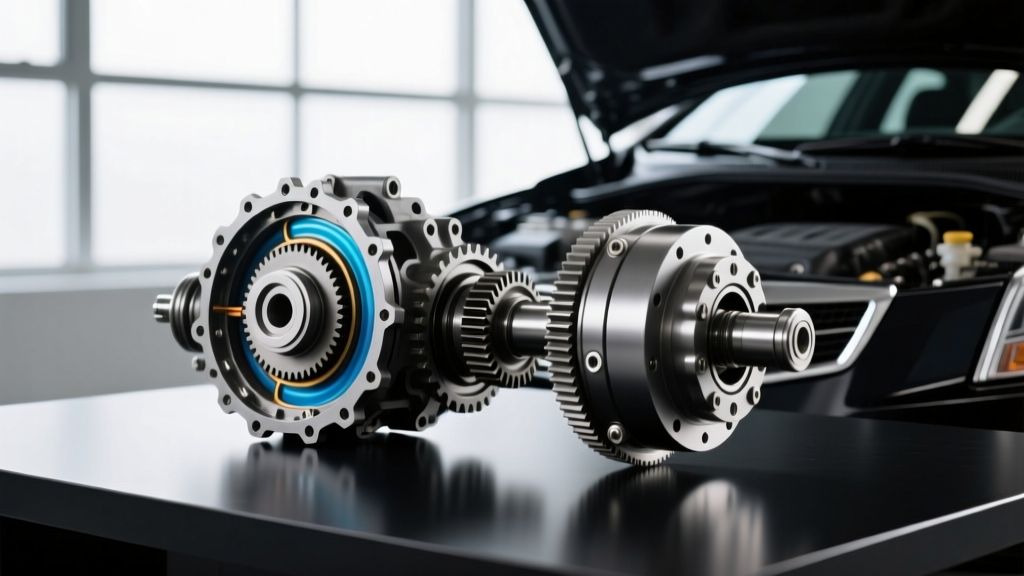
To properly maintain the unit, one must first understand the internal physics of a clutch-type limited-slip differential. Unlike an open differential, which sends torque to the wheel with the least resistance (resulting in one-wheel spin on icy or uneven surfaces), an LSD utilizes a series of alternating friction and steel clutch packs located behind each side gear.
Preload and Torque Sensitivity
Inside the 2014 Cadillac ATS rear differential, a central preload spring (often a V-shaped or S-shaped spring) pushes the side gears outward against the clutch packs. This creates a baseline clamping force, known as 'static preload,' which ensures both wheels turn together during straight-line acceleration. When cornering, the outer wheel must rotate faster than the inner wheel. The differential allows this by permitting the side gears to overcome the friction of the clutch packs, a process called 'breakaway torque.'
Expert Insight: If the breakaway torque is too high due to incorrect fluid or degraded clutch discs, the differential will 'bind' during low-speed corners, causing the rear tires to hop or skip. If it is too low, the LSD effectively operates as an open differential, failing to transfer torque to the wheel with traction.
Under heavy acceleration, the angled teeth of the side gears generate axial thrust. This thrust dynamically increases the clamping force on the friction discs, locking the axles together proportionally to the input torque. This torque-sensitive operation is what gives the ATS its predictable, neutral handling balance at the limit of adhesion.
Fluid Dynamics: Viscosity, Friction Modifiers, and Additives
The most common point of failure in LSD maintenance is the misuse of gear oil. General Motors engineered the Alpha platform's IRS to minimize parasitic drivetrain loss, which directly impacts fuel economy and emissions. Consequently, the factory fill is not a traditional thick 75W-90 or 80W-90 GL-5 gear oil.
Instead, GM specifies a lower-viscosity 75W-85 Synthetic Axle Lubricant (often branded under the Dexron Ultra-Light specification). When an LSD is present, the base fluid alone is insufficient. The clutch packs require a specific Friction Modifier (FM) additive. FMs are long-chain polar polymers that bond to the metallic surfaces of the clutch discs, altering the coefficient of friction to prevent 'stick-slip' oscillations—the primary cause of differential chatter.
| Parameter | Specification & Data |
|---|---|
| Axle Architecture | GM Independent Rear Suspension (IRS) |
| Ring Gear Diameter | 218mm (8.6") for 3.6L V6 / 200mm (7.875") for 2.0T |
| Fluid Capacity | 1.15 Liters (1.21 Quarts) |
| Base Fluid Spec | ACDelco 75W-85 Synthetic (P/N 88862624) |
| LSD Additive | ACDelco Friction Modifier (P/N 88900401) - 4 oz required |
| Fill/Drain Plug Torque | 24 lb-ft (32 Nm) |
Step-by-Step 2014 Cadillac ATS Rear Differential Service
Servicing the 2014 Cadillac ATS rear differential is a straightforward but meticulous process. Because the IRS housing lacks a traditional dipstick, the vehicle must be perfectly level to ensure the correct fluid volume. According to the GM Owner Center Manuals, the recommended service interval for severe duty or track use is every 50,000 miles, though many drivetrain specialists recommend a 30,000-mile interval for LSD-equipped models to preserve the friction modifier's efficacy.
1. Preparation and Extraction
- Level the Vehicle: Use a rotary lift or four jack stands on perfectly level concrete. A tilted vehicle will result in an under-filled or over-filled differential.
- Remove the Fill Plug First: Located on the rear or side of the cast aluminum housing. Never remove the drain plug first. If the fill plug is seized or stripped, you must be able to reinstall the drain plug to drive the vehicle to a shop.
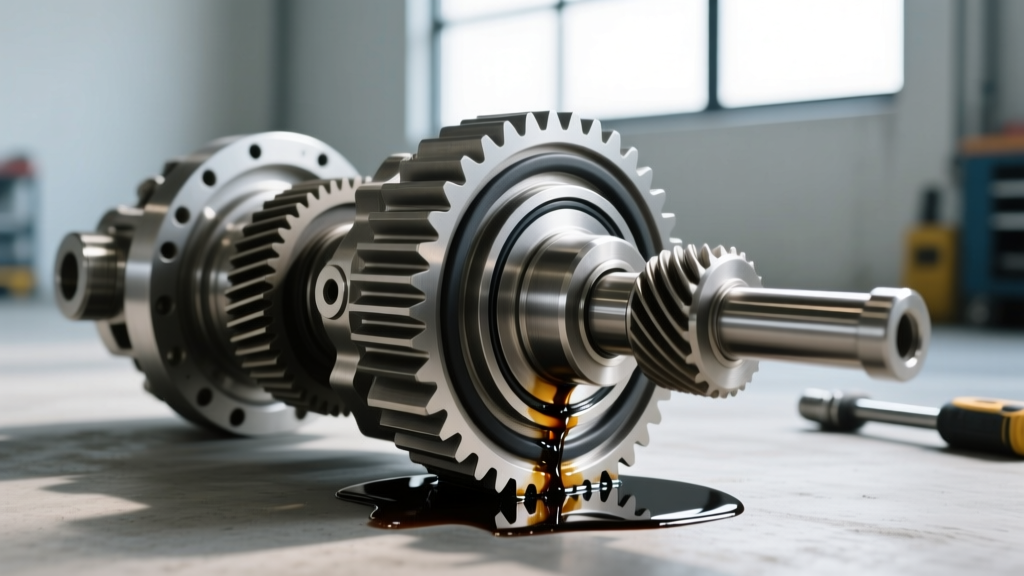
- Drain the Fluid: Remove the bottom drain plug. Allow the fluid to drain completely. Expect it to take 15-20 minutes due to the 75W-85 viscosity and internal baffling.
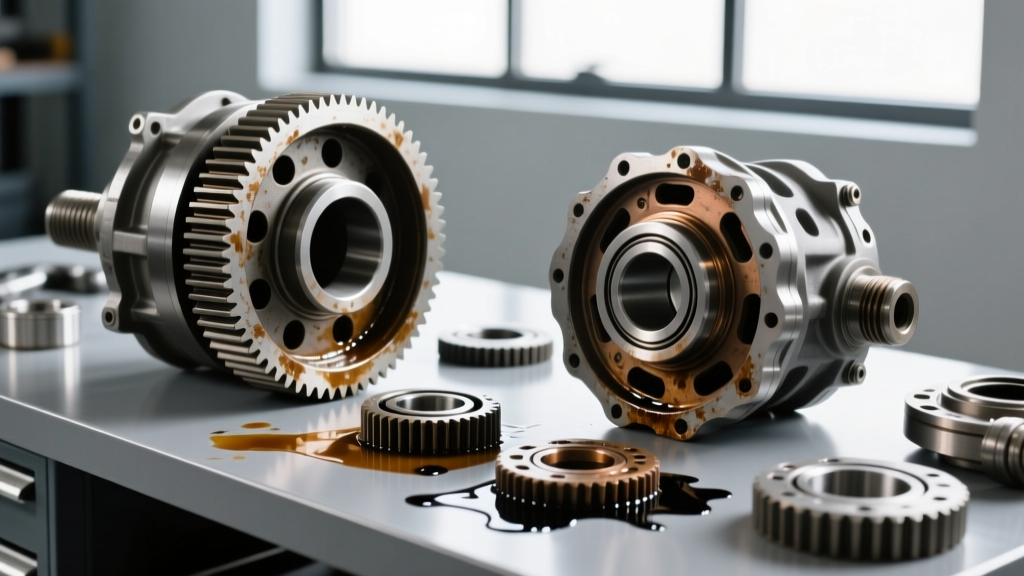
- Magnetic Plug Analysis: Inspect the drain plug. A fine, dark gray metallic paste is normal wear from the clutch steels and ring gear. Chunky metallic flakes or needle-bearing shards indicate catastrophic internal failure requiring a teardown.
2. Refill and Torque Procedures
- Reinstall Drain Plug: Clean the magnetic tip, apply a fresh crush washer if equipped, and torque to 24 lb-ft (32 Nm).
- Add Friction Modifier: If your ATS is equipped with a clutch-type LSD, inject exactly 4 ounces of ACDelco Limited Slip Axle Lubricant Additive (or an equivalent like Lubegard Limited Slip Supplement) into the fill hole before adding the base gear oil. Refer to the ACDelco Lubricants Catalog for verified part numbers.
- Fill with Base Oil: Pump the 75W-85 Synthetic gear oil into the fill hole until it begins to weep out of the opening. This indicates the fluid is exactly level with the fill port.
- Reinstall Fill Plug: Torque to 24 lb-ft (32 Nm).
Diagnosing LSD Chatter and Clutch Pack Wear
Even with the correct fluid, the 2014 Cadillac ATS rear differential can develop noise or binding issues as the vehicle ages. The most common complaint from owners is a rhythmic 'chatter' or 'hopping' sensation from the rear axle during tight, low-speed parking lot maneuvers.
The Figure-8 Diagnostic Test
To isolate differential chatter from suspension or CV joint issues, perform the Figure-8 test. Find an empty, smooth asphalt parking lot. Drive the vehicle in tight, continuous figure-eight patterns at idle speed (approx. 3-5 mph) with the steering wheel at full lock.
- If the chatter persists: The friction modifier has depleted, or the clutch discs have become glazed. Attempt a fluid flush with a high-quality synthetic 75W-85 and a double-dose (up to 6 oz) of friction modifier. Drive the vehicle aggressively in a safe environment to work the additive into the porous surface of the friction discs.
- If the chatter remains after fluid service: The clutch packs are physically worn or the preload spring has fatigued. At this stage, the differential must be removed from the subframe, and the carrier must be opened to measure the clutch pack clearance using a dial indicator. Replacement of the clutch kit (typically costing between $180 and $350 for OEM or Eaton components) is required.
- If you hear a rotational whine: Gear whine that changes pitch with vehicle speed (not engine RPM) usually indicates improper ring and pinion backlash or worn pinion bearings. This requires a professional setup with dial indicators and inch-pound torque wrenches to adjust the shims.
Final Thoughts on IRS Longevity
The 2014 Cadillac ATS rear differential is a marvel of packaging and performance, but its longevity is entirely dependent on fluid chemistry and adherence to torque specifications. By respecting the specific 75W-85 viscosity requirement, utilizing the correct friction modifiers for LSD operation, and performing rigorous magnetic plug inspections, owners can ensure their Alpha-platform drivetrain continues to deliver uncompromised performance well into the future.