The Evolution of Drivetrain Diagnostics: Analog Muscle vs. Digital Precision
As we navigate the 2026 automotive landscape, the chasm between analog mechanical sympathy and digital mechatronic intervention has never been wider. Yet, the fundamental physics of transferring torque from a crankshaft to the pavement remain identical. For performance builders and master technicians, mastering drivetrain malfunction diagnosis requires a bilingual fluency: you must be able to read the harmonic vibrations of a 1971 Plymouth Cuda rare drivetrain just as adeptly as you decode the CAN-bus fault codes of a modern BMW M xDrive system.
Whether you are preserving a numbers-matching Mopar or extracting maximum lap times from a G80 M3, drivetrain NVH (Noise, Vibration, and Harshness) and power delivery faults demand a systematic approach. This guide bridges the gap between classic heavy-duty mechanical layouts and modern mechatronic marvels, providing actionable diagnostic frameworks and performance upgrade paths.
The Analog Masterpiece: 1971 Plymouth Cuda Rare Drivetrain
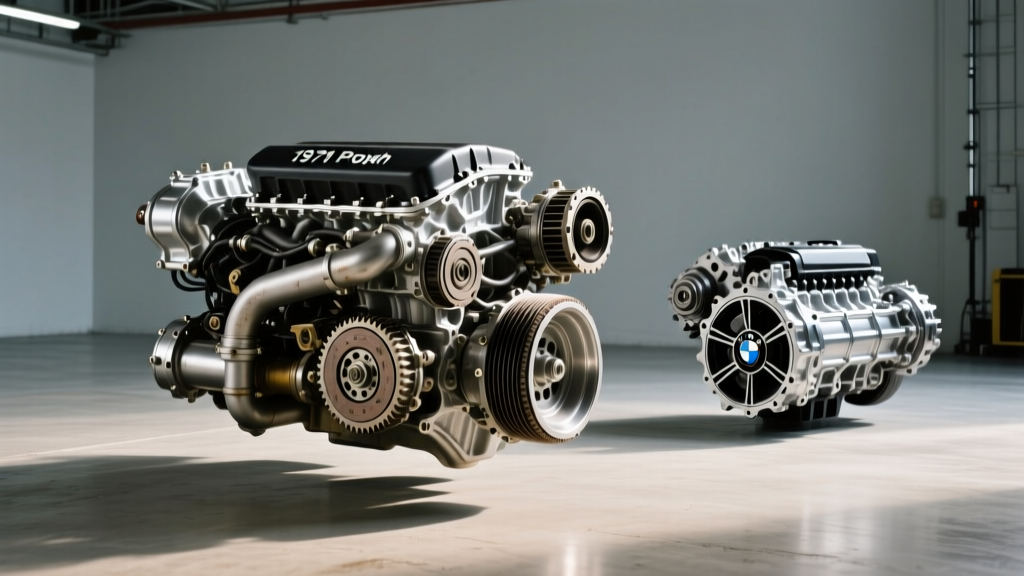
In 1971, Plymouth produced exactly 58 Hemi 'Cudas (49 hardtops and 9 convertibles). The 1971 Plymouth Cuda rare drivetrain configuration consisted of the legendary 426 cubic-inch Hemi V8 mated to the heavy-duty A833 18-spline 4-speed manual, terminating in a Dana 60 rear axle with a 3.54 Sure-Grip limited-slip differential. While robust, this analog drivetrain is notorious for specific mechanical malfunctions when pushed beyond its 1970s engineering tolerances.
Diagnosing Analog Drivetrain Malfunctions
Unlike modern cars that throw a Check Engine Light, a classic Mopar communicates drivetrain malfunctions through physical feedback. The most common issue is high-speed driveline shudder (typically between 65-75 mph), often misdiagnosed as an unbalanced driveshaft.
- Pinion Angle Misalignment: The rear leaf springs on the E-body chassis are prone to wrap and sag. If the transmission output shaft angle and the Dana 60 pinion angle are not perfectly parallel (within 1 to 3 degrees of each other in opposite directions), the universal joints will operate at unequal velocities, causing severe vibration.
- U-Joint Binding: The original 1310-series U-joints are undersized for modern sticky radial tires. Binding in the U-joint caps due to lack of lubrication or improper strap torque creates a cyclic vibration that mimics a bent axle.
- Thrust Angle Deviation: If the rear axle housing is not perfectly square to the chassis centerline (often caused by worn leaf spring bushings), the car will 'dog-track', causing the drivetrain to bind laterally under load.
Performance Upgrades: The TKX & Dana 60 Blueprint
To modernize this rare drivetrain without sacrificing its soul, builders in 2026 are swapping the A833 for the Tremec TKX 5-speed (Part #TUX-1101). This unit handles 600 lb-ft of torque and features a 3.27 first gear and 0.64 overdrive, dropping highway RPMs by 30%. To support the Hemi's torque, the Dana 60 must be upgraded with Strange Engineering 35-spline alloy axles and a Detroit Truetrac locker. When reassembling the Dana 60 pinion yoke, the crush sleeve must be set to achieve 15-25 in-lbs of rotational preload, with the pinion nut torqued to 200-250 lb-ft.
Decoding the Digital: BMW Drivetrain Malfunction Diagnosis
Transitioning from the analog 1970s to modern Bavarian engineering, the infamous 'Drivetrain Malfunction' warning on a BMW iDrive screen is the digital equivalent of a Dana 60 shudder—but infinitely more complex. This warning triggers a limp-home mode, artificially limiting engine torque to protect the driveline components.
Common Culprits in the ZF 8HP & xDrive Systems
When diagnosing a BMW (such as the F90 M5 or G01 X3 M40i), the fault rarely lies in the physical gears. Instead, it resides in the mechatronic control units and fluid dynamics.
- ZF 8HP Mechatronic Sleeve Leak: The ZF 8HP70/76 transmissions utilize a plastic sealing sleeve where the electrical connector passes through the transmission pan. Over time, heat cycles cause this sleeve to warp, leaking fluid into the connector and causing communication faults (e.g., Code 4F92 - Gear Ratio Monitoring). The fix requires replacing the sleeve (ZF Part #24347588725) and resetting transmission adaptations via ISTA+.
- VTG Transfer Case Actuator Wear: In xDrive models, the transfer case actuator motor utilizes a small plastic gear that strips over time. This triggers codes like 5F3A (Transfer Case Internal Fault). Performance builders bypass this by upgrading to a billet aluminum actuator gear or utilizing software solutions like xDelete to lock or bias the xDrive system for rear-wheel-drive dynamics.
- Fluid Degradation & Shear: BMW markets their fluids as 'lifetime,' but in 2026, track-focused M-cars see severe shear in the Shell TF0870 transfer case fluid after just 30,000 miles, leading to clutch pack slip and subsequent drivetrain warnings.
Cross-Era Diagnostic Matrix
Understanding the parallels between these two eras of engineering highlights how diagnostic principles transcend technology.
| Diagnostic Parameter | 1971 Plymouth Cuda (Analog) | Modern BMW G-Series (Digital) |
|---|---|---|
| Primary Fault Indicator | NVH (Vibration through seat pan/steering wheel) | iDrive 'Drivetrain Malfunction' / Limp Mode |
| Diagnostic Tooling | Digital Inclinometer, Dial Indicator, Chassis Ear | ISTA+ Software, OBDX Pro, Oscilloscope |
| Common Failure Point | Leaf Spring Wrap / U-Joint Binding | Mechatronic Sleeve / VTG Actuator Gear |
| Fluid Spec (Rear/Trans) | SAE 80W-90 GL-5 / MTL Synthetic | Shell TF0870 / ZF LifeguardFluid 8 |
| Avg. Repair Cost (2026) | $800 - $2,500 (U-joints, springs, alignment) | $1,200 - $4,500 (Mechatronic, Coding, VTG) |
Torque Specs & Fluid Capacities Cheat Sheet
Precision is mandatory whether you are using a torque wrench on a Hemi or a digital fluid pump on a ZF transmission. Keep these specifications on your bench:
- 1971 Cuda Dana 60 Pinion Nut: 200-250 lb-ft (Adjust for 15-25 in-lbs rotational preload).
- 1971 Cuda Driveshaft U-Bolts (1350 series upgrade): 25 lb-ft.
- Tremec TKX Fluid Capacity: 2.8 Liters (Tremec MTL or Red Line D6).
- BMW ZF 8HP Pan/Filter Torque: 10 Nm (Aluminum pan bolts are highly susceptible to stripping).
- BMW xDrive Transfer Case Fluid Capacity: 0.6 to 1.0 Liters (Model dependent, verify with ISTA).
2026 Restomod Integration: Bridging the Gap
The most cutting-edge builds in 2026 involve integrating modern diagnostic telemetry into classic chassis. Builders are now utilizing Holley Terminator X ECU systems paired with GPS-driven traction control modules that monitor drivetrain slip. By installing a driveshaft speed sensor on the Dana 60 and comparing it to the transmission output shaft speed, the ECU can detect wheelspin and micro-jitter (the analog equivalent of a BMW traction control intervention) and pull ignition timing in milliseconds.
Expert Insight: 'Whether you are tuning a 1971 Hemi Cuda or a modern BMW M3, rotational mass is the enemy of drivetrain longevity. Upgrading to a carbon-fiber driveshaft in the Cuda or a lightweight aluminum xDrive shaft in the BMW reduces parasitic loss and minimizes the harmonic shockwaves that shatter U-joints and strip mechatronic clutch packs.' - Drivetrain Dynamics Lab, 2025
Sources & Further Reading
For deeper dives into specific diagnostic procedures and parts sourcing, consult the following authoritative resources:
- Hagerty Media - In-depth guides on classic Mopar drivetrain preservation and valuation.
- ZF Aftermarket - Official technical service bulletins for 8HP transmission mechatronic repairs and fluid specifications.
- BMW Blog - Community-driven diagnostics for xDrive and Drivetrain Malfunction fault codes.