The Hidden Costs of Yamaha Blaster Clutch Cable Failure
The Yamaha Blaster (YFS200) remains one of the most iconic and heavily modified two-stroke ATVs in off-road history. Despite its age, the YFS200 platform is still actively raced, trailed, and restored in 2026. At the heart of its drivetrain is a wet multi-plate clutch system actuated by a simple, yet highly critical, steel-braided or polymer-coated mechanical cable. When riders search for solutions regarding a yamaha blaster clutch that slips, drags, or feels notchy, the root cause is frequently traced back to clutch cable degradation, improper routing, or severe misadjustment.
Unlike the hydraulic slave cylinders found on modern automotive manual transmissions (such as the Tremec TR-6060 or Ford MT-82), the Blaster relies entirely on mechanical leverage. A frayed cable, corroded inner wire, or stretched housing doesn't just result in a stiff lever pull; it fundamentally alters the clamping force applied to the pressure plate. This micro-slippage generates immense heat, glazes friction material, and warps steel separator plates. In this comprehensive 2026 cost analysis and diagnostic guide, we break down the exact pricing, part numbers, and mechanical specifications required to diagnose, adjust, and replace the Yamaha Blaster clutch cable system.
Anatomy of the YFS200 Cable Actuation System
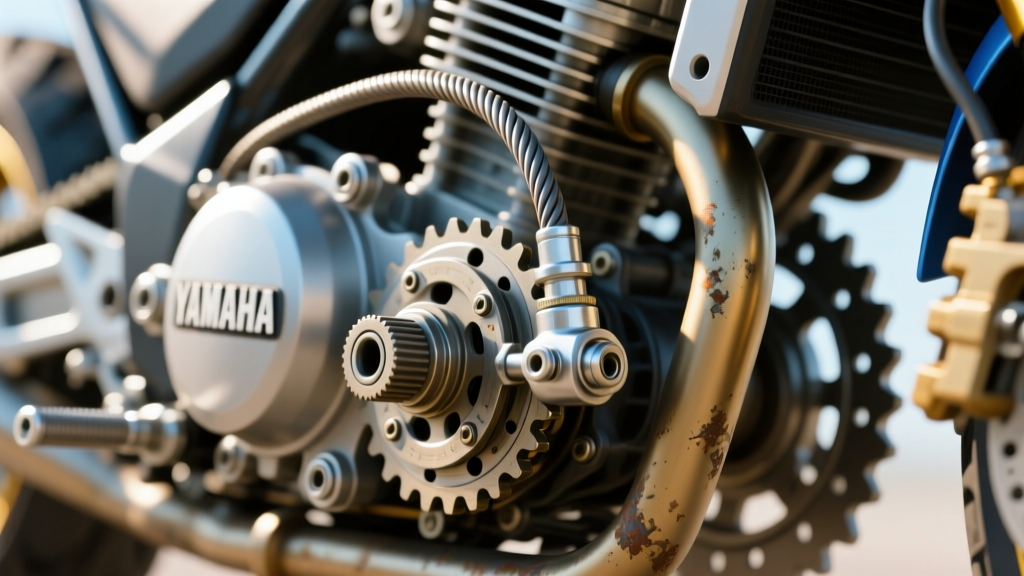
The Blaster's clutch cable routes from the left handlebar perch, down the main frame tube, across the engine cradle, and terminates at the right-side crankcase cover. Here, the cable's barrel end seats into an actuator lever that pushes a hardened steel rod directly into the clutch pressure plate. Because the cable is exposed to the elements—mud, water, UV radiation, and extreme temperature fluctuations—the internal Teflon liner eventually degrades. Water ingress leads to oxidation of the inner steel wire, increasing friction and causing the lever to snap back slowly or fail to fully disengage the clutch during shifts.
2026 Price Breakdown: OEM vs. Aftermarket Cables & Labor
When budgeting for a yamaha blaster clutch cable replacement, owners must choose between Original Equipment Manufacturer (OEM) parts, premium aftermarket upgrades, and budget alternatives. Furthermore, professional labor rates for specialized vintage ATV shops have risen significantly in 2026. Below is a detailed cost matrix to help you plan your repair.
| Component / Service | Brand / Type | Estimated 2026 Cost | Durability & Notes |
|---|---|---|---|
| OEM Clutch Cable Assembly | Yamaha (Part # 21A-26335-00) | $48.00 - $55.00 | Exact factory fit, standard polymer liner. Best for stock restorations. |
| Standard Replacement Cable | Motion Pro | $24.00 - $29.00 | Cost-effective, reliable for casual trail riding. Motion Pro Cables are widely available. |
| Heavy-Duty Performance Cable | Barnett Kevlar Core | $65.00 - $78.00 | Kevlar-reinforced, zero-stretch. Mandatory for high-horsepower big-bore builds. |
| Crankcase Cover Gasket | Yamaha OEM | $12.00 - $16.00 | Required if adjusting the internal actuator arm or replacing the push rod. |
| Professional Shop Labor | Independent ATV Specialist | $140.00 - $195.00 | Based on 1.2 - 1.5 hours at 2026 average rates ($115-$130/hr). |
Note: If your local shop quotes over $250 for a simple cable swap, they are likely padding the labor time. A competent DIY mechanic can complete this swap in under 30 minutes with basic hand tools.
The True Cost of Misadjustment: Physics and Fluid Dynamics
Many riders mistakenly believe that clutch cable adjustment is merely about lever comfort. In reality, improper freeplay directly dictates the survival of your clutch pack. The YFS200 utilizes a 6-plate friction and 5-plate steel configuration. When the cable is adjusted too tightly (zero freeplay), the actuator arm remains slightly engaged, preventing the clutch springs from applying their full 150+ lbs of clamping force.
At the Blaster’s peak powerband of 6,500 to 7,500 RPM, this lack of clamping force results in micro-slippage. Slippage generates extreme friction heat, which rapidly degrades the paper/cork friction material. Worse, if the rider is using an automotive oil lacking JASO MA friction modifiers, the clutch will slip catastrophically. Always ensure your crankcase is filled with 1.4 Liters of a JASO MA-certified 10W-40 ATV oil (such as Yamalube 4 or Mobil 1 Racing 4T) to protect the wet clutch pack, regardless of cable condition.
Precision Adjustment: Torque Specs and Freeplay Metrics
If you are diagnosing a slipping or dragging yamaha blaster clutch, follow this exact adjustment protocol before ordering replacement parts. The goal is to achieve 10-15mm (approx. 3/8 to 5/8 inch) of freeplay measured at the tip of the clutch lever.
- Step 1: Maximize the Inline Adjuster. Located on the right side of the engine near the crankcase cover, this threaded barrel provides fine-tuning. Thread it all the way IN (clockwise) to remove all slack from the system before starting.
- Step 2: Adjust the Handlebar Perch. Loosen the locknut on the left handlebar lever perch. Thread the coarse adjuster OUT (counter-clockwise) until you achieve roughly 12mm of freeplay at the lever tip.
- Step 3: Fine-Tune at the Crankcase. Return to the right-side inline adjuster. Thread it OUT (counter-clockwise) until the clutch lever has exactly 10-15mm of freeplay before you feel resistance from the actuator arm.
- Step 4: Lock and Test. Tighten both locknuts securely. Start the ATV, pull the clutch in, shift into first gear, and ensure the machine does not creep forward (indicating a dragging clutch). Rev the engine in neutral and ensure the RPMs climb freely without the clutch slipping under load.
Advanced Diagnostic Edge Case: If you run out of threads on the inline adjuster and the cable is still too loose, your inner steel wire has permanently stretched, or the internal actuator arm is worn. At this point, the cable must be replaced.
Diagnosing Collateral Damage: Beyond the Cable
When a Yamaha Blaster clutch cable snaps or seizes completely, it often takes other components down with it. If you are already paying for labor or tearing down the right-side crankcase cover, you must inspect the following high-wear items. Referencing Partzilla's Yamaha Blaster clutch catalog can help you source these specific OEM components.
The Actuator Arm and Push Rod
The cast aluminum actuator lever (Part # 21A-16381-00, approx. $26.00) pivots on a small steel shaft. Over time, the slot where the cable barrel seats can wallow out, becoming egg-shaped. This introduces 2-3mm of dead play that no amount of cable adjustment can fix. Additionally, the hardened steel push rod (Part # 90501-23035, approx. $14.00) that transfers this force through the engine cases can develop flat spots or mushroom at the ends. If your clutch engagement point feels inconsistent or 'gritty' through the lever, replace both the actuator arm and the push rod.
Pressure Plate Bearing and Gasket Sealing
Behind the actuator arm sits a small needle bearing that allows the pressure plate to spin freely while the arm applies static pressure. If this bearing dries out or ingests water, it will seize, snapping your clutch cable under heavy load. When removing the right crankcase cover to inspect this bearing, the 8mm flange bolts must be torqued to exactly 10 Nm (7.4 ft-lbs) upon reassembly. Over-torquing these bolts will strip the soft aluminum crankcase threads, resulting in a $400+ helicoil repair or case replacement. Always use a fresh gasket or a thin bead of Yamaha Yamabond 4 to prevent oil weeping.
Final Verdict: Is It Worth the Repair?
From a purely financial perspective, maintaining the yamaha blaster clutch cable system is one of the most cost-effective preventative measures an owner can perform. Spending $30 on a premium Motion Pro cable and 15 minutes of DIY adjustment prevents the $150+ collateral damage of burnt friction plates, warped steel separators, and boiled transmission oil. For collectors restoring a YFS200 to factory specifications, the $55 investment in an OEM Yamaha cable ensures the lever feel matches the exact engineering intent of the original 1988-2006 production runs. Never ignore a stiff lever or a slipping engagement point; in a mechanical wet-clutch system, the cable is the sole lifeline between your hand and the drivetrain.