The Hydraulic Bottleneck: Understanding the WRX Clutch Delay Valve
For decades, the Subaru WRX platform has been a cornerstone of the performance community. However, whether you are piloting a classic GD-chassis 5-speed or a modern VB-chassis 6-speed, you are likely battling a hidden enemy in your hydraulic clutch circuit: the Clutch Delay Valve (CDV). From a factory engineering perspective, the CDV was implemented to protect novice drivers from driveline shock. By restricting the flow of hydraulic fluid returning from the slave cylinder, the CDV artificially slows the clutch engagement phase, ensuring smooth shifts even if the driver abruptly dumps the pedal.
While this protects the differential and axle seals from sudden torque spikes, it creates a severe thermodynamic penalty for the clutch assembly. As we navigate the 2026 enthusiast landscape, where modified VA and VB chassis WRX models are producing well over 300 wheel horsepower, the factory CDV has become a primary catalyst for premature clutch system failure. Understanding the root causes of these failure modes is critical before you invest in a clutch delay valve delete WRX solution.
Root Cause Analysis: WRX Clutch Failure Modes Linked to the CDV
To properly diagnose clutch slipping, chatter, or engagement issues, we must look at the thermodynamics and mechanical stress caused by the hydraulic restrictor. The CDV typically features an internal orifice measuring barely 1.5mm to 2.0mm. This bottleneck forces the clutch disc to slip against the flywheel for milliseconds longer during every single gear change.
1. Friction Material Glazing and Thermal Runaway
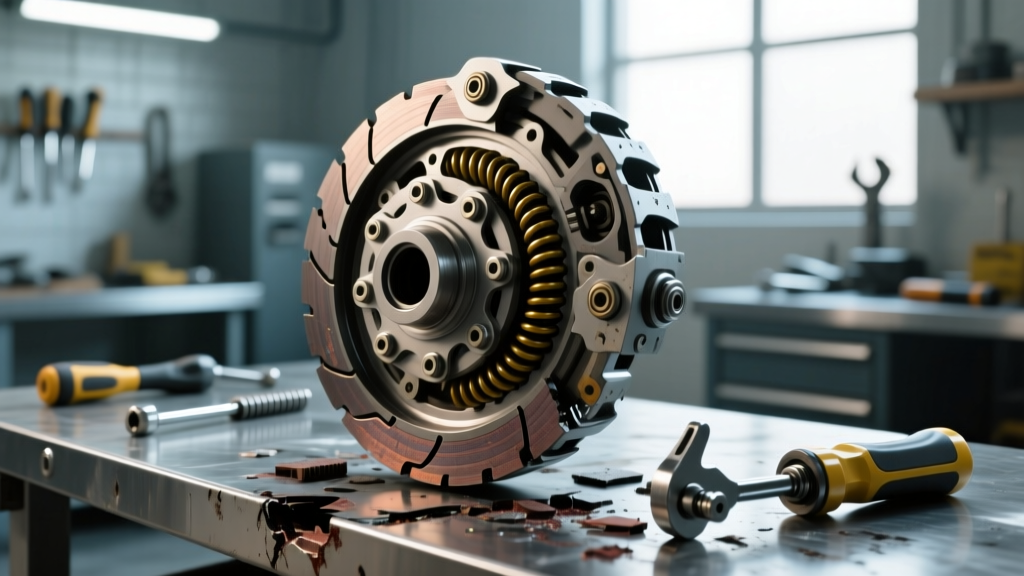
The OEM Exedy organic clutch disc (Part # SUB023U for the 5MT, SUB042U for the 6MT) is designed for a specific thermal threshold. When the CDV prolongs the slip phase, kinetic energy is converted into extreme heat at the friction interface. Localized temperatures can easily exceed 400°F (204°C) during aggressive 2-3 or 3-4 shifts. This bakes the organic resins in the friction material, causing them to surface and crystallize—a process known as glazing. Once glazed, the coefficient of friction drops drastically, leading to the classic symptom of RPM flaring under wide-open throttle (WOT) in higher gears.
2. Marcel Spring Fatigue and Engagement Chatter
Inside the OEM clutch disc lies a waved cushion plate known as the Marcel spring. Its purpose is to absorb micro-vibrations and provide a progressive engagement feel. The excessive heat generated by the CDV-induced slip phase repeatedly anneals the spring steel of the Marcel plate. Over 15,000 to 20,000 miles, the Marcel spring loses its tension and collapses. The root cause of severe 1st-to-2nd gear engagement chatter in high-mileage WRX models is often this collapsed cushion plate, exacerbated by the delayed hydraulic engagement.
3. Accelerated Synchro Degradation (TY752 and TY856 Transmissions)
Clutch diagnostics are not limited to the friction assembly; the transmission internals suffer as well. The CDV delays the physical disengagement of the clutch. When a driver initiates a shift, the clutch disc is still partially transmitting torque while the shift fork attempts to move the synchronizer hub. This forces the carbon-coated synchro rings (particularly in 2nd and 3rd gears of the TY752 5MT and TY856 6MT) to absorb the rotational delta. According to teardown data discussed on the NASIOC Technical Forums, this forced friction accelerates synchro wear, resulting in the notorious WRX 'crunch' when downshifting into 2nd gear.
2026 Buyer’s Guide: Comparing Clutch Delay Valve Delete WRX Solutions
If you are experiencing the symptoms above, or simply want to preserve your clutch assembly on a new build, removing the restriction is mandatory. Below is a comparison of the most effective clutch delay valve delete WRX methods available on the market today.
| Delete Method | Estimated Cost | Engagement Feel | Installation Difficulty | Best Application |
|---|---|---|---|---|
| OEM Valve Removal (Gutted) | $0 (Free) | Very Abrupt / On-Off | Moderate (Requires disassembly) | Budget track cars, dedicated drag builds |
| Aftermarket Restrictor Delete Plate | $25 - $45 | Linear, Predictable, OEM+ | Easy (Inline swap) | Daily driven street/track cars, autocross |
| Stainless Braided Line + CDV Delete | $90 - $140 | Ultra-Firm, Immediate Bite | Moderate (Requires full bleed) | High-horsepower builds, heavy track abuse |
Expert Recommendation: For 90% of WRX owners, the Aftermarket Restrictor Delete Plate (such as those engineered by GrimmSpeed or COBB Tuning) is the optimal choice. It completely eliminates the delay while maintaining enough hydraulic volume to prevent the 'on-off' light-switch feel that makes daily driving in stop-and-go traffic fatiguing. If you are pushing over 350 WHP and utilizing a ceramic twin-disc setup, upgrade to the braided line combo to eliminate factory rubber hose expansion under high pedal pressure.
Diagnostic Checklist: Has the CDV Already Damaged Your Clutch?
Before purchasing a delete kit, perform this diagnostic sequence to determine if your clutch assembly requires a full replacement or if a simple hydraulic modification will suffice. Reference the Subaru Technical Information System (STIS) for baseline pedal travel specifications if you suspect master cylinder bypass issues alongside the CDV restriction.
- The 4th Gear WOT Test: In a safe environment, enter 4th gear at 2,500 RPM and apply full throttle. If RPMs climb faster than vehicle speed, your organic disc is glazed beyond recovery. A CDV delete will not fix this; you need a new clutch and flywheel resurfacing.
- The Reverse Gear Crunch: With the car stationary and engine running, press the clutch and wait exactly one second before shifting into Reverse. If it grinds, your CDV is severely delaying disengagement, or your clutch master cylinder is failing internally.
- The 1-2 Shift Chatter Test: Release the clutch in 1st gear with moderate throttle. If the chassis shudders violently and the pedal pulses, the Marcel spring has collapsed, or the flywheel has developed hard hot-spots due to CDV-induced thermal runaway.
- Pedal Return Speed: Press the clutch to the floor and release it instantly. If the pedal returns sluggishly for the final inch of travel, the CDV is choking the return fluid flow, confirming the restrictor is active and limiting hydraulic recovery.
Precision Installation: Torque Specs and Bleeding Protocols
Installing a clutch delay valve delete WRX kit requires precision to avoid introducing air into the hydraulic circuit, which will mimic the symptoms of a slipping clutch. When swapping the hardline or slave cylinder assembly, adhere strictly to these factory torque specifications:
- Slave Cylinder Mounting Bolts (M8x1.25): 25 Nm (18.4 lb-ft)
- Hardline Flare Nut (10mm): 15 Nm (11 lb-ft) - Use a flare-nut wrench to prevent rounding.
- Bleeder Nipple (8mm): 8 Nm (71 lb-in) - Over-torquing will snap the nipple inside the slave cylinder body.
- Clutch Fork Pivot Ball: 22 Nm (16.2 lb-ft) - Apply high-temp moly grease to the pivot contact pad.
Fluid Selection: Do not reuse factory fluid. The prolonged slip phase boils standard DOT 3 fluid rapidly. Flush the system with a high-dry-boiling-point fluid like Motul RBF 600 (Dry boiling point 328°C / 622°F). This provides a massive safety margin against vapor lock during aggressive canyon driving or track sessions.
Expert Verdict
The factory clutch delay valve is a relic of compromise engineering, designed to protect the driveline at the direct expense of the clutch friction assembly and transmission synchros. By performing a root cause analysis on WRX clutch failure modes, it becomes undeniably clear that the hydraulic restrictor is the primary culprit behind premature glazing, Marcel spring fatigue, and synchro crunch. Investing in a high-quality clutch delay valve delete WRX kit is not merely a modification for better pedal feel; it is a critical, preventative maintenance procedure that will extend the life of your Exedy clutch, preserve your TY752 or TY856 transmission, and restore the precise, linear engagement that a true performance vehicle demands.