The High-Stakes Reality of Class 8 Clutch Diagnostics
In the heavy-duty commercial sector, the clutch assembly is the critical chokepoint between massive diesel torque and the driveline. Modern powerplants like the Cummins X15 and Detroit DD15 routinely generate between 1,650 and 2,050 lb-ft of peak torque. When a fleet manager or owner-operator begins experiencing drivability issues, accurate diagnostics and subsequent performance upgrades are not just matters of convenience—they are essential for preventing catastrophic driveline failures and minimizing costly downtime. As we navigate the 2026 landscape of commercial hauling, where payload demands and engine thermal efficiencies continue to push mechanical limits, understanding the nuanced symptoms of heavy-duty clutch degradation is paramount.
Unlike passenger vehicles, a Class 8 truck clutch operates in a brutal environment characterized by extreme thermal cycling, heavy inertial loads, and constant vibrational stress. Diagnosing these systems requires a deep understanding of commercial friction materials, release bearing dynamics, and the specialized tooling required to safely service 150-pound cast-iron flywheels. Furthermore, when it comes time to upgrade from a standard organic single-plate to a high-performance twin-plate cerametallic setup for heavy-haul or logging applications, precision assembly becomes non-negotiable.
Identifying Heavy-Duty Failure Modes
Before pulling the transmission, technicians must accurately interpret the symptoms of a failing commercial clutch. Misdiagnosis often leads to unnecessary R&R (Remove and Replace) labor, which averages 12 to 16 hours at heavy-duty shop rates of $150 to $225 per hour.
Slipping Under Load vs. Boost Leaks
One of the most common misdiagnoses in heavy-duty bays is confusing clutch slip with a turbocharger boost leak. When a fully loaded 80,000-lb rig attempts to climb a 6% grade, the engine load is immense. If the RPMs flare while road speed stagnates, and the cab fills with the distinct, acrid odor of burnt friction material, the clutch is slipping. In high-torque applications, standard organic friction facings can glaze or lose their coefficient of friction once temperatures exceed 450°F at the flywheel interface.
Driveline Chatter and Marcel Spring Degradation
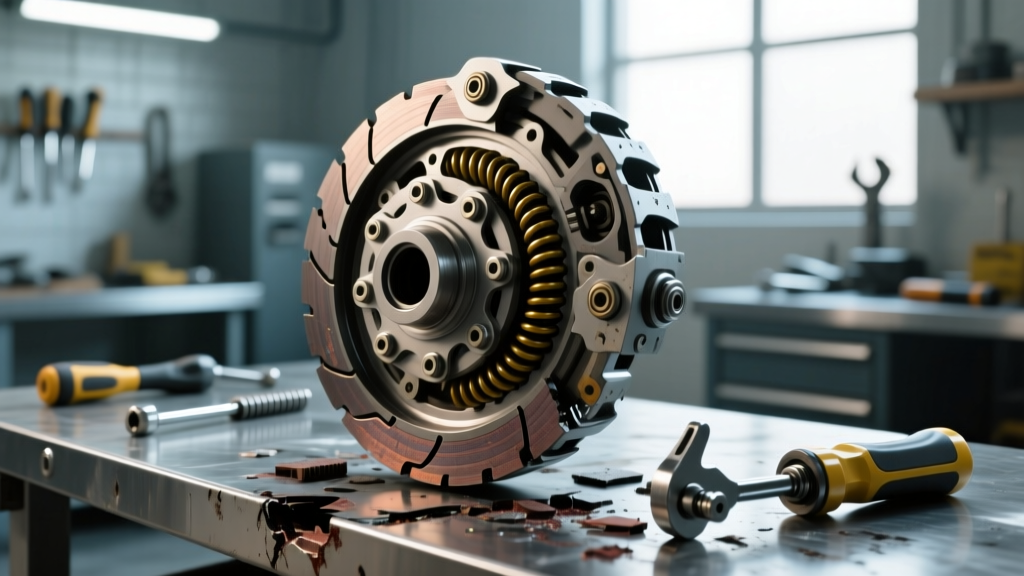
Aggressive, shuddering engagement from a dead stop—often felt through the chassis and shift lever—is known as driveline chatter. In heavy-duty 15.5-inch x 2-inch clutches, this is frequently caused by the collapse or thermal degradation of the marcel (wave) springs located between the friction facings. Hot-spotting on the flywheel friction surface, caused by repeated heavy-load slip starts, will also induce severe chatter, necessitating a flywheel resurfacing or replacement alongside the clutch upgrade.
Release Bearing and Clutch Brake Issues
Heavy-duty manual transmissions (such as the Eaton Fuller FAOM-15810C) utilize a clutch brake to halt input shaft rotation for smooth gear engagement. If the driver experiences grinding when shifting into first or reverse from a stop, the clutch brake squeeze gap is likely out of specification. The ideal clearance between the release bearing and the clutch brake is typically 0.50 to 0.62 inches. A worn release bearing or a fatigued diaphragm spring will alter this geometry, rendering the clutch brake ineffective.
The Tool Trap: Motorcycle vs. Commercial Holding Fixtures
In multi-bay shops that service both powersports and commercial fleets, or among DIY owner-operators attempting to save on shop labor, a dangerous and costly trend occasionally surfaces: technicians attempting to use a motorcycle clutch holding tool or a modified automotive flywheel strap to lock the massive flywheels of Class 8 trucks during removal and installation.
CRITICAL SAFETY WARNING: Never use light-duty or powersports tools on heavy-duty commercial flywheels. The kinetic energy and breakaway torque of a Class 8 crankshaft can turn a sheared tool into lethal shrapnel.
While a motorcycle clutch holding tool is perfectly engineered to withstand the 80-120 lb-ft of breakaway torque on a Harley-Davidson primary drive or a sportbike crankshaft, applying it to a Cummins X15 or Detroit DD15 is a recipe for disaster. The flywheel breakaway torque on a heavy-duty diesel easily exceeds 900 lb-ft, and the rotational mass of a 15.5-inch commercial flywheel can exceed 150 pounds.
Metallurgy and Shear Strength Limitations
A standard motorcycle clutch holding tool is typically constructed from stamped steel, cast aluminum, or thin strap-steel designed to wrap around a small rotor. When subjected to the immense leverage required to break a 3/4-inch impact gun on a heavy-duty flywheel nut or bolt, these light-duty tools will instantly shear, bend, or slip. This slippage frequently results in shattered flywheel ring gear teeth, damaged transmission bell housings, and severe physical injury to the technician.
Proper heavy-duty diagnostics and upgrades mandate the use of dedicated commercial fixtures. Tools like the OTC 5086 Heavy Duty Flywheel Lock or the Schley Products 56600 are machined from drop-forged 4140 chromoly steel. Instead of relying on friction or weak strap tension, these heavy-duty tools physically engage the flywheel ring gear teeth or lock directly into the heavy-duty clutch hub splines, safely transferring the 1,000+ lb-ft of breakaway torque directly into the engine block or transmission housing.
Performance Upgrades for Commercial Drivetrains
When a heavy-duty clutch reaches the end of its service life, fleet managers and heavy-haul operators often look to performance upgrades to handle increased towing loads and aggressive tuning. The industry standard upgrade path involves moving from a single-plate organic clutch to a twin-plate cerametallic or Kevlar-reinforced system.
Upgrading to a system like the Eaton Solo Advantage series or specialized heavy-haul twin-plate kits from manufacturers like EXEDY or BorgWarner provides a massive increase in torque capacity without a proportional increase in pedal effort, thanks to advanced diaphragm spring geometry and self-adjusting wear compensators.
| Material Type | Max Temp Threshold | Torque Capacity | Best Application | Estimated Kit Cost |
|---|---|---|---|---|
| Organic (Full-Faced) | 350°F - 450°F | Up to 1,850 lb-ft | Line-haul, LTL, Regional Freight | $850 - $1,400 |
| Kevlar / Aramid | 500°F - 600°F | Up to 2,050 lb-ft | Heavy-Haul, Steep Grade Regional | $1,600 - $2,200 |
| Cerametallic (Twin-Plate) | 800°F+ | 2,200 - 2,800+ lb-ft | Logging, Heavy Equipment, Oilfield | $2,400 - $3,800 |
Twin-Plate Conversions: ZF and Eaton Applications
When upgrading to a twin-plate setup for severe-duty applications, intermediate drive plates and specialized release bearings are required. Technicians must verify bell housing depth and input shaft spline compatibility. For example, mating a heavy-duty twin-plate clutch to a ZF AS Tronic or manual transmission requires precise measurement of the clutch brake crush distance to ensure the internal transmission synchronizers are not damaged during aggressive engagement.
Precision Assembly and Torque Specifications
The installation of a heavy-duty commercial clutch requires strict adherence to torque specifications. The use of a calibrated torque wrench and the proper heavy-duty holding tool is mandatory. Improper torque will lead to flywheel warping, pressure plate cracking, or catastrophic separation under load.
- Cummins X15 Flywheel to Crankshaft: M16 bolts are typically torqued to 225 lb-ft, followed by an additional 90-degree turn (torque-to-yield). Always use new OEM stretch bolts.
- Detroit DD15 Flywheel to Crankshaft: Verify specific year guidelines, but generally requires 185 lb-ft initial torque, followed by a 60-degree angle turn.
- Pressure Plate to Flywheel: 3/8-inch or 10mm bolts must be torqued to 35-45 lb-ft in a strict, multi-pass star pattern to ensure the diaphragm spring seats evenly without binding.
- Clutch Alignment: A heavy-duty dummy shaft (alignment tool) must be used. Forcing the transmission input shaft through misaligned friction discs will destroy the hub splines and the pilot bearing before the truck ever leaves the shop.
Shop Economics and the ROI of Proper Tooling
Investing in dedicated heavy-duty flywheel holding fixtures and precision alignment tools is a matter of shop economics as much as safety. A high-quality, drop-forged commercial holding tool costs between $150 and $350. Compare this to the cost of a dropped truck: a heavy-duty tow from a highway shoulder, a replacement 150-pound flywheel ($1,200+), and the 16 hours of shop labor to tear the rig down a second time can easily exceed $5,000 in losses and severe reputational damage with fleet clients.
By understanding the distinct failure modes of commercial clutches, refusing to compromise on tooling safety, and selecting the correct friction materials for the specific duty cycle, shops and owner-operators can ensure their heavy-duty drivetrains survive the punishing demands of the modern freight industry.