Diagnosing the Jeep Wrangler Front Differential Leak
Whether you are wheeling a JK on 35-inch mud-terrains or daily driving a 2026 JL Rubicon 392, a leaking front axle is a critical issue that demands immediate attention. The front axle on a Wrangler operates under extreme stress, managing steering geometry, suspension articulation, and torque delivery simultaneously. When you suspect a leak from your Jeep Wrangler front differential, misdiagnosing the source can lead to hours of wasted labor and catastrophic gear failure due to fluid starvation. This model-specific repair guide breaks down the exact diagnostic framework, OEM part numbers, and torque specifications required to properly seal Dana 30, Dana 44, and modern M210/M220 axles.
The Often-Overlooked Culprit: The Axle Breather Tube
Before you order a single seal or drain a drop of gear oil, you must inspect the axle breather tube. As the differential fluid heats up during highway driving or heavy off-road use, the internal air expands. The breather tube, typically routed up into the engine bay near the firewall, allows this pressure to escape. If this tube becomes kinked, clogged with mud, or disconnected, internal pressure will skyrocket. This hydrostatic pressure will force gear oil past perfectly good, brand-new seals. Always verify the breather valve is functioning and the line is clear before assuming a mechanical seal failure has occurred.
Leak Point Diagnostic Matrix
Proper detection requires cleaning the entire axle housing with brake cleaner and compressed air, then driving the vehicle to pinpoint the exact origin. Use this matrix to identify your leak source:
- Differential Cover Perimeter: Fluid seeping from the mating surface or bolt holes. Common on older JKs with cork/rubber gaskets or JLs with improper RTV application.
- Fill/Drain Plugs: Stripped threads or missing crush washers on the plugs. Often caused by previous owners over-tightening with an impact wrench.
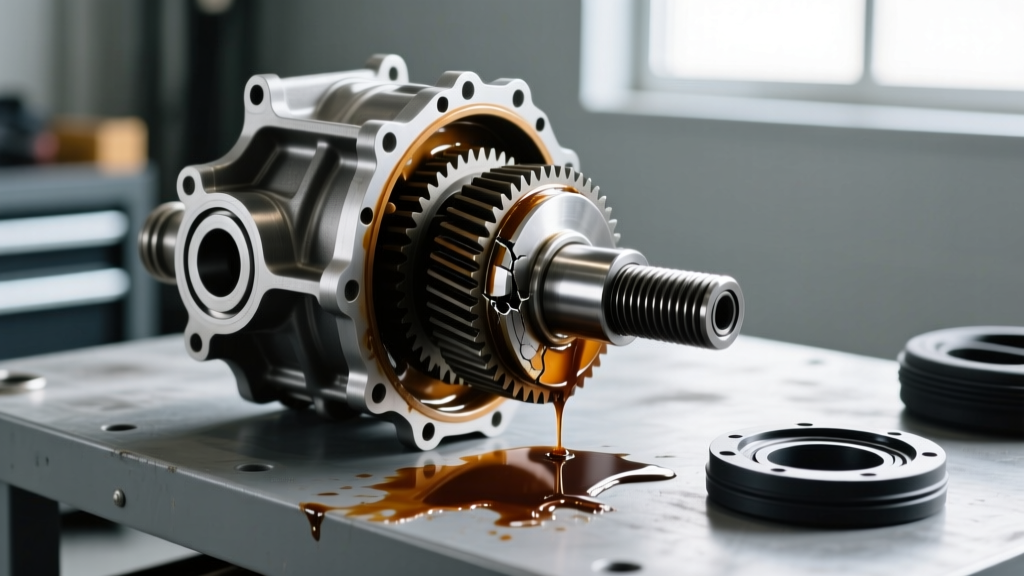
- Inner Axle Shaft Seals: Fluid accumulating on the back of the steering knuckle, dripping down the inner C-gusset, or pooling on the differential side of the axle tube. Requires shaft removal.
- Pinion Seal: Fluid slung directly onto the skid plate, crossmember, or exhaust from the yoke area. Often accompanied by a distinct rotational whine if the yoke is pitted.
Repair Tier 1: Differential Cover and Fill Plug Service
The most common entry point for leaks is the differential cover. For the JK generation Dana 30 and Dana 44 axles, these utilize a pre-formed rubber or cork gasket. However, the modern JL generation M210 and M220 front axles do not use a gasket; they rely on a precise bead of RTV silicone.
JK Dana 30/44 Procedure: Clean the mating surfaces thoroughly. Install the new gasket (Mopar Part # 68084233AA for Dana 44) dry—do not use RTV on both sides of a pre-formed gasket, as this causes slippage and leaks. Torque the cover bolts in a crisscross pattern to 25 lb-ft.
JL M210/M220 Procedure: Scrape off all old RTV using a plastic gasket scraper to avoid gouging the aluminum housing. Apply a continuous 3mm bead of Mopar Black RTV (Part # 04883971). The bead must encircle every bolt hole on the inside to prevent oil from migrating through the threads. Torque the M210/M220 cover bolts to 20 lb-ft. Allow the RTV to cure for a minimum of 2 hours before adding fluid.
Repair Tier 2: Inner Axle Shaft Seals
If fluid is migrating down the axle tubes, your inner axle shaft seals have failed. This is incredibly common after deep water fording or when running oversized tires that deflect the axle shafts under load.
Part Numbers:
- JK Dana 30 Inner Seal: Spicer 43385 (or National 711024)
- JK Dana 44 Inner Seal: Spicer 54381
- JL M210/M220 Inner Seal: Mopar 68349066AA
Installation Depth is Critical: When pressing in the new seals, depth is everything. If the seal is driven in too deep, it will miss the sealing surface on the axle shaft spline. If it is not deep enough, the shaft will not fully seat into the differential side gears. Use a dedicated seal installer tool (like the OTC 7158) or a long PVC pipe coupler that matches the outer diameter of the seal. Drive the seal until it bottoms out softly against the internal shoulder of the axle tube. Always replace the differential side gear shims if they show wear, as excessive backlash will cause the seal lip to wobble and leak prematurely.
Repair Tier 3: Pinion Seal Replacement (The Crush Sleeve Trap)
A leaking pinion seal on a Jeep Wrangler front differential is a notorious trap for novice mechanics. The seal itself is cheap (e.g., Spicer 52089121 for the JK Dana 44), but the installation process requires extreme precision due to the crush sleeve used to set bearing preload.
CRITICAL WARNING: Never use a static torque specification (like 160 lb-ft) to tighten a new pinion nut on a crush-sleeve axle. Doing so will over-crush the sleeve, destroying the pinion bearings and requiring a complete differential rebuild.
The Correct Pinion Seal Procedure:
- Mark the relationship between the pinion shaft, the nut, and the driveshaft yoke with paint pen.
- Use a holding tool to keep the yoke from spinning and break the nut loose.
- Remove the yoke using a proper gear puller. Never hammer the yoke off, as this will damage the internal bearings and ring gear alignment.
- Pry out the old seal and lubricate the lip of the new seal with fresh gear oil before tapping it flush into the housing.
- Reinstall the yoke and a brand new pinion nut (the old nut is stretch-torqued and must be discarded).
- Setting Preload: Tighten the nut in tiny increments (1/8th of a turn) while constantly measuring the rotational drag using an inch-pound torque wrench. For used bearings, the target rotational torque is typically between 15 and 25 inch-pounds. Stop tightening the exact moment you hit your target drag.
Pro-Tip: If you are tired of dealing with crush sleeves during future pinion seal or gear ratio changes, upgrade to a Solid Spacer Eliminator Kit (like the Yukon Gear SK PSS-01). This replaces the crush sleeve with a machined steel spacer and shims, allowing you to safely torque the pinion nut to a standard 160-180 lb-ft without risking bearing preload.
OEM Fluid Specifications and Capacities (2007-2026)
Using the correct API GL-5 rated fluid is mandatory. The modern JL Wrangler front differentials require a specific viscosity to protect the M210/M220 bearings while maintaining efficiency. Do not mix viscosities, and avoid fluids with friction modifiers unless you are servicing a rear Trac-Lok LSD (front axles on Wranglers are open or electronically locked, requiring no friction modifiers).
| Axle Model | Vehicle Generation | OEM Fluid Spec | Capacity (Approx) |
|---|---|---|---|
| Dana 30 | JK (2007-2018) | 75W-90 API GL-5 | 1.4 Quarts (1.3L) |
| Dana 44 | JK Rubicon (2007-2018) | 75W-90 or 75W-140 API GL-5 | 1.5 Quarts (1.4L) |
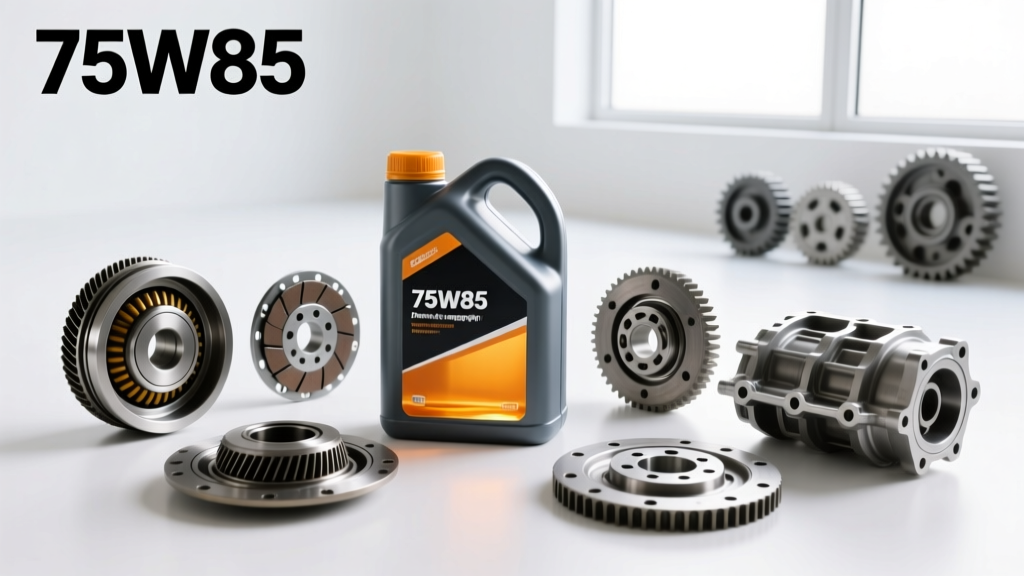
| M210 | JL Sport/Sahara (2018-2026) | Mopar 75W-85 (68218655AC) | 1.5 Quarts (1.4L) |
| M220 | JL Rubicon (2018-2026) | Mopar 75W-85 (68218655AC) | 1.6 Quarts (1.5L) |
Cost Breakdown: DIY vs. Professional Service
Understanding the financial landscape of axle repairs helps you decide which tier of repair to tackle yourself. Labor rates at 4x4 specialty shops in 2026 average between $140 and $190 per hour.
- Differential Cover Reseal & Fluid Change: DIY cost is roughly $45-$70 for fluid and RTV/gasket. A shop will charge $180-$250.
- Inner Axle Shaft Seals (Both Sides): DIY parts are under $40, but it requires 4-6 hours of labor (knuckle teardown, shaft pulling). Shop cost ranges from $650 to $950 due to the intense labor.
- Pinion Seal Replacement: DIY parts (seal, nut, fluid) cost about $60. Shop cost is typically $350-$500, assuming no complications with seized yokes or damaged crush sleeves.
For comprehensive axle identification and OEM part cross-referencing, always consult the Spicer Differential Identification Guide and verify fitment via the Quadratec Jeep Axle Academy. Proper detection, patience with RTV cure times, and strict adherence to inch-pound rotational torque specs will ensure your Wrangler's front differential remains sealed and trail-ready for years to come.