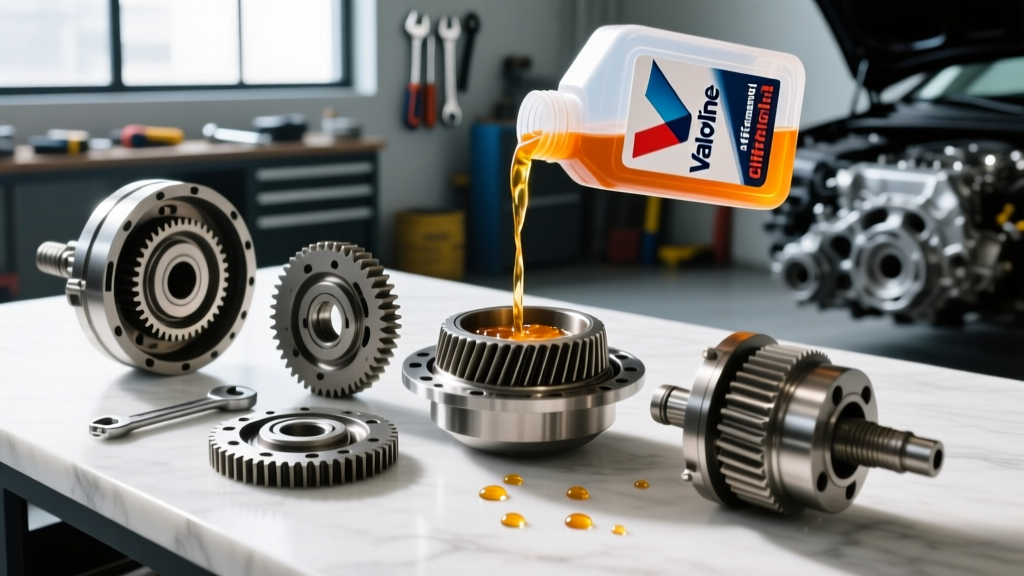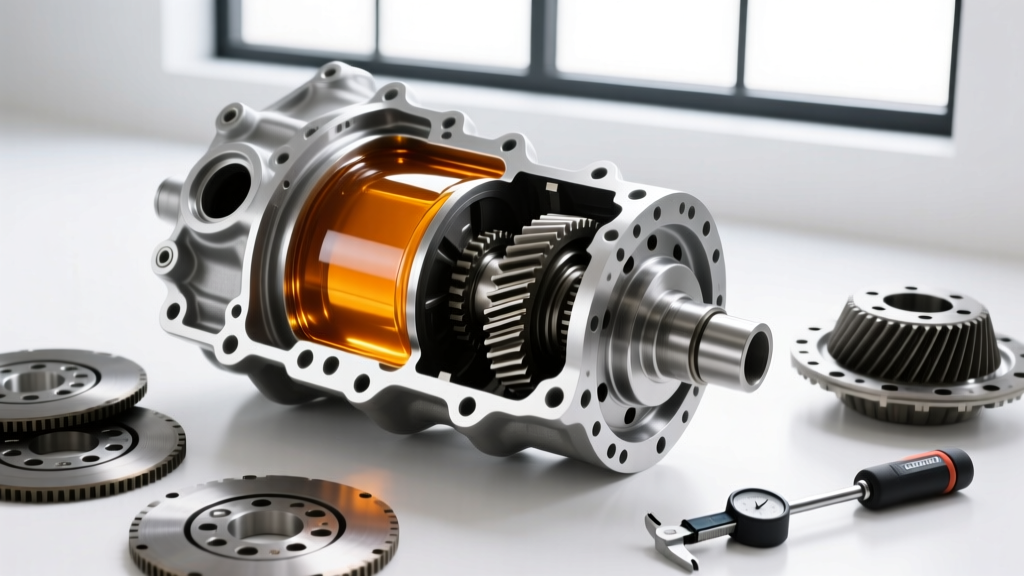
When pushing a Jeep Wrangler to its limits on the Rubicon Trail or towing a loaded trailer across the Mojave, the drivetrain endures immense mechanical stress. While the ZF 8HP75 transmission and the NV241 transfer case get plenty of attention from off-road enthusiasts, the axles are where the true torque multiplication meets the pavement—or the rocks. Selecting the right differential oil Jeep Wrangler owners rely on is not just about routine maintenance; it is a critical performance upgrade that dictates the lifespan of your ring and pinion gears. In this 2026 performance and upgrade guide, we break down the metallurgical realities of hypoid gears, the 75W-85 versus 75W-140 viscosity debate, and the exact torque specifications required for a bulletproof Dana 44 differential service.
The Hypoid Gear Sliding Action and Shear Stability
Unlike the straight-cut or helical gears found in your Wrangler’s manual or automatic transmission, the front and rear axles utilize hypoid ring and pinion gears. This design offsets the pinion gear below the centerline of the ring gear, providing crucial ground clearance for the driveshaft. However, this offset creates a severe sliding friction action rather than a pure rolling contact. Under heavy loads—such as crawling over ledges in 4WD Low or accelerating with 37-inch mud-terrain tires—this sliding action generates localized temperatures exceeding 250°F (121°C) at the gear tooth contact patch.
Factory-fill 75W-85 synthetic gear oil is engineered primarily for EPA fuel economy mandates. While it provides adequate protection for stock Wranglers on the highway, it rapidly loses shear stability when subjected to the extreme boundary lubrication demands of modified trucks and SUVs. Upgrading to a high-zinc, API GL-5 certified 75W-140 synthetic fluid ensures that the hydrodynamic oil film does not rupture under shock loading, preventing micro-welding and spalling on the gear teeth. Modern API GL-5 fluids rely heavily on sulfur-phosphorus extreme pressure (EP) additives rather than ZDDP (Zinc Dialkyldithiophosphate), as ZDDP can poison catalytic converters if a pinion seal leaks and oil enters the exhaust system. Understanding this chemistry is vital when selecting your upgrade fluid.
Factory vs. Performance: Viscosity and Additive Breakdown
The transition from OEM fluid to a severe-duty synthetic involves more than just a thicker base oil. Performance differential oils utilize complex ester-based chemistry and advanced EP additive packages. When upgrading your differential oil, Jeep Wrangler builders must also consider the friction modifier requirements of their specific locker or limited-slip differential (LSD).
If your JL or JK Wrangler is equipped with the factory Trac-Loc clutch-type LSD, failing to add the required friction modifier will result in aggressive clutch chatter during low-speed turns, eventually destroying the friction discs. Conversely, if you have upgraded to an Eaton E-Locker, an ARB Air Locker, or a Spicer ECTED Max, you must explicitly avoid friction modifiers. These locking differentials rely on raw friction to engage the internal locking collars; adding a modifier will cause the locker to slip under load. Always verify your locker type before pouring the first drop.
Top Performance Differential Oils for Heavy-Duty Wranglers
Based on 2026 tribological testing and real-world off-road telemetry, here is how the top-tier synthetic gear oils stack up for modified Wranglers:
| Brand & Viscosity | Est. Price/Qt | API Rating | Friction Modifier | Best Application |
|---|---|---|---|---|
| Amsoil Severe Gear 75W-140 | $24.99 | GL-5 | No | Extreme rock crawling, ARB/Eaton lockers |
| Royal Purple Max Gear 75W-140 | $28.50 | GL-5 | Yes (Built-in) | Excellent for factory Trac-Loc LSDs; no extra additive needed |
| Red Line HeavyWeight 75W-140 | $26.99 | GL-5+ | No | Superior thermal stability for high-speed desert running and towing |
| Mopar OEM 75W-140 Synthetic | $22.00 | GL-5 | No | Baseline dealer spec; requires separate Mopar 4318060AB modifier |
Step-by-Step Dana 44 Heavy-Duty Differential Service
Performing a differential service on a JK or JL Wrangler Dana 44 axle is straightforward, but cutting corners on cleanliness or torque specs will lead to catastrophic fluid leaks or bearing preload issues. Unlike older stamped-steel covers that require RTV silicone, modern JL Rubicon Dana 44 axles feature cast aluminum differential covers with precision-machined mating surfaces and reusable rubber-coated steel gaskets.
1. Preparation and Extraction
Jack the vehicle safely on jack stands, ensuring the axle is hanging freely to relieve stress on the suspension bushings. Remove the fill plug first. If the fill plug is seized or stripped, you do not want to discover this after draining the housing. Use a 3/8-inch drive hex socket or a dedicated differential pump to extract the old fluid.
2. Magnetic Plug Inspection
Inspect the fill and drain plugs (if equipped) for metallic debris. A fine, glitter-like paste is normal wear from the hypoid gears breaking in. However, if you find jagged metal shards larger than 1/16th of an inch, your ring and pinion or carrier bearings are actively failing, and a complete teardown is required.
3. Gasket and Surface Prep
If using an RTV-equipped aftermarket cover (like an ARB or Solid Axle diff cover), clean both mating surfaces with brake cleaner and a brass wire brush. Apply a 3mm continuous bead of Permatex Ultra Black RTV. Allow it to tack up for 10 minutes before mating to prevent silicone from squeezing into the gear oil.
4. Torque Sequence
This is where most DIYers fail. Tighten the cover bolts in a crisscross star pattern to seat the gasket evenly. Over-torquing will warp thin stamped covers or strip the threads on aluminum housings, leading to permanent weeping.
5. Fill and Vent Upgrades
Fill the differential until the fluid reaches the bottom edge of the fill hole. For vehicles with lifted suspensions and extended brake lines, upgrading the factory axle breather valve is mandatory. The stock breathers easily clog with mud. When a 200°F axle is submerged in 50°F creek water, the rapid temperature drop creates a vacuum (up to 15 inHg) that sucks water past the pinion seal. Route a 1/4-inch polyurethane breather hose up into the engine bay, terminating with a high-flow PCV filter to equalize pressure safely.
Dana 44 Capacities and Torque Specifications
Keep this data on hand for your garage whiteboard. Note that aftermarket differential covers (such as those from Alloy USA or Riddler) often increase fluid capacity by 0.5 to 1.0 pints due to their deeper finned designs. Always fill to the physical fill-hole level, regardless of the exact volume pumped.
- Front Dana 44 (JK/JL) Fluid Capacity: 2.7 pints (1.28 Liters)
- Rear Dana 44 (JK/JL) Fluid Capacity: 3.5 pints (1.65 Liters)
- Differential Cover Bolt Torque (Dana 44): 30 ft-lbs (40 Nm)
- Differential Cover Bolt Torque (Dana 30): 25 ft-lbs (34 Nm)
- Fill Plug Torque (All Axles): 25 ft-lbs (34 Nm)
- Recommended Fluid Spec: API GL-5, SAE 75W-140 Synthetic
- Friction Modifier (Trac-Loc only): 2.5 oz (74 ml) Mopar P/N 4318060AB
Cost Analysis: DIY vs. Dealership Service
Upgrading your differential fluid is one of the highest ROI maintenance tasks you can perform. A dealership will typically charge between $250 and $350 per axle for a standard 75W-85 fluid swap, totaling up to $700 for both axles. By sourcing premium 75W-140 synthetics and performing the labor yourself, your total out-of-pocket cost will range from $110 to $140 for both axles, including new gaskets and a high-quality fluid transfer pump. The performance gain in shear stability, thermal management, and gear protection is immeasurable when you are miles away from the nearest pavement.
Sourcing and Technical References
For advanced drivetrain engineering data, locker compatibility charts, and API lubricant certifications, consult the following authoritative resources:
- Dana Incorporated - Official Dana 44 and Spicer axle service manuals and engineering bulletins.
- American Petroleum Institute (API) - Comprehensive documentation on API GL-5 and MT-1 gear oil classification standards.
- Amsoil Technical Guides - Tribological testing data on Severe Gear synthetic shear stability and extreme pressure additive performance.