The Acoustic Signature of Drivetrain and PTO Degradation
Clutch noise is rarely a random occurrence; it is a precise acoustic signature of mechanical degradation, thermal overload, or electromagnetic failure. Whether you are diagnosing a heavy-duty manual transmission in a commercial truck or troubleshooting an auxiliary Power Take-Off (PTO) system, the frequencies of grinding, squealing, and chirping tell a distinct story. As automotive and industrial drivetrains have evolved, the integration of complex electromagnetic assemblies alongside traditional friction clutches has required technicians to broaden their diagnostic frameworks.
In this expert guide, we break down the exact failure modes behind specific clutch noises, detailing the diagnostic protocols for both manual drivetrains and specialized auxiliary systems. Furthermore, we provide an in-depth analysis of sourcing and troubleshooting Warner Electric clutch parts, a cornerstone brand for electromagnetic PTO and industrial clutch applications.
1. High-Pitched Squealing and Chirping
High-frequency noises (typically above 2,000 Hz) are almost exclusively tied to rotational friction on bearing surfaces or electromagnetic armature drag.
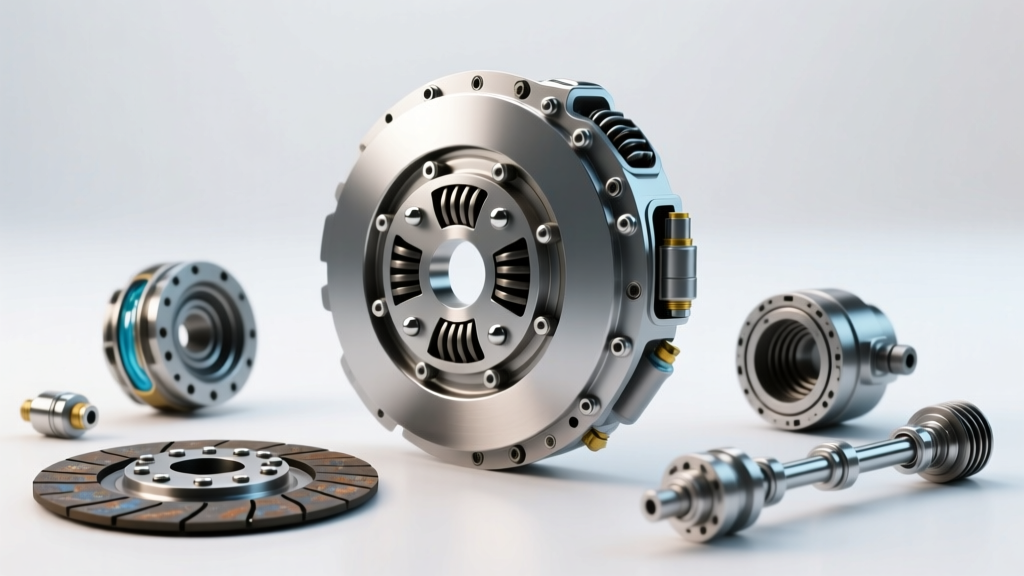
- Squealing on Pedal Depression (Manual): If a manual transmission (such as the Tremec T-56 Magnum or ZF S6-650) squeals only when the clutch pedal is depressed, the throw-out bearing (TOB) or hydraulic concentric slave cylinder (CSC) bearing is failing. The noise is generated by the bearing being forced against the rotating pressure plate diaphragm fingers under load.
- Chirping on Pedal Release (Manual): A rhythmic chirp that disappears when the pedal is pressed points to a worn pilot bearing or a lack of lubrication on the clutch fork pivot ball. The input shaft is spinning at engine RPM while the bearing struggles to maintain concentricity.
- Squealing in Disengaged PTOs (Electric): In auxiliary systems, a high-pitched squeal when the PTO is turned off usually indicates residual magnetism causing the armature to drag against the rotor, or a failing rotor support bearing.
2. Harsh Grinding and Metal-on-Metal
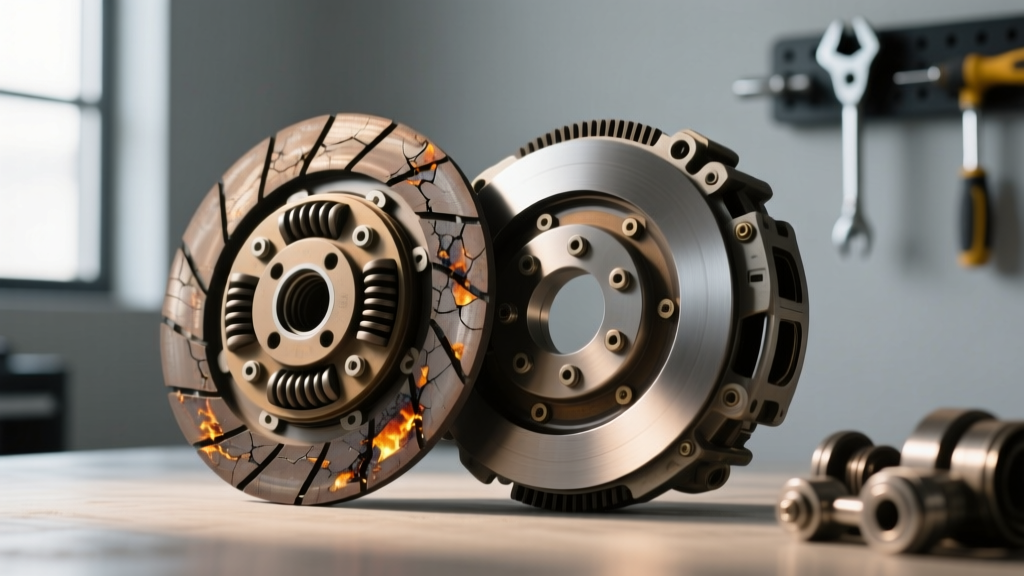
Low-frequency grinding is the sound of macroscopic material failure or severe engagement clashes. In manual transmissions, grinding during gear engagement (while the clutch is fully depressed) is often misdiagnosed as a clutch issue when it is actually a synchro or hydraulic drag problem. However, if the grinding occurs precisely at the moment of clutch engagement (pedal release), it indicates severe flywheel runout, warped pressure plate fingers, or a shattered friction disc hub spring.
Deep Dive: Troubleshooting Warner Electric Clutch Parts
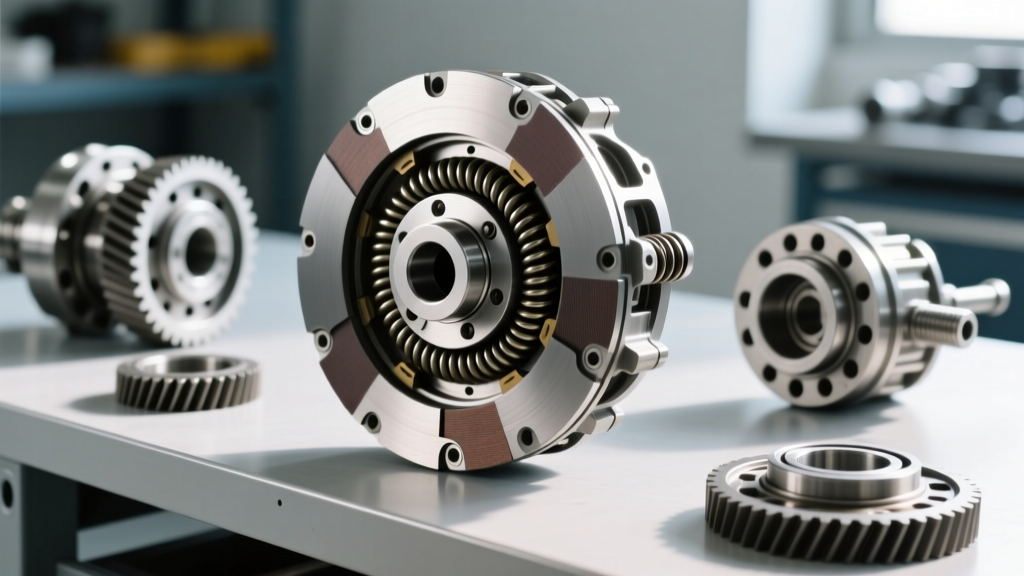
Warner Electric (an Altra Industrial Motion brand) manufactures premier electromagnetic PTO and auxiliary clutches, widely used in agricultural, commercial, and specialized automotive applications. Diagnosing noise in a 12V or 24V Warner Electric clutch (such as the 521, 522, or E45 series) requires a shift from mechanical linkages to electromagnetic and air-gap diagnostics.
According to technical service guidelines from Warner Electric, the most common cause of slipping, chatter, and eventual grinding in these units is an out-of-specification air gap between the rotor and the armature. As the friction disc wears, the air gap widens. If the gap exceeds 0.045 in., the electromagnetic field cannot fully pull the armature flush against the rotor. This results in micro-slipping, intense localized heat, and a harsh grinding noise.
Warner Electric PTO Troubleshooting Matrix
| Symptom / Noise | Probable Cause | Diagnostic Measurement | Corrective Action |
|---|---|---|---|
| Chirping (Engaged) | Armature Drag / Low Gap | Air Gap < 0.010 in. | Shim air gap to 0.020 - 0.030 in. |
| Slipping & Grinding | Worn Friction Disc | Air Gap > 0.045 in. | Replace friction stack and reset gap |
| Squealing (Disengaged) | Failing Rotor Bearing | Radial play > 0.005 in. | Replace rotor assembly |
| No Engagement / Clicking | Burnt or Shorted Coil | Infinite or 0 Ohms | Install new coil kit (10-30 Ohms expected) |
Electrical Diagnostics for Electromagnetic Clutches
Before replacing expensive mechanical components, always verify the electrical delivery. Using a digital multimeter (such as a Fluke 87V), measure the resistance across the Warner Electric coil terminals. A healthy 12V DC coil should read between 10 and 30 ohms. An infinite reading indicates an open circuit (burnt internal wire), while a reading near zero indicates a short. Furthermore, verify that the wiring harness is delivering a full 11.5V to 12.5V under load; voltage drops across corroded PTO switches are a leading cause of weak magnetic fields and subsequent armature chatter.
Manual Drivetrain Diagnostics: Clutch Drag and Runout
When diagnosing grinding in standard automotive manual transmissions, technicians must differentiate between a failing clutch disc and hydraulic clutch drag. If the friction disc does not fully disconnect from the flywheel, the transmission input shaft continues to spin, causing gear clash.
Flywheel Runout and Torque Protocols
Clutch chatter and localized grinding are frequently traced back to improper flywheel installation. For example, when servicing a GM LS-based application, the flywheel bolts (such as ARP 200-2804) require a precise torque of 74 lb-ft, often in a specific star pattern. Uneven torque induces stress warping. According to engineering standards referenced by the Society of Automotive Engineers (SAE), flywheel Total Indicator Runout (TIR) must not exceed 0.005 in. Exceeding this tolerance causes the pressure plate to engage at an angle, creating a rhythmic grinding or chopping noise during takeoff.
For heavy-duty and commercial manual transmissions, BorgWarner engineering guidelines dictate that friction material contamination from a leaking rear main seal will glaze the disc, leading to high-frequency squealing during slip phases before ultimately failing to engage.
Advanced Diagnostic Tooling and Best Practices
To elevate your diagnostic accuracy, move beyond auditory guesswork and employ precision tooling:
- Mechanical Stethoscope: Use a stethoscope with a long probe to isolate bearing noise. Place the probe on the transmission bell housing near the TOB housing, and then on the PTO mounting bracket. This isolates whether a squeal is originating from the engine side or the driveline side.
- Dial Indicator: Mandatory for measuring flywheel runout and Warner Electric rotor face runout. Mount the indicator on a magnetic base attached to the engine block or PTO housing.
- Infrared Thermometer: After a brief engagement cycle, scan the friction surfaces. A manual clutch pressure plate or a Warner Electric armature showing temperatures exceeding 400°F (204°C) in localized spots indicates severe micro-slipping and imminent friction material failure.
- Feeler Gauge Sets: Essential for setting the precise 0.020 in. to 0.030 in. air gaps on electromagnetic clutches. Never rely on visual estimation for electromagnetic air gaps.
Cost Analysis and Replacement Framework
Understanding the financial implications of these repairs helps in advising fleet managers and vehicle owners on the most economical path forward.
- Warner Electric PTO Repairs: Replacing a burnt coil assembly typically costs between $150 and $250 for the part. A complete friction disc and armature rebuild kit ranges from $120 to $200. Because these are often externally mounted, labor is minimal (1-2 hours), making component-level repair highly cost-effective.
- Manual Transmission Clutch Kits: A premium OEM-equivalent clutch kit (such as a LuK RepSet or Sachs Performance kit) for a heavy-duty or performance manual transmission ranges from $350 to $800. However, the labor involves dropping the transmission, driveshaft, and potentially the transfer case, pushing labor costs to $800 - $1,500 depending on the chassis.
The Expert Verdict
Clutch noise diagnosis requires a methodical approach that respects the distinct physics of mechanical friction and electromagnetic engagement. Whether you are adjusting the air gap on a Warner Electric PTO clutch to eliminate a high-pitched squeal, or measuring flywheel TIR to cure a manual transmission grind, precision measurement is your most valuable tool. By adhering to strict torque specifications, verifying electrical resistance, and respecting manufacturer tolerances, you can accurately diagnose the root cause of drivetrain noise and execute a permanent repair.