The Olfactory Signature of Friction Failure
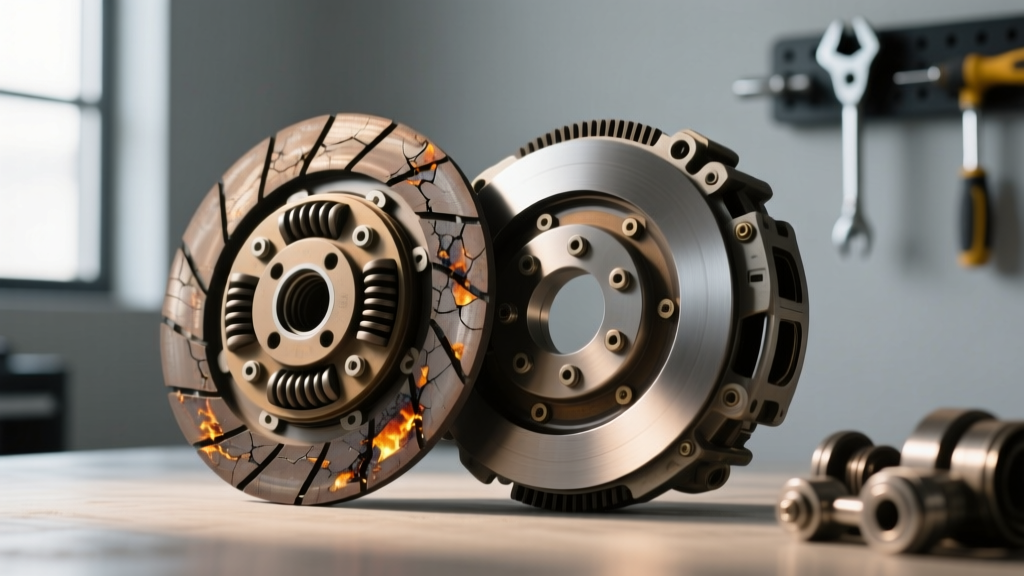
When a driver reports a pungent, acrid odor emanating from the vehicle, identifying the exact source is the first step in troubleshooting auto clutch problems. A burning clutch smell is distinctly different from burning brake pads or hot engine oil. It is characterized by a sharp, sulfuric scent—often likened to burnt toast or burning asbestos—caused by the thermal degradation of the phenolic resins and fiberglass binders used in organic friction materials. When the clutch disc slips under load, kinetic energy is converted into thermal energy. If the temperature exceeds the thermal threshold of the friction material, the binders vaporize, creating the telltale smoke and odor.
Thermal Thresholds: Material Science of the Clutch Disc
Understanding why a clutch burns requires looking at the friction material composition. Modern manual transmissions utilize various friction compounds depending on the torque capacity required. According to technical documentation from RepXpert (Schaeffler), exceeding the operational temperature of these materials leads to immediate glazing and long-term structural failure.
| Material Type | Max Temp Threshold | Coefficient of Friction (μ) | Common Applications |
|---|---|---|---|
| Organic | 400°F (204°C) | 0.35 - 0.40 | OEM Daily Drivers, Light Commuting |
| Ceramic | 800°F (426°C) | 0.30 - 0.35 | Heavy Duty Towing, Track Use |
| Kevlar / Carbon | 1000°F (537°C) | 0.25 - 0.30 | High-Performance Street, Rally |
| Sintered Iron | 1500°F+ (815°C) | 0.20 - 0.25 | Purpose-Built Drag Racing |
If a daily driver equipped with an organic disc (like the LuK RepSet 04-208 for a Ford Mustang GT) is subjected to aggressive launching or hill-holding, the 400°F threshold is breached in seconds. The resin melts, transfers to the flywheel, and creates a glass-like glaze that guarantees future slipping.
Diagnostic Protocol: Isolating the Slip
Before tearing down the transmission, you must verify that the burning smell is indeed caused by clutch slip rather than a dragging brake caliper or a leaking rear main seal dripping oil onto a hot exhaust. Follow this diagnostic sequence:
1. The Static Stall Test
Find a safe, open area. Engage the parking brake. Depress the clutch, shift into 3rd gear (not 1st, to increase mechanical disadvantage), and slowly release the pedal while applying moderate throttle (around 2,000 RPM). If the engine stalls immediately, the clutch is gripping. If the RPMs climb and the engine continues to run while the pedal is fully released, the friction material is severely compromised.
2. Highway Load Test
Drive at 55 MPH in 5th or 6th gear. Quickly floor the accelerator. If the tachometer needle spikes disproportionately compared to the vehicle's acceleration rate, the clutch is slipping under high torque loads. This is a classic indicator of a weak diaphragm spring or glazed friction surface.
3. Pedal Freeplay Measurement
Measure the clutch pedal freeplay. Most hydraulic systems require 0.5 to 1.0 inches of freeplay before the throw-out bearing engages the diaphragm spring. If a previous mechanic or owner adjusted the pushrod to eliminate freeplay, the throw-out bearing is constantly applying pressure, preventing the pressure plate from fully clamping the disc. This results in micro-slipping, generating immense heat and the signature burning odor.
Mechanical Culprits Beyond Driver Error
While "riding the clutch" is the most common cause of premature wear, several mechanical failures can induce slipping and burning odors even with perfect driving habits.
Oil Contamination from Seal Failures
Engine oil or transmission gear oil on the friction surface destroys the coefficient of friction. A weeping rear main seal or a leaking input shaft seal will sling oil onto the clutch disc. As the disc heats up during normal operation, the oil bakes onto the friction material, creating localized hot spots and severe slip. If you smell burning oil mixed with the sulfuric clutch scent, suspect a seal failure.
Concentric Slave Cylinder (CSC) Drag
In modern vehicles utilizing internal hydraulic release bearings (like the GM Tremec T56 Magnum or various Honda 6-speeds), a failing CSC can fail to fully retract. This keeps the pressure plate slightly disengaged. As noted in AA1Car's diagnostic guides, hydraulic drag is a frequent, often misdiagnosed cause of chronic clutch burning in late-model manuals.
Dual Mass Flywheel (DMF) Dampener Failure
Dual Mass Flywheels contain internal arc springs designed to absorb torsional vibrations. When these springs break or lose tension, the flywheel's secondary mass can wobble axially. This runout prevents the pressure plate from applying even clamping force across the friction disc, leading to edge-slipping and localized burning. If a burning smell is accompanied by a rhythmic "clack-clack" noise at idle that disappears when the clutch pedal is depressed, the DMF is likely the root cause.
2026 Repair Economics and Torque Specifications
Addressing a burnt clutch requires a complete system replacement. Resurfacing a glazed or heat-cracked flywheel is rarely successful if the thermal damage has altered the metallurgical grain structure of the cast iron.
- Parts Cost: A premium OEM-equivalent kit (e.g., Sachs K70238-01 for Honda Civic Si) ranges from $250 to $450. If a DMF to Single Mass Flywheel (SMF) conversion is required, expect parts to reach $600 - $900.
- Labor Rates (2026): With shop rates averaging $140 to $190 per hour, and a standard FWD clutch R&R taking 5.5 to 7.0 hours, labor will range from $770 to $1,330.
- Total Out-the-Door: $1,100 to $2,200 for most passenger vehicles; up to $3,500 for AWD or performance applications requiring subframe removal.
Critical Installation Specs
Proper torque sequencing is non-negotiable to prevent pressure plate warpage, which would immediately cause a new clutch to slip and burn.
- Flywheel to Crankshaft (Honda K-Series): 76 lb-ft (103 Nm) in a crisscross pattern.
- Pressure Plate to Flywheel: 19 lb-ft (26 Nm), stepped in 3 passes using a star pattern to ensure even diaphragm spring loading.
- Transmission Bellhousing Bolts: 47 lb-ft (64 Nm). Misalignment here binds the input shaft, causing drag and heat.
Expert Break-In Protocol: After replacing a burnt clutch, the new organic friction material requires a 500-mile bedding period. Avoid stop-and-go traffic, do not launch the vehicle, and refrain from towing. The goal is to slowly mate the microscopic peaks and valleys of the new friction disc to the machined surface of the flywheel without exceeding 300°F. Failure to observe this break-in period will result in immediate glazing and a return of the burning smell.
Diagnosing a burning clutch smell is a race against time. Once the phenolic resins begin to vaporize, the structural integrity of the disc is permanently compromised. By systematically ruling out hydraulic drag, verifying seal integrity, and measuring thermal thresholds, you can accurately pinpoint the failure and execute a lasting repair.