The Evolution of Heavy-Duty Commercial Clutch Systems
In the 2026 commercial trucking landscape, Class 7 and Class 8 vehicles are pushing unprecedented torque figures. Modern powerplants like the Cummins X15 Efficiency Series and the Detroit DD15 routinely exceed 2,050 lb-ft of torque. Managing this immense rotational force requires heavy-duty clutch assemblies that are vastly more complex than their light-duty counterparts. When diagnosing clutch problems in heavy-duty and commercial vehicles, technicians must look beyond simple friction material wear and evaluate the entire air-over-hydraulic actuation ecosystem. Failure to do so often results in misdiagnosed slipping, premature release bearing failure, and costly fleet downtime.
Diagnosing Common Clutch Problems in Class 8 Trucks
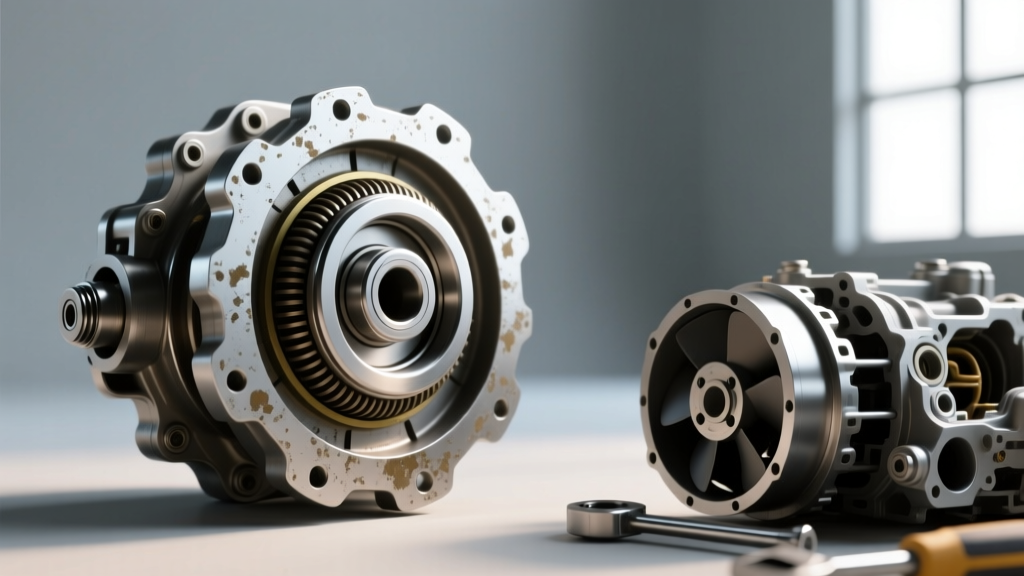
Heavy-duty commercial clutches, such as the Eaton Fuller 15.5-inch Solo Series twin-plate assemblies, operate under extreme thermal and mechanical stress. The most frequent symptoms reported by fleet operators include:
- Clutch Dragging (Incomplete Release): Often caused by air entrapment in the hydraulic lines, a failing Air-Assisted Hydraulic Clutch Actuator (AAHCA), or warped intermediate drive plates. This results in grinding gears during shifts and severe transmission synchronizer damage.
- Slipping Under Load: While frequently blamed on worn organic friction discs, slipping in a heavy-duty application is often traced back to a loss of clamp load from fatigued diaphragm springs or oil contamination from a failing rear main seal.
- Pedal Vibration and Chatter: Usually indicative of hot spots on the cast-iron flywheel or uneven wear on the cerametallic friction buttons, exacerbated by aggressive low-RPM lugging common in modern downsped drivetrains.
- Air System Leaks: A hissing sound near the bell housing or firewall typically points to a ruptured pneumatic diaphragm inside the AAHCA, preventing the clutch from fully engaging or disengaging.
Actuation Diagnostics: Commercial Hydraulics vs. Powersports
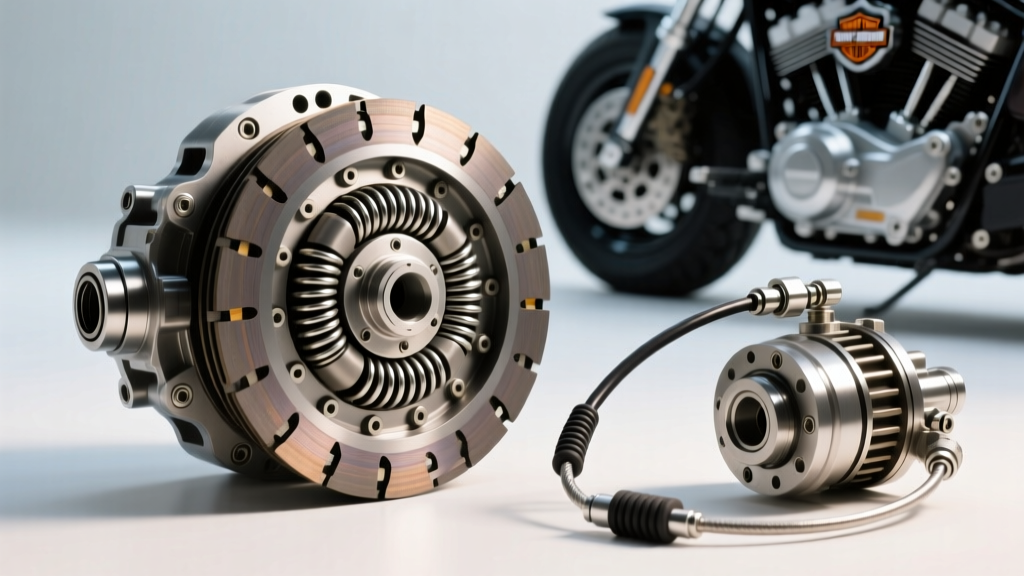
When mastering manual actuation diagnostics, veteran technicians often draw parallels across different mechanical disciplines to understand the physics of free-play and tension. For instance, the precision required in a Harley Davidson clutch cable adjustment serves as an excellent baseline for understanding mechanical actuation tolerances. On a Milwaukee-Eight 114 engine, achieving the exact 1/16-inch to 1/8-inch free-play at the hand lever ensures the release bearing does not prematurely ride the diaphragm spring, which would cause catastrophic bearing failure and clutch slip.
In heavy-duty commercial vehicles, the exact same physical principle applies, but the execution relies on pneumatic and hydraulic stroke calibration rather than a simple steel cable. If a fleet mechanic applies the loose tolerances of a heavy truck pedal to a Harley, the motorcycle will slip instantly. Conversely, if a technician fails to respect the 1/2-inch to 3/4-inch internal free-play requirement at the heavy-duty release bearing, the Eaton Solo clutch will never fully clamp, leading to rapid friction disc incineration under 2,050 lb-ft of torque. Understanding this contrast is vital for cross-trained performance mechanics working on both commercial fleets and heavy cruiser motorcycles.
Actuation System Comparison Matrix
| System Type | Application | Free-Play Specification | Primary Failure Mode | Adjustment Method |
|---|---|---|---|---|
| Mechanical Cable | Harley-Davidson (Milwaukee-Eight) | 1/16' to 1/8' at lever | Cable stretch, fraying, housing compression | Turnbuckle and inline barrel adjusters |
| Air-Assisted Hydraulic (AAHCA) | Class 8 Trucks (Eaton Fuller) | 1/2' to 3/4' at release bearing | Internal air diaphragm rupture, hydraulic cavitation | Hydraulic bleed, pushrod clevis adjustment |
| Automated Manual (AMT) | Volvo I-Shift / Mack mDRIVE | Electronically calibrated (0.0mm manual) | Solenoid failure, position sensor drift | Dealer-level software recalibration |
Performance Upgrades for Extreme Torque Applications
For commercial vehicles operating in severe-duty environments—such as heavy-haul logging, oilfield services, or heavy equipment transport—upgrading the clutch assembly is a necessary performance modification. Standard organic twin-plate clutches simply cannot handle the shock loads of a 140,000 lb GCW (Gross Combination Weight) start on an incline.
Friction Material Upgrades
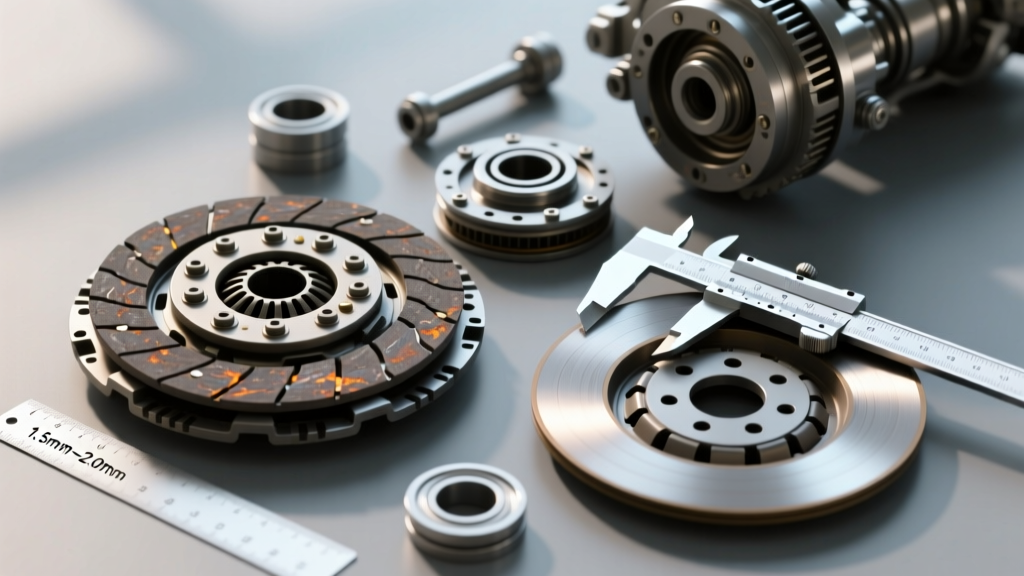
Upgrading to a full cerametallic friction package (such as the Eaton Advantage Series or aftermarket equivalents from Ram Clutches) increases torque capacity by up to 40%. Cerametallic buttons resist thermal fading up to 1,200°F, whereas organic materials begin to glaze and slip around 600°F. Expect to pay between $1,800 and $2,800 for a premium heavy-duty cerametallic clutch kit.
Heavy-Duty Release Bearings and Brake Assemblies
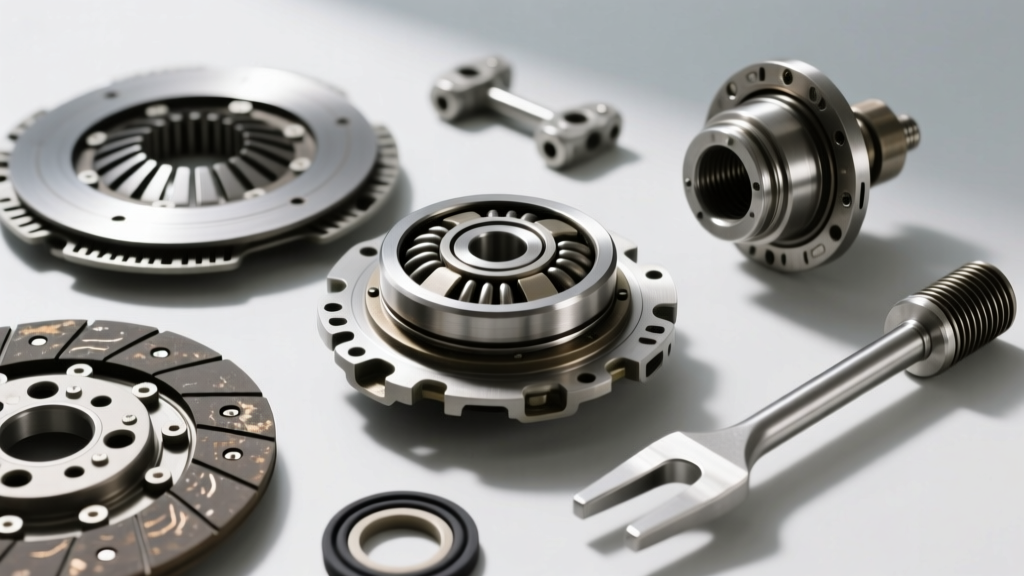
When upgrading the friction package, it is mandatory to replace the clutch brake and release bearing. The Eaton K-34500-1 heavy-duty release bearing features a larger contact surface and improved thermal dissipation. Furthermore, upgrading to a two-piece clutch brake (Part # 5140140) allows for faster gear engagement without dropping the transmission oil pan, reducing fleet maintenance time by up to 45 minutes per service event.
Step-by-Step Heavy-Duty Actuator Bleed and Adjustment
Resolving clutch dragging in a Class 8 truck requires a meticulous bleed procedure of the AAHCA. Unlike a simple Harley Davidson clutch cable adjustment which requires only basic hand tools, heavy-duty hydraulic bleeding demands specialized equipment to purge micro-bubbles that cause a spongy pedal and incomplete disengagement.
- Verify Air Supply: Ensure the vehicle's primary air system is building to at least 110 PSI. The AAHCA requires a minimum of 60 PSI to assist the hydraulic master cylinder.
- Inspect the Pushrod: Check the clevis connection at the master cylinder. There should be exactly 1/8-inch of free-play before the pushrod engages the hydraulic piston. If there is zero free-play, the master cylinder will not fully return, blocking the compensation port and causing the clutch to drag.
- Pressure Bleed the Hydraulics: Connect a pressure bleeder to the master cylinder reservoir. Force DOT 3 or DOT 4 heavy-duty hydraulic fluid through the system until it exits the slave cylinder bleeder screw completely free of air. Never use DOT 5 silicone fluid, as it will destroy the EPDM seals in the Eaton actuator.
- Measure Internal Free-Play: Using a feeler gauge through the bell housing inspection cover, verify the 1/2-inch to 3/4-inch gap between the release bearing and the clutch brake when the pedal is fully released. Adjust the external slave cylinder pushrod if necessary.
Torque Specifications and Reassembly Guidelines
When performing a complete heavy-duty clutch replacement, adhering to OEM torque specifications is non-negotiable. The flywheel on a Cummins X15 or Detroit DD15 must be torqued in a star pattern. For most Class 8 applications, the flywheel-to-crankshaft bolts require 150 to 170 lb-ft of torque, followed by a final angle torque of 90 degrees on TTY (Torque-to-Yield) fasteners. The intermediate drive plate bolts on a 15.5-inch twin-plate clutch should be torqued to 35 to 45 lb-ft using a high-temperature threadlocker (such as Loctite 271) to prevent backing out under severe torsional vibration.
For comprehensive service manuals and torque charts, fleet technicians should always refer to the Eaton Roadranger Service Manual or the specific OEM service documentation for their drivetrain configuration. Proper diagnostics, whether you are performing a Harley Davidson clutch cable adjustment in a custom bike shop or rebuilding an Eaton Fuller Solo clutch in a commercial fleet garage, always comes down to respecting the engineering tolerances of the actuation system.