The Engineering Challenge of the Rear-Mounted Transaxle
For beginners diving into the world of classic Volkswagen maintenance, the T3 (widely known as the Vanagon in North America) presents a unique mechanical puzzle. Unlike front-engine vehicles where the clutch pedal sits inches away from the transmission bell housing, the T3 features a rear-mounted transaxle. This means the actuation mechanism must travel nearly three meters (over nine feet) from the driver’s footwell to the back of the vehicle.
Historically, Volkswagen solved this routing challenge using a mechanical Bowden cable. While simple in theory, this long cable run is notorious for friction, stretching, and eventual failure. Today, many enthusiasts and daily-drivers are ditching the cable in favor of a hydraulic setup. In this beginner-friendly explainer, we will break down the differences between mechanical and hydraulic actuation, and explore why installing a vw t3 clutch slave cylinder is one of the most transformative upgrades you can perform on your van.
Mechanical Cable vs. Hydraulic Actuation: The Core Differences
Before tearing into your pedal box, it is crucial to understand how these two systems translate your left foot's movement into clutch disengagement.
The Mechanical Cable System
The factory cable system relies on a steel wire encased in a rubber and metal-lined sheath (the Bowden tube). As you press the pedal, the cable pulls a mechanical lever on the transaxle bell housing, which pushes the throwout bearing against the pressure plate fingers. Because the cable is so long, it acts like a giant spring. You lose a significant amount of pedal travel to cable stretch, and the friction of the wire dragging through the sheath results in a heavy, gritty pedal feel.
The Hydraulic System
A hydraulic system replaces the physical cable with incompressible brake fluid. A master cylinder at the pedal box pushes fluid through a hard line routed along the chassis, down to a flexible hose, and finally into the vw t3 clutch slave cylinder mounted on the transaxle. The slave cylinder's piston pushes a rod to actuate the clutch fork. Because fluid does not stretch, pedal feel is direct, consistent, and requires significantly less physical effort.
Head-to-Head Comparison Chart
| Feature | Factory Mechanical Cable | Hydraulic Slave Cylinder Setup |
|---|---|---|
| Pedal Feel | Heavy, inconsistent, prone to binding | Light, linear, and highly responsive |
| Free Play Adjustment | Manual wingnut adjustment under the van | Self-adjusting via hydraulic fluid displacement |
| Common Failure Mode | Cable snapping or sheath splitting | Slave cylinder seal leaks or master cylinder bypass |
| Routing Vulnerability | Exposed to road debris, water, and heat | Hard lines tucked safely alongside brake lines |
| Heavy-Duty Clutch Support | Poor (cable stretches under high spring pressure) | Excellent (fluid pressure multiplies pedal force) |
| Average Parts Cost (2026) | $40 - $70 (Replacement Cable) | $250 - $400 (Full Conversion Kit) |
Why Upgrade to a VW T3 Clutch Slave Cylinder?
If the factory cable system worked for Volkswagen in the 1980s, why change it? The answer lies in vehicle age, aftermarket modifications, and parts availability.
Handling Heavy-Duty Clutches and Syncro Models
If you are rebuilding your T3's engine or transaxle, you might opt for a heavy-duty pressure plate (such as those from Kennedy Engineering or Sachs Performance). These performance pressure plates feature much stiffer diaphragm springs. A mechanical cable will stretch and deform under the immense load required to depress these springs, leading to premature cable failure and an exhausting driving experience. A hydraulic system multiplies your pedal input via piston diameter ratios, making even the stiffest racing clutches manageable in stop-and-go traffic.
Furthermore, if you own a T3 Syncro (the all-wheel-drive variant), the front differential and complex undercarriage layout make routing a mechanical cable nearly impossible. The Syncro left the factory with a hydraulic system, utilizing a specific slave cylinder to navigate the cramped bell housing.
The 2026 Parts Availability Reality
As we navigate the classic car market in 2026, the scarcity of high-quality, New Old Stock (NOS) Bowden cables is a real concern. Many aftermarket reproduction cables suffer from poor internal lubrication and subpar sheath materials that degrade rapidly when exposed to the elements. Upgrading to hydraulics future-proofs your van, as hydraulic components like the vw t3 clutch slave cylinder (Part No. 251 721 261 A) are shared with various other VAG vehicles and remain in abundant, high-quality production by OEM suppliers like ATE and FTE.
Technical Blueprint: The Hydraulic Conversion
For the DIY beginner, a hydraulic conversion might sound intimidating, but it is essentially a bolt-on process if you purchase a comprehensive kit. Here are the critical technical specifications you need to know.
Essential Components and Pricing
- Master Cylinder: Part No. 251 721 401 A (Approx. $65 - $90). Mounts to the pedal cluster bracket.
- Slave Cylinder: Part No. 251 721 261 A (Approx. $45 - $75). Always buy ATE, FTE, or TRW. Avoid unbranded eBay specials, as the internal rubber seals will fail within months.
- Hard Line & Flex Hose: Custom bent steel or copper-nickel hard line routed along the factory brake lines, transitioning to a braided stainless flex hose near the transaxle to allow for engine movement.
- Pushrod & Clevis: Connects the slave cylinder piston to the factory clutch actuation lever.
Critical Torque Specifications
When installing your hydraulic components, precision is key. Over-torquing can crack the cast aluminum bell housing or snap the bleeder nipple.
- Slave Cylinder to Bell Housing (M8x1.25 Bolts): 25 Nm (18 ft-lbs)
- Master Cylinder Mounting Nuts (M8): 20 Nm (15 ft-lbs)
- Slave Cylinder Bleeder Nipple: 10 Nm (7 ft-lbs) - Use extreme caution; these are brittle!
- Hard Line Flare Nuts: 15 Nm (11 ft-lbs)
Pushrod Adjustment and Free Play
The most common beginner mistake during a vw t3 clutch slave cylinder installation is setting the pushrod too tight. You must leave 1mm to 2mm of free play at the slave cylinder pushrod. If the rod is constantly pressing against the clutch fork, the throwout bearing will ride against the spinning pressure plate, generating immense heat and destroying both the bearing and the hydraulic seals in a matter of miles.
The Bleeding Protocol
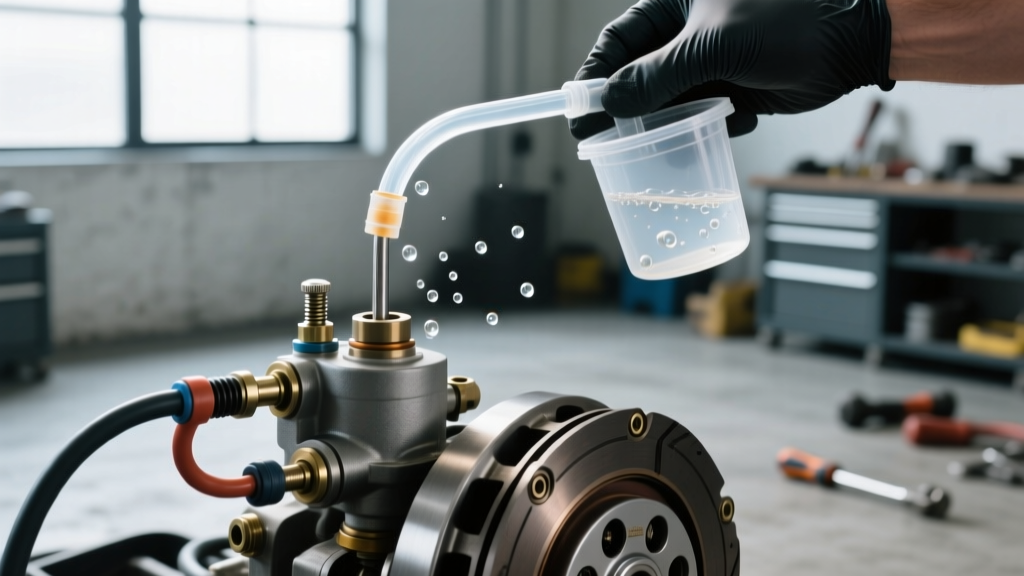
Because the slave cylinder sits lower than the master cylinder and the hard line features several bends, air can easily become trapped in the system. Do not rely on the "pump the pedal" method, as it often whips the fluid into a foam, trapping micro-bubbles.
- Use a pressure bleeder (like a Motive Products 0108) attached to the master cylinder reservoir.
- Pressurize the system to 15-20 PSI. Do not exceed 20 PSI, or you risk blowing the master cylinder reservoir cap seal.
- Use fresh Pentosin Super DOT 4 or Bosch ESI6 fluid. DOT 5 (Silicone) is strictly forbidden in VAG hydraulic systems as it swells the factory EPDM rubber seals.
- Open the slave cylinder bleeder nipple and let the fluid flow until absolutely zero bubbles are visible in the clear catch tube.
- Close the nipple, release the pressure, and verify pedal firmness.
Final Verdict for Beginners
While a mechanical cable replacement is cheaper upfront and keeps the van "factory original," the long-term reliability and driving dynamics heavily favor hydraulics. Upgrading to a vw t3 clutch slave cylinder setup eliminates the anxiety of a snapped cable leaving you stranded in third gear, reduces pedal fatigue on long road trips, and provides the necessary clamping force for modern, heavy-duty clutch upgrades. For any beginner looking to build a reliable, driveable classic VW, the hydraulic conversion is an investment that pays dividends every time you press the clutch pedal.
For further reading and factory wiring/plumbing diagrams, consult the Bentley Publishers' Official Vanagon Service Manual and the extensive community archives at Vanagon.com Technical Archives. For OEM hydraulic component specifications, refer to the ATE Brakes Hydraulic Clutch Components Guide.