The Spongy Pedal Dilemma: Understanding E30 Clutch Hydraulics
The BMW E30 (1984-1991) remains a benchmark in analog driving dynamics, but its clutch hydraulic system is notoriously frustrating for both weekend warriors and seasoned technicians. Whether your chassis is mated to a Getrag 260 5-speed, a ZF S5-16, or a Getrag 265 6-speed transmission, a spongy, inconsistent pedal almost always points to trapped air in the hydraulic circuit. Because of the unique routing of the hard lines and the orientation of the slave cylinder, simply replacing an e30 clutch master cylinder and pumping the pedal rarely yields a rock-solid feel. In 2026, with aging rubber components and modern synthetic fluids, understanding the precise physics of this system is mandatory for a proper repair.
Why the E30 Hydraulic Circuit Traps Air
To effectively bleed the system, you must first understand its architectural flaws. Unlike modern vehicles that utilize concentric slave cylinders (CSC) housed inside the bellhousing, the E30 uses an external slave cylinder mounted at a downward angle on the side of the transmission. Air naturally rises to the highest point in a fluid column. In the E30, the highest physical points are often the hard line flare nut fitting near the transmission crossmember and the outlet port of the master cylinder itself.
Furthermore, the flexible rubber feed hose connecting the brake fluid reservoir to the master cylinder is a 7.5mm ID line. Over decades of heat cycling, this hose degrades internally. It may not leak fluid outward, but it can become porous enough to suck in microscopic air bubbles during the vacuum phase of pedal release. If you are battling persistent air in the lines, replacing this upper reservoir hose is a non-negotiable first step.
Component Selection: OEM vs. Aftermarket Masters
Before attempting to bleed the system, ensure your hardware is up to the task. The original equipment manufacturers for BMW during this era were primarily ATE and FTE. Today, the market offers both direct OEM replacements and upgraded billet aluminum units designed to eliminate the firewall flex that plagues the OEM plastic units.
| Manufacturer | Part Number | Material | 2026 Est. Price (USD) | Expert Verdict |
|---|---|---|---|---|
| ATE (OEM) | 03.2430-0210.3 | Reinforced Polymer | $55 - $75 | Best for purists. Requires careful firewall nut torquing to prevent flange cracking. |
| FTE | KG19011.1.1 | Polymer | $45 - $65 | Excellent OEM alternative. Internal bypass seals are highly durable. |
| Ireland Engineering | IE-CMC-AL | Billet Aluminum | $160 - $195 | Best for track cars. Eliminates firewall flex and provides a firmer pedal baseline. |
Note: Always cross-reference part numbers using a reliable catalog like RealOEM to ensure compatibility with your specific E30 production month, as early (1984-1986) and late (1987-1991) models feature slight variations in pushrod geometry.
Fluid Chemistry: DOT 4 vs. DOT 5.1 in Vintage BMWs
A common mistake in 2026 is flushing vintage BMW hydraulic systems with the wrong fluid specification. The E30 clutch system shares its fluid reservoir with the brake system and relies on EPDM (Ethylene Propylene Diene Monomer) rubber seals.
- DOT 4 (Recommended): High-quality low-viscosity DOT 4 fluids, such as ATE Typ 200 or Super Blue, offer excellent boiling points (Dry: 280°C / Wet: 198°C) and are perfectly matched to the E30's EPDM seals. You can verify fluid specifications directly via ATE Brakes technical data sheets.
- DOT 5.1: While compatible with DOT 4 and offering higher boiling points, DOT 5.1 is highly hygroscopic. In a street-driven E30 that sees infrequent fluid changes, DOT 5.1 will absorb moisture faster, leading to internal master cylinder corrosion.
- DOT 5 (Silicone - NEVER USE): DOT 5 is silicone-based. It does not absorb water, which sounds great in theory, but it causes EPDM seals to swell and fail. Furthermore, silicone fluid has a higher compressibility rate than glycol-based fluids, guaranteeing a spongy pedal feel.
The Reverse-Bleed Protocol: Banishing Stubborn Air
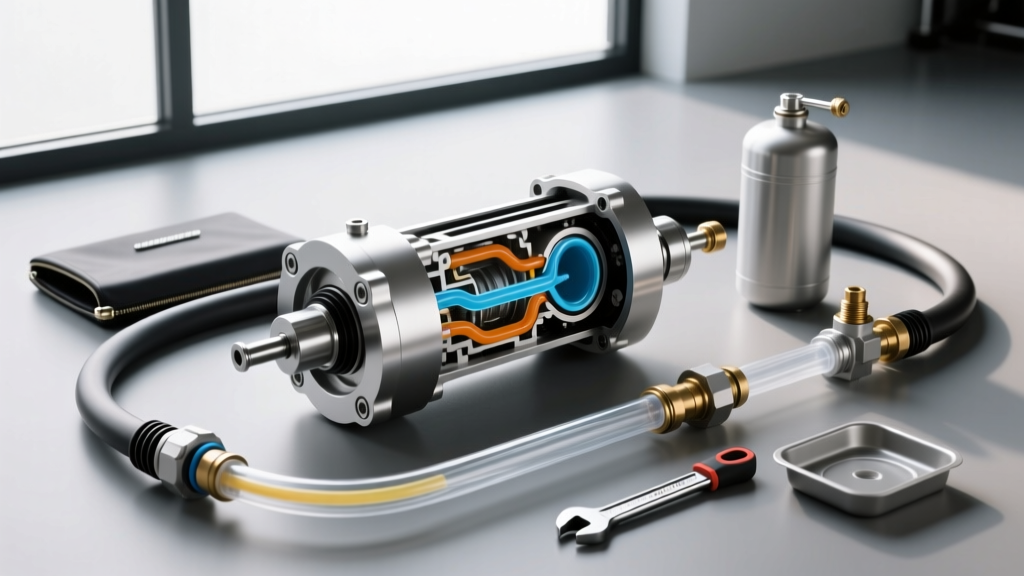
Pedal-pumping (the traditional two-person method) is highly ineffective on the E30. Pushing fluid downward forces air bubbles against their natural buoyancy, often wedging them into the hard line bends or the slave cylinder bypass port. The industry best practice is reverse bleeding—pushing fluid UP from the slave cylinder to the master cylinder reservoir.
Step-by-Step Reverse Bleed Procedure
- Prep the Reservoir: Use a turkey baster or fluid extractor to remove 80% of the old fluid from the brake/clutch reservoir. Leave enough to cover the master cylinder outlet port so you don't suck air into the brake circuit.
- Access the Bleeder Screw: Locate the slave cylinder on the Getrag bellhousing. The bleeder screw is typically an M7x1.0 thread. Attach your reverse bleeder hose (e.g., Motive Products or Mityvac) securely over the nipple.
- Push Fluid Upward: Slowly pressurize the reverse bleeder, pushing fresh DOT 4 fluid up through the hard line and into the master cylinder. Watch the reservoir closely. You will see a steady stream of micro-bubbles erupting at the surface.
- The 'Pedal Hold' Trick: Once clean fluid enters the reservoir and bubbles cease, close the bleeder screw. Have an assistant press the clutch pedal to the floor and hold it. While the pedal is depressed, slightly crack the bleeder screw open for one second, then close it. This sudden pressure drop expands and dislodges any microscopic air pockets trapped behind the slave cylinder piston cup.
- Top Off and Seal: Top off the reservoir to the MAX line with fresh DOT 4.
Bench Bleeding: The Forgotten Pre-Installation Step
If you are installing a brand new e30 clutch master cylinder, never bolt it to the firewall dry. The internal compensating port and primary cup seal will trap a large air pocket that reverse bleeding alone cannot dislodge.
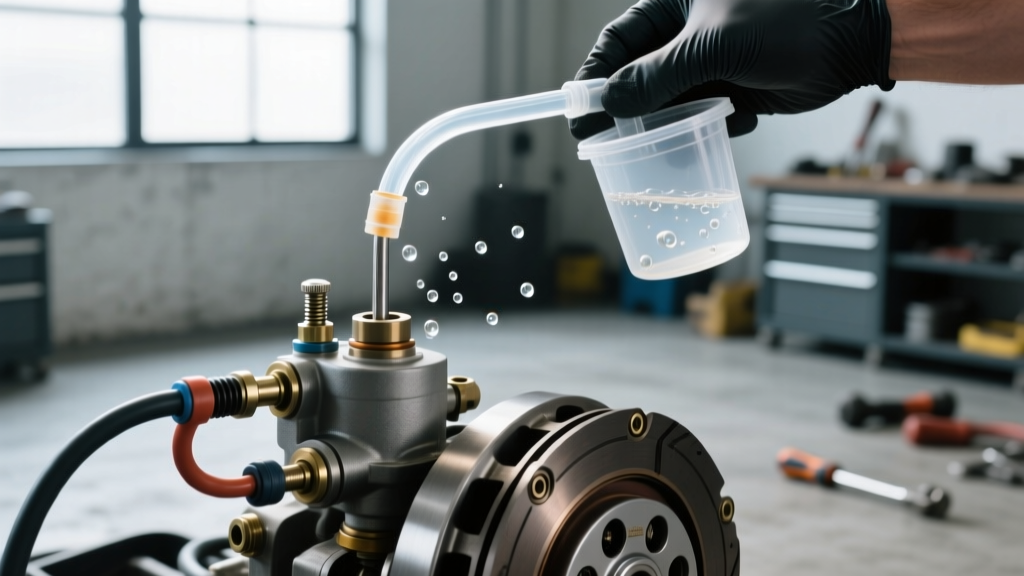
Bench Bleed Method: Clamp the master cylinder in a vise. Fill the integrated reservoir (or attach a temporary hose and funnel). Insert a blunt rod into the pushrod recess and slowly stroke the piston. Keep the outlet port submerged in a small cup of fluid via a looped hose until no bubbles emerge from the outlet. Only then should you connect the M12x1.0 hard line flare nut.
Firewall Pushrod Adjustment: The Hidden Culprit
If you have perfectly bled the system but the pedal still feels spongy or fails to fully disengage the clutch, the issue is likely mechanical, not hydraulic. The E30 clutch pedal pushrod features an adjustable threaded section secured by a 10mm locknut, accessible from under the dash or the engine bay firewall.
If the pushrod is adjusted too tightly inward, it prevents the master cylinder piston from fully retracting. This blocks the internal compensating port, meaning the fluid cannot return to the reservoir. As the fluid heats up and expands, it applies constant pressure to the clutch fork, causing slip and premature throwout bearing failure.
Adjustment Spec: Adjust the pushrod until you measure exactly 0.5mm to 1.0mm of freeplay at the clutch pedal pad before you feel hydraulic resistance. Secure the 10mm locknut to 8 Nm.
Master Torque & Specification Reference
Precision matters when reassembling vintage hydraulics. Overtightening brittle brass fittings or plastic mounting flanges will result in immediate failure. Keep this reference handy in the shop:
- System Fluid Capacity: ~0.35 Liters (Clutch circuit only)
- Master Cylinder Firewall Nuts (M6): 10 Nm (Caution: Plastic flanges crack easily)
- Slave Cylinder to Bellhousing Bolts (M8): 25 Nm
- Hard Line Flare Nut (M12x1.0): 15 Nm (Use a flare-nut wrench to avoid rounding)
- Slave Cylinder Bleeder Screw (M7x1.0): 8 - 10 Nm (Brass is highly susceptible to shearing)
- Pushrod Locknut (M8): 8 Nm
By combining high-quality OEM components from trusted suppliers like FCP Euro with the reverse-bleed protocol and precise pushrod adjustment, you will restore the crisp, mechanical engagement that made the E30 a legend. Proper hydraulic maintenance ensures your Getrag or ZF transmission shifts exactly as the engineers in Munich intended.