The Baseline: Why Performance Drivers Must Verify Factory Gears
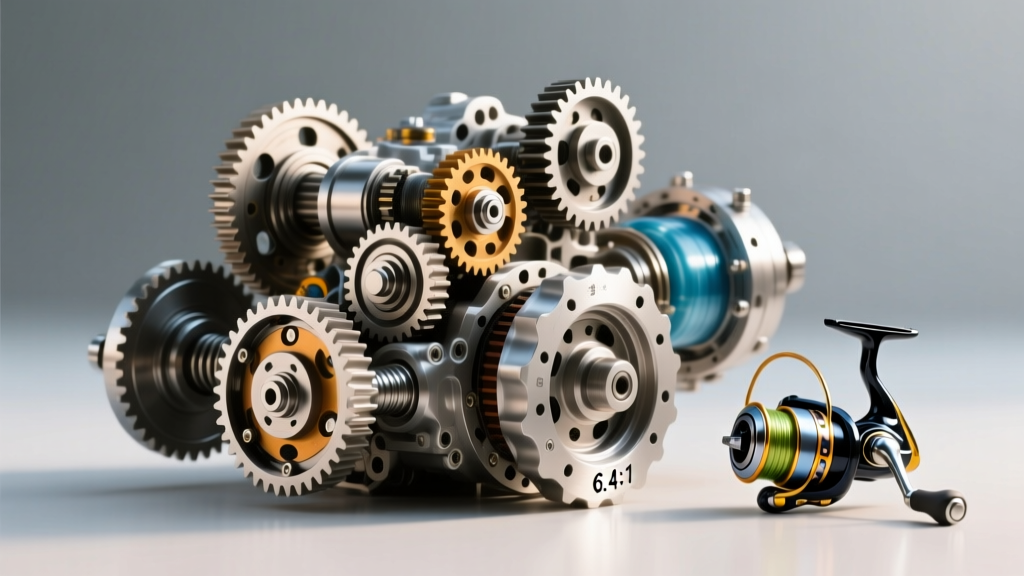
When planning a dedicated track build, canyon carver, or drag racing project, your drivetrain's final multiplication is the most critical variable outside of engine output. Before you order a 4.10 Richmond gear set or swap in a Tremec T56 Magnum transmission, you must establish your exact baseline. Relying on previous owner claims or online forum guesses is a fast track to ordering the wrong ring and pinion set. Understanding how to find gear ratio by VIN is your first critical step in building a balanced, high-performance drivetrain that maximizes your engine's powerband without over-revving on the highway.
How to Find Gear Ratio by VIN (The OEM Decoder Method)
The Vehicle Identification Number (VIN) itself does not explicitly state your axle ratio in plain text. Instead, the VIN acts as a key to unlock the vehicle's original build sheet, which contains specific Regular Production Option (RPO) codes or axle identification tags. Here is how to decode the factory paperwork for the most popular performance platforms.
General Motors (Camaro, Corvette, Silverado)
For GM vehicles, you need to locate the Service Parts Identification sticker, typically found in the glovebox or under the trunk lid. You are looking for three-character RPO codes related to the axle:
- GU5: 3.23 Ratio
- GU6: 3.42 Ratio
- GT4: 3.73 Ratio (Common in WS6 and SS models)
- GT5: 4.10 Ratio (Common in ZL1 and dedicated track packages)
- G80: Eaton Automatic Locking Differential (Crucial to know if you are upgrading to an aftermarket Wavetrac or Detroit Locker).
Ford Performance (Mustang, F-150)
Ford simplifies the process by printing the axle code directly on the driver's side door jamb Safety Compliance Certification Label. Look for the 'AXLE' box. For example, in a 2015-2023 Mustang GT:
- D2: 3.73 Limited Slip
- D4: 3.55 Limited Slip
- Z5: 3.31 Limited Slip
By cross-referencing these codes with the manufacturer's Randy's Ring & Pinion technical database, you can confirm the exact factory configuration before designing your upgrade path.
Physical Verification: When the VIN Lies
If you are building a project car that has changed hands multiple times, the VIN will only tell you what the car was born with—not what is currently bolted to the chassis. Swapped differentials are incredibly common in the performance community. To verify the physical ratio, use the tire spin method.
Jack up the rear of the vehicle safely on jack stands, ensuring both rear wheels are off the ground. Place the transmission in neutral. Mark the driveshaft with a piece of bright tape and mark the sidewall of the passenger-side tire at the 6 o'clock position. Rotate the tire exactly one full revolution while a helper counts the driveshaft rotations. If the driveshaft turns roughly 3.75 times, you have a 3.73 gear set. If it turns just over 4 times, you are running 4.10s. For absolute precision, remove the differential cover and count the teeth: divide the ring gear teeth by the pinion gear teeth (e.g., 41 ring / 11 pinion = 3.727, stamped as 3.73).
Selecting the Ideal Performance Gear Ratio
Once your baseline is confirmed, selecting the new ratio depends entirely on your vehicle's intended use case, tire diameter, and transmission overdrive. In 2026, with modern tire compounds offering unprecedented grip, shorter gears are increasingly popular to overcome the rotational mass of wider wheel and tire setups.
| Axle Ratio | 1st Gear Mult (T56 Magnum 2.66) | RPM @ 70 MPH (27" Tire) | Best Performance Application |
|---|---|---|---|
| 3.42 | 9.09 | 2210 | Highway / Light Track / Daily Driven |
| 3.73 | 9.92 | 2410 | Canyon Carving / Autocross / OEM+ |
| 4.10 | 10.90 | 2650 | Dedicated Track / Drag Radial |
| 4.56 | 12.13 | 2950 | Drag Slicks / Short Track / Low TQ Engines |
The Overdrive Factor
Never select an axle ratio without calculating your final drive in top gear. If you pair a 4.56 axle with a ZF 8HP transmission featuring a 0.67 8th gear, your highway RPMs remain manageable. However, pairing that same 4.56 with a classic Muncie M22 (1:1 top gear) will result in engine destruction at highway speeds. Always map your engine's peak torque and horsepower curves against your target trap speeds or corner exit speeds.
Real-World Swap Data: Ring & Pinion Costs and Setup Specs
Upgrading your differential is not a simple bolt-on affair. Setting up a ring and pinion requires precision measuring tools and a deep understanding of drivetrain geometry. According to Yukon Gear & Axle, improper setup will destroy a $400 gear set in under 500 miles.
Crucial Setup Specifications
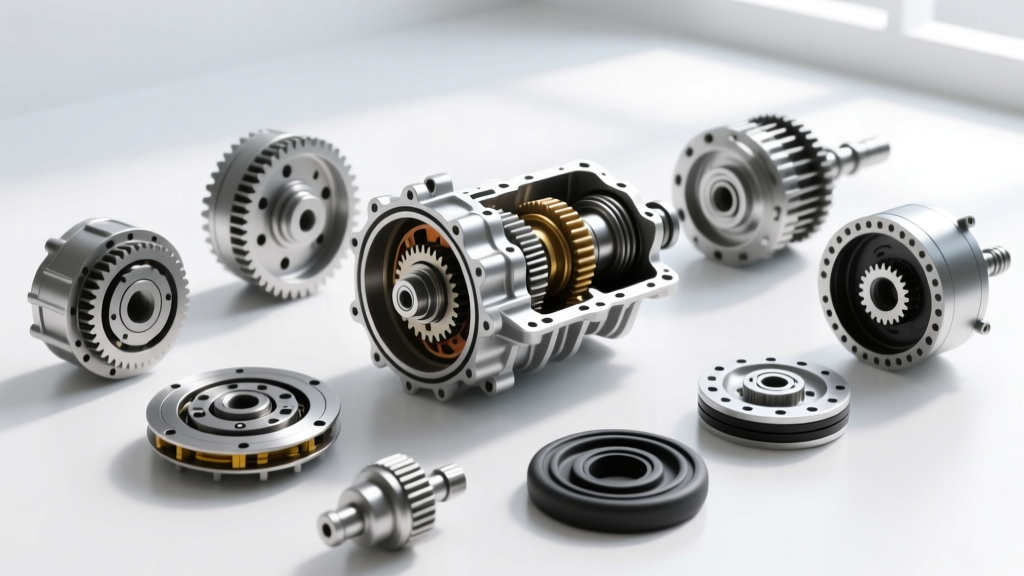
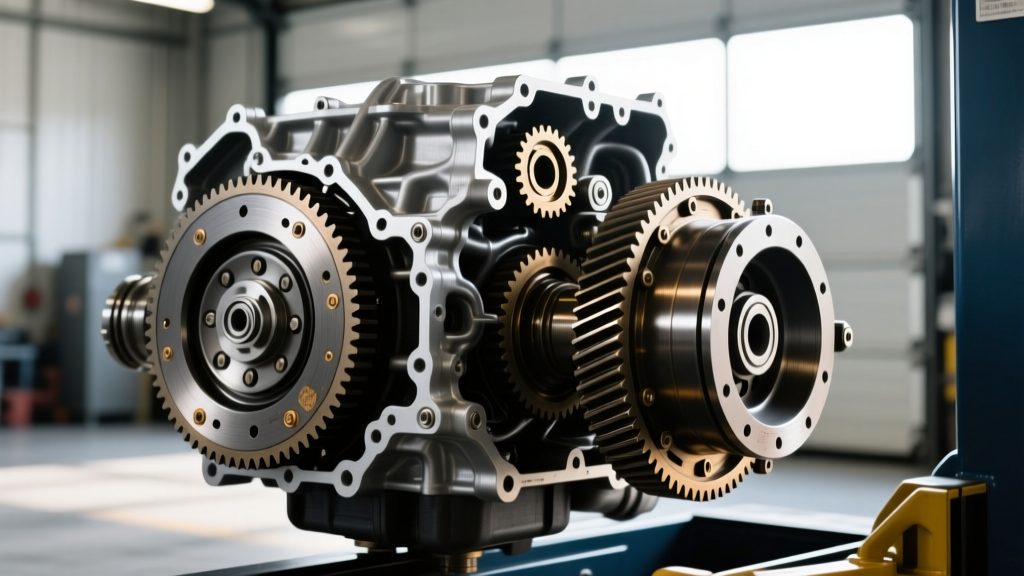
When installing a new Motive Gear or Richmond set into a Ford 8.8 or GM 12-bolt housing, you must adhere to strict tolerances:
- Backlash: Must be set between 0.006" and 0.009". Measured at the ring gear's outer edge using a dial indicator. Too tight causes binding and heat; too loose causes gear slap and tooth shearing under heavy load.
- Pinion Bearing Preload: Typically 15-25 in-lbs of rotational torque with new bearings. This is achieved by torquing the pinion nut to crush the spacer (often exceeding 250 lb-ft of torque).
- Ring Gear Bolts: Must be torqued to 85-95 lb-ft (Ford 8.8 spec) using red Loctite 271 and a crisscross star pattern to prevent warping the ring gear.
- Differential Cap Bolts: Torqued to 100-110 lb-ft to ensure the carrier bearings do not shift under high-G cornering loads.
"Never reuse a crush sleeve on a performance differential. For high-horsepower track cars, we always machine the housing to accept a solid pinion spacer with shims. It eliminates the risk of the sleeve over-crushing and losing preload during extreme heat cycles on the track." — Master Differential Technician
2026 Pricing and Break-In Procedures
As of 2026, a high-quality master install kit (including Timken bearings, shims, and seals) costs between $180 and $260, while the ring and pinion set itself ranges from $280 to $450. Professional machine shop labor for setup typically runs $800 to $1,200 depending on your region.
The break-in procedure is non-negotiable. For the first 20 miles, drive under 40 MPH. Allow the differential to cool completely to ambient temperature. Repeat this heat-cycle process three times. For the first 500 miles, avoid wide-open-throttle (WOT) pulls and sustained highway speeds. Use a high-quality 85W-90 mineral-based gear oil with the required friction modifier for your clutch-type limited-slip differential during break-in, then drain and refill with a 75W-90 full synthetic like Red Line ShockProof or Torco RGF for track duty.
Final Thoughts on Drivetrain Optimization
Knowing how to find gear ratio by VIN is merely the starting line of your performance build. By verifying your physical hardware, calculating your final drive multiplication, and executing a precision setup with correct torque specs, you ensure that every ounce of your engine's horsepower is effectively translated into forward momentum. Whether you are chasing 10-second quarter miles or shaving tenths off your lap time at the local circuit, the right gear ratio is the ultimate mechanical advantage.