The True Cost of Protecting Your Drivetrain
As we navigate the 2026 automotive landscape, the cost of routine maintenance continues to shift due to fluctuating synthetic oil prices and rising shop labor rates. Among the most overlooked yet critical services is the maintenance of vehicle differentials. Whether you are driving a daily commuter AWD crossover, a heavy-duty 3/4-ton truck, or a dedicated off-road rig, the gear oil inside your axles is the only barrier between catastrophic metal-on-metal failure and a smooth, quiet ride.
Unlike engine oil, differential fluid operates under extreme shearing forces and high thermal loads without the benefit of a filtration system. When preventive maintenance is deferred, the resulting hypoid gear wear, bearing failure, and limited-slip clutch degradation can lead to repair bills exceeding $2,500 per axle. This comprehensive guide breaks down the exact costs, labor times, and fluid specifications you need to budget for differential service this year.
National Average Pricing for Differential Services
Pricing varies wildly depending on whether your axles feature simple drain-and-fill plugs or require differential cover removal, cleaning, and RTV resealing. Below is the 2026 national average pricing matrix for professional service and DIY costs.
| Service Type | Independent Shop | Dealership | DIY Cost (Parts/Fluid) |
|---|---|---|---|
| Front Diff (Drain & Fill) | $85 - $140 | $160 - $230 | $35 - $65 |
| Rear Diff (Drain & Fill) | $95 - $150 | $170 - $240 | $40 - $75 |
| Rear Diff (Cover Remove/Reseal) | $160 - $240 | $260 - $380 | $60 - $95 |
| Full AWD/4WD (Front, Rear, Transfer Case) | $320 - $550 | $600 - $950 | $140 - $220 |
Breaking Down the Invoice: Where Your Money Goes
To understand the quotes you receive, it is essential to look at the three main cost drivers of a differential fluid service: the gear oil itself, the labor book time, and the necessary shop consumables.
1. Fluid Costs and Friction Modifiers
Modern vehicle differentials require high-grade synthetic gear oils, typically in 75W-90, 75W-110, or 75W-140 viscosities, meeting API GL-5 specifications. A standard passenger vehicle requires between 1.5 and 3.5 quarts per axle. Premium synthetics from brands like AMSOIL or Royal Purple cost between $18 and $28 per quart.
If your vehicle is equipped with a clutch-type Limited Slip Differential (LSD), you must also factor in the cost of a friction modifier additive. Skipping this $12 to $18 additive will result in severe chatter during low-speed cornering and premature destruction of the clutch packs. For example, Ford requires Motorcraft XL-3, while GM specifies ACDelco 88900401. Some modern synthetic fluids come pre-blended with friction modifiers, but verifying compatibility with your specific differential carrier (e.g., Eaton Truetrac vs. Auburn Gear) is mandatory.
2. Labor Rates and Book Times
In 2026, the national average independent shop labor rate sits between $135 and $185 per hour, while dealerships frequently charge $180 to $250+ per hour.
- Drain and Fill (0.4 - 0.6 Hours): Axles equipped with discrete drain and fill plugs (common on Toyota, Subaru, and Honda) are quick to service. The technician simply removes the fill plug first, drains the old fluid, and pumps new fluid in until it weeps from the fill hole.
- Cover Removal and Reseal (1.2 - 1.8 Hours): Many domestic trucks (Ford 8.8, GM 10-bolt, Dana 44) lack drain plugs. The entire differential cover must be unbolted, the old fluid caught in a pan, and the mating surfaces scraped clean of old gasket material. This process requires curing time for RTV silicone sealants, tying up the service bay and increasing your labor bill.
3. Shop Supplies and Consumables
Expect a line item for "Shop Supplies" or "Consumables" ranging from $15 to $35. For cover-removal services, this covers high-temperature RTV silicone (such as Permatex Ultra Black), brake cleaner for degreasing the housing, and replacement crush washers for drain plugs. Some shops also use specialized pneumatic pump tools to push heavy 75W-140 gear oil upward into the fill hole, which factors into their shop supply fee.
Dealership vs. Independent Shop vs. DIY: A Financial Comparison
Where should you take your vehicle? The decision hinges on your budget, your mechanical confidence, and the complexity of your drivetrain.
- The Dealership: Best for vehicles under powertrain warranty or complex AWD systems requiring proprietary fluid formulations (e.g., specific transfer case fluids that share cooling loops with the differential). You pay a premium for OEM fluids and guaranteed documentation, but expect to pay 40% to 60% more than an independent shop.
- The Independent Driveline Specialist: The sweet spot for most 4WD truck and SUV owners. Shops that specialize in 4x4 systems or performance differentials will not only change the fluid but also inspect the ring and pinion gears for abnormal wear patterns, check axle shaft end-play, and look for metal shavings on the magnetic drain plugs. Resources like Ring & Pinion provide extensive technical documentation that reputable specialists use to diagnose early-stage failures during a fluid drain.
- The DIY Route: Changing differential fluid at home can save you $200 to $400 on a full 4WD service. However, you must invest in a fluid transfer pump ($25-$40), a 3/8" or 1/2" drive torque wrench, and proper disposal containers. The most common DIY mistake is over-torquing the aluminum fill plugs or cross-threading them, which leads to stripped housings and expensive repairs.
Real-World Pricing and Specs: Popular Trucks and SUVs
To provide concrete context, here are the exact specifications, capacities, and estimated independent shop costs for three of the most popular platforms on the road today.
Ford F-150 (10.5-Inch Rear Axle)
The modern F-150 10.5-inch rear axle requires the removal of a 14-bolt cover. It holds approximately 2.75 quarts of 75W-140 Synthetic Gear Oil. Critical Note: If your F-150 is equipped with the electronic locking differential (eLocker), Ford explicitly states not to use friction modifiers, as it can interfere with the locking mechanism engagement. Cover bolts must be torqued to 33 lb-ft in a star pattern. Expect to pay $180 - $220 at an independent shop for this messy, RTV-heavy job.
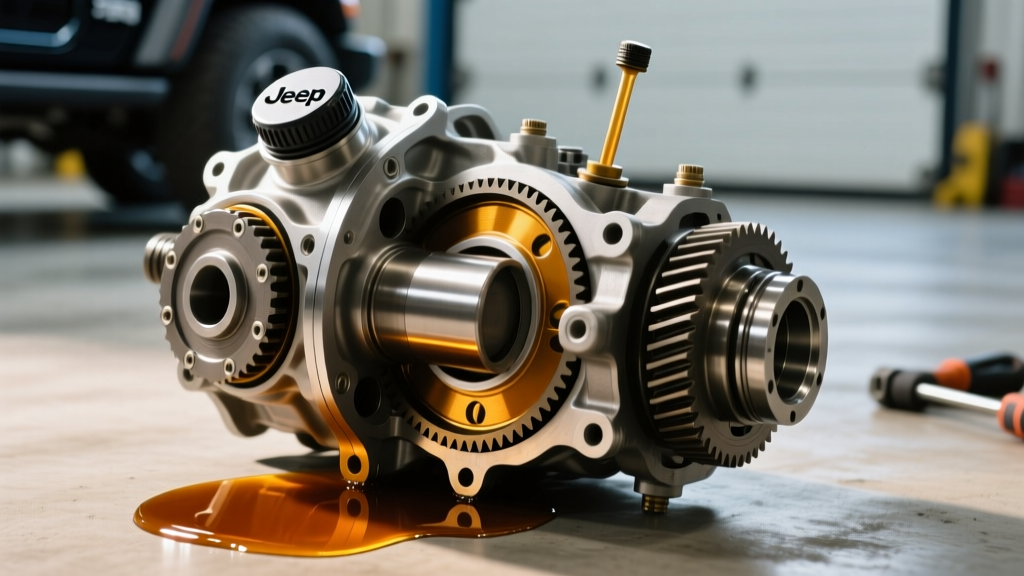
Jeep Wrangler JL (Dana 44 M210/M220 Axles)
Jeep's JL Wrangler utilizes Dana 44 front and rear axles. The rear M220 axle requires about 2.2 quarts of 75W-85 API GL-5 gear oil. If equipped with the Trac-Lok limited-slip carrier, a friction modifier is required. The cover bolts are 13mm and should be torqued to 30 lb-ft. Because the front axle requires draining and refilling via plugs, a full Jeep axle service usually runs $260 - $340 at a 4x4 specialty shop.
Toyota Tacoma (8-Inch Rear Axle)
The Tacoma features a highly serviceable drain-and-fill setup. The 8-inch rear differential holds 3.2 quarts of 75W-90 GL-5 gear oil. Both the 24mm drain and fill plugs should be torqued to 29 lb-ft. Because no RTV or gasket scraping is required, this is one of the most cost-effective services to perform, averaging just $95 - $130 professionally, or about $55 in your driveway.
Hidden Costs and Upsells to Avoid
When reviewing a quote for vehicle differentials maintenance, be wary of the "Differential Flush" upsell. Unlike automatic transmissions, differentials do not have complex hydraulic valve bodies or external coolers that require pressurized flushing. A manual drain-and-fill or cover removal is the only manufacturer-approved method. If a shop attempts to sell you a $300 "machine flush" for your axles, walk away.
Additionally, if a shop quotes you for a "cover reseal" on a differential that clearly has a drain plug (like most Subaru or Honda AWD rear units), they are either misinformed or attempting to inflate the labor hours. Always verify your specific axle housing design before authorizing the work.
Preventive Maintenance Intervals: When is it Worth Paying?
Many modern owner's manuals list differential fluid as "lifetime" under normal driving conditions. However, in the automotive engineering world, "lifetime" often means the warranty period of the vehicle. For true longevity, adhere to these preventive maintenance intervals:
- Normal Commuting (Highway/City): Every 60,000 to 80,000 miles.
- Severe Duty (Towing, Off-Road, Snow Plowing): Every 15,000 to 30,000 miles. Water intrusion through the axle breather tubes during off-roading will emulsify gear oil into a milky sludge, stripping its protective properties instantly. If you submerge your axles, the fluid must be changed immediately, regardless of mileage.
- Break-In Service: If you have installed aftermarket regearing (e.g., moving from 3.21 to 4.10 gears) or a new ring and pinion set, the first fluid change must occur at 500 miles to remove metallic break-in paste, followed by a standard interval thereafter.
By understanding the real costs and mechanical requirements of your axles, you can budget effectively and ensure your drivetrain survives the harshest conditions without missing a beat.