The Limitations of the Factory Toyota Differential Lock Button
For decades, off-road enthusiasts have relied on the rear electronic locker found in TRD Off-Road Tacomas, 4Runners, and Land Cruisers. Pressing the Toyota differential lock button on the dash engages a rear-axle locking mechanism that provides 100% traction to both wheels. However, as of 2026, modern overlanding and extreme rock-crawling demands often outpace the factory system's capabilities.
The factory Toyota e-locker comes with strict operational parameters. It typically requires the vehicle to be in 4WD Low, moving at less than 5 MPH (8 km/h), and driving in a straight line to engage. Furthermore, the front differential on most of these platforms remains an open unit. While Toyota’s A-TRAC (Active Traction Control) system attempts to simulate a front locker by applying brake pressure to spinning wheels, this method generates excessive heat, boils brake fluid on long climbs, and ultimately falls short of true mechanical locking.
To build a truly capable trail rig, enthusiasts must look beyond the dash button and explore aftermarket locking differential types. This guide breaks down the mechanical options, installation specifications, and the critical differential fluid chemistry required to support heavy-duty aftermarket lockers.
Locking Differential Types: Selecting the Right Upgrade
Choosing the correct differential upgrade depends heavily on your axle position (front vs. rear), tire size, and steering requirements. Below are the primary categories of performance lockers available for Toyota solid axles and independent front suspension (IFS) setups.
1. Selectable Air and Electric Lockers
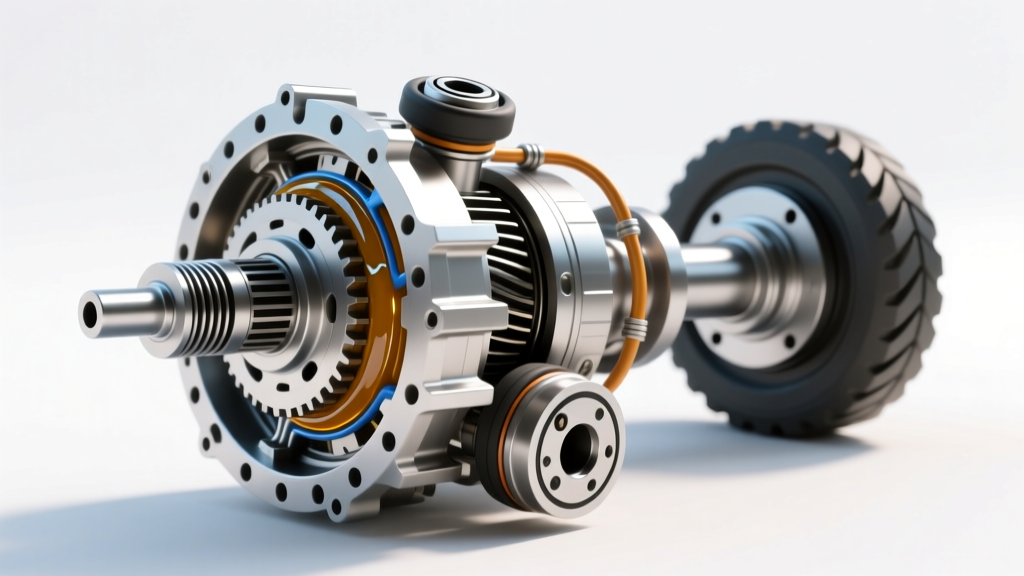
Selectable lockers, such as the ARB Air Locker or the Eaton ELocker, function as open differentials on the street and lock into a solid spool at the push of a button. For the Toyota 8-inch rear differential, the ARB RD121 (30-spline) is the industry standard. Because they require an onboard 12V air compressor and pneumatic lines routed through the axle housing, installation is complex, but the on-demand traction is unmatched. Electric variants like the Eaton ELocker eliminate the need for air lines, using an electromagnetic coil inside the carrier, though they can be susceptible to moisture ingress if the axle is submerged frequently.
2. Automatic Lockers (Detroit, Spartan, Aussie)
Automatic lockers replace the internal spider gears with a ratcheting mechanism. The Detroit Locker and the budget-friendly Spartan Locker lock the axles together under load but allow the outside wheel to ratchet and spin faster during turns. These are highly durable and require no external wiring or air lines. However, they are generally recommended for the rear axle only. Installing an automatic locker in a Toyota IFS front differential causes severe steering bind, premature CV axle failure, and dangerous handling characteristics on high-traction surfaces.
3. Helical Torque-Biasing Differentials (TBD)
For front-axle upgrades where steering feel and predictability are paramount, helical limited-slip differentials like the Eaton Truetrac are the optimal choice. The Truetrac uses planetary helical gears to bias torque up to 3.5:1 between the wheels. It operates smoothly, requires no dash switches, and will not snap CV axles during tight, locked turns. While it is technically a limited-slip differential rather than a 100% spool locker, applying light brake pressure to the spinning wheel (using the factory brake pedal) instantly multiplies torque to the grounded wheel, effectively mimicking a locked state.
Performance Upgrade Matrix: Locker Comparison Chart
| Locker Type | Brand / Model Example | Engagement Method | Steering Impact | Ideal Axle Position | Est. Cost (2026) |
|---|---|---|---|---|---|
| Selectable (Air) | ARB Air Locker (RD121) | Dashboard Pneumatic Switch | None (Open on street) | Front or Rear | $950 - $1,100 |
| Selectable (Electric) | Eaton ELocker | Dashboard Electrical Switch | None (Open on street) | Front or Rear | $850 - $1,000 |
| Automatic (Ratcheting) | Spartan / Detroit Locker | Automatic (Under Load) | Heavy Bind / Ratcheting | Rear Only | $300 - $750 |
| Helical TBD | Eaton Truetrac (913A485) | Automatic (Torque Biasing) | Smooth / Seamless | Front (IFS or Solid) | $650 - $800 |
Installation Specifications and Drivetrain Setup
Upgrading from an open carrier or a factory e-locker to an aftermarket unit requires precision setup. The Toyota 8.4-inch (Tundra/Tacoma TRD) and 8.0-inch ring and pinion gear sets are highly sensitive to improper backlash and bearing preload.
- Ring Gear Bolt Torque: M10x1.25 ring gear bolts must be torqued to 57 ft-lbs (77 Nm). Always apply red Loctite 272 to the threads and allow 24 hours of cure time before filling with fluid or driving.
- Bearing Cap Torque: The differential bearing caps on Toyota 8-inch housings should be torqued to 58 ft-lbs. Ensure cap alignment marks match the housing to prevent bearing bore distortion.
- Backlash Specification: Target a backlash between 0.0051 and 0.0071 inches. Measure using a dial indicator at three distinct points around the ring gear. Variation greater than 0.002 inches indicates a warped ring gear or improper seating on the carrier flange.
- Pinion Bearing Preload: For used bearings, target 10-15 in-lbs of rotational drag. For new bearings, target 20-25 in-lbs. This is achieved by adjusting the crush sleeve or solid spacer shim stack.
Post-Upgrade Differential Fluid Selection & Chemistry
Because this upgrade drastically alters the internal friction and heat generation of the axle, selecting the correct differential fluid is not an afterthought—it is a mechanical necessity. The factory Toyota manual generally recommends 75W-90 GL-5 gear oil, but aftermarket lockers demand a closer look at additive chemistry.
The Friction Modifier Trap
A common and catastrophic mistake made by DIY mechanics is adding a limited-slip friction modifier to a differential equipped with an ARB Air Locker, Detroit Locker, or Eaton Truetrac. Friction modifiers are designed for clutch-pack-style limited-slip differentials (LSDs) to prevent chatter. Do not use friction modifiers in gear-driven or air-actuated lockers. The modifiers reduce the coefficient of friction on the gear teeth, which can lead to micro-slippage under extreme shock loads, accelerating wear on the helical gears and locker pins.
Viscosity and Synthetic Base Stocks
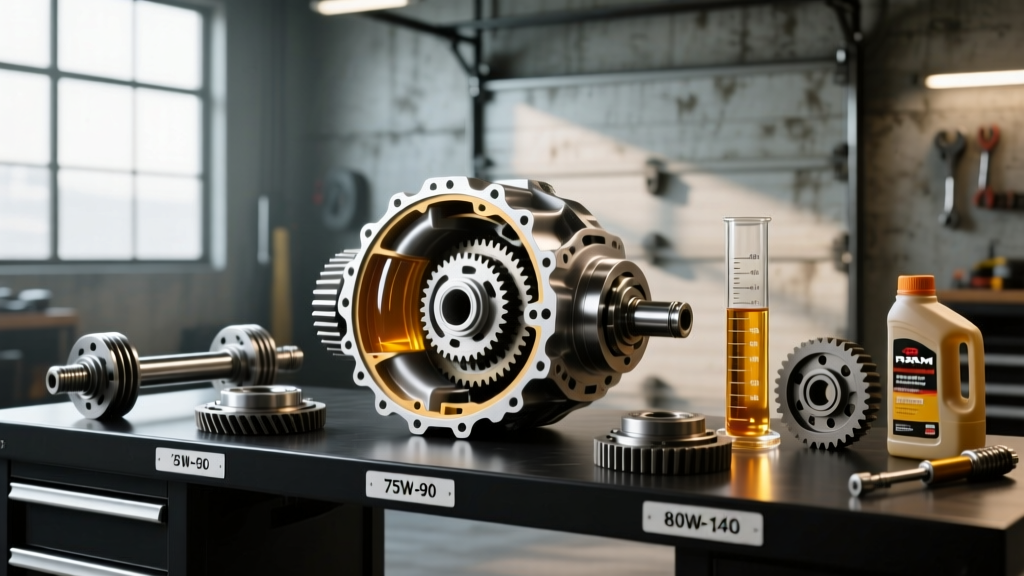
For rigs running 35-inch tires or larger, or those subjected to low-speed, high-torque rock crawling, stepping up to a 75W-140 Synthetic GL-5 is highly recommended. The thicker high-temperature film strength prevents the gear oil from being squeezed out from between the ring and pinion teeth during extreme axle articulation. Premium synthetic options, such as those available from AMSOIL Severe Gear or Royal Purple Max-Gear, contain high concentrations of Zinc and Phosphorus (ZDDP) to protect the sliding friction surfaces of the Truetrac’s helical gears.
Fluid Capacity and Service Intervals
The Toyota 8-inch and 8.4-inch differentials typically hold between 3.5 and 4.2 pints of gear oil, depending on the bumper design and whether an aftermarket diff drop kit is installed. Always fill until the fluid is level with the bottom of the fill hole threads. If you have installed an ARB Air Locker, ensure the bulkhead air fitting is positioned at the 3 o'clock or 9 o'clock position inside the housing to prevent gear oil from migrating up into the pneumatic lines when the axle is submerged in deep water crossings.
Expert Tip: After installing any new locker or setting up a new ring and pinion, perform a break-in fluid change at 500 miles. The initial wear-in of the gears and locker components generates microscopic metallic swarf that will remain suspended in the fluid and act as a lapping compound if not drained immediately.
Conclusion: Building a Cohesive Drivetrain
The factory Toyota differential lock button is an excellent entry point into off-roading, but serious terrain requires serious hardware. By pairing a front Eaton Truetrac with a rear ARB Air Locker, utilizing precise 57 ft-lbs torque specs, and filling the housings with high-quality, modifier-free 75W-140 synthetic gear oil, you transform a trail-rated truck into an uncompromising, expedition-grade vehicle capable of conquering the most punishing environments on the planet.