The Thermal Bottleneck in Automotive Differentials
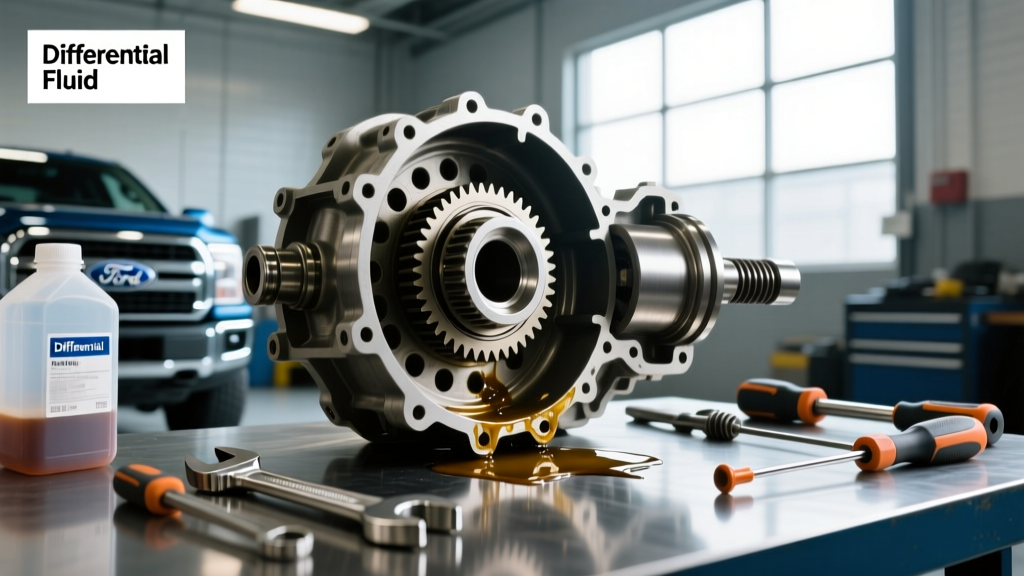
When pushing heavy payloads up steep grades or crawling technical terrain, automotive differentials become massive heat generators. Unlike manual transmissions where gears primarily roll, the hypoid gear sets found in modern axles rely heavily on sliding friction to transfer torque. While highly effective for ground clearance and NVH (noise, vibration, and harshness) reduction, hypoid gears operate at roughly 90% to 95% mechanical efficiency. That missing 5% to 10% of energy is converted directly into thermal energy, heating the gear oil and the differential housing.
As of 2026, with trucks towing in excess of 15,000 pounds and off-road vehicles running massive 40-inch tires with deep gearing, the thermal load on the ring and pinion is higher than ever. If the heat is not effectively dissipated, the gear oil undergoes rapid oxidation, leading to catastrophic bearing and gear failure. Understanding the thermodynamics of differential cooling is critical for anyone operating vehicles in extreme-duty environments.
Gear Oil Oxidation: The 250°F Cliff
Synthetic 75W-90 and 75W-140 gear oils are engineered to withstand immense shearing forces, but they are highly susceptible to thermal degradation. According to tribology data published by Machinery Lubrication, the baseline operating temperature for a differential should ideally remain below 200°F (93°C). Once the fluid surpasses 250°F (121°C), the oxidation rate accelerates exponentially. For every 18°F increase above the baseline, the usable life of the gear oil is cut in half.
| Sump Temperature | Fluid State | Oxidation Impact |
|---|---|---|
| 180°F - 200°F | Optimal | Normal additive depletion; standard service intervals apply. |
| 220°F - 240°F | Elevated | Accelerated viscosity loss; EP (Extreme Pressure) additives begin to degrade. |
| 250°F - 275°F | Critical | Rapid oxidation; sludge and varnish formation; fluid life reduced by 75%. |
| 280°F+ | Failure Imminent | Complete breakdown of lubricating film; metal-on-metal contact and gear scoring. |
Passive Thermal Management: Finned Aluminum Covers
The factory stamped-steel differential cover is designed for cost-efficiency and assembly-line speed, not thermal dynamics. Steel is a relatively poor conductor of heat, and the smooth, shallow profile offers minimal surface area for convective cooling. Upgrading to a cast aluminum differential cover is the most cost-effective first step in thermal management, typically ranging from $180 to $350 depending on the axle application.
Material and Surface Area Dynamics
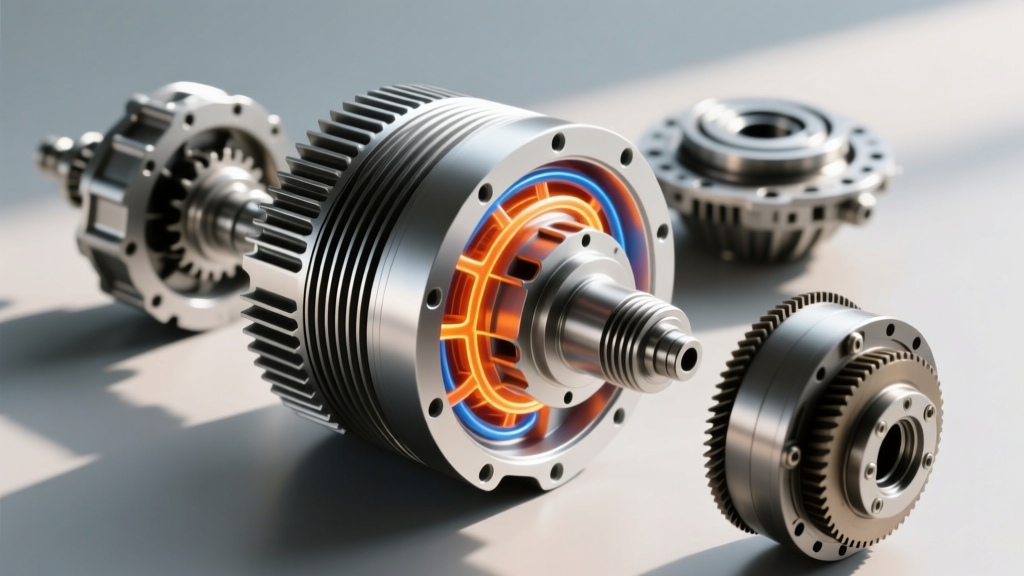
Premium aftermarket covers, such as those manufactured by Mag-Hytec or AFE Power, are cast from 356-T6 aerospace-grade aluminum. Aluminum conducts heat approximately 200 times faster than stamped steel. Furthermore, these covers feature deep external cooling fins that increase the exposed surface area by up to 300%. As air flows under the vehicle, it passes over these fins, pulling heat away from the fluid via forced convection.
Increased Fluid Capacity
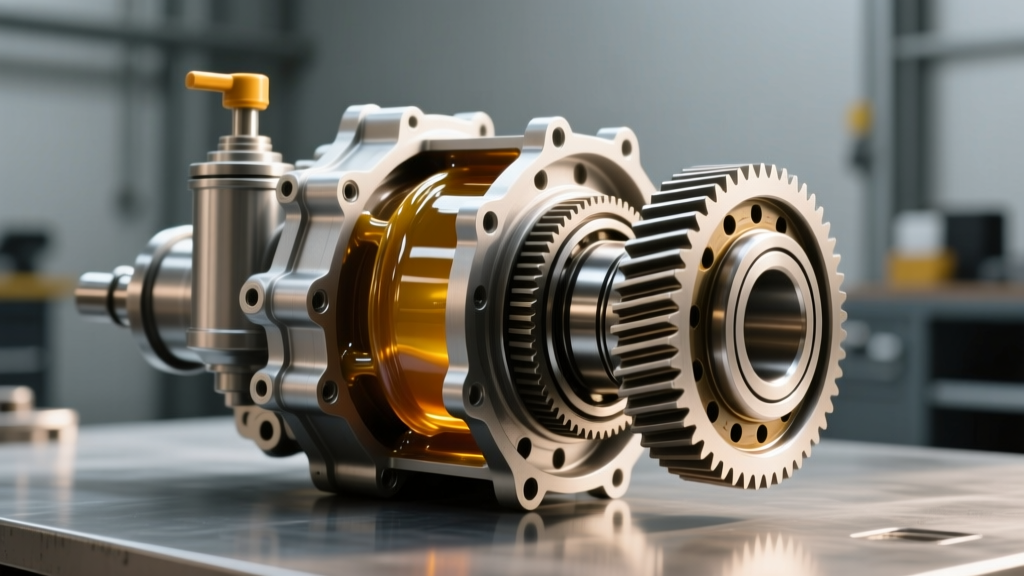
Beyond conduction, aftermarket covers drastically increase the thermal mass of the system by holding more fluid. More fluid means it takes longer for the system to reach critical temperatures. Consider the GM 11.5-inch 14-bolt axle, a staple in heavy-duty towing:
- Stock Stamped Cover: ~7.2 quarts capacity.
- Mag-Hytec 11.5" Cast Cover (Part #115-14B): ~10.5 quarts capacity.
This 45% increase in fluid volume acts as a massive heat sink, delaying the onset of the 250°F oxidation cliff during sustained 8% grade climbs.
Active Cooling Systems for Extreme Duty
While finned covers excel at highway towing and moderate off-roading, they fall short in low-speed, high-torque scenarios where ambient airflow is non-existent. Desert racing, heavy rock crawling, and continuous low-speed logging operations require active differential cooling.
PTO-Driven and Electric Pump Systems
Active cooling involves extracting the gear oil, passing it through a fluid-to-air or fluid-to-water heat exchanger, and returning it to the differential sump. Companies like TeraFlex and custom fabrication shops utilize Power Take-Off (PTO) covers that replace the standard differential cover. These PTO covers house a mechanical or electric 12V pump.
Expert Insight: When plumbing an active differential cooler, always draw fluid from the lowest point of the sump (where the hottest, heaviest oil settles) and return the cooled fluid directly over the ring gear or pinion bearing to ensure immediate lubrication and cooling of the highest-friction components.
Active systems are complex and expensive (often exceeding $1,200 for parts and fabrication), but they can maintain sump temperatures below 180°F even in 110°F ambient desert conditions.
Application Spotlight: Dana 80 and GM 11.5-Inch Axles
The Dana 80 and the GM 11.5-inch AAM (American Axle & Manufacturing) are the workhorses of the heavy-duty truck world. When paired with 3.73 or 4.10 final drive ratios and tasked with towing 15,000+ lb fifth-wheel trailers, pinion bearing temperatures routinely exceed 260°F with stock covers.
For the Dana 80, upgrading to a finned cover that increases capacity from 7.5 quarts to 13.5 quarts is practically mandatory for commercial fleet operators. The sheer volume of 75W-140 synthetic oil, combined with the aluminum finned housing, drops operating temperatures by an average of 35°F to 45°F on sustained highway pulls, preserving the expensive Dana Spicer ring and pinion sets from premature pitting and spalling.
Precision Installation: Sealing and Torque Specifications
An upgraded differential cover is only as good as its seal. Leaks lead to low fluid levels, which immediately result in catastrophic overheating and gear destruction. The debate between RTV silicone and reusable elastomer gaskets is ongoing, but proper surface preparation and torque sequencing are non-negotiable.
RTV vs. Reusable Gaskets
For stamped steel mating surfaces or slightly pitted housings, a high-temperature RTV like Permatex The Right Stuff (Part #29208) is the industry standard. It cures quickly and fills minor imperfections. However, for machined aluminum covers mating to clean axle housings, reusable gaskets like the Lube-Locker series are superior. They utilize an elastomer O-ring embedded in a steel carrier, eliminating cure times and preventing the common issue of RTV beads breaking off and clogging the differential's internal oil pickup or bearing journals.
Critical Torque Specifications
Over-torquing differential cover bolts is a frequent DIY mistake that warps the mounting flange, causing immediate weeping. Always use a calibrated inch-pound or low-range foot-pound torque wrench. Below are standard specifications for common heavy-duty axles:
- Dana 60 / Dana 70 (3/8"-16 Bolts): Torque to 30-35 lb-ft. Use a star-pattern sequence starting from the center and working outward to ensure even flange compression.
- GM 11.5-Inch AAM (M8x1.25 Bolts): Torque to 22-25 lb-ft. Note that these are relatively small metric bolts; exceeding 28 lb-ft risks snapping the bolt head or stripping the aluminum housing threads if the cover is aluminum.
- Ford 10.5-Inch Sterling (3/8" Bolts): Torque to 28-32 lb-ft.
Summary: Protecting the Drivetrain Investment
Thermal management is not an accessory; it is a fundamental requirement for the longevity of automotive differentials under load. Whether you are opting for a passive finned aluminum cover to increase thermal mass and convection, or engineering a full active cooling loop for extreme off-road racing, controlling sump temperatures is the single most effective way to prevent gear oil oxidation and protect your ring and pinion investment. Always pair your cooling upgrades with high-quality synthetic 75W-90 or 75W-140 fluids, and adhere strictly to manufacturer torque specifications during installation.