Decoding the Rear Differential Service Meaning for F-150 Owners
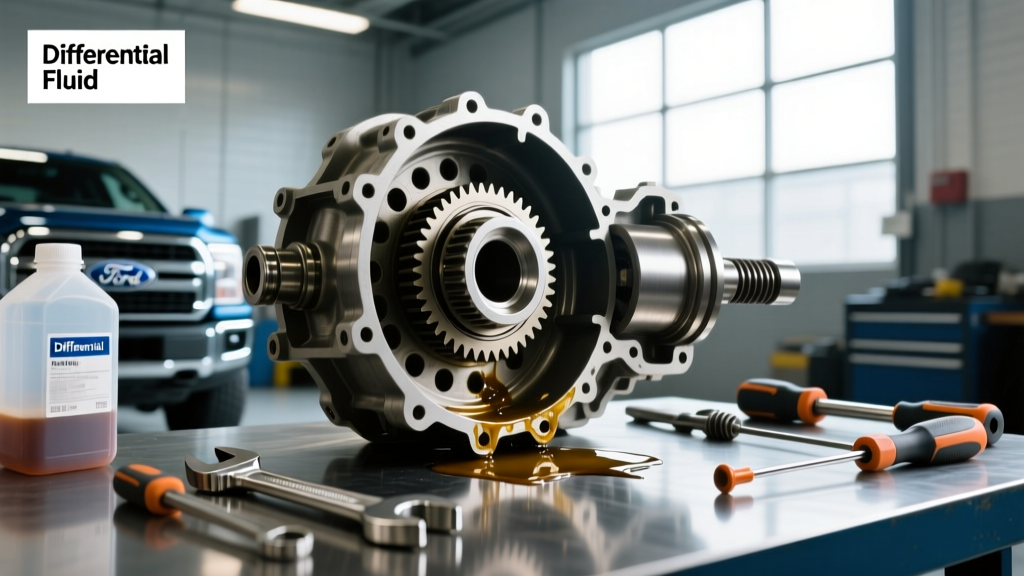
When Ford F-150 owners browse dealership service menus or consult independent mechanics, the phrase "differential service" often triggers confusion. What is the actual rear differential service meaning when applied to modern trucks? At its core, it is not merely a fluid drain-and-fill procedure. For the ubiquitous Ford 9.75-inch and 8.8-inch rear axles found in generations of F-150s, a true service encompasses comprehensive leak detection, seal integrity verification, gear oil analysis, and precise fluid replenishment. In 2026, with synthetic lubricants lasting longer but operating under higher thermal loads from advanced towing packages, understanding this distinction is critical for drivetrain longevity.
If you are experiencing fluid weeping on your driveway or noticing a distinct sulfur smell after highway driving, this model-specific repair guide will walk you through diagnosing and repairing leaks on the Ford 9.75-inch rear axle, the most common heavy-duty rear end equipped in half-ton Ford trucks.
Common Leak Points on the Ford 9.75-Inch Rear Axle
Before you can repair a leak, you must accurately identify its origin. The Ford 9.75-inch semi-floating rear axle has three primary failure points for fluid egress:
- The Pinion Seal: Located where the driveshaft yoke connects to the differential housing. This is the most common leak source due to constant rotational friction and exposure to road debris.
- Axle Shaft Seals: Located at the outer ends of the axle tubes, just behind the brake backing plates. These fail when axle bearings wear out or when moisture causes the seal lip to degrade.
- Differential Cover Gasket: The RTV silicone or pre-cut gasket sealing the rear access cover. Over-torquing the cover bolts during a previous service is the leading cause of failure here.
Step-by-Step Leak Detection Protocol
Misdiagnosing a differential leak can lead to unnecessary parts replacement. Differential gear oil is thick and can travel along the axle tube or driveshaft via centrifugal force, making the origin point hard to spot. Follow this professional detection protocol:
- Chemical Degreasing: Use a dedicated automotive degreaser and a pressure washer to completely strip the differential housing, pinion flange, and both axle tubes of old grime and oil.
- UV Dye Injection: If the leak is slow, drain a small amount of fluid and inject Tracerline OPTI-GLO UV dye designed for petroleum-based oils. Drive the truck for 50-100 miles under normal load.
- Blacklight Inspection: Shine a 365nm UV flashlight over the differential. The exact origin point will fluoresce brightly. A leak originating from the pinion flange will spray in a radial pattern across the underside of the truck bed and exhaust components.
Repair Guide: Replacing the Pinion Seal (Part #710934)
The pinion seal (commonly replaced with the National 710934 or Motorcraft BR-139) requires precise execution. A critical mistake made by amateur mechanics is using an impact wrench to reinstall the pinion nut. The Ford 9.75-inch axle uses a crush sleeve to set bearing preload. Over-tightening the nut will over-compress the crush sleeve, resulting in catastrophic pinion bearing failure within a few thousand miles.
The Preload Measurement Method
Instead of guessing the torque, professional drivetrain technicians measure the rotating preload. Here is the exact procedure:
- Remove the rear wheels and brake calipers to eliminate drag.
- Using an inch-pound beam-style torque wrench on the pinion nut, measure the force required to rotate the pinion flange. For a used 9.75-inch axle, this should read between 8 and 14 inch-pounds. Record this exact number.
- Mark the pinion nut and the pinion shaft with a paint pen so you can track thread engagement.
- Remove the driveshaft and the pinion nut using a heavy-duty breaker bar and a flange-holding tool.
- Pull the pinion flange using a 3-jaw puller. Never hammer the flange off, as this can shatter the internal pinion bearing rollers.
- Pry out the old seal. Clean the bore and lubricate the lip of the new National 710934 seal with 75W-140 gear oil.
- Tap the new seal in using a specialized seal driver until it seats perfectly flush.
- Reinstall the flange and thread the nut back on. Tighten the nut incrementally while checking the rotating preload with your inch-pound wrench every few turns.
- Stop tightening exactly when you reach your originally recorded preload measurement (e.g., 11 inch-pounds).
F-150 9.75" Rear Differential Service Specifications
Reference this data table to ensure your 2026 repair meets OEM engineering standards. Sourcing parts from reputable suppliers like RockAuto ensures you receive genuine OEM or premium aftermarket equivalents.
| Specification Category | Ford 9.75-Inch Rear Axle Data |
|---|---|
| Fluid Capacity | 3.5 Pints (1.65 Liters) |
| Recommended Fluid (Towing) | 75W-140 Synthetic (Motorcraft XY-75W140-QL) |
| Recommended Fluid (Standard) | 75W-85 Synthetic Gear Oil |
| Pinion Seal Part Number | National 710934 / Timken 710934 |
| Axle Shaft Seal Part Number | National 8660S / Timken 8660S |
| Cover Bolt Torque Spec | 24 - 28 lb-ft |
| Used Pinion Rotating Preload | 8 - 14 inch-pounds |
| Limited Slip Additive | Required if equipped with Traction-Lok (XL-3) |
Tackling Axle Shaft Seal Leaks
If your UV dye test reveals a leak at the wheel hub, you are dealing with an axle shaft seal failure. On the semi-floating 9.75-inch axle, the seal and bearing are pressed onto the axle shaft. Replacing this seal requires pulling the axle shaft out of the housing.
Unlike C-clip axles found on lighter 8.8-inch setups, the 9.75-inch requires unbolting the axle retainer plate from the backing plate. Once the shaft is slid out, the old seal and bearing must be cut off using a die grinder or hydraulic press. A new bearing and seal assembly (often sold pre-pressed by suppliers like Motorcraft) is then pressed onto the shaft. Pro Tip: Always inspect the axle shaft surface where the seal rides. If a deep groove has been worn into the steel by years of friction, the new seal will leak immediately. In this scenario, you must install a "Speedi-Sleeve" or replace the entire axle shaft.
Fluid Selection and the Limited-Slip Factor
The rear differential service meaning also heavily involves selecting the correct chemical formulation. If your F-150 is equipped with an electronic locking rear differential (eLocker), you must not use standard limited-slip friction modifier additives, as they can interfere with the locking mechanism's engagement. However, if your truck features the traditional Traction-Lok clutch-based limited-slip differential, omitting the Motorcraft XL-3 Friction Modifier will result in severe "chatter" or vibration during low-speed cornering as the clutches bind and release.
Always fill the differential until the fluid is level with the bottom of the fill plug hole. To ensure an accurate fill, the truck must be parked on a perfectly level surface. Reinstall the fill plug using a new crush washer and torque to 22 lb-ft.
2026 Cost Breakdown: DIY vs. Dealership Repair
Understanding the financial aspect of drivetrain maintenance helps owners budget appropriately. Labor rates in 2026 have continued to climb, making DIY seal replacement an attractive option for mechanically inclined truck owners.
- Dealership Pinion Seal Replacement: $350 - $550 (Includes 1.5 hours labor and OEM fluids).
- Independent Shop Pinion Seal: $250 - $400.
- DIY Pinion Seal Repair: $65 - $90 (Cost of National seal, gear oil, and brake cleaner).
- Dealership Axle Seal & Bearing (Per Side): $450 - $700 (Requires shop press and extensive labor).
For deep-dive community troubleshooting and real-world torque verification, forums like F150Forum remain invaluable resources where master technicians share model-year-specific quirks, such as variations in the ABS tone ring placement that can interfere with axle seal drivers on newer F-150 generations.
Final Thoughts on Drivetrain Longevity
Ultimately, the rear differential service meaning boils down to proactive preservation. Ignoring a minor pinion weep will eventually lead to low fluid levels, causing the ring and pinion gears to overheat, score, and ultimately seize—a repair that pushes well past $2,500 for a complete axle assembly replacement. By mastering leak detection, respecting inch-pound preload specifications, and utilizing high-quality synthetic gear oils, you can ensure your Ford 9.75-inch rear axle survives hundreds of thousands of miles of heavy towing and daily driving.